
A practical list of high fiber foods, how much fiber you need each day, and how to add more without stomach upset.
High fiber foods, including vegetables, fruits, legumes, nuts, seeds, and whole grains, are some of the most useful foods you can eat. Fiber adds bulk to your diet, helps you feel full, and helps prevent constipation (2). Large reviews also link higher fiber intake to lower rates of heart disease, type 2 diabetes, and colorectal cancer (4).
Yet most people fall short. On average, Americans eat about 16 grams of fiber a day, well below recommendations (2). This guide lists the best sources, the daily targets, and simple ways to close the gap.
Key Takeaways
- Adults need about 21 to 38 grams of fiber a day, depending on age and sex (1, 2).
- People who eat the most fiber have a 15% to 30% lower risk of heart disease, stroke, type 2 diabetes, and colorectal cancer than those who eat the least (4).
- Legumes, whole grains, nuts, seeds, vegetables, and fruits are the richest sources (2, 3).
- Soluble fiber can lower cholesterol, while insoluble fiber adds bulk to stool (2, 3).
- Increase fiber gradually over a few weeks and drink plenty of fluids to avoid gas and bloating (2).
Unusual fruits count too: the medlar is an autumn pome worth knowing about for fibre.
What Is Fiber?
Dietary fiber is the part of plant foods that your body cannot digest. It is found in fruits, vegetables, and grains (2), and much of it reaches the colon, where it is fermented by the gut bacteria that also influence mood (5, 6). There are two main types (3):
- Soluble fiber attracts water and turns into a gel during digestion, which slows digestion. It is found in oat bran, barley, nuts, seeds, beans, lentils, peas, and some fruits and vegetables, and it can lower cholesterol (2, 3).
- Insoluble fiber is found in wheat bran, vegetables, and whole grains. It adds bulk to stool and helps food pass through the intestines more quickly (3).
Health Benefits of a High Fiber Diet
The strongest evidence comes from a series of systematic reviews and meta-analyses published in The Lancet, covering 185 prospective studies and 58 clinical trials. People with the highest fiber intakes had a 15% to 30% lower risk of death from all causes and from heart disease, as well as lower rates of coronary heart disease, stroke, type 2 diabetes, and colorectal cancer. Clinical trials showed lower body weight, systolic blood pressure, and total cholesterol with higher fiber intake. The greatest benefits were seen at 25 to 29 grams a day, with possibly more benefit above that (4).
Fiber also helps in everyday ways:
- Digestion: fiber aids digestion and helps prevent constipation (2).
- Fullness: it makes you feel full faster, which can help with weight control (2).
- Gut bacteria: some fibers act as prebiotics, feeding beneficial bacteria such as Bifidobacterium (6), and gut bacteria help drive many of fiber’s benefits (5).
- Blood sugar: fiber intake is linked to better insulin sensitivity and metabolic health (5). See our tips on how to lower blood sugar naturally.
High Fiber Foods List
 Save
SaveMedlinePlus recommends eating a variety of fiber-rich foods, including cereals, dried beans and peas, fruits, vegetables, and whole grains (2). The US Dietary Guidelines for 2025–2030 advise prioritizing fiber-rich whole grains and note that high-fiber foods support a diverse gut microbiome (9).
Legumes
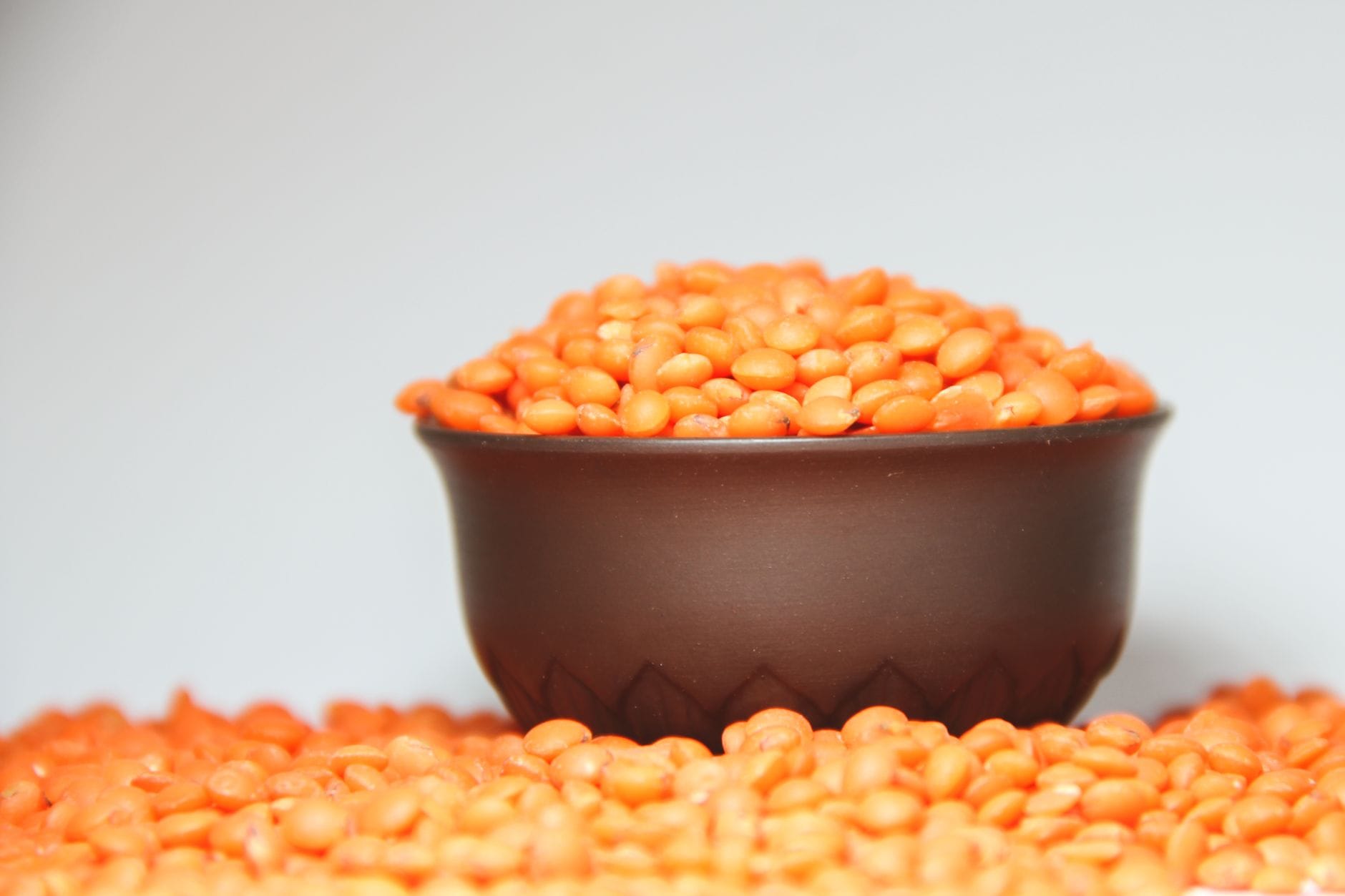
Beans, lentils, and peas are rich in soluble fiber (3). Cooked lentils provide 7.9 grams of fiber per 100 grams (14). If you use canned beans, note that one study found canning reduced total dietary fiber by 44% in kidney beans compared with household cooking (10).
Whole grains
Whole grains, oat bran, barley, and wheat bran all provide fiber (2, 3). Swapping refined grains for whole grains is one of the easiest changes, and whole grain intake is linked to similar health benefits as fiber (4). Air-popped popcorn, a whole grain, has 14.5 grams of fiber per 100 grams (12). For how whole grains compare with refined starches, see our guide to foods high in starch.
Nuts and seeds
Nuts and seeds contain soluble fiber (3). Dried chia seeds provide 34.4 grams of fiber per 100 grams and almonds 12.5 grams (11, 13). Because they are also high in calories, a small handful or a spoonful goes a long way.
Vegetables
Vegetables provide insoluble fiber, and some also contain soluble fiber (3). Eating vegetables with the peel on keeps more of their fiber, since peeling reduces the amount you get (2). A cup of boiled green beans carries about 4 g of fibre, and the pod is eaten whole.
Fruits
Many fruits provide soluble fiber (3). As with vegetables, leaving the skin on gives you more fiber (2). Avocado, for example, has 6.7 grams of fiber per 100 grams (15).
Fiber per 100 grams of selected foods
| Food (USDA description) | Fiber per 100 g |
|---|---|
| Chia seeds, dried (11) | 34.4 g |
| Popcorn, air-popped (12) | 14.5 g |
| Almonds (13) | 12.5 g |
| Lentils, cooked, boiled (14) | 7.9 g |
| Avocado, raw (15) | 6.7 g |
How Much Fiber Do You Need Per Day?
 Save
SaveThe National Academies set these adequate intakes for total fiber (1):
| Age | Men (g/day) | Women (g/day) |
|---|---|---|
| 14–18 years | 38 | 26 |
| 19–50 years | 38 | 25 |
| 51 years and older | 30 | 21 |
| Pregnancy | 28 | |
| Breastfeeding | 29 |
Few people reach these amounts. In a representative Slovenian study, 90.6% of adolescents, 89.6% of adults, and 83.9% of older adults ate less than 30 grams of fiber a day (7). In the United States, national surveys suggest only about 5% of people meet fiber recommendations, according to a report from a food and fiber summit co-authored by a Kellogg Company employee (8).
How to Eat More Fiber
- Choose whole grains instead of refined grains such as white bread and crackers (9).
- Add beans, lentils, or peas to soups, salads, and stews (2, 3).
- Keep the peel on fruits and vegetables when you can (2).
- Snack on fruit, vegetables, nuts, or air-popped popcorn instead of chips and sweets.
- Increase fiber gradually over a few weeks, and drink plenty of fluids, about 8 glasses of water or other non-caloric drinks a day (2).
Possible Side Effects
Eating a large amount of fiber in a short time can cause gas, bloating, and abdominal cramps. This usually improves as your gut bacteria adjust, and adding fiber slowly helps. Very high fiber intakes may also reduce the absorption of minerals such as iron, zinc, magnesium, and calcium, though high-fiber foods tend to be rich in minerals (2). If your doctor has told you to limit fiber, for example before a procedure or during a bowel flare, follow their advice; our guide to the low-residue diet explains what that involves. If you are pregnant and constipated, see our constipation during pregnancy guide.
Frequently Asked Questions
How much fiber do you need a day?
The National Academies set adequate intakes of 38 grams a day for men aged 19 to 50 and 25 grams for women aged 19 to 50. After age 50, the targets are 30 grams for men and 21 grams for women. Pregnant women need about 28 grams a day.
Which foods are highest in fiber?
Seeds, legumes, whole grains, nuts, vegetables, and fruits are the best sources. Per 100 grams, USDA data list dried chia seeds at 34.4 grams of fiber, air-popped popcorn at 14.5 grams, almonds at 12.5 grams, and cooked lentils at 7.9 grams.
What is the difference between soluble and insoluble fiber?
Soluble fiber attracts water and turns into a gel, slowing digestion; it is found in oat bran, barley, nuts, seeds, beans, lentils, peas, and some fruits and vegetables, and it can lower cholesterol. Insoluble fiber, found in wheat bran, vegetables, and whole grains, adds bulk to stool.
Can you eat too much fiber?
Adding a lot of fiber quickly can cause gas, bloating, and cramps. Very large amounts may also reduce absorption of minerals such as iron, zinc, magnesium, and calcium, although high-fiber foods tend to be rich in minerals. Increase fiber gradually over a few weeks and drink plenty of fluids.
Do eggs, meat, or milk contain fiber?
No. Dietary fiber comes from plants, so fruits, vegetables, legumes, nuts, seeds, and whole grains are where you will find it.
The Bottom Line
High fiber foods such as legumes, whole grains, nuts, seeds, vegetables, and fruits help digestion and fullness and are linked to lower risks of heart disease, type 2 diabetes, and colorectal cancer. Most adults need 21 to 38 grams a day, yet most people eat far less. Build meals around plant foods, choose whole grains, keep the peels on, and increase fiber slowly with plenty of fluids. A balanced diet makes reaching your target much easier.
This article is for informational purposes only and is not a substitute for professional medical advice, diagnosis, or treatment. Always consult a qualified healthcare provider before making changes to your diet, especially if you have a digestive condition or other medical condition.
Related Articles
How to Lower Blood Sugar Naturally: 8 Evidence-Based Habits
Foods High in Starch: 6 Smart Picks and 4 to Skip
Balanced Diet Guide With the 5 Food Groups
1500-Calorie Diet for Weight Loss, Food List & Plan
Low-Glycemic Diet: GI Food List, Benefits and Limits
Winter Melon: Nutrition Facts and Claims Worth Checking
Foods for Healthy Kidneys: What the Evidence Says
Celery Juice Benefits: What Holds Up and What Does Not
Magnesium Glycinate: Uses, Dosage, Side Effects and Evidence
Sourdough Bread Benefits: What Holds Up
Coconut Meat Benefits and the Saturated Fat Problem
Oat Milk: What the Carton Actually Gives You
Almond Butter Benefits: The Verified Version