
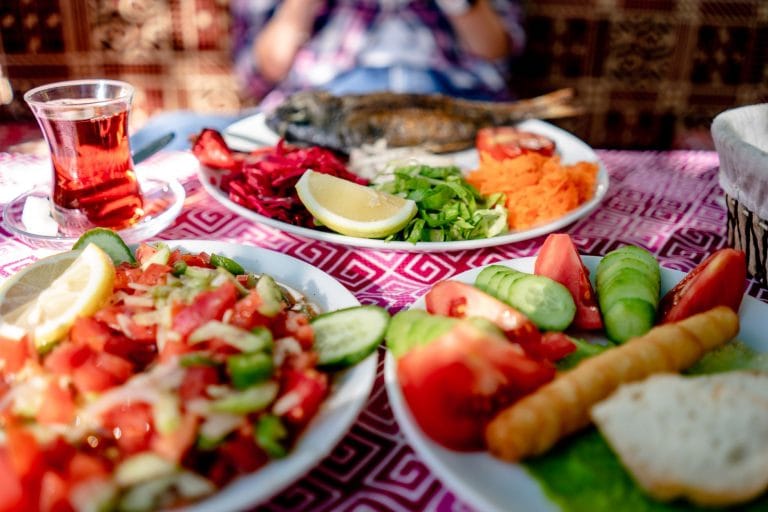
Gut health and mental health are genuinely connected — but the strongest human evidence is for changing what you eat, not for the supplements sold on the strength of it.
Gut health and mental health is one of the noisiest subjects in nutrition. Most of what circulates comes from mouse studies, and most of what is sold comes with claims those studies do not support.
So here is only the human trial evidence, ranked by how much weight it can carry — starting with the finding that surprises people most.
Key Takeaways
- The best evidence is for changing the diet: remission in 32.3% versus 8.0% in a randomised trial (1).
- A Mediterranean diet lowered depression scores by 14.4 points more than the control in young men (2).
- Probiotics beat placebo for major depression — but certainty was rated moderate to very low (3).
- Outside major depression, the evidence for probiotics does not clarify their role at all (4).
- “Leaky gut” is a measurable phenomenon, not an established diagnosis with a proven treatment (5).
Gut Health and Mental Health: What Has Actually Been Tested
| Approach | Best human evidence | How strong |
|---|---|---|
| Changing the whole diet | The SMILES trial: 12 weeks of dietary support alongside usual treatment produced remission in 32.3% versus 8.0% on social support, with a number needed to treat of 4.1 (1) | Strongest — randomised, though small |
| A Mediterranean diet | In 72 young men with moderate to severe depression, 12 weeks of Mediterranean eating lowered depression scores by a mean of 14.4 points more than the control (2) | Strong signal, but open-label |
| Probiotic supplements | A network meta-analysis of 42 trials found probiotics better than placebo and non-inferior to antidepressants for major depression, ranking second after escitalopram (3) | Promising, but certainty rated moderate to very low (3) |
| Probiotics for other conditions | A systematic review of 42 studies concluded that except in major depression, current evidence does not clarify their role in treating mental illness (4) | Not established |
| Treating ‘leaky gut’ | Increased intestinal permeability has been measured in mood disorders and other psychiatric illness, and possible mechanisms proposed (5) | Association and hypothesis, not a treatable diagnosis |
The trial that changed the conversation
The SMILES trial was a 12-week, parallel-group, single-blind randomised controlled trial of a dietary intervention added to existing treatment for moderate to severe depression (1). The intervention was seven individual sessions with a clinical dietitian; the control group received a social support protocol on the same schedule (1).
The results: the dietary group improved significantly more on the depression rating scale, with a Cohen’s d of 1.16, and remission was reached by 32.3% of the diet group against 8.0% of the control group (1). The number needed to treat was 4.1 (1).
Two things about it deserve stating. It was small — 67 people enrolled, with complete 12-week data on 31 and 25 (1). And it was adjunctive: 55 of the participants were already receiving psychotherapy, medication, or both (1). The diet was added to treatment, not substituted for it.
A separate randomised trial in 72 young men aged 18 to 25 with moderate to severe depression tested a Mediterranean diet against befriending therapy (2). After 12 weeks, depression scores fell by a mean of 14.4 points more in the diet group, with quality of life also improving (2). That trial was open-label, which limits it, but the direction agrees with SMILES.
Probiotics: better than expected, weaker than claimed
 Save
SaveHere the honest answer requires holding two facts together.
A systematic review and network meta-analysis identified 42 eligible trials covering 22 interventions for major depressive disorder (3). Probiotics came out superior to placebo (standardised mean difference −0.62), non-inferior to a list of antidepressants including duloxetine, venlafaxine and vortioxetine, and ranked second in the treatment hierarchy after escitalopram (3). Tolerability over eight weeks or more matched that of antidepressants (3).
That is a striking result. The same paper states the qualifier plainly: across those trials the certainty of evidence was moderate to very low (3). A network meta-analysis inherits the quality of what it pools, and here that quality was limited.
And the picture narrows further outside depression. A systematic review of clinical trials covering 47 articles from 42 studies in people with formal psychiatric diagnoses concluded that except in major depressive disorder, current evidence does not clarify the role of probiotics and prebiotics in the treatment of mental illness (4). Schizophrenia had 11 studies, bipolar disorder 5, and generalised anxiety disorder exactly one (4).
So: promising in one specific condition, unproven in the rest.
What “leaky gut” actually means
Increased intestinal permeability is real and measurable. It can be assessed with orally administered tracer molecules detected in urine, or through blood biomarkers such as LPS, LBP and zonulin (5). Researchers have examined it in mood disorders, schizophrenia, alcohol dependence, anxiety disorders and neurodevelopmental conditions (5).
The proposed mechanism is that bacterial endotoxin in the body causes inflammation, and chronic low-grade inflammation affects the brain — disrupting the blood-brain barrier, altering astrocyte and microglial function, and changing tryptophan metabolism and GABA and glutamate levels (5).
That is a coherent hypothesis supported by measured associations. It is not a diagnosis, and the reviewers themselves frame this as work that may, in future, allow earlier detection and targeted treatment (5). Anything sold today as a cure for leaky gut is running well ahead of that.
What The Successful Trials Actually Fed People
| What the trials fed people | Why it matters |
|---|---|
| Vegetables, fruit, wholegrains, legumes, nuts, fish, olive oil, lean meat | This is what the SMILES and Mediterranean trials actually used — ordinary food, not a supplement (1), (2) |
| Reduced sweets, refined cereals, fried food, processed meat, sugary drinks | The intervention was as much about what came out of the diet as what went in (1) |
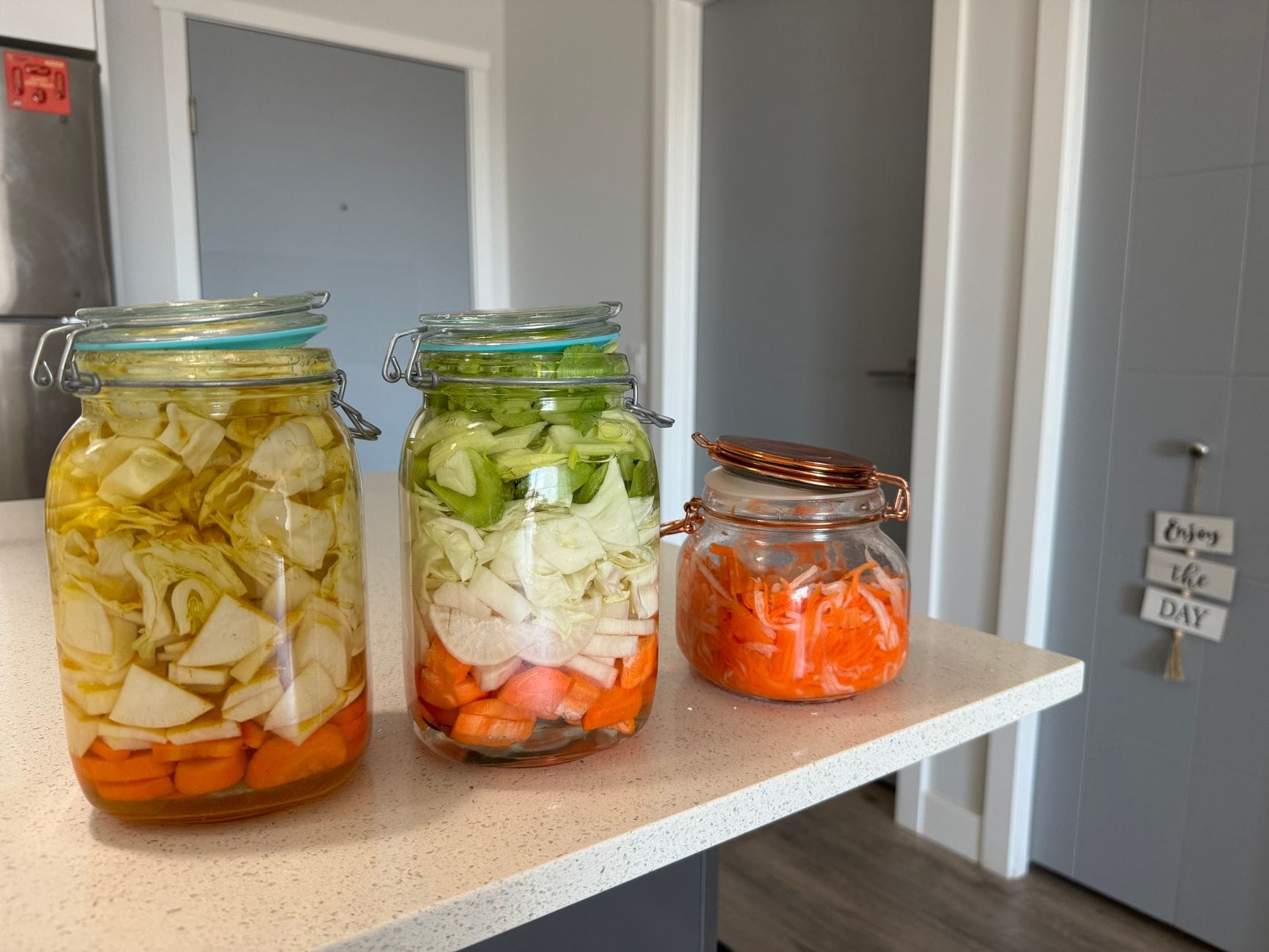
| Fermented foods, in some studies | Included in reviews of gut-brain interventions, though the trials are mixed and often small (4) |
| Seven sessions with a dietitian over 12 weeks | The SMILES result came with structured support, not a leaflet (1) |
This is the least glamorous and most useful part. No trial that worked used an exotic ingredient.
The pattern was vegetables, fruit, wholegrains, legumes, nuts, fish, olive oil and lean meat, with a reduction in sweets, refined cereals, fried food, processed meat and sugary drinks (1), (2). The sugary-drinks half of that has its own evidence, covered in sugar and mood. In other words, an ordinary balanced diet of the kind dietary guidelines already describe, with fibre-rich foods doing much of the work.
Before You Buy A Probiotic
NCCIH notes that probiotics have an extensive history of apparently safe use, particularly in healthy people, but that few studies have looked at safety in detail, leaving a lack of solid information on the frequency and severity of side effects (6).
Risk is higher in people with severe illness or compromised immune systems. Severe or fatal infections have been reported in premature infants given probiotics, and the FDA has warned health care providers about it (6). Some products have also been found to contain organisms other than those listed on the label (6).
And the necessary line: depression and anxiety are medical conditions with treatments that work. Every trial above added diet or supplements alongside care, not instead of it.
Frequently Asked Questions
Is gut health really linked to mental health?
There is a genuine and measurable link, but it is weaker and more specific than the internet suggests. The strongest human evidence is not about supplements at all: it is that changing what people eat improves depression symptoms. In the SMILES randomised controlled trial, 12 weeks of dietary support alongside usual treatment produced remission in 32.3% of participants compared with 8.0% on a social support control. Probiotic supplements have promising trial data for major depression specifically, but a systematic review of 42 studies found that outside major depression the evidence does not clarify their role at all.
Can probiotics help depression?
The most favourable evidence is a network meta-analysis of 42 trials covering 22 interventions, which found probiotics superior to placebo with a standardised mean difference of -0.62, non-inferior to several antidepressants, and ranked second in the treatment hierarchy behind escitalopram. That sounds remarkable, and it comes with a serious qualifier the authors state directly: the certainty of evidence across these trials was moderate to very low. It is a promising finding that needs better trials, not a reason to substitute a supplement for treatment.
What is leaky gut, and is it real?
Increased intestinal permeability is a real, measurable phenomenon. It can be assessed by giving tracer molecules and measuring them in urine, or through blood markers such as LPS, LBP and zonulin. Researchers have measured it in mood disorders, schizophrenia, alcohol dependence and anxiety disorders, and proposed mechanisms involving chronic low-grade inflammation affecting the brain. What it is not is an established diagnosis with a proven treatment. The research describes associations and plausible mechanisms, and the reviewers frame the work as something that may in future allow earlier detection, which is a long way from the confident claims made by products sold to fix it.
What should I eat for gut and mental health?
What the successful trials actually used was ordinary food: vegetables, fruit, wholegrains, legumes, nuts, fish, olive oil and lean meat, with a reduction in sweets, refined cereals, fried food, processed meat and sugary drinks. That is the Mediterranean pattern in practice. No exotic ingredient and no supplement was involved. It is also worth knowing that the SMILES participants had seven sessions with a clinical dietitian over 12 weeks, so the result reflects structured support rather than simply reading a food list.
Are probiotics safe?
For healthy people they have an extensive history of apparently safe use, though NCCIH notes that few studies have looked at safety in detail, so solid information on the frequency and severity of side effects is lacking. The risk is greater in people with severe illness or compromised immune systems, and severe or fatal infections have been reported in premature infants given probiotics, prompting an FDA warning to health care providers. NCCIH also notes that some products have been found to contain organisms other than those on the label.
Can changing my diet replace treatment for depression?
No, and the trials themselves make this clear. In the SMILES trial the dietary programme was adjunctive: most participants were already receiving psychotherapy, medication or both, and the diet was added on top. The result shows that diet can help alongside treatment, not instead of it. Depression is a serious medical condition, and if it is affecting your life the first step is a health professional.
The Bottom Line
The link between gut health and mental health is real, and the useful version of it is duller than the marketing. The strongest human evidence is that changing the whole diet helps depression: the SMILES trial produced remission in 32.3% against 8.0% on control, with a number needed to treat of 4.1, and a Mediterranean diet trial in young men found a 14.4-point advantage. Probiotic supplements did surprisingly well in a network meta-analysis of 42 trials for major depression, but the certainty of that evidence was moderate to very low, and outside major depression a review of 42 studies found the evidence does not clarify their role. Leaky gut is measurable but is not a diagnosis you can treat off a shelf. If you want the intervention with the best trial record, it is ordinary food, eaten consistently, alongside proper treatment.
This article is for informational purposes only and is not a substitute for professional medical advice. Depression and anxiety are medical conditions that require professional care. Do not stop prescribed treatment, and speak to your doctor before taking probiotics if you are seriously ill, immunocompromised, or caring for a premature infant.
Related Articles
Balanced Diet Guide With the 5 Food Groups
High Fiber Foods List and How Much Fiber You Need
Vitamin B12 Deficiency: Symptoms, Causes and Treatment
Magnesium vs Melatonin for Sleep: What Trials Show