

Vitamin B12 deficiency: the symptoms that get missed, who is actually at risk, what the blood test numbers mean, and why tablets usually work as well as injections.
Vitamin B12 deficiency affects roughly 2% to 3% of adults, and it is one of the more commonly missed diagnoses in nutrition — partly because the neurological symptoms can arrive without obvious anaemia (1).
The useful parts of this page are the ones people rarely get told: the borderline test result that needs a second test, the medication that quietly lowers B12, and the fact that oral tablets are noninferior to injections for most people (1).
Key Takeaways
- Affects about 2–3% of adults; symptoms range from fatigue to peripheral neuropathy and ataxia (1).
- Metformin lowered B12 by a mean of 57 pmol/L in weeks to months (4).
- Below 180 pg/mL is diagnostic. 180–350 is borderline and needs a methylmalonic acid test (1).
- Oral tablets are noninferior to injections for most people; injections are for severe or neurological cases (1).
- In vegans, homocysteine rises even where serum B12 looks only modestly lower (7).
Vitamin B12 Deficiency Symptoms, In Two Groups
Splitting them this way explains why the deficiency gets missed.
The anaemia symptoms are what most people expect: fatigue, lack of energy, lightheadedness on standing or exertion, pale skin, shortness of breath during exercise, loss of appetite, irritability, a swollen red tongue or bleeding gums, and diarrhoea or constipation (3).
The neurological symptoms are the ones that matter more: brain fog, depression, peripheral neuropathy — numbness, tingling or burning in the hands and feet — and ataxia, meaning unsteadiness when walking (1).
The two do not always arrive together. You can develop neurological features without the blood picture that would normally raise suspicion, which is exactly how a treatable deficiency turns into months of unexplained symptoms — a recognition problem clinical reviews have flagged for years (2).
Anxiety, Low Mood And Vitamin B12 Deficiency
This comes up constantly, and it deserves a straight answer in two halves, because the two halves point in opposite directions.
Half one: a real deficiency can genuinely produce psychiatric symptoms. A review of the neuropsychiatric picture lists depression, anxiety, psychosis, dementia and delirium among presentations in which B12 deficiency can play a causal role, alongside apathy, agitation, impaired concentration and insomnia (11). This is not a fringe claim; it is why screening at-risk groups is recommended (11).
The landmark finding behind it is worth knowing. In a New England Journal of Medicine study of 141 consecutive patients whose neuropsychiatric abnormalities were due to cobalamin deficiency, 40 of them — 28% — had no anaemia and no macrocytosis (10). In other words, the blood count that would normally raise the alarm was clean. Of the patients treated, 39 of 39 improved (10). That is the strongest argument for testing rather than assuming.
Half two: if you are not deficient, B12 is not a treatment for anxiety or depression. A systematic review and meta-analysis of randomised placebo-controlled trials found that short-term use of folate and B12 did not improve depressive symptoms in adults with major depression who were already on antidepressants, with a standardised mean difference of −0.12 (95% CI −0.45 to 0.22) — a result that includes no effect (12). More prolonged use may reduce the risk of relapse and the onset of clinically significant symptoms in people at risk, but that is a different claim from treating an existing episode (12).
So the useful question is not “should I take B12 for anxiety”. It is “have I been tested”. If you have risk factors and symptoms, ask for the test (1). If your B12 is fine, the answer to the anxiety lies elsewhere, and that is a conversation for a health professional.
Who Is Actually At Risk
| Who is at risk | Why | What the evidence says |
|---|---|---|
| People taking metformin | It interferes with B12 absorption in the gut | A meta-analysis of 4 trials found a mean drop of 57 pmol/L after 6 weeks to 3 months (4, 5) |
| Vegans, and vegetarians to a lesser degree | B12 occurs naturally almost only in animal foods | 17 studies pooled: significantly lower serum B12 and raised homocysteine versus other diets (7) |
| Older adults | Stomach acid falls with age, and acid is needed to release B12 from food | Named as a risk factor in current practice guidance (1) |
| People with pernicious anaemia or autoimmune gastritis | The stomach stops making intrinsic factor, the protein required to absorb B12 | Worth testing for when no other cause is obvious (1, 3) |
| People on long-term acid-reducing medicines | Less stomach acid means less B12 released from food | 25 studies pooled an odds ratio of 1.42 — but the authors call it too low and too heterogeneous to confirm (6) |
| After gastric or bowel surgery | Absorption happens in the last part of the small intestine | A recognised malabsorptive cause (1) |
Metformin: the one worth knowing about
If you take metformin for type 2 diabetes, this applies to you and is rarely mentioned at the pharmacy counter.
A systematic review gathered 26 papers, of which 10 of 17 observational studies found significantly lower B12 in people taking metformin. Pooling four trials gave a mean reduction of 57 pmol/L after just 6 weeks to 3 months of use (4). A separate meta-analysis review reached similar conclusions (5).
That is not a reason to stop metformin, which is a highly effective drug. It is a reason to have your B12 checked periodically while taking it.
Vegans and vegetarians
B12 occurs naturally almost exclusively in animal foods, so this one is a matter of chemistry rather than ideology.
A systematic review and meta-analysis pooled 17 studies using the full panel of B12 biomarkers rather than serum B12 alone. Vegans showed significantly lower serum B12 and significantly elevated total homocysteine (7) — homocysteine rising is a functional sign that the body is short of usable B12, and it can appear when the serum number alone looks unremarkable.
Children and adolescents on plant-based diets have been studied separately for the same reason (8). If you eat no animal foods, supplementation or reliably fortified foods is not optional.
Acid-reducing medication: weaker than you will read elsewhere
Worth handling honestly, because this claim is often overstated.
A meta-analysis of 25 studies found the pooled odds ratio of B12 deficiency among proton pump inhibitor users was 1.42 (95% CI 1.16–1.73). But the authors’ own conclusion was careful: heterogeneity was significant, most studies found no difference in actual serum B12 levels, and the pooled odds ratio was too low to imply an association clearly (6).
So: a plausible mechanism and a weak signal, not an established cause.
What The Blood Test Numbers Mean
| Result | What it means | Next step |
|---|---|---|
| Below 180 pg/mL | Diagnostic for deficiency (1) | Treatment |
| 180–350 pg/mL | Borderline — serum B12 alone cannot settle it (1) | Measure methylmalonic acid; raised MMA confirms deficiency |
| Above 350 pg/mL | Deficiency unlikely on this measure | Look elsewhere for the symptoms |
| No obvious cause found | The reason matters as much as the number | Test for H. pylori and for autoimmune gastritis antibodies (1) |
The borderline band is the practically important part. Plenty of people are told their B12 is “normal” at 220 or 280 while having symptoms, when guidance says that range warrants a methylmalonic acid test to settle it (1).
Note also that universal screening is not recommended. Testing should be considered when someone has at least one risk factor and at least one clinical feature (1).
Tablets Or Injections?
 Save
SaveThis is the question with the most useful answer, and it is not the one most people assume.
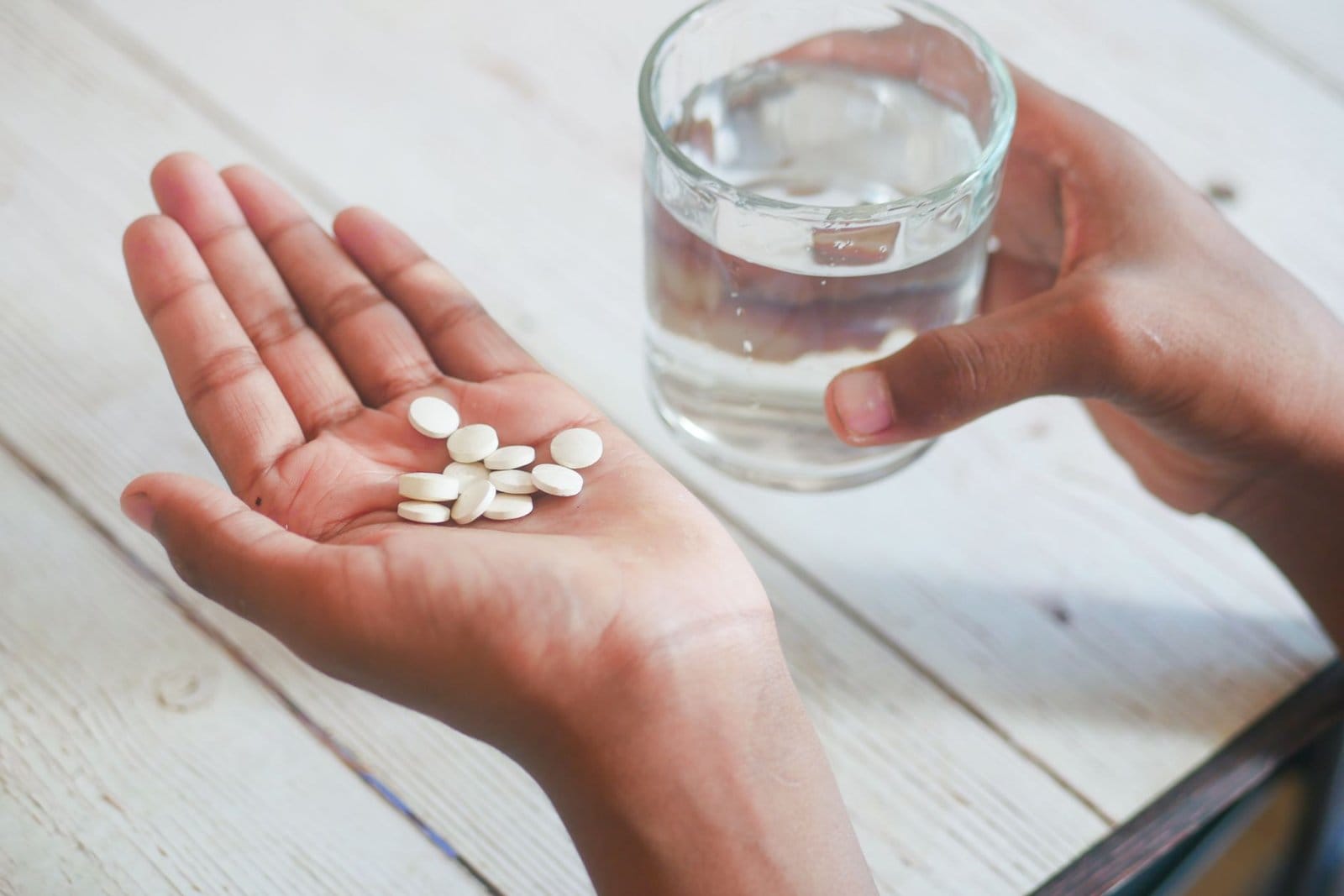
Oral vitamin B12 supplementation can be used in most patients and is noninferior to intramuscular supplementation (1). Tablets, taken properly, do the job for the majority.
The exceptions are specific: intramuscular administration should be considered in patients with severe deficiency or neurological manifestations (1). That is where injections earn their place.
Food sources remain the foundation for everyone not in a risk group: meat, poultry, shellfish, eggs, fortified breakfast cereals and dairy products (3). Absorption, not intake, is usually the problem — there is a section on how much you actually need below. If you are building meals around this, the overall pattern matters, and animal-based whole foods carry it naturally.
Where B12 Actually Comes From
| Food (100 g, cooked) | Vitamin B12 | Source type |
|---|---|---|
| Mackerel, Atlantic | 19.0 µg | Animal |
| Herring, Atlantic | 13.1 µg | Animal |
| Sardines, canned in oil | 8.94 µg | Animal |
| Trout, rainbow, farmed | 4.11 µg | Animal |
| Tuna, light, canned in water | 2.99 µg | Animal |
| Egg, hard-boiled | 1.11 µg | Animal |
| Any unfortified plant food | None | — |
Those figures come from USDA FoodData Central, and the last row is the one that matters most.
B12 is made by bacteria, not by plants or animals. Animals accumulate it; plants do not. So no unfortified plant food is a reliable source — not spirulina, not tempeh, not mushrooms. The algae case is the clearest of the three: spirulina carries the inactive form while chlorella carries the real one, which is the single difference that decides between them. Products that appear to contain it usually carry inactive analogues that the body cannot use, and which can make a blood test look better than the situation is.
Oily fish sit at the top of the list by a wide margin. Mackerel carries 19 µg per 100 g and herring 13.1, against an egg at 1.11.
For anyone eating no animal products at all, this is not a section about eating better. It is the reason supplementation or reliably fortified foods are not optional, and why testing matters rather than assuming. Deficiency develops slowly, because the liver stores several years’ worth, which is exactly why it is often caught late.
How Much Vitamin B12 Do You Need a Day?
The Daily Value for vitamin B12 is 2.4 mcg for adults 9. Set against the table above, that is a very small target: 100 g of mackerel carries 19 µg, close to eight times the whole day’s value, and a single hard-boiled egg carries 1.11 µg.
Which is why intake is rarely the problem. Anyone eating animal foods reaches 2.4 mcg without trying. The people who do not are the ones named above: those eating no animal products, and those whose bodies cannot absorb what they eat.
Treatment doses look nothing like 2.4 mcg, and that is deliberate. In a year-long randomised trial in primary care, the oral group took 1 mg a day — about four hundred times the Daily Value — for the first eight weeks, then one a week. By week 8, more than 90% of patients in both the oral and the injection group had normal B12 levels 13. The large dose is not because the body needs that much; it is because only a fraction of it crosses the gut wall.
And more is not better beyond that point. A 2025 meta-analysis pooled 16 studies and 6,098 people and found no significant difference between oral, sublingual and intramuscular routes, and no dose-response effect at all. The authors’ reading is that absorption efficiency, rather than the size of the dose, is what decides the outcome 14.
So the practical answer splits in two. If you are not in a risk group, food covers it and there is no reason to supplement. If you are, the number that matters is not 2.4 mcg but whatever your doctor sets after a test — and a tablet is likely to serve you as well as a needle.
Shellfish are among the densest sources of all: 100 g of cooked scallops carries 2.15 micrograms, close to a full day in one modest portion.
Frequently Asked Questions
How much vitamin B12 do you need a day?
The Daily Value is 2.4 mcg for adults, which food covers easily if you eat animal products: 100 g of mackerel has about 19 micrograms and an egg about 1.11. Treatment doses are far higher, around 1 mg a day in trials, because only a fraction of an oral dose is absorbed. A 2025 meta-analysis of 16 studies and 6,098 people found no dose-response effect and no difference between tablets, sublingual and injections, so taking more than prescribed does not help.
What are the symptoms of vitamin B12 deficiency?
They fall into two groups, and the second is the one that matters most. The blood-related symptoms come from anaemia: fatigue, lightheadedness on standing or exertion, pale skin, shortness of breath on exercise, loss of appetite, irritability, a swollen red tongue or bleeding gums, and either diarrhoea or constipation. The neurological symptoms are separate and include brain fog, depression, peripheral neuropathy, and ataxia, which is unsteadiness when walking. You can have neurological symptoms without obvious anaemia, which is part of why the deficiency gets missed. Deficiency affects roughly 2% to 3% of adults in the United States, so it is not rare.
Who is most at risk of B12 deficiency?
Six groups, and most people who have it fall into one. People taking metformin, where a meta-analysis found an average drop of 57 pmol/L within weeks to months. Vegans, and vegetarians to a lesser extent, because B12 occurs naturally almost only in animal foods. Older adults, because stomach acid declines with age and acid is needed to release B12 from food. People with pernicious anaemia or autoimmune gastritis, where the stomach stops producing intrinsic factor. People on long-term acid-reducing medication, though that evidence is weaker than commonly claimed. And anyone who has had gastric or bowel surgery affecting absorption.
Do you need B12 injections, or do tablets work?
For most people, tablets work. Current practice guidance states that oral vitamin B12 supplementation can be used in most patients and is noninferior to intramuscular supplementation. That is a genuinely useful thing to know, because injections are inconvenient and often assumed to be the only real treatment. The exceptions matter though: intramuscular administration should be considered in people with severe deficiency or with neurological manifestations. So the answer depends on how deficient you are and whether your nerves are involved, which is a decision for your doctor after testing, not a preference. Worth knowing that the picture reverses with vitamin B6: there it is too much, not too little, that damages nerves, and the safe limit is lower than many supplements contain.
What B12 level is too low?
A total serum vitamin B12 below 180 pg/mL is diagnostic for deficiency. The awkward zone is 180 to 350 pg/mL, which is borderline and cannot be settled on that test alone; there the next step is measuring methylmalonic acid, and a raised MMA confirms the deficiency. This matters because plenty of people are told their B12 is ‘normal’ when it sits in that borderline band with symptoms. If no clear cause for a deficiency is found, guidance also suggests testing for H. pylori and for the autoantibodies associated with autoimmune gastritis.
Can vitamin B12 deficiency cause anxiety?
A genuine deficiency can produce psychiatric symptoms. A review of the neuropsychiatric picture lists anxiety alongside depression, psychosis, dementia and delirium as presentations in which B12 deficiency can play a causal role, together with apathy, agitation, impaired concentration and insomnia. The important practical point is that this can happen without anaemia: in a New England Journal of Medicine series of 141 patients whose neuropsychiatric problems were caused by cobalamin deficiency, 28% had neither anaemia nor macrocytosis, so a normal blood count does not rule it out. The reverse does not follow, though. If you are not deficient, B12 is not a treatment for anxiety, and a meta-analysis of placebo-controlled trials found no improvement in depressive symptoms from short-term folate and B12 in adults already taking antidepressants. Get tested rather than self-supplementing, and treat anxiety itself with a health professional.
Are B12 neurological symptoms reversible?
This is the reason not to wait. Neurological features such as peripheral neuropathy and ataxia are why current guidance says intramuscular treatment should be considered rather than oral tablets in those cases, which reflects how seriously they are taken. The honest position is that outcomes depend heavily on how long the deficiency has been present before treatment starts, and that is not something to manage by trial and error with supplements bought online. If you have numbness, pins and needles, unsteadiness or memory problems alongside risk factors for B12 deficiency, that is a reason to get tested promptly rather than to self-treat and see.
The Bottom Line
Vitamin B12 deficiency affects about 2 to 3% of adults and is easy to miss, because the neurological symptoms — brain fog, numbness, unsteadiness — can arrive without the anaemia that would normally prompt testing. The risk groups are specific: people on metformin, which lowered B12 by an average of 57 pmol/L within months; vegans, where homocysteine rises even when serum B12 looks only slightly low; older adults; people with pernicious anaemia; and anyone who has had gut surgery. On testing, below 180 pg/mL is diagnostic and 180 to 350 is a borderline band that needs a methylmalonic acid test rather than reassurance. And on treatment, the most useful fact is that oral tablets are noninferior to injections for most people — with injections reserved for severe deficiency or neurological involvement.
This article is for informational purposes only and is not a substitute for professional medical advice. See your doctor for testing rather than self-treating, particularly if you have numbness, tingling, unsteadiness or memory problems, and do not stop metformin or acid-reducing medication without medical advice.
Related Articles
How to Increase Blood Oxygen Levels: What Actually Works
Foods High in Collagen: Why Eating It Doesn’t Reach Your Skin
Balanced Diet Guide With the 5 Food Groups
Manganese Benefits, Daily Needs, Food Sources and Safety