
What a normal blood oxygen level is, what really helps your lungs and heart deliver oxygen, what does not, and when a low reading is an emergency.
If you are wondering how to increase oxygen levels in blood, the first thing to know is that most healthy people do not need to. A normal pulse oximeter reading is 95% to 100% (1), and almost all of the oxygen in your blood, about 98%, travels bound to hemoglobin in red blood cells (3). A normal reading is already near the ceiling, and no food, breathing trick, or supplement will push it meaningfully higher.
What everyday habits can do is keep your lungs, heart, and circulation working well, help people with lung conditions breathe more easily, and avoid things that lower oxygen delivery, such as smoking and carbon monoxide. And if your oxygen level is genuinely low, that is a medical problem that needs assessment, not home fixes (2, 4).
Key Takeaways
- Normal oxygen saturation is 95% to 100%. Contact a provider at 92% or lower, and seek immediate care at 88% or lower (1).
- Low blood oxygen (hypoxemia) is usually caused by heart or lung conditions, sleep apnea, high altitude, or certain medicines, and needs medical care (4).
- Regular exercise improves how your body uses oxygen, including in people with COPD (9).
- Pursed-lip and belly breathing can ease shortness of breath (10).
- Pulse oximeters can be less accurate with poor circulation, cold skin, darker skin, or nail polish (1, 5).
- Supplemental oxygen is a prescription treatment, and too much oxygen can cause harm (6, 7).
What Is a Normal Blood Oxygen Level?
Blood oxygen is usually measured in two ways: with a fingertip pulse oximeter, which estimates oxygen saturation (SpO2), or with an arterial blood gas test, which measures the pressure of oxygen in arterial blood (PaO2). At rest, a saturation of 95% or less, or a drop of 5% or more during exercise, is considered abnormal in clinical assessment, and a PaO2 below 80 mm Hg is typically considered abnormal (2).
For home pulse oximeter readings, MedlinePlus gives these guides (1):
| Pulse oximeter reading (SpO2) | What it means |
|---|---|
| 95% to 100% | Normal range |
| 92% or lower | Contact your healthcare provider |
| 88% or lower | Seek immediate medical attention |
Your doctor may set different targets if you have a chronic lung condition such as COPD. In advanced COPD, low blood oxygen can be part of the disease itself (8).
Symptoms and Causes of Low Oxygen
Symptoms of hypoxemia can include headache, shortness of breath, fast heart rate, tiredness, coughing, wheezing, confusion, and bluish skin, fingernails, or lips. Common causes include COPD, asthma, pneumonia, heart failure, pulmonary embolism, sleep apnea, high altitude, and medicines that slow breathing (4). Treatment depends on the cause and can include supplemental oxygen, inhalers or other medicines, CPAP for sleep apnea, or a ventilator in severe cases (4).
Call emergency services or go to the emergency room if you have symptoms of low oxygen, or if someone notices a sudden change in your behavior or awareness, such as restlessness or confusion. Severe untreated hypoxemia can be fatal (4).
How to Use a Pulse Oximeter Correctly
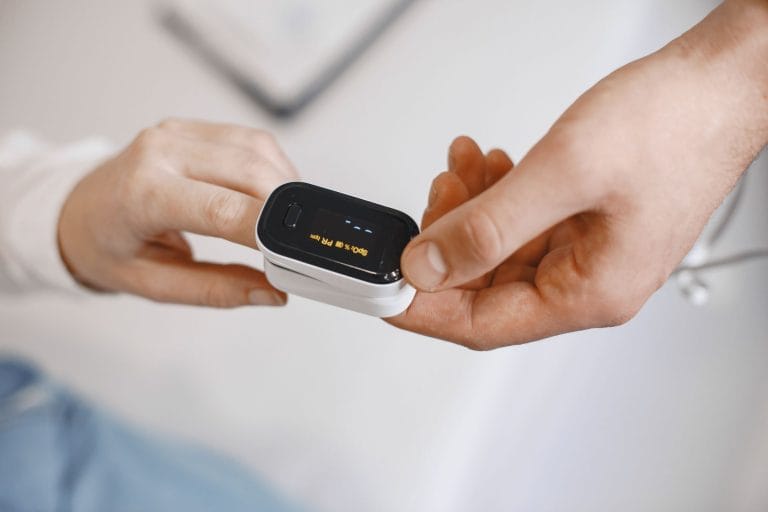
Pulse oximeters use light to estimate oxygen saturation. The FDA notes that poor circulation, skin pigmentation, skin thickness, skin temperature, current tobacco use, and fingernail polish can all affect accuracy, and that readings can differ between people with lighter and darker skin (5). Dark nail polish, artificial nails, and cold skin can also give misleading results (1).
- Warm your hands, remove nail polish or artificial nails, and sit still for a minute before reading.
- Write down the reading, date, and time so you can see trends (5).
- Pay attention to your symptoms, not just the number. Contact a provider if you are worried about a reading or your symptoms are serious or getting worse (5).
Habits That Help Your Body Use Oxygen
Stay physically active
 Save
SaveDuring exercise, your body uses more oxygen, and oxygen consumption stays raised for a while after you stop, longer at higher intensities (11). Over time, regular activity trains your heart, lungs, and muscles. For people with COPD, the American Lung Association says moderate exercise can improve the body’s use of oxygen, energy, muscle strength, cardiovascular fitness, and shortness of breath. Pulmonary rehabilitation programs teach people how to exercise with less breathlessness (9).
Walking, cycling, and swimming are easy places to start, and these simple full-body workouts can add variety. If you have a heart or lung condition, talk to your healthcare provider before starting, and do not exercise if you have a fever, chest pain, dizziness, or worsening shortness of breath (9).
Practice pursed-lip and belly breathing
These techniques are taught in pulmonary rehabilitation and help people with asthma or COPD when they are short of breath (10):
- Pursed-lip breathing: breathe in slowly through your nose with your mouth closed, purse your lips as if to whistle, then breathe out slowly and gently through your mouth, making the out-breath about twice as long as the in-breath. It slows your breathing and helps keep airways open longer so trapped air can leave the lungs.
- Belly (diaphragmatic) breathing: sit comfortably with your hands on your belly, breathe in slowly through your nose so your belly rises, then breathe out slowly through pursed lips. Practice for 5 to 10 minutes a day.
Slow breathing also helps with stress. In a 12-week randomized trial in healthy adults, regular slow breathing reduced anxiety, although making the exhale longer than the inhale made no significant extra difference (13).
Sit comfortably upright
Sitting up can make breathing feel easier when you are short of breath. But in healthy people, body position does not change oxygen saturation much: in one laboratory study of 32 healthy young adults, SpO2 did not change across sitting, lying flat, head-down, or side-lying positions (12). Good posture is about comfort, not a way to raise a normal oxygen level.
Protect the Air You Breathe
Carbon monoxide. Carbon monoxide is an odorless, colorless gas produced whenever fuel is burned, including in cars, generators, stoves, grills, fireplaces, and furnaces. Poisoning can cause headache, dizziness, weakness, vomiting, chest pain, and confusion. The CDC recommends battery-operated or battery back-up CO detectors near every sleeping area, never running a generator indoors, and never running a car in an attached garage (14).
 Save
SaveVentilation beats houseplants. Houseplants are pleasant, but they do not clean indoor air in any meaningful way. A review of chamber studies estimated that it would take 10 to 1,000 plants per square meter of floor space to match the air cleaning that normal ventilation already provides (15). Opening windows when outdoor air is clean and using ventilation fans does far more.
Avoid smoke and limit alcohol. Stop smoking and avoid secondhand smoke to protect your lungs. Heavy drinking weakens the lungs’ immune defenses and is linked to higher rates of pneumonia, tuberculosis, and acute respiratory distress syndrome (16), one reason pneumonia can hit heavy drinkers harder.
What Does Not Help
- Canned or recreational oxygen. Oxygen is considered a medicine that requires a prescription (7). Evidence does not support extra oxygen for people whose saturation is above 90%, and excess oxygen can cause harm (6).
- “Oxygen-boosting” foods or supplements. No food raises a normal oxygen saturation. A balanced diet supports overall health, but be wary of products that promise more oxygen or better circulation, such as nitric oxide supplements, which carry their own risks.
- Ignoring a low reading. A persistently low reading is a sign to see a doctor, not something to fix with breathing exercises alone (1, 2).
Frequently Asked Questions
What is a normal blood oxygen level?
A normal oxygen saturation reading on a pulse oximeter is 95% to 100%. MedlinePlus advises contacting your healthcare provider if it is 92% or lower, and seeking immediate medical attention if it falls to 88% or lower. People with some chronic lung conditions may have different targets set by their doctor.
Can you increase your oxygen level if it is already normal?
Not meaningfully. In healthy people, nearly all the oxygen in blood is already carried on hemoglobin, and a normal reading is close to the maximum. Exercise, not smoking, and good breathing habits help your heart and lungs work well, but they do not push a normal reading much higher.
How can I raise my oxygen level quickly at home?
If your reading is low or you feel short of breath, sitting upright and using slow pursed-lip breathing can help you breathe more easily. But a genuinely low oxygen level needs medical assessment, not home remedies. Call emergency services if you have severe shortness of breath, blue lips or skin, or confusion.
Are pulse oximeters accurate?
They are useful but not perfect. Readings can be affected by poor circulation, cold skin, darker skin pigmentation, tobacco use, and nail polish or artificial nails. Track readings over time and pay attention to how you feel, not a single number.
Should I use supplemental or canned oxygen?
Only if a doctor prescribes it. Oxygen is treated as a medicine. Evidence does not support giving extra oxygen to people whose saturation is above 90%, and too much oxygen can cause harm.
What are the symptoms of low blood oxygen?
Symptoms can include shortness of breath, headache, fast heart rate, tiredness, coughing, wheezing, confusion, and bluish skin, lips, or nails.
The Bottom Line
For most healthy people, blood oxygen is already where it should be, 95% to 100%, and no quick trick will raise it further. The habits that genuinely help are regular exercise, breathing techniques like pursed-lip breathing if you get short of breath, avoiding smoke and carbon monoxide, and limiting alcohol. Use a pulse oximeter carefully and track trends rather than single readings. If your oxygen is 92% or lower, contact your provider, and if it is 88% or lower, or you have severe breathlessness, blue lips, or confusion, get emergency help.
This article is for informational purposes only and is not a substitute for professional medical advice, diagnosis, or treatment. Always consult a qualified healthcare provider about low oxygen readings, shortness of breath, or before starting a new exercise program.
Related Articles
Magnesium vs Melatonin for Sleep: What Trials Show
Home Remedies for Pneumonia: Home Care and Warning Signs
Swimming for Weight Loss: What Trials Found
Side Effects of Nitric Oxide You Should Know
Blood Pressure After Exercise: What the Data Shows