

The averaged answer and the answer in your own blood are not the same answer. That is the whole problem with this vegetable.
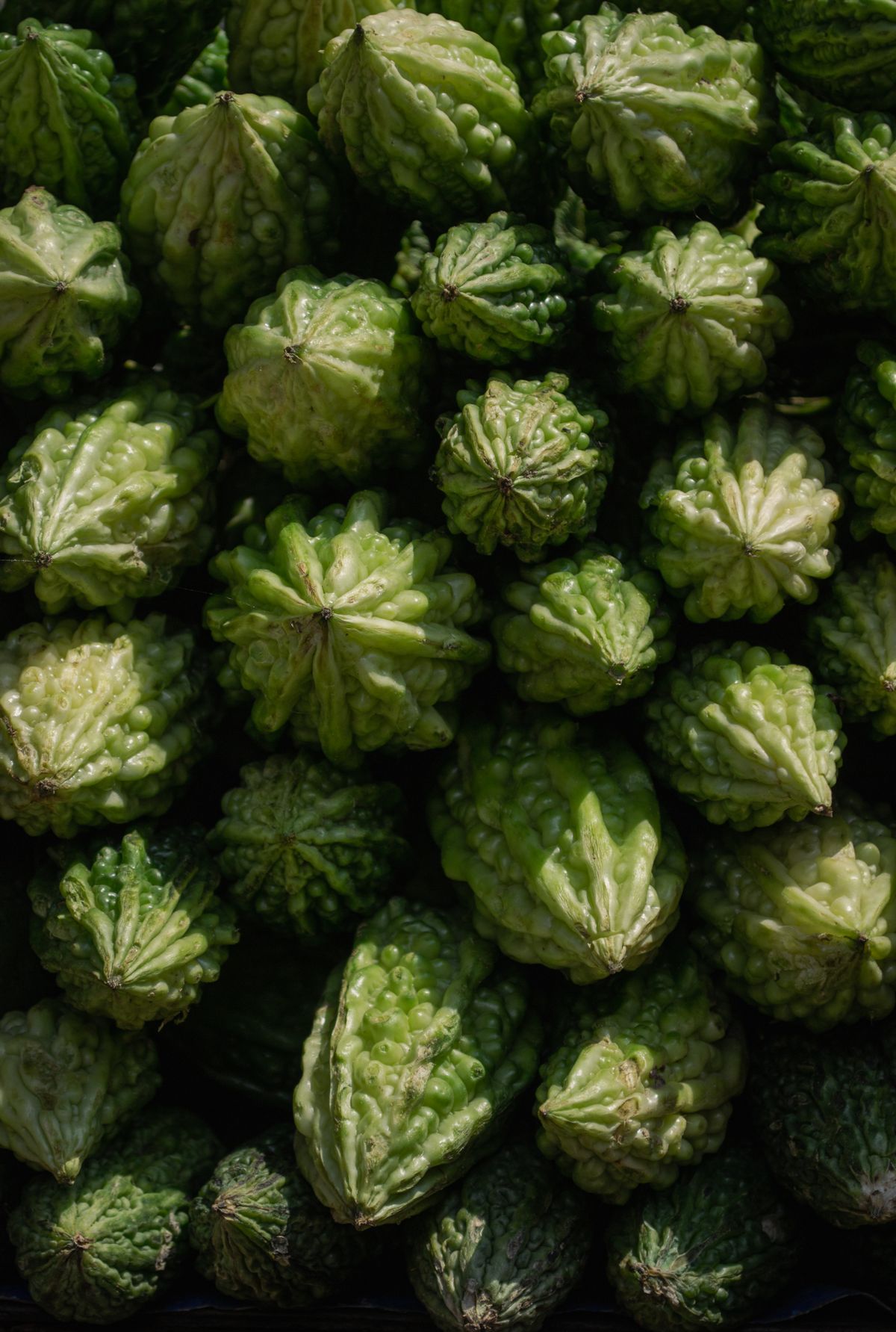
People try bitter melon for diabetes because the tradition behind it is long and the claims around it are loud. It is eaten as a vegetable from India to the Philippines to the Caribbean, where it goes by karela, ampalaya or bitter gourd, and it is sold everywhere as capsules, powders and juices aimed squarely at blood sugar.
The research is unusual in one respect. There is a lot of it, it has been pooled and re-pooled by several teams, and the pooled answer is consistently positive. It is also consistently small.
Key Takeaways
- A 2025 meta-analysis of 25 randomised trials found significant reductions in fasting glucose, HbA1c, insulin and insulin resistance (1).
- The clearest single figure is an HbA1c reduction of about 0.38 percentage points, from eight trials in 423 patients (2).
- Individual trials often find nothing. One 90-person trial saw fasting glucose fall but HbA1c unchanged in both groups (3).
- Two separate 2024 reviews of the same eight trials disagreed with each other about triglycerides (2, 5).
- Trials reported no serious adverse events. The weakness of the evidence is its length, not its safety record (3, 4, 5).
- The practical issue is stacking it on top of medication that already lowers your blood sugar.
Does Bitter Melon for Diabetes Lower Blood Sugar?
Pooled across enough trials, it does. The largest of the reviews gathered here, published in 2025, pooled 25 randomised controlled trials with 34 sub-studies in people with prediabetes or type 2 diabetes. Four of the five measures it tracked improved. The fifth did not (1).
| Measure | What the pooled trials found | Where |
|---|---|---|
| Fasting blood glucose | Reduced, SMD −0.46 (p = 0.0012); and −0.85 mmol/L in a separate review | 25 trials (1); 8 trials (2) |
| HbA1c | Reduced, SMD −0.57 (p < 0.0001); about −0.38 percentage points | 25 trials (1); 8 trials (2) |
| Post-meal glucose | Reduced by 2.28 mmol/L | 8 trials, 423 patients (2) |
| Fasting insulin | Reduced, SMD −0.48 (p = 0.0082) | 25 trials (1) |
| Insulin resistance (HOMA-IR) | Reduced, SMD −0.52 (p = 0.0195) | 25 trials (1) |
| Beta-cell function (HOMA-β) | No effect (p = 0.586) | 25 trials (1) |
That last row matters more than it looks. Bitter melon appears to make the body respond better to the insulin it has. It does not appear to repair the cells that make insulin. Whatever it is doing, it is not fixing the underlying disease (1).
Why Individual Trials Keep Finding Nothing
 Save
SaveIf you read one trial rather than a pooled average, you may well come away unimpressed.
A randomised trial published in 2020 gave bitter melon to patients with type 2 diabetes and compared them with placebo over the course of the study. Fasting glucose fell in the bitter melon group, and that was statistically significant. HbA1c did not move, in either group (3).
A 2025 paper reported two separate studies in prediabetic volunteers over twelve weeks. The first found no significant differences against placebo. The second found reductions in fasting glucose, fasting insulin and insulin resistance, and estimated the pace of the effect at roughly 0.05 mmol/L per week (4).
Two studies, same plant, same duration, opposite conclusions. This is what a small, real effect looks like when it is measured in groups that are too small to see it reliably. The 2024 review reported high statistical heterogeneity between trials, around 73 per cent for fasting glucose, which is the formal way of saying the trials do not agree with each other (2).
How Big Is 0.38, Really?
A reduction of 0.38 percentage points in HbA1c is a genuine result. It is also the kind of number that gets reported as a breakthrough and experienced as nothing.
Be careful about what the figure is not. It is not a replacement for treatment, it was not measured against any diabetes medication head to head, and it comes from trials that the reviewers themselves describe as needing to be followed by higher-quality studies (2). The lipid trials were all shorter than three months (5), so the long-term picture, the one that actually decides whether someone develops complications, has not been studied.
What the number is good for is calibration. If you add bitter melon to your diet and your HbA1c drops by two points, bitter melon is not why.
The Cholesterol Claim Is Shakier Than the Glucose One
Bitter melon is also sold for cholesterol, and here the evidence openly contradicts itself.
Two reviews published in 2024 both drew on eight randomised trials covering 423 patients. One found a significant drop in total cholesterol of 0.38 mmol/L, and no significant change in triglycerides, HDL or LDL (2). The other found total cholesterol down 9.71 mg/dL and triglycerides down 10.24 mg/dL, both statistically significant, with LDL and HDL unchanged (5).
They agree that total cholesterol falls a little. They agree that LDL, the number most people are actually told to lower, does not budge. They disagree about triglycerides.
When two teams analyse what appears to be the same small body of evidence and reach different conclusions, the honest reading is not that one of them is right. It is that the evidence is thin enough for reasonable choices in method to flip the answer.
The Medication Question
This is the part that matters for anyone already being treated.
If you take metformin, a sulfonylurea, insulin or any other glucose-lowering drug, and you add something that also lowers glucose, you have changed your treatment without telling anyone. That is the issue in one sentence, and it does not require bitter melon to be dangerous. It only requires it to work.
There is a curious piece of evidence here. A 2026 study combined work in diabetic mice with a retrospective look at 119 people with prediabetes or diabetes taking a bitter melon protein supplement. Among those also taking metformin, HbA1c fell by 0.23 percentage points. Among those not taking metformin, nothing significant changed (6).
That was an observational cohort looking backwards, not a randomised trial, and it cannot establish cause. But it points in an interesting direction: the measurable benefit showed up in people who were already medicated.
What it does not show is harm. It is worth being clear about this, because the internet is not. Searching the published literature for case reports of bitter melon causing hypoglycaemic crises returns remarkably little, and the trials themselves reported no serious adverse events (3) and no indications of health risks (4). The sensible response is monitoring and a conversation with your prescriber, not fear.
Who Should Be Careful
| Situation | Why | What to do |
|---|---|---|
| On diabetes medication | Two glucose-lowering agents at once, and you did not choose the combined dose | Tell your doctor by name; check readings more often when you start or stop |
| Due for surgery | Anything that lowers blood glucose matters to an anaesthetist | Mention it with your medicines, not separately |
| Pregnant | Caution rests on mouse experiments from the 1980s in which a seed protein ended early pregnancy (7), with no comparable human data | Avoid concentrated supplements; ask your midwife or doctor |
| Expecting a large effect | The pooled HbA1c effect is about 0.38 percentage points (2) | Do not reduce prescribed treatment on the strength of it |
The Bottom Line
Bitter melon is not a fraud and it is not a cure. Pooled across dozens of trials it lowers fasting glucose, HbA1c and insulin resistance by small, statistically real amounts (1), while leaving beta-cell function alone (1) and LDL cholesterol untouched (2).
Eaten as a vegetable, it is food, and the trials give no reason to be nervous about it. Taken as a concentrated supplement alongside prescribed medication, it stops being food and becomes an unlabelled part of your treatment. That is the only sentence in this article worth acting on today.
Frequently Asked Questions
Does bitter melon really lower blood sugar?
On average, yes, but by a modest amount. A 2025 meta-analysis that pooled 25 randomised trials found significant reductions in fasting blood glucose, HbA1c, insulin and insulin resistance. A 2024 review of eight trials in 423 people with type 2 diabetes put the HbA1c reduction at about 0.38 percentage points. Those are real effects, but they are small, and several individual trials found nothing at all.
How much does bitter melon lower HbA1c?
The best single number available is about 0.38 percentage points, from a 2024 meta-analysis of eight randomised trials in 423 patients with type 2 diabetes. For perspective, one 90-person trial published in 2020 found no change in HbA1c at all in either the bitter melon or the placebo group, even though fasting glucose fell. The averaged effect is real; the effect in any one person is not guaranteed.
Can you take bitter melon with metformin or other diabetes medication?
This is the question to put to your doctor rather than to a website, because you would be combining two things that both lower blood glucose. The trials themselves did not report serious adverse events or episodes of dangerously low blood sugar, so this is a reason to monitor rather than to panic. Tell your prescriber by name that you are taking it, and check your readings more often when you start or stop.
Is bitter melon juice better than capsules?
No form has been shown to be better than another. The trials never used one standard preparation. A 2024 review of eight trials describes dried powder of whole fruit, extracts of the fruit and seeds, dried powder of fruit pulp, dried fruit-juice powder and isolated peptides, given mostly as capsules or tablets, at doses ranging from 0.6 to 6 grams a day. That is a tenfold spread in dose before you even reach the question of form, and it is part of why the pooled estimates carry broad confidence intervals.
Is bitter melon safe to eat every day?
As a vegetable it is eaten daily across Asia, Africa and the Caribbean, and the clinical trials reported no serious adverse events and no indications of health risks. The honest limitation is length rather than severity: the lipid trials were all shorter than three months, so nobody has good data on taking concentrated supplements for years.
Should you avoid bitter melon in pregnancy?
Standard advice is to avoid concentrated bitter melon supplements in pregnancy, but it is worth knowing where that advice comes from. It rests on mouse experiments from the 1980s in which a protein from the seeds, beta-momorcharin, terminated early pregnancy. There is no comparable human evidence either way, so the caution is precautionary rather than proven. Ask your midwife or doctor.
This article is for information and does not replace medical advice. Do not change or stop prescribed diabetes treatment, and do not start a concentrated bitter melon supplement, without speaking to your doctor.
Related Articles
Red Yeast Rice Side Effects: Why It Works Like a Statin
Giloy Side Effects: What the Liver Injury Reports Show
Star Fruit Side Effects: Dangerous With Kidney Disease