
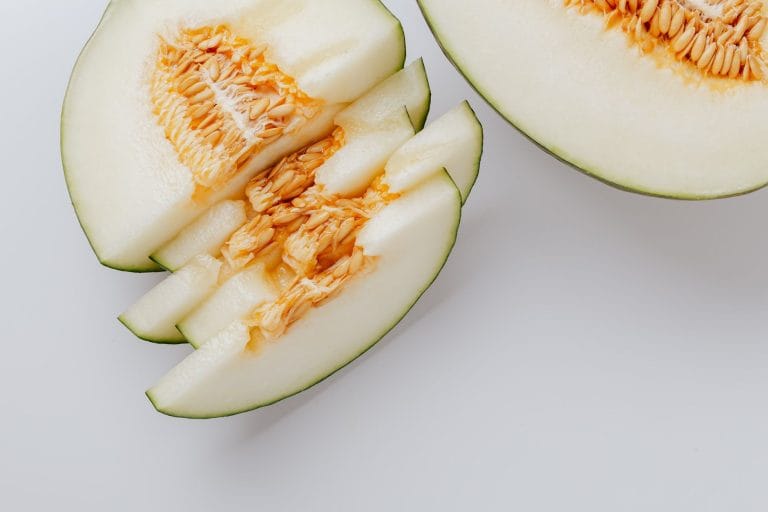
A pale green melon that is mostly water, genuinely useful for potassium and vitamin C — and not the eye food the internet says it is.
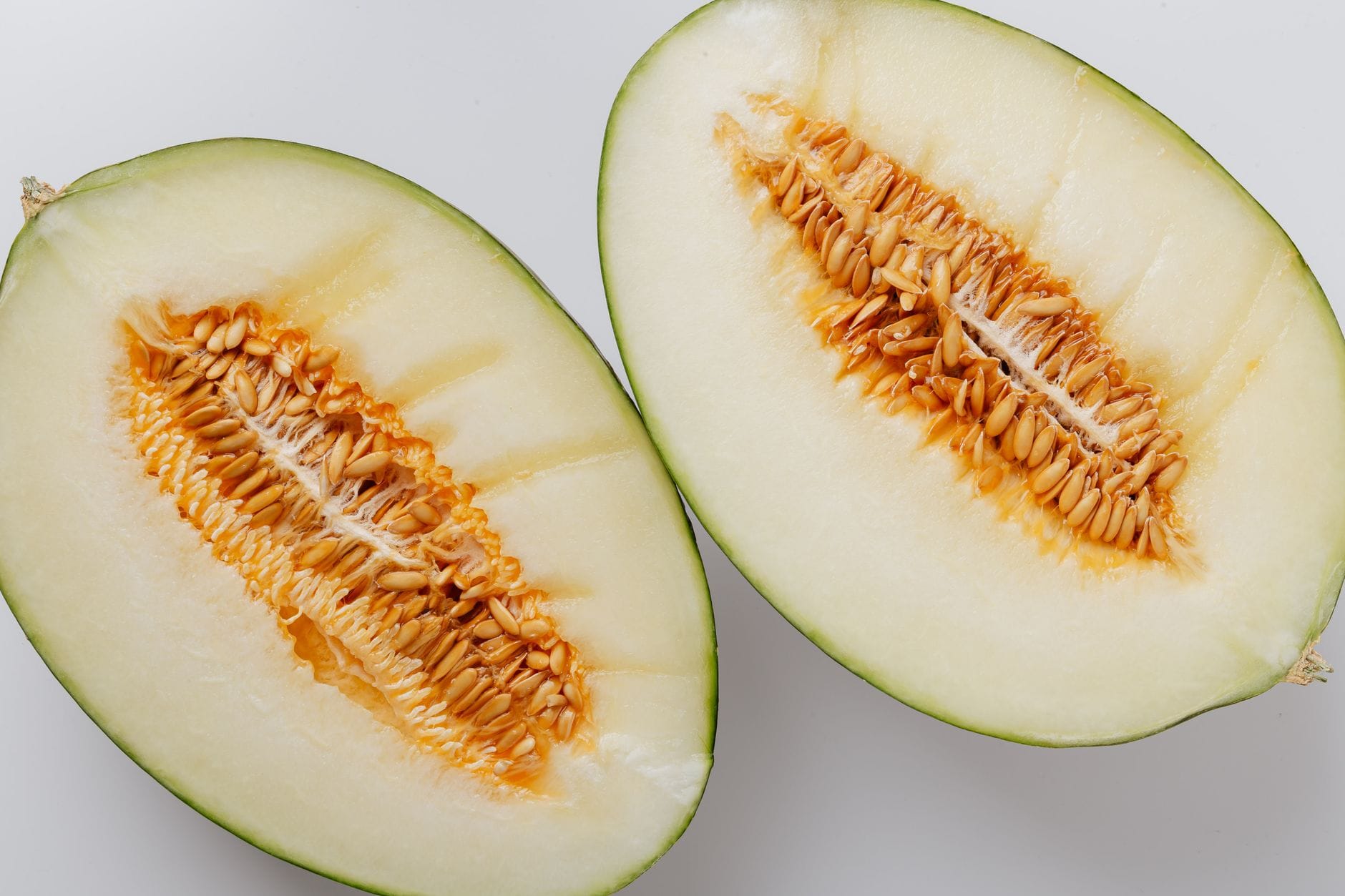
Cut open a ripe honeydew melon and you get soft, honey-sweet flesh under a smooth rind. Underneath that it is a simple fruit: about 90% water, 36 calories per 100 g, and a short list of minerals that do real work 1. It belongs to the same species as cantaloupe, Cucumis melo 3.
Most pages about honeydew borrow the eye-health research that belongs to carotenoid-rich foods. The USDA numbers do not support that, and this article says so with the figures. What honeydew is actually good for is simpler and still worth knowing.
Key Takeaways
- Honeydew is 89.8% water and 36 calories per 100 g, which is what makes it filling for very little 1.
- 228 mg of potassium against 18 mg of sodium 1 — the ratio that matters most for blood pressure 4.
- 18 mg of vitamin C per 100 g, about a fifth of a day’s intake 1.
- It is not a carotenoid food. 30 µg of beta-carotene against cantaloupe’s 2,020 12.
- Low in fibre at 0.8 g per 100 g, so it is easy to eat a lot of quickly 1.
Honeydew Melon Nutrition
 Save
SavePer 100 grams of raw honeydew, from USDA FoodData Central 1:
| Nutrient | Per 100 g | What it means |
|---|---|---|
| Water | 89.8 g | Nearly nine-tenths of the fruit |
| Calories | 36 kcal | Low, because of the water |
| Carbohydrate | 9.09 g | Mostly natural sugars |
| Fibre | 0.8 g | Low — less filling than it tastes |
| Potassium | 228 mg | The standout mineral |
| Sodium | 18 mg | Very low, which is the point |
| Vitamin C | 18 mg | About 20% of a day |
| Folate | 19 µg | Useful, not a main source |
| Magnesium | 10 mg | Small |
| Beta-carotene | 30 µg | Negligible |
What Honeydew Actually Does
The potassium-to-sodium ratio is the real argument for it. Honeydew gives 228 mg of potassium and 18 mg of sodium 1, and it is that ratio, rather than either figure alone, that tracks with blood pressure: a review of the evidence concluded the sodium-to-potassium ratio is more strongly associated with blood pressure outcomes than either mineral on its own 4. Work in animals has traced part of the mechanism to how potassium affects sodium handling in the kidney 5, and dietary pattern studies find the same direction in people: patterns higher in fruit and vegetables are associated with lower rates of hypertension 6.
It is an easy way to take in fluid. At nearly 90% water 1, a bowl of honeydew is close to drinking while eating, with potassium alongside. That is not a medical claim, just arithmetic — and it is the most practical thing about the fruit in hot weather.
The vitamin C is genuinely useful. 18 mg per 100 g 1 is roughly a fifth of an adult’s daily intake. Vitamin C is required for normal immune function, and deficiency impairs it 7. That is a different statement from saying melon prevents colds, which it does not.
Folate is worth a line. 19 µg per 100 g 1 is a small contribution to a nutrient that matters especially before and during pregnancy 10. Honeydew is not a leading source, but it adds to the total.
What Honeydew Does Not Do
This is where most articles about honeydew go wrong, so it is worth being precise. You will read that honeydew supports eye health through lutein and zeaxanthin. The pigments are present. The amount is the problem.
| Per 100 g | Honeydew | Cantaloupe |
|---|---|---|
| Lutein + zeaxanthin | 27 µg | 26 µg |
| Beta-carotene | 30 µg | 2,020 µg |
| Vitamin A | 3 µg RAE | 169 µg RAE |
| Vitamin K | 2.9 µg | 2.5 µg |
Those figures are from the USDA entries for the two melons 12. The eye-health literature on lutein and zeaxanthin is about concentrating them in the retina at supplement levels 8, and the large trial that put lutein and zeaxanthin into the standard eye-health formula tested them as a supplement, not as fruit 9. Honeydew’s 27 micrograms is not in that conversation.
The same caution applies to bone health. Honeydew’s vitamin K is 2.9 µg and its magnesium 10 mg per 100 g 1 — small fractions of a day’s needs. Honeydew is not a bone food, and a melon that is nine-tenths water was never going to be. If beta-carotene is what you are after, it sits in orange and deep-green produce — we went through the numbers in our piece on whether carrots are good for you.
None of this makes honeydew a bad choice. It makes it an honest one: water, potassium, vitamin C, few calories.
Honeydew Versus Cantaloupe
 Save
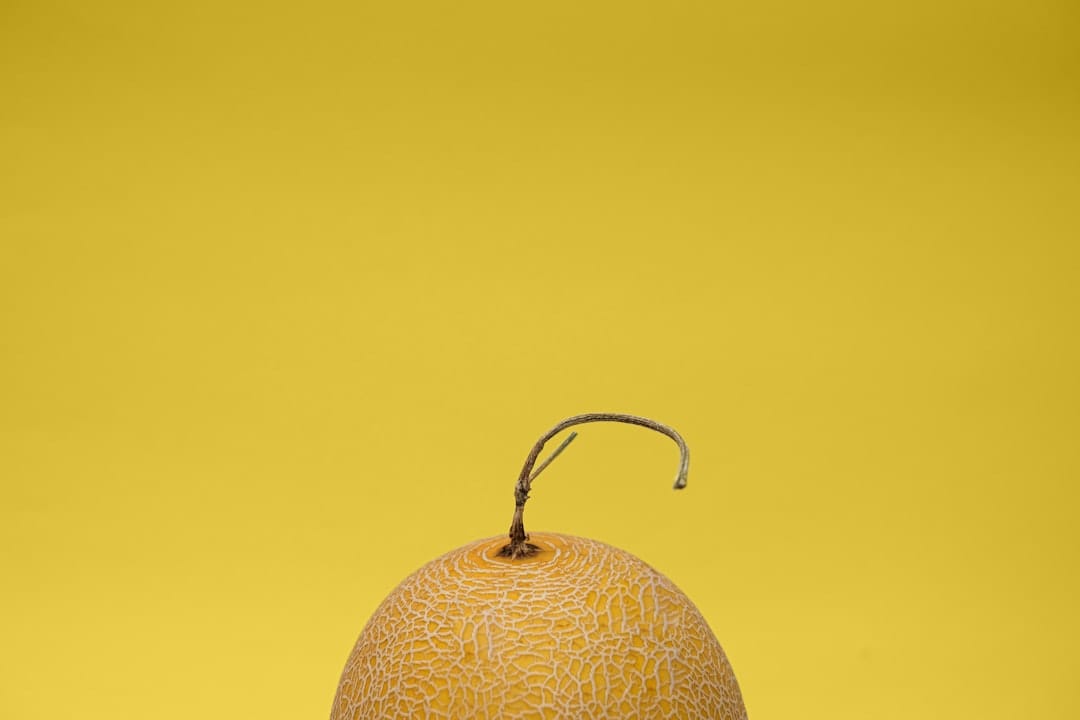
SaveThey are the same species, Cucumis melo, in different botanical groups 3, and the difference you can see is the difference that counts. Cantaloupe’s orange flesh is beta-carotene; honeydew’s pale green is the absence of it.
| Honeydew | Cantaloupe | |
|---|---|---|
| Calories (100 g) | 36 kcal | 34 kcal |
| Carbohydrate | 9.09 g | 8.16 g |
| Potassium | 228 mg | 267 mg |
| Vitamin C | 18 mg | 36.7 mg |
| Vitamin A | 3 µg RAE | 169 µg RAE |
| Folate | 19 µg | 21 µg |
| Flesh | Pale green, milder | Orange, more aromatic |
Figures from USDA FoodData Central 12. If you are choosing on nutrition alone, cantaloupe wins — twice the vitamin C and more than fifty times the vitamin A. Choose honeydew because you prefer how it tastes, which is a perfectly good reason. We have a full piece on cantaloupe if that is the one you reach for.
How to Pick a Ripe Honeydew
Honeydew is picked before it is ripe and does not get sweeter after cutting, so choosing well at the shop decides what you get. Four checks, in order of how much they tell you:
- Weight. It should feel heavy for its size. That is water, and water is most of the fruit.
- Rind colour. Green-white means underripe. A ripe one turns creamy pale yellow.
- Surface feel. An unripe melon is waxy and slick. A ripe one feels very slightly tacky.
- Blossom end. Opposite the stem, it should give a little under a thumb and smell faintly sweet. No scent means no flavour.
Keep a whole melon at room temperature until it gives at the end, then refrigerate it. Once cut, cover it and keep it cold, and wash the rind before you cut: the knife carries whatever is on the surface straight into the flesh.
Can You Eat the Seeds?
Yes, and most people do not. Honeydew seeds are edible and not toxic, but raw they are fibrous and taste of very little, which is why the usual move is to scoop them out with the stringy pulp. If you want to use them, rinse off the pulp, dry them and roast them the way you would pumpkin seeds. There is no evidence that eating them does anything for your health — it is a use-the-whole-fruit question, not a nutrition one.
Side Effects and Portions
Honeydew is a safe food for almost everyone. The cautions are about quantity and about specific situations:
- It is low in fibre. 0.8 g per 100 g 1 is less than most fruit, so honeydew fills you with water rather than fibre and is easy to keep eating.
- Large amounts can loosen the stool, which is the usual result of a lot of fruit sugar and fluid at once.
- With diabetes, measure the portion. 9 g of carbohydrate per 100 g 1 is moderate, but the low fibre means it is easier to overshoot than with a whole apple. Eating it with a meal rather than alone helps.
- Melon allergy exists and is most common in people allergic to ragweed pollen, usually as itching or tingling in the mouth. If that happens, stop and speak to a doctor.
- Cut melon needs refrigeration. It is a low-acid, high-moisture food, which is why cut melon left out is a food-safety matter rather than a freshness one.
Frequently Asked Questions
Is honeydew melon good for you?
Yes, in the way most fruit is: it is about 90% water, gives 36 calories per 100 g, and carries 228 mg of potassium against only 18 mg of sodium, plus 18 mg of vitamin C. It is a good everyday fruit. It is not a superfood, and it is not a source of the carotenoids that eye-health research is about.
How can you tell if a honeydew is ripe?
Go by feel and smell rather than colour alone. A ripe honeydew feels heavy for its size, the rind turns from green-white to a creamy pale yellow, the surface loses its waxy slickness and feels slightly tacky, and the blossom end gives a little when pressed and smells faintly sweet. A rock-hard melon with no scent will not ripen much further once cut.
Honeydew or cantaloupe: which is healthier?
Cantaloupe, if you are choosing by nutrients. Per 100 g it has twice the vitamin C (36.7 mg against 18) and about 67 times the beta-carotene (2,020 micrograms against 30), which is why it is orange and honeydew is pale green. Honeydew has slightly more sugar and a milder flavour. Both are mostly water and low in calories.
Can you eat honeydew seeds?
They are edible and not toxic, but they are fibrous and bland raw, so most people scoop them out. If you want to use them, rinse, dry and roast them like pumpkin seeds. There is no research showing a health benefit from eating them.
Can people with diabetes eat honeydew?
In normal portions, yes. Honeydew has about 9 g of carbohydrate per 100 g, so a cup of cubes is a modest amount, but it is low in fibre at 0.8 g per 100 g, so it is easier to overeat than a whole apple. Eat it as part of a meal rather than alone, and keep to a measured portion.
Can I eat honeydew during pregnancy?
Yes. It is a refreshing source of fluid, potassium and folate, which matters in pregnancy. Wash the rind before cutting, because the knife carries anything on the surface into the flesh, and refrigerate cut melon promptly.
The Bottom Line
Honeydew melon is 90% water, low in calories, high in potassium relative to sodium, and a reasonable source of vitamin C 1. That is the whole honest case, and it is enough. What it is not is a carotenoid food: with 30 micrograms of beta-carotene against cantaloupe’s 2,020 12, the eye-health claims attached to it belong somewhere else. Pick one that feels heavy and smells sweet at the blossom end, keep it cold once cut, and enjoy it for what it is.
Related Articles
13 Good Reasons to Keep Carrots on Your Grocery List Every Week
Cantaloupe Might Be the Most Underrated Fruit in Your Summer Fridge
9 Everyday Ways to Keep Your Blood Sugar Steady
Which Foods Are Actually High in Collagen (and Which Just Help You Make More)
7 Homemade Drinks That Quietly Make Losing Weight Easier