
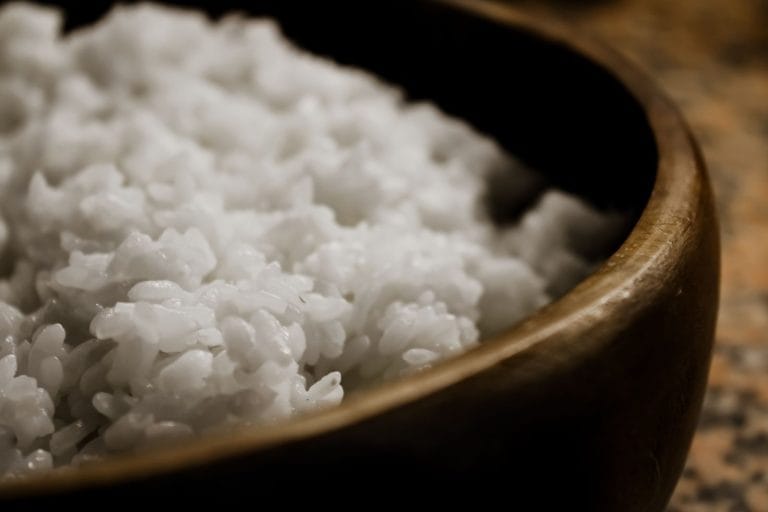
“Fried rice syndrome” gets the blame on the wrong step. The danger is not the reheating — it is what happened to the rice before it reached the fridge.
Reheating rice has a reputation it half deserves. The risk is real, but it is not created in the microwave — it is created while a pot of rice sits on the counter cooling slowly, and no amount of heat afterwards can undo it (1). It is the same pattern as aluminium foil and how rice is cooked in the first place: the risk sits in handling, not in the ingredient.
 Save
SaveHere is what is actually happening, and the handful of rules that prevent it.
Key Takeaways
- Uncooked rice can carry Bacillus cereus spores that survive cooking (1).
- The emetic toxin, cereulide, forms in the food — reheating does not remove it (1).
- Refrigerate leftovers within 2 hours, in wide flat containers so they cool fast (2).
- Reheat to at least 165 °F / 74 °C throughout (2).
- Usually self-limiting — but liver failure has been reported in rare cases (4, 5).
Why Rice Specifically
Three facts stack up, and only together do they make rice a problem.
The spores survive cooking. Bacillus cereus is a spore-forming bacterium found in soil and on raw rice. Boiling kills the bacteria but the spores can persist.
Cooling is slow. A deep pot or a rice cooker holds heat for a long time, and a large mass of rice cools from the outside in. That creates hours in the warm range where surviving spores can germinate and multiply.
The toxin is not undone by heat. This is the part that matters most. The 2023 review of this organism describes a diarrhoeal illness caused by heat-resistant enterotoxin proteins, and an emetic illness caused by a toxin called cereulide (1). Once a toxin has formed in the food, reheating addresses the bacteria, not the toxin already there.
That is the whole reason rice has this reputation. Not because reheating is dangerous — because reheating cannot rescue rice that was mishandled.
What “Fried Rice Syndrome” Actually Is
 Save
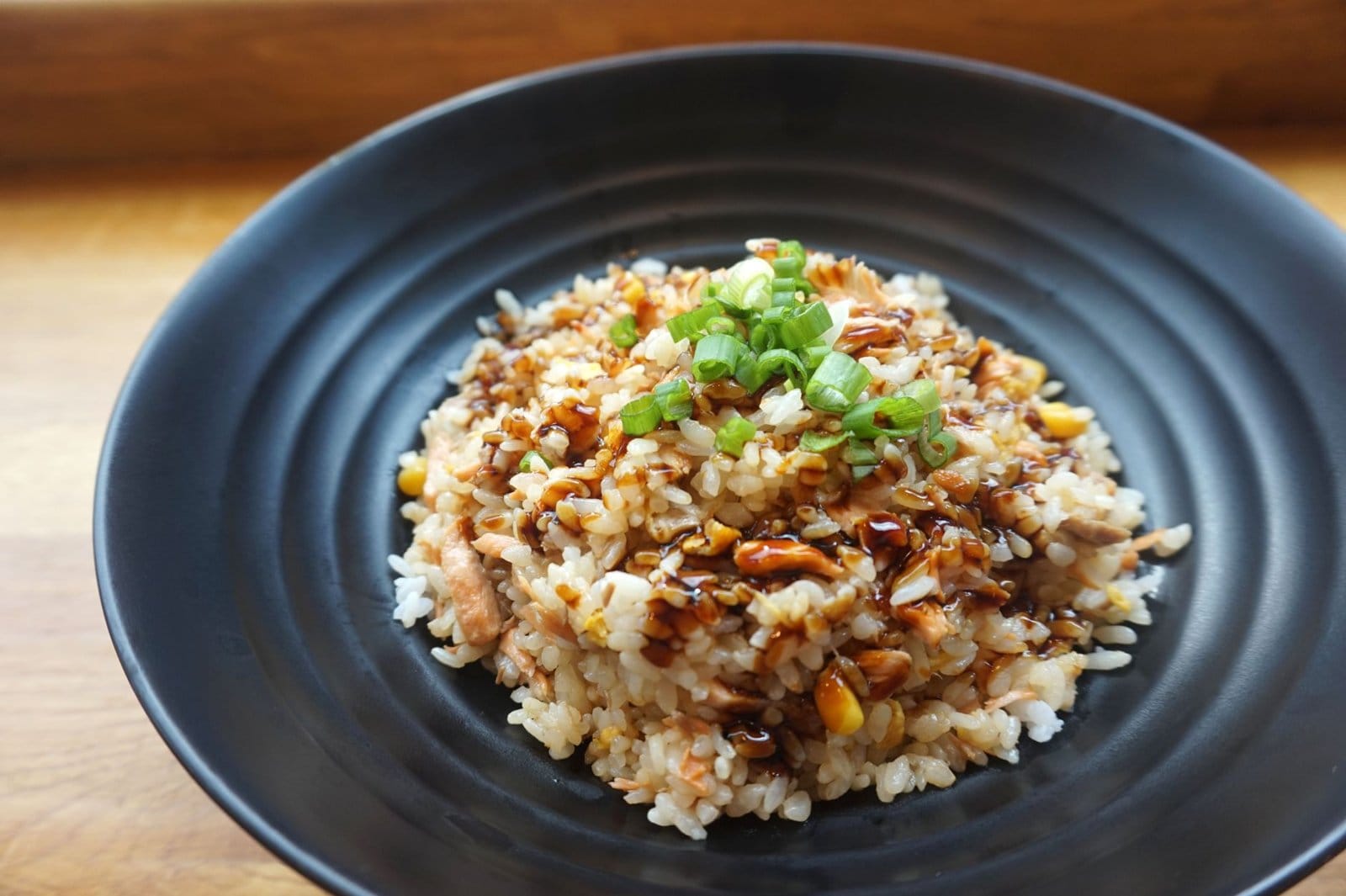
SaveThe name comes from an early outbreak traced to a contaminated fried rice dish, and it stuck. A 2023 review compiled outbreak cases from 1984 to 2019 and separates two distinct illnesses (1).
| Emetic illness | Diarrhoeal illness | |
|---|---|---|
| Caused by | Cereulide, a toxin formed in the food before you eat it (1) | Enterotoxin proteins, described as heat-resistant (1) |
| Main symptom | Vomiting | Diarrhoea and cramps |
| Typical onset | Fast — in one case report, symptoms began under 30 minutes after a rice salad (4) | Slower, several hours |
| Usual course | Unpleasant and self-limiting for most | Self-limiting (1, 4) |
| Why reheating does not fix it | The toxin is already in the food. Heat addresses bacteria, not a toxin that has already formed | Same problem |
One correction worth making. The same review notes that contamination is not confined to starchy food and has also been found in protein-rich foods (1). Pasta, and leftovers generally, deserve the same handling. The rice reputation is partly an accident of which outbreak got named first.
Reheating Rice Safely: The Rules
| Step | What to do | Why |
|---|---|---|
| 1. Cool it fast | Spread rice into wide, flat containers rather than leaving it in the pot (2) | A deep pot of rice stays warm for hours, which is the window that matters |
| 2. Refrigerate within 2 hours | Leftovers should be refrigerated within 2 hours of serving (2) | This is the single rule that prevents the problem |
| 3. Reheat properly | Reheat leftovers to an internal temperature of at least 165 °F (74 °C) (2) | Steaming hot throughout, not warm in the middle |
| 4. Reheat once | Take out what you will eat and reheat that, rather than reheating the whole batch repeatedly | Every cycle back to room temperature is another window |
| 5. When in doubt | Throw it out | Rice that sat out overnight is not rescuable by any amount of heat |
The second rule is the one that decides everything. General food safety guidance is that leftovers should be refrigerated within two hours of serving, and that hot foods should be moved into wide, flat containers so they cool down more quickly (2). That advice exists for all leftovers, but rice is the food where it is most often ignored, because the pot is sitting there and it seems easier to deal with later.
When you do reheat, the target is an internal temperature of at least 165 °F (74 °C) (2) — steaming hot all the way through, stirred rather than heated in a lump with a cold centre.
How Serious Is It
For most people, not very. These infections are described as largely underreported precisely because they usually run a self-limiting course (4), and detecting the organism responsible is itself difficult enough to require specific methods (6).
But the severe end exists. Fulminant liver failure associated with the emetic toxin has been reported in the medical literature (5). A 2024 case report describes liver failure after B. cereus food poisoning in a 48-year-old whose symptoms began less than 30 minutes after eating a rice salad, and notes that rare and sometimes fatal cases of liver failure, pulmonary haemorrhage and cerebral oedema have been reported mainly in children and young adults (4).
Those are rare outcomes from a common exposure, which is the right way to hold them: not a reason for alarm, but a reason to take the two-hour rule seriously rather than treating it as fussiness.
Get medical help if vomiting is severe or will not stop, if someone cannot keep fluids down, or if there is confusion or drowsiness. Foodborne illness affects around 48 million people a year in the United States alone, and most of it resolves — but dehydration is the thing that turns a bad day into an emergency (3).
Frequently Asked Questions
Is it safe to reheat rice?
Yes, if the rice was stored properly. This is the part most people have backwards: the danger is not in the reheating, it is in what happened to the rice before it reached the fridge. Uncooked rice can carry spores of Bacillus cereus that survive cooking. If cooked rice then sits at room temperature, those spores can germinate and the bacteria can produce toxins. Reheating kills bacteria but does not undo a toxin that has already formed, which is why heat cannot rescue rice that was left out. Rice cooled quickly and refrigerated within two hours, then reheated until steaming hot throughout, is fine.
What is fried rice syndrome?
It is the informal name for food poisoning caused by Bacillus cereus, and it got the name from an early outbreak traced to a contaminated fried rice dish. A 2023 review compiling outbreak cases from 1984 to 2019 describes two distinct illnesses. The diarrhoeal type is a self-limiting illness caused by heat-resistant enterotoxin proteins. The emetic type, the one associated with rice, is caused by a toxin called cereulide and produces vomiting. The same review notes that contamination is not limited to starchy food and has also been found in protein-rich foods, so pasta and other leftovers deserve the same handling.
How long can cooked rice sit out?
The practical answer is the general leftovers rule: refrigerate within two hours of serving. Rice is worse than most leftovers for two reasons. It often sits in a deep pot or rice cooker that stays warm long after the heat is off, and a large mass of rice cools slowly from the middle. Spreading it into wide, flat containers so it cools quickly is specifically recommended for hot foods, and it matters more for rice than for almost anything else. Rice left out overnight should be thrown away rather than reheated.
Can you reheat rice more than once?
It is better not to. Each time rice comes back to room temperature you reopen the window in which bacteria can multiply, and reheating does not remove toxin that has already formed. The practical approach is to portion cooked rice while it is cooling, refrigerate the portions, and reheat only the amount you are about to eat. When you do reheat it, get it to at least 165 degrees Fahrenheit, or 74 Celsius, all the way through rather than just warm on the outside.
How serious is rice food poisoning?
For most people it is unpleasant and short-lived. A 2023 review describes the diarrhoeal illness as self-limiting, and case reports note that these infections are largely underreported precisely because they usually resolve on their own. But severe outcomes exist and are worth knowing about rather than dismissing. Fulminant liver failure associated with the emetic toxin has been reported in the medical literature, and a 2024 case report describes liver failure after Bacillus cereus food poisoning, noting that rare and sometimes fatal cases of liver failure, pulmonary haemorrhage and cerebral oedema have been reported mainly in children and young adults. If vomiting is severe or persistent, or someone becomes confused or cannot keep fluids down, that needs medical attention rather than waiting it out.
The Bottom Line
Reheating rice is safe when the rice was handled properly, and unsafe when it was not — and the microwave has almost nothing to do with which. Raw rice carries Bacillus cereus spores that survive boiling; if cooked rice then cools slowly on the counter, those spores germinate and can produce toxins that heat does not remove. So the rules that matter all happen before reheating: spread rice into wide flat containers, get it in the fridge within two hours, reheat only the portion you will eat, and take it to 165 degrees Fahrenheit throughout. Most cases are unpleasant and self-limiting, though rare liver failure has been reported. Rice left out overnight is not worth the gamble, and no amount of reheating makes it so.
This article is for informational purposes only and is not a substitute for professional medical advice. Seek medical attention for severe or persistent vomiting, inability to keep fluids down, confusion or drowsiness after suspected food poisoning, particularly in children, older adults and anyone with a weakened immune system.
Related Articles
Black Rice Benefits: Nutrition and What Studies Show
Foods High in Starch: 6 Smart Picks and 4 to Skip
High Fiber Foods List and How Much Fiber You Need
Balanced Diet Guide With the 5 Food Groups