
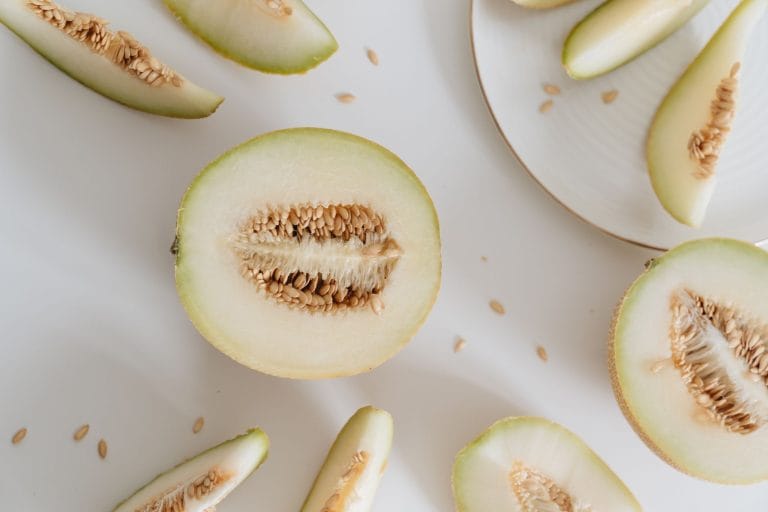
Cantaloupe nutrition, the evidence behind cantaloupe benefits for blood pressure, immunity, skin and hair, and how to prepare it safely.
Cantaloupe (Cucumis melo), also called muskmelon, is a sweet orange melon in the same plant family as cucumbers and squash. A cup of cubed cantaloupe provides about 54 calories and is mostly water, along with vitamin C, beta-carotene and potassium (1).
Most cantaloupe benefits come from these nutrients rather than from studies of the melon itself. This guide explains what is supported, what has only been tested in animals, and why washing the rind matters.
Key Takeaways
- One cup of cubed cantaloupe has about 54 calories, 59 mg of vitamin C and 427 mg of potassium (1).
- Cantaloupe’s beta-carotene is converted to vitamin A, which is needed for vision and immune function (2, 3).
- Higher potassium intake lowers blood pressure in people with hypertension (5).
- Anti-inflammatory and kidney-protective effects have been shown only in rats and mice (10, 11).
- Cantaloupe has caused serious Listeria outbreaks, so scrub the rind before cutting and refrigerate cut melon (13, 14).
Cantaloupe Nutrition
| Raw cantaloupe | Per 100 g | Per cup, cubed (160 g) |
|---|---|---|
| Calories | 34 kcal | 54 kcal |
| Water | 90 g | 144 g |
| Carbohydrate | 8.2 g | 13.1 g |
| Fiber | 0.9 g | 1.4 g |
| Potassium | 267 mg | 427 mg |
| Vitamin C | 36.7 mg | 58.7 mg |
| Vitamin A (RAE) | 169 mcg | 270 mcg |
| Beta-carotene | 2,020 mcg | 3,232 mcg |
| Folate | 21 mcg | 34 mcg |
Source: USDA FoodData Central, melons, cantaloupe, raw (1).
Cantaloupe also contains amino acids such as GABA, glutamine and citrulline, and phenolic compounds with antioxidant activity; levels vary by variety and where the melon is grown (9). Like other fruits, it contributes to the variety of nutrients and plant compounds linked to lower chronic disease risk when eaten as part of a varied diet (8).
Cantaloupe Benefits at a Glance
| Claim | What the evidence shows |
|---|---|
| Vitamin C and vitamin A | One cup provides about 59 mg of vitamin C and 270 mcg RAE of vitamin A (1) |
| Blood pressure | Higher potassium intake lowers blood pressure in people with hypertension (5); no trials of cantaloupe itself |
| Immune support | Vitamin C is needed for immune function (4); no trials of cantaloupe itself |
| Anti-inflammatory | Extracts reduced inflammation in rats (10) |
| Kidney protection in diabetes | A cantaloupe extract product (oxykine) was tested only in mice (11) |
| Skin and hair | No studies of cantaloupe masks or hair treatments |
Vitamin A, Vitamin C and Immunity
Cantaloupe provides beta-carotene, a provitamin A carotenoid that the body converts to vitamin A (3). Vitamin A is important for vision, immune function and cell growth (2). One cup of cantaloupe provides about 270 mcg RAE of vitamin A (1).
Vitamin C supports several parts of the immune system, helps protect the skin’s barrier and acts as an antioxidant; low vitamin C intake is linked to impaired immunity (4). That review was co-written by an employee of a vitamin manufacturer. One cup of cantaloupe provides about 59 mg of vitamin C (1).
Potassium and Blood Pressure
 Save
SaveLow potassium intake raises blood pressure, partly by making the kidneys hold on to more sodium (6). In a meta-analysis of 22 randomized trials, increasing potassium intake lowered systolic blood pressure by 3.5 mmHg in adults, with the effect seen in people with high blood pressure. Higher potassium intake was also linked to a 24% lower risk of stroke in cohort studies (5).
With about 427 mg of potassium per cup (1), cantaloupe can help increase potassium intake as part of a balanced diet. The authors noted these benefits apply to people without impaired kidney handling of potassium (5).
Hydration and Digestion
Cantaloupe is about 90% water (1), so it contributes to fluid intake. It has 1.4 g of fiber per cup (1), a modest amount; dietary fiber supports regular bowel movements and overall health (7).
What Has Only Been Shown in Animals
- Inflammation: in rats, extracts of cantaloupe pulp and peel reduced paw swelling and inflammatory markers (10). Cantaloupe is traditionally used in Egypt for inflammation, cough, eczema and kidney problems, but these uses have not been tested in people.
- Diabetic kidney damage: oxykine, a cantaloupe extract rich in superoxide dismutase (SOD) coated with wheat gliadin, reduced kidney damage in diabetic mice but did not lower blood sugar (11).
- Superoxide dismutase: SOD enzymes are studied for anti-aging and other uses, but researchers note ongoing problems with how well SOD is absorbed and how long it stays active (12). There is no evidence that SOD from eating cantaloupe lowers blood pressure or relieves stress.
Cantaloupe for Skin and Hair
Eating cantaloupe supplies vitamin C and vitamin A, both of which the skin needs (2, 4). For foods that support your body’s own collagen production, see our guide to foods that support collagen.
However, we found no studies of cantaloupe face masks or of cantaloupe pulp used as a hair conditioner, and no evidence that cantaloupe prevents hair loss. If you are losing hair, see our guide to home remedies for hair fall.
Food Safety and Who Should Be Careful
The netted rind of cantaloupe can carry bacteria. In 2011, whole cantaloupes from one Colorado farm caused a listeriosis outbreak in 28 US states: 147 people were infected, 99% of those with information were hospitalized, and 33 died. Most were 60 or older, and infections also affected pregnant women and newborns. Unsanitary conditions at the packing facility were the likely cause (13).
The FDA recommends these steps for melons (14):
- Wash your hands for at least 20 seconds before preparing produce.
- Scrub the rind under running water with a clean produce brush, even though you will not eat it, so bacteria are not carried into the flesh when cutting.
- Do not use soap, detergent or commercial produce washes.
- Dry the melon with a clean towel.
- Buy pre-cut melon only if it is refrigerated or on ice, and keep cut cantaloupe in the refrigerator at 40°F (4°C) or below.
People with kidney disease who need to limit potassium should ask their healthcare team how much cantaloupe is appropriate (5). If you react to other fruits, see our article on pineapple side effects for how fruit allergies can present.
Cantaloupe’s orange colour is the giveaway: it carries about 2,020 micrograms of beta-carotene per 100 g against honeydew’s 30, which is why the two melons are not interchangeable on nutrition.
Frequently Asked Questions
What are the health benefits of cantaloupe?
Cantaloupe is about 90% water and provides vitamin C, vitamin A from beta-carotene, potassium and folate for only 54 calories per cup. Potassium-rich diets help lower blood pressure in people with hypertension, and vitamin C supports immune function, although cantaloupe itself has not been tested in clinical trials.
Is cantaloupe good for your skin?
Eating cantaloupe provides vitamin C and vitamin A, nutrients the skin needs. Vitamin C supports the skin’s barrier and antioxidant defenses. However, no studies have tested cantaloupe face masks or shown that eating cantaloupe improves skin conditions.
How many calories are in a cup of cantaloupe?
One cup of cubed raw cantaloupe (160 g) has about 54 calories, 1.4 g of fiber and 144 g of water, according to USDA data.
Who should limit cantaloupe?
People with kidney disease who have been told to limit potassium should ask their doctor or dietitian how much cantaloupe fits their diet, since one cup provides about 427 mg of potassium. Older adults, pregnant women and people with weakened immunity should be especially careful to wash melons and refrigerate cut fruit.
How do you wash cantaloupe safely?
Wash your hands, then scrub the rind under running water with a clean produce brush before cutting, and dry it with a clean towel. Do not use soap or produce washes. Refrigerate cut cantaloupe at 40°F (4°C) or below.
The Bottom Line
Cantaloupe is a hydrating, low-calorie fruit that provides vitamin C, vitamin A from beta-carotene, potassium and folate. Its potassium can help as part of a diet that lowers blood pressure, and its vitamins support immune function, but claims about inflammation, kidney protection, stress, skin masks and hair come from animal studies or have no evidence. Enjoy cantaloupe as part of a varied diet, scrub the rind before cutting, and keep cut melon refrigerated.
This article is for informational purposes only and is not a substitute for professional medical advice. Talk to a qualified healthcare provider before making significant changes to your diet, especially if you have kidney disease or a weakened immune system, or are pregnant.
Related Articles
Balanced Diet Guide With the 5 Food Groups
Foods High in Collagen: Why Eating It Doesn’t Reach Your Skin
Home Remedies to Control Hair Fall: What the Evidence Says
Side Effects of Pineapple: Allergy, Bromelain, Blood Sugar