
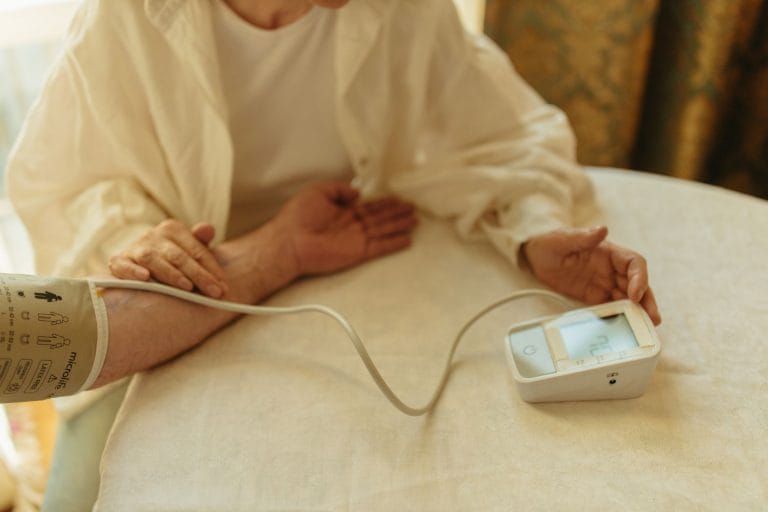
A quick look at why your numbers climb mid-workout, when they settle, and how to move safely if your pressure runs high or low.
Exercise is one of the most reliable ways to bring blood pressure down over time. That much the research agrees on. But if you strapped on a cuff and checked your reading before a workout, halfway through, and an hour later, you would see the number move around quite a bit. So which is it, up or down? And if your pressure already runs high or low, does that change what you should be doing?
The short answer is that a workout pushes your numbers up in the moment and tends to lower them over weeks and months. Understanding the difference between those two windows is what keeps exercise both effective and safe.
- Key Takeaways
- First, What Counts as Normal?
- Why Your Numbers Climb During a Workout
- How Long Before It Settles Back Down
- Safe Workouts If Your Pressure Runs High
- The Kinds of Exercise Worth Skipping
- Can a Workout Push Your Pressure Too Low?
- Frequently Asked Questions
- The Bottom Line
- Related Articles
- References
Key Takeaways
– Systolic blood pressure measures the force of blood against your artery walls each time the heart beats; diastolic measures it while the heart rests between beats.
– A workout temporarily raises blood pressure, yet regular training helps keep it near the healthy 120/80 range over the long run.
– Pressure usually stays elevated for roughly two to three hours after exercise before returning to baseline.
– Walking, jogging, cycling, moderate swimming, and light resistance work are generally safe choices for people with hypertension.
– Sprinting, near-maximal lifts, and extreme sports are best avoided if your pressure runs high.
First, What Counts as Normal?
The American Heart Association puts healthy blood pressure below 120 systolic and below 80 diastolic, written as 120/80 mm Hg. A systolic reading of 120 to 129 is labeled elevated, and anything at or above 130/80 crosses into hypertension.
Those two numbers describe different moments in a single heartbeat. Systolic is the pressure your blood exerts against artery walls when the heart contracts. Diastolic is the pressure during the pause between beats. Of the two, the systolic figure carries more weight when doctors assess disease risk.
Aging, inactivity, and general lifestyle wear can stiffen the arteries over time, which nudges systolic pressure upward and opens the door to hypertension and heart trouble. Staying active is one of the levers you can actually pull, and it pairs well with the small daily food swaps that keep blood sugar and heart risk in check.
Why Your Numbers Climb During a Workout
When you exercise, your muscles contract and demand more blood. To meet that demand, the heart pumps harder, and systolic pressure rises in response. This is expected and, for most healthy people, completely fine.
Matt Scarfo, a NASM-certified trainer, describes it plainly: working muscles pump blood back toward the heart, and that effort elevates blood pressure while the activity is happening. Certified fitness coach Robert Dodds adds an important qualifier. Systolic pressure rises acutely during exercise, but the long-term effect of training is to help lower it. So the mid-workout spike and the lasting benefit are not in conflict. They are two ends of the same process.
A study published in Hypertension used treadmill exercise testing to map out peak systolic responses across ages. Researchers found that women’s peak diastolic pressure climbed steadily with each decade of life, a reminder that “normal” during exertion shifts as we get older.
How Long Before It Settles Back Down
Dodds notes that pressure tends to stay elevated for about two hours after you stop moving. If you want an honest picture of your own response, take a reading before you start, another during the session, and a final one two to three hours later. You will see the spike, then the return to baseline.
Recovery is not identical for everyone, though. A few things shift the timeline:
Age. Older adults may recover more slowly because blood vessels lose some flexibility over time, which slows the return to normal.
Fitness level. People who train regularly tend to bounce back faster, since a well-conditioned heart regulates pressure more efficiently.
Medication. Drugs for blood pressure, heart conditions, or energy levels can all change how quickly things settle.
Because pressure stays raised for a couple of hours, it makes sense to wait before drawing conclusions from a post-workout reading.
Safe Workouts If Your Pressure Runs High
 Save
SaveIt is tempting to assume that if exercise raises pressure, people with hypertension should sit it out. That logic gets it backward. The right kind of movement is one of the better tools for managing the condition, which is why it belongs in the same conversation as everyday habits that keep blood sugar steady.
Scarfo’s advice is to favor light to moderate intensity, especially until you know how your body reacts, and to stop immediately if you feel nauseous or lightheaded. Always clear a new routine with your doctor first. Endurance-style movement tends to be the safest bet:
Walking
Jogging
Cycling
Moderate-paced swimming
Weight training with light weights
Resistance band work at light resistance
None of this requires a gym membership or fancy equipment. A brisk daily walk, worked into a routine alongside simple bodyweight and dumbbell workouts you can do at home, goes a long way toward keeping weight, stress, and cardiovascular health in a better place.
The Kinds of Exercise Worth Skipping
Not everything is fair game. Dodds flags high-intensity effort as the main risk. Lifting weights at near-100% effort, all-out sprinting, and extreme pursuits like skydiving or scuba diving sit firmly on the avoid list. Competitive sports such as squash, tennis, football, and basketball land in a gray zone. It depends entirely on how hard you push. If you are sprinting flat out and maxing your exertion, the same cautions apply.
A rough list to steer clear of when your pressure is high:
Sprinting
High-intensity workouts
Heavy weight lifting
Strength training with heavy loads
Intense outdoor sports
Adventure and extreme sports
Can a Workout Push Your Pressure Too Low?
 Save
SaveHere the story turns, because exercise can also drop your pressure, sometimes noticeably. Better circulation is one of the core payoffs of moving your body, and research consistently links regular activity to lower blood pressure.
One study found that no matter the type of exercise, there was a measurable dip in pressure both during and after the session, an effect scientists call hypotension. The mechanism is fairly intuitive. Your muscles contract and send blood back toward the heart during effort. Afterward, cardiac output drops as blood redistributes to areas that need it, leaving the heart with less to pump and lowering pressure.
Dodds explains that blood can pool in the muscles of your extremities, farther from the heart, during and after a workout. When diastolic pressure runs low, blood struggles to return to the heart between beats, which can drag cardiac output and pressure down further. This is more of an issue for people who already tend toward low blood pressure. If you feel faint, dizzy, or unusually drained after training, that is your cue to slow down, hydrate, and check in with a professional. Getting enough oxygen into your blood plays into how well your body handles recovery too.
Frequently Asked Questions
How long should I wait to check my blood pressure after exercising?
Give it at least two hours, ideally two to three. Pressure stays elevated during that window, so an early reading will look higher than your true baseline.
Is it dangerous to exercise if I have high blood pressure?
For most people it is not only safe but helpful, provided you stick to light or moderate intensity and get your doctor’s sign-off first. Stop if you feel nauseous, dizzy, or lightheaded.
Why do I feel faint after a hard workout?
Blood can pool in your limbs and cardiac output can dip after exertion, which lowers pressure. It is more common in people prone to low blood pressure. Cool down gradually and rehydrate, and see a doctor if it keeps happening.
The Bottom Line
Blood pressure is not a fixed number, and it moves the most around exercise. Expect it to rise while you are working, then drift back to baseline over the next two to three hours. Across weeks of consistent, sensible training, the trend bends downward, which is exactly why movement is so valuable for anyone managing hypertension. Keep the intensity in check, skip the all-out efforts if your pressure runs high, and pay attention to how you feel afterward. When in doubt, a quick chat with your doctor settles most questions before they become problems.
This article is for informational purposes only and is not a substitute for professional medical advice. Talk with your doctor before starting a new exercise routine, especially if you have high or low blood pressure or any heart condition.
Related Articles
What Actually Happens to Your Body When You Start Eating Healthy
9 Everyday Ways to Keep Your Blood Sugar Steady
15 Workouts That Build a Lean, Strong Body
How to Get More Oxygen Into Your Blood