
Burning 2000 calories through exercise in one day takes hours of hard work. Spreading it across a week is something most people can actually do.
If you are wondering how to burn 2000 calories, it helps to start with how much energy you already use. Your body burns calories all day just keeping you alive and moving — breathing, digesting food, walking around the house. For many adults that daily total is already in the region of 2,000 calories or more, depending on size, age, sex, and how active you are. Exercise adds to that baseline.
Trying to burn an extra 2,000 calories through exercise in a single day is a different matter. For most people it means three or more hours of hard training. A far more realistic target is 2,000 exercise calories a week, and that fits comfortably inside the amount of activity health guidelines recommend. Below are the numbers for 13 common workouts, calculated for different body weights, and a sample week that adds up.
Key Takeaways
- Calories burned depend on body weight and intensity. A useful estimate is MET value × body weight in kg × hours (1, 2).
- For a 70 kg person, burning 2,000 calories in one day would take about 3 hours 4 minutes of running at 6 mph.
- About 2,000 calories a week is realistic with four or five sessions of 40 to 60 minutes.
- Adults should aim for 150 to 300 minutes of moderate activity a week plus muscle strengthening on 2 days (5).
- Exercise alone usually produces modest weight loss; combining it with diet changes works better (3, 4).
How Many Calories Does Exercise Burn?
Exercise scientists describe the energy cost of an activity in METs, or metabolic equivalents. One MET is roughly the energy you use sitting quietly, about 1 calorie per kilogram of body weight per hour. An activity rated 8 METs uses about eight times that. The 2024 Adult Compendium of Physical Activities, the standard reference for these values, is built on measured data for hundreds of activities (1).
That gives a simple formula: calories burned ≈ MET × body weight (kg) × time (hours). The table below applies it to common workouts using the Compendium’s MET values (2). Treat the numbers as estimates — fitness, technique, and how hard you really push all change the result, and the figures include the calories you would have burned at rest anyway.
| Activity (60 minutes) | MET | 60 kg (132 lb) | 80 kg (176 lb) | 100 kg (220 lb) |
|---|---|---|---|---|
| Running uphill, 6 mph, 5% incline | 13.3 | 800 | 1,060 | 1,330 |
| Cycling, 16–19 mph, very fast | 12 | 720 | 960 | 1,200 |
| Jumping rope, general | 11 | 660 | 880 | 1,100 |
| HIIT, vigorous (burpees, squat jumps) | 11 | 660 | 880 | 1,100 |
| Swimming laps, freestyle, fast | 9.8 | 590 | 780 | 980 |
| Running, 6 mph (10 min/mile) | 9.3 | 560 | 740 | 930 |
| Cycling, 12–13.9 mph, moderate effort | 8 | 480 | 640 | 800 |
| Aerobic dance, high impact | 8 | 480 | 640 | 800 |
| Stationary bike, general | 6.8 | 410 | 540 | 680 |
| Zumba class | 6.5 | 390 | 520 | 650 |
| Swimming laps, freestyle, slow | 5.8 | 350 | 460 | 580 |
| Water aerobics | 5.5 | 330 | 440 | 550 |
| Brisk walking, 3.5–3.9 mph | 4.8 | 290 | 380 | 480 |
Two things stand out. First, body weight matters a lot: the same hour of running burns far more for a 100 kg person than a 60 kg person. Second, intensity matters as much as the activity — easy lap swimming burns roughly half as much as fast swimming.
Can You Burn 2000 Calories in One Day?
Yes, but it takes a lot. At 70 kg, you would need about 3 hours 4 minutes of running at 6 mph, or around 5 hours 57 minutes of brisk walking, to burn 2,000 calories from exercise. Endurance athletes do this on long training days. For everyone else, that volume in a single day raises the risk of overuse injuries and exhaustion, and it is almost impossible to repeat.
If you want a big day, build up to it gradually over weeks. For fat loss and fitness, consistency across the week matters far more than one heroic session.
10 Exercises That Burn the Most Calories
 Save
Save- Running. About 9.3 METs at 6 mph, rising to over 13 METs running uphill at a 5% incline (2). It needs no equipment, and walking or jogging has also been shown to reduce symptoms of depression in randomized trials (6).
- Cycling. Moderate riding at 12 to 14 mph is around 8 METs, and fast riding at 16 to 19 mph is about 12 (2). It is easier on the joints than running, and a stationary bike works just as well indoors.
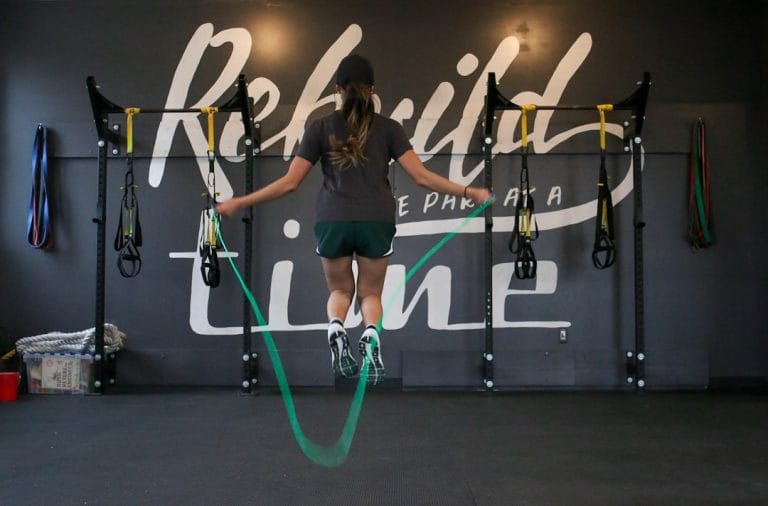
- Jumping rope. About 11 METs (2), which makes it one of the most efficient options per minute. Few people jump for an hour, so use it in 5- to 10-minute bursts.
- HIIT. Vigorous interval sessions with burpees, mountain climbers, and squat jumps are rated about 11 METs (2). Keep sessions to 20 to 30 minutes and allow recovery days between them.
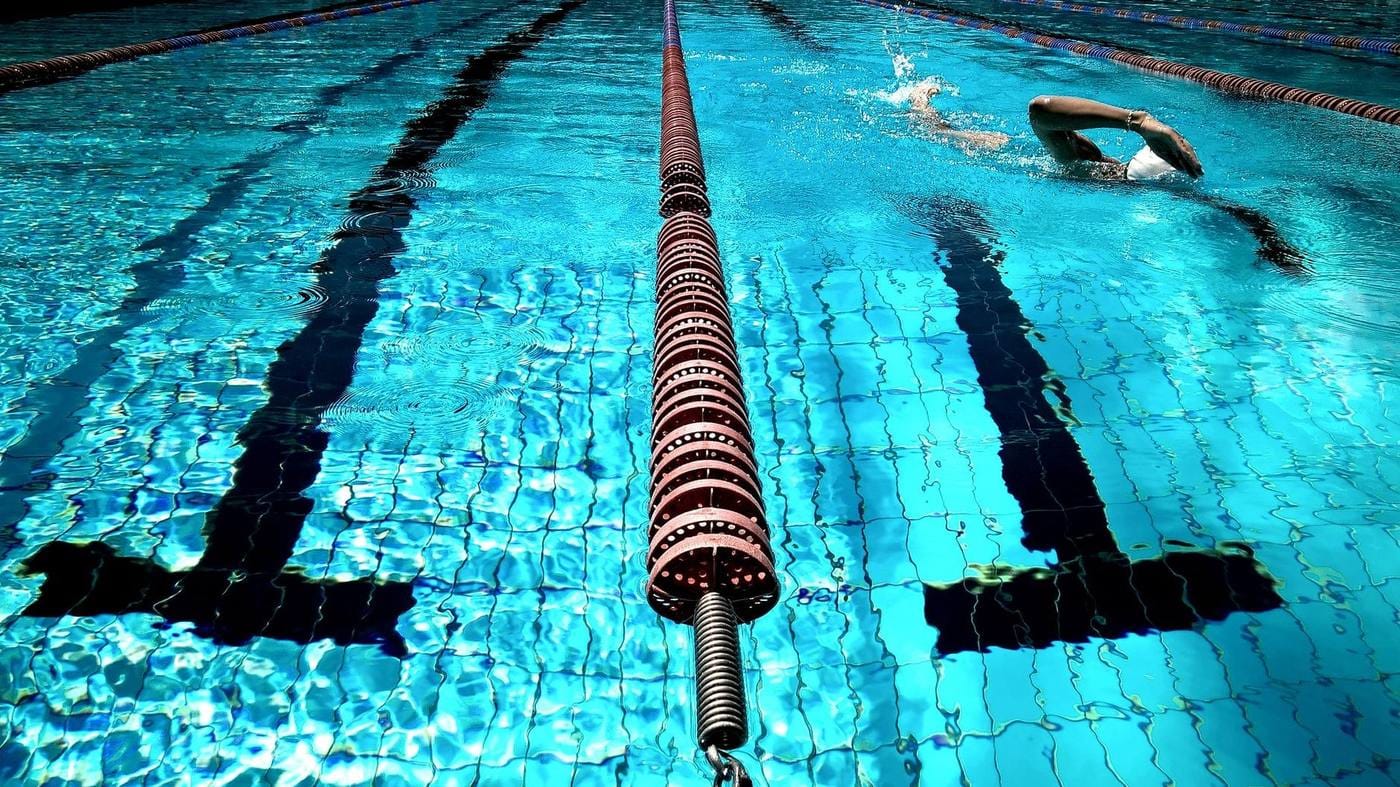
- Swimming. Easy freestyle laps are about 5.8 METs and fast laps about 9.8 (2). Swimming works the whole body and is kind to sore joints.
- High-impact aerobics. About 8 METs (2), and the music and choreography make the time pass quickly.
- Zumba. Around 6.5 METs for a group class (2). Enjoyment counts: a workout you look forward to is one you will keep doing.
- Jump squats. A short, equipment-free plyometric move that fits into HIIT circuits. Injury-prevention programs that include plyometric exercises have been shown to reduce ACL injuries in sport (7), though that benefit comes from structured, well-coached programs rather than jump squats alone. Land softly, and build up slowly if you are new to jumping.
- Water aerobics. About 5.5 METs (2). It burns less than lap swimming but is gentle, social, and suitable for many people with joint problems.
- Brisk walking. About 4.8 METs at 3.5 to 3.9 mph (2). It burns fewer calories per hour than the options above, but it is the easiest to do every day, and daily minutes add up.
A Realistic Week That Adds Up
 Save
SaveHere is a sample week for a 70 kg (154 lb) person, using the same MET values (2):
- Monday – Warm-up, 30 minutes of running at 6 mph, 10 minutes of jumping rope, cool-down (about 450 calories)
- Tuesday – Warm-up, 45 minutes of Zumba, 15 minutes of HIIT, cool-down (about 530 calories)
- Wednesday – Warm-up, 30 minutes of stationary cycling, 10 minutes of jumping rope, cool-down (about 370 calories)
- Thursday – Rest or gentle stretching
- Friday – Warm-up, 40 minutes of easy lap swimming, cool-down (about 270 calories)
- Saturday – Warm-up, 60 minutes of brisk walking, cool-down (about 340 calories)
- Sunday – Rest or gentle stretching
That comes to roughly 2,000 calories across the week for a 70 kg person, or about 2,200 at 80 kg. It is also about 240 minutes of activity, which sits within the 150 to 300 minutes of moderate activity a week that the U.S. Physical Activity Guidelines recommend for adults (5). Add muscle-strengthening work, such as bodyweight exercises or weights, on at least 2 days a week (5).
Shuffle the days to suit your schedule, and keep at least one or two lighter days. Recovery is when your body adapts to training.
Will Burning 2000 Calories a Week Help You Lose Weight?
It helps, but exercise alone is rarely enough. The American College of Sports Medicine’s position stand concludes that 150 to 250 minutes a week of moderate activity produces only modest weight loss, while more than 250 minutes a week is associated with clinically significant weight loss. Activity in the 150 to 250 minute range does improve weight loss when combined with moderate diet changes (3).
A review of randomized trials with at least a year of follow-up found that programs combining diet and physical activity led to more weight loss in the long term than diet alone, and considerably more than exercise alone (4). In other words, your workouts and your meals work best together. Here is how to set up a calorie deficit without wrecking your energy, along with easy diet recipes for weight loss and guidance on eating a balanced diet.
After harder sessions, a protein-rich meal or snack helps you recover — a homemade protein shake is one easy option. For more workout ideas, see these workouts for a lean, strong body.
Frequently Asked Questions
How long does it take to burn 2000 calories?
It depends on your weight and the activity. For a 70 kg (154 lb) person, running at 6 mph burns about 650 calories an hour, so 2,000 calories would take roughly 3 hours 4 minutes. Brisk walking would take about 5 hours 57 minutes. Heavier people burn more per hour, lighter people less.
Which exercise burns the most calories per hour?
Among common activities, running uphill, very fast cycling, jumping rope, and vigorous HIIT have the highest energy costs. In practice, the exercise that burns the most calories for you is the one you can keep up for longer, at a hard but sustainable effort.
Is it safe to burn 2000 calories a day through exercise?
For most people it is not a sensible goal. It usually means three or more hours of hard exercise, which raises the risk of overuse injuries, fatigue, and burnout, and is very hard to repeat. Spreading 2,000 calories across a week is far more realistic.
Will burning 2000 calories a week help me lose weight?
It helps, but exercise alone usually leads to modest weight loss. Guidelines from the American College of Sports Medicine note that 150 to 250 minutes a week of moderate activity produces only modest weight loss, while more than 250 minutes a week is linked to clinically significant loss. Programs that combine diet changes with exercise work better over the long term than exercise alone.
Do heavier people burn more calories doing the same exercise?
Yes. Energy cost scales with body weight, so a 100 kg person burns roughly two-thirds more calories doing the same activity for the same time as a 60 kg person. That is why a single calorie number for an exercise is always an estimate.
The Bottom Line
You can burn 2,000 calories in a day, but for a 70 kg person it takes around three hours of hard running, which is not a sustainable or safe goal for most people. Aim for about 2,000 exercise calories a week instead: four or five sessions of running, cycling, swimming, jumping rope, HIIT, or dance classes, plus strength training twice a week. Remember that your weight and effort change the numbers, and that exercise works best for weight loss when it is paired with sensible eating.
This article is for informational purposes only and is not a substitute for professional medical advice, diagnosis, or treatment. Consult your doctor or a qualified fitness professional before starting any new exercise program, especially if you have an existing health condition.
Related Articles
How to Set Up a Calorie Deficit Without Wrecking Your Energy (or Your Muscle)
Easy Diet Recipes for Weight Loss: Breakfast, Lunch and Dinner
15 Workouts That Build a Lean, Strong Body (Most Need No Gym at All)
How to Eat a Balanced Diet Without Counting Every Calorie