

A calorie deficit diet explained: how an energy deficit causes weight loss, the targets used in clinical guidelines, how to estimate your needs, which foods keep you full, and the risks of cutting too far.
A calorie deficit diet is based on a simple principle: to lose weight, you take in fewer calories than your body uses. Fat stores are the body’s energy buffer, so when intake falls short of expenditure, the missing energy comes largely from stored fat (1). The AHA/ACC/TOS obesity guideline states plainly that an energy deficit is required to achieve weight loss (2).
Doing it well is the hard part. This guide covers the deficit sizes used in clinical guidelines, how to estimate your own needs, food choices that support fullness and muscle, and why modest, steady changes work better than extreme cuts.
Key Takeaways
- Weight loss requires an energy deficit; clinical guidelines typically use a deficit of 500 to 750 calories a day (2).
- Common targets are 1,200–1,500 calories a day for women and 1,500–1,800 for men, adjusted for body weight and activity (2).
- People who lose about 1 to 2 pounds a week are more likely to keep the weight off (3).
- Protein and low-energy-density foods such as vegetables and fruit help you feel full on fewer calories (6, 8).
- Very restrictive diets can cause nutrient shortfalls, so talk to a doctor or dietitian before starting (11).
How a Calorie Deficit Works
Energy balance is the difference between the calories you consume and the calories you expend. When intake is lower than expenditure, stored energy, mainly fat, makes up the difference; a deficit of 200 calories over 24 hours means about 200 calories of expenditure come from fat stores (1).
The body’s response is not instant or perfectly linear. Mathematical modeling shows that body weight responds slowly to a change in calorie intake, with a half-time of about a year, and people with more body fat can expect a larger weight loss from the same calorie change (4). During calorie restriction, resting energy expenditure also falls by about 100 calories a day (10). This is why progress usually slows over time.
For example, if your body uses about 2,000 calories a day, eating about 1,500 calories creates a 500-calorie deficit, similar to a 1500-calorie diet. Much lower intakes are harder to sustain and should only be followed with medical guidance.
Setting a Calorie Target
| Approach in the AHA/ACC/TOS obesity guideline | Typical target |
|---|---|
| Fixed calorie range | 1,200–1,500 kcal/day for women; 1,500–1,800 kcal/day for men, adjusted for body weight and activity |
| Individual deficit | 500 or 750 kcal/day below estimated needs, or a 30% energy deficit |
| Comprehensive lifestyle programs | Diet designed to create a deficit of at least 500 kcal/day, plus physical activity and behavior support |
The obesity guideline describes three ways to reduce calorie intake: a fixed calorie range, an individual deficit based on estimated energy needs, or approaches that lower intake by restricting certain foods without a formal calorie target (2). With dietary changes, average weight loss is greatest at 6 months, ranging from about 4 to 12 kg, with smaller losses maintained for up to 2 years (2).
Estimating your energy needs
Calorie needs start with resting energy expenditure. The revised Harris-Benedict equations estimate it from weight, height, age and sex:
- Men: 88.362 + (13.397 × weight in kg) + (4.799 × height in cm) − (5.677 × age in years)
- Women: 447.593 + (9.247 × weight in kg) + (3.098 × height in cm) − (4.330 × age in years)
These equations estimate resting energy expenditure in normally nourished people with a precision of about ±14% (5), and the result is then adjusted upward for physical activity. Because estimates can be off, track your weight over several weeks and adjust. The CDC recommends keeping a food and beverage diary and a physical activity diary to see where changes can be made (3).
How Many Calories Should You Eat A Day?
The equation above gives resting energy — what you burn doing nothing. To get from there to a daily target takes two more steps, and this is where most explanations stop.
Step one: multiply for activity. The conventional multipliers are roughly 1.2 if you are sedentary, 1.375 lightly active, 1.55 moderately active and 1.725 very active. Treat these as a widely used convention rather than a measured constant — they are not part of the equation’s own validation 5, and the honest range between sedentary and very active is wide enough to matter more than any food choice on this page.
Step two: subtract the deficit. The obesity guideline uses 500 or 750 kcal a day below estimated needs, or a 30% energy deficit 2.
| Step | Worked example: woman, 70 kg, 165 cm, 35 |
|---|---|
| Resting energy, from the equation above | 447.593 + (9.247 × 70) + (3.098 × 165) − (4.330 × 35) = 1455 kcal |
| Multiply for activity (lightly active, ×1.375) | 1455 × 1.375 = 2,000 kcal, her estimated daily need |
| Subtract the guideline deficit of 500 kcal 2 | 2,000 − 500 = 1,500 kcal a day |
That lands at 1,500 kcal a day, which sits at the top of the guideline’s fixed range for women of 1,200 to 1,500 kcal 2. The two methods agree in that case.
They do not always agree, and it is worth seeing where they part. Run the men’s equation for someone 85 kg, 180 cm and 40 years old and you get 1,864 kcal resting, 2,563 with the same activity multiplier, and 2,063 after the 500 kcal deficit. The guideline’s fixed range for men is 1,500 to 1,800 2 — several hundred calories lower. Neither number is wrong; the fixed ranges are the more aggressive approach, and the calculated one is tailored to a larger body.
Which is why the figure you calculate is a starting point, not a prescription. The equation itself is only accurate to about ±14% 5, so a target of 1,500 kcal could really be anywhere from roughly 1,290 to 1,709. Pick a number, hold it for a few weeks, and let the scale correct it.
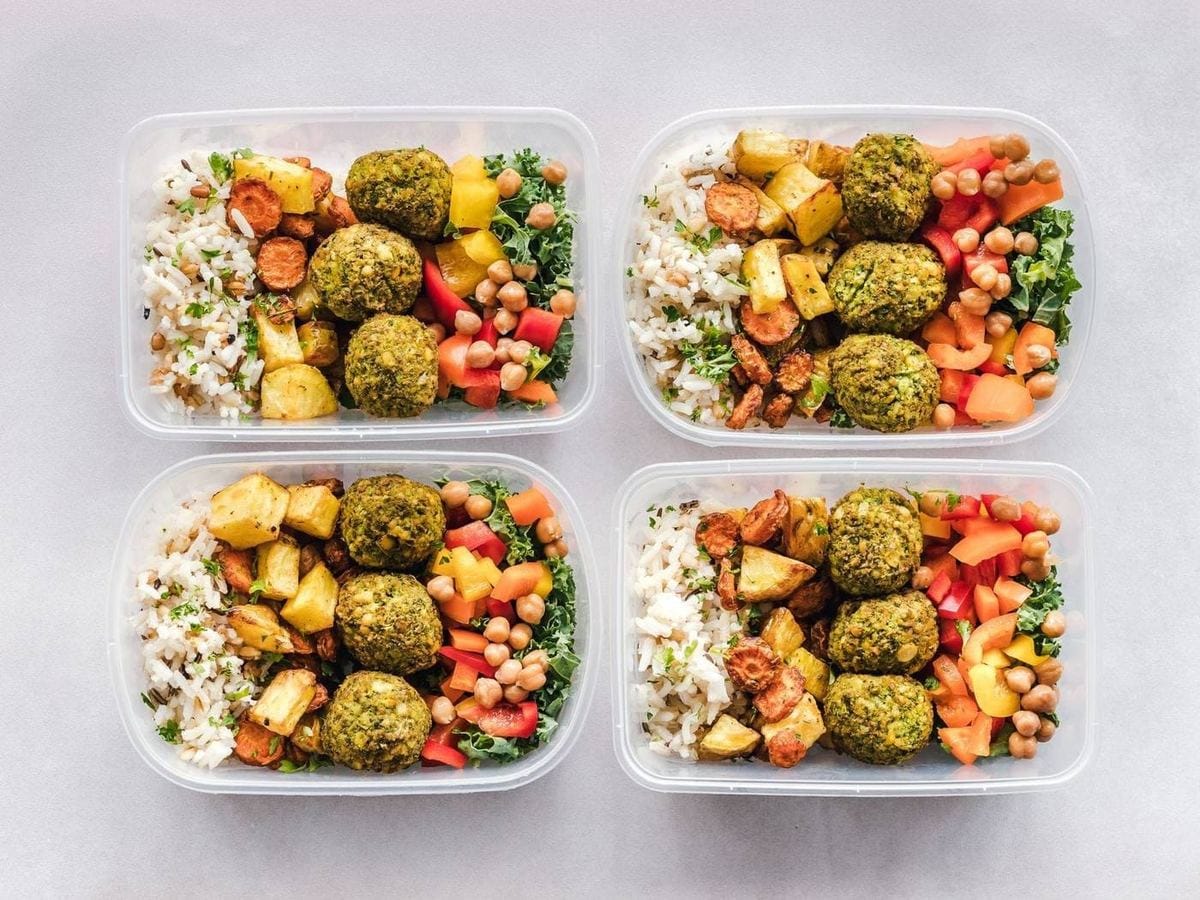
What to Eat on a Calorie Deficit
 Save
SaveProtein
Protein generally increases satiety more than carbohydrate or fat, increases thermogenesis, and may help retain lean muscle mass during weight loss (6). Some commercial plans, such as the Dukan diet, push protein much higher and restrict most other foods in their early phases. Higher-protein diets have clear benefits for muscle mass, and the recommended dietary allowance is a minimum rather than an optimal intake (7). Good sources include poultry, fish, eggs, dairy, tofu, beans and lentils. If you use shakes, see how soy and whey protein compare.
Vegetables, fruit and other low-energy-density foods
Energy density is the number of calories per gram of food. When the energy density of the diet is reduced, people spontaneously eat fewer calories, and eating a large portion of a low-energy-dense food such as soup, salad or fruit as a first course can reduce total intake at a meal (8). Adding water-rich vegetables and fruit to meals lowers energy density while keeping portions satisfying (8).
Whole grains
In a crossover study of 47 adults, whole grain high-fiber barley foods reduced hunger before lunch, although energy intake at lunch did not differ from whole wheat or refined rice foods (9). Whole grains remain a good choice for fiber and nutrients, but they are not a guarantee of eating less.
Fats and snacks
Fat provides 9 calories per gram, so fatty foods raise energy density (8). Nuts, seeds, avocado and olive oil are nutritious but best used in measured amounts. For meal ideas, try these light recipes or diet recipes for weight loss.
Habits That Help
 Save
Save- Track and plan: keep a food diary, plan meals ahead and focus on two or three specific, realistic goals at a time (3).
- Swap sugary drinks: drinking water instead of sugary beverages is one of the short-term goals the CDC suggests (3).
- Sleep and stress: enough sleep and stress management are part of healthy weight loss (3).
- Stay active: maintaining at least 250 minutes of physical activity a week is linked to keeping weight off and helps preserve lean body mass (10). Walking and swimming are good options.
- Expect setbacks: occasional setbacks are normal; get back on track and plan for similar situations (3).
Aerobic exercise produced greater weight loss than resistance training in programs lasting at least 10 weeks, while resistance training may support weight maintenance (10). If you are trying to lose fat while keeping muscle for sport, see our guide to a cutting diet.
In a Calorie Deficit and Not Losing Weight
This is the most common thing that goes wrong, and the usual explanation offered online — a broken or slow metabolism — is the one the research keeps ruling out.
The clearest study on it took 224 people with obesity and focused on ten who repeatedly failed to lose weight while reporting intakes below 1,200 calories a day. Their total energy expenditure and resting metabolic rate were measured directly and came out within 5% of what their body composition predicted. A slow metabolism was excluded. What the measurements did find was that the same people underreported what they ate by 47% and overreported their exercise by 51% 12.
That is not an accusation. Estimating portions is genuinely difficult, oils and drinks are easy to miss, and restaurant servings rarely match a label. The practical point is that when the scale will not move, the tracking is a far more likely place to look than the metabolism.
The second reason is timing. Bodyweight does not respond to a change in intake on a weekly schedule. Modelling of energy balance puts the half-time of the response at about one year, so a few flat weeks is normal rather than evidence that the deficit has failed 4. Day-to-day swings from water, salt, glycogen and gut contents can easily hide a week’s fat loss.
What to check first, in order:
- Weigh and log everything for one honest week, including cooking oil, drinks and bites while cooking.
- Compare a four-week average weight against the previous four weeks, not one day against another.
- Recalculate the target: a smaller body needs fewer calories, so a deficit set months ago may no longer be one.
- Only then consider lowering intake further — and not below the limits in the section above.
Risks and Who Should Be Careful
- Nutrient shortfalls: inadequate intake of macro- and micronutrients can lead to deficiencies, with effects ranging from poor growth and wound healing to greater infection risk (11). Very low calorie plans, such as a strict calorie diet plan, make this more likely.
- Metabolic adaptation: resting energy expenditure falls during calorie restriction, which can slow progress (10).
- Medical conditions: medicines, medical conditions, hormones and age can affect weight management, so talk with your health care provider if you have concerns (3).
- Special groups: pregnant or breastfeeding women, teenagers and anyone with a history of eating disorders should not start a calorie deficit diet without medical supervision.
Even modest weight loss helps: losing 5% of body weight can improve blood pressure, cholesterol and blood sugar (3).
Frequently Asked Questions
How many calories should I eat a day to lose weight?
Work it out in three steps rather than guessing. Estimate resting energy with the revised Harris-Benedict equation, multiply by an activity factor of roughly 1.2 if sedentary up to 1.725 if very active, then subtract the 500 to 750 kcal a day the obesity guideline uses. For a woman of 70 kg, 165 cm and 35 years who is lightly active, that is 1,455 resting, 2,000 for her daily need, and 1,500 kcal a day as a target. The guideline also offers fixed ranges of 1,200 to 1,500 kcal for women and 1,500 to 1,800 for men. The equation is accurate to about plus or minus 14%, so treat the result as a starting point and adjust it against the scale over several weeks.
Why am I in a calorie deficit and not losing weight?
Usually because the deficit is smaller than it looks on paper, not because of a slow metabolism. In a study of people who could not lose weight while reporting under 1,200 calories a day, measured energy expenditure was within 5% of predicted, while intake was underreported by 47% and exercise overreported by 51%. The other common reason is timing: bodyweight responds slowly to a change in intake, with a half-time of roughly a year, so short flat stretches are normal.
How big should my calorie deficit be?
The AHA/ACC/TOS obesity guideline describes prescribing an energy deficit of 500 or 750 calories a day, or a 30% deficit, often achieved with 1,200 to 1,500 calories a day for women and 1,500 to 1,800 for men. Your needs depend on your size and activity, so ask a doctor or dietitian to tailor the numbers.
How fast will I lose weight on a calorie deficit?
The CDC notes that people who lose about 1 to 2 pounds a week are more likely to keep the weight off. Weight loss usually slows over time because the body adapts: in guideline studies, weight loss from dietary changes was greatest at 6 months, and mathematical modeling shows the body’s response to a calorie change is gradual.
Do I have to exercise, or can I just eat less?
You can lose weight by eating less, but physical activity helps. People who keep up at least 250 minutes of activity a week are more likely to maintain weight loss, and activity helps preserve lean body mass. Aerobic exercise produced more weight loss than resistance training in programs lasting at least 10 weeks.
What foods help you stay full on fewer calories?
Protein generally increases satiety more than carbohydrate or fat and helps preserve lean mass. Foods with low energy density, such as vegetables, fruit, soups and salads, let you eat satisfying portions for fewer calories, and whole-grain high-fiber barley reduced hunger in a short-term study.
Can a calorie deficit be harmful?
Very restrictive or poorly planned diets can lead to inadequate intake of vitamins and minerals. Resting energy expenditure also falls during calorie restriction. Talk to a doctor before starting, especially if you have a medical condition, are pregnant or breastfeeding, have a history of eating disorders, or are a teenager.
The Bottom Line
A calorie deficit is required for weight loss, and clinical guidelines typically aim for 500 to 750 fewer calories a day, often 1,200 to 1,500 calories for women and 1,500 to 1,800 for men. Weight loss is gradual and slows over time as the body adapts. Build meals around protein, vegetables, fruit and other low-energy-density foods, stay active, track your progress, and aim for about 1 to 2 pounds a week. Get advice from a doctor or dietitian before starting, especially if you have a medical condition. For overall food choices, see our balanced diet guide.
This article is for informational purposes only and is not a substitute for professional medical advice, diagnosis, or treatment. Always consult a qualified healthcare provider before starting a weight loss plan, especially if you have an existing medical condition.
Related Articles
1500-Calorie Diet for Weight Loss, Food List & Plan
Easy Diet Recipes for Weight Loss: Breakfast, Lunch and Dinner
Cutting Diet Guide for Fat Loss and Muscle
Swimming for Weight Loss: What Trials Found
Balanced Diet Guide With the 5 Food Groups
Snake Diet: What It Involves and Why It Is Risky
Insulin Resistance Diet: What the Evidence Backs
Ankle Weight Exercises: What Works, and Limits
Optavia Diet: The Trial, the Risks, the Rebrand
Lamb Nutrition: The Numbers and the Trade-Offs