
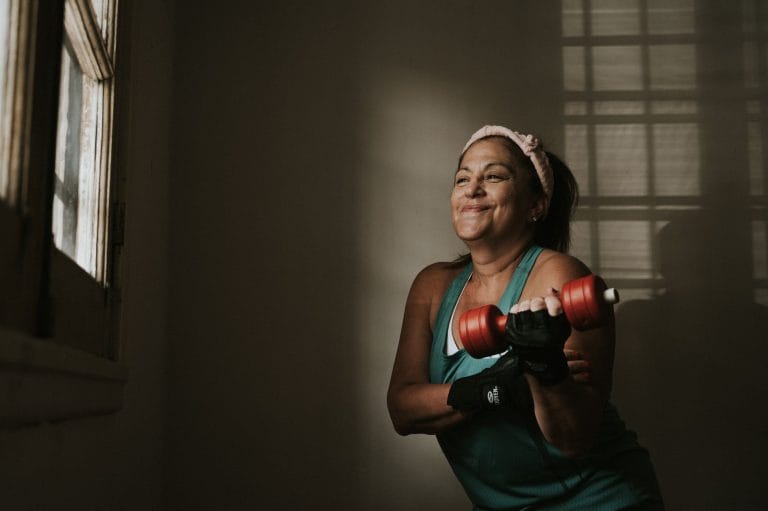
Nine simple moves, a pair of dumbbells, and a plan that builds real strength at home or at the gym.
Dumbbells have a reputation as the “biceps tool,” which sells them badly short. A pair of handheld weights can train your shoulders, back, chest, glutes, and core just as well as your arms, and research on rehabilitation exercises shows dumbbells are effective at activating the muscles they target (1). Pair a few strength sessions with some cardio and you may shed fat while building lean muscle.
Sports nutritionist and certified clinical nutritionist Nilofer Pendhari puts it simply: training with dumbbells is a good way to build lean mass and lose body fat, partly because these workouts raise your metabolism and keep it elevated for hours afterward.
Key Takeaways
– Dumbbell training is one of the most effective ways for women to tone and strengthen the legs, chest, back, arms, and core.
– Research supports lifting heavier weights over time; it builds strength without creating a “bulky” physique.
– Strength training may support bone health, reduce osteoporosis risk, increase lean mass, and boost confidence.
– Beginners should start light, prioritize form, and add weight gradually.
– Rest days matter, since muscles grow while they recover.
Heavier Weights Won’t Make You Bulky
 Save
SaveMany women reach for the lightest dumbbells on the rack out of fear that anything heavier will build a large, masculine physique. The research says otherwise. Studies on strength training in women show that lifting with meaningful resistance may improve bone health and lower osteoporosis risk, increase lean body mass, decrease body fat, and improve overall well-being (2). There is a psychological payoff too, with women reporting feeling more powerful and self-confident after taking up strength training.
One more reason to keep showing up: a study of 116,221 participants found that people who exercised two to four times beyond the recommended amount had a 26% to 31% lower risk of death from any cause and a 28% to 38% lower risk of cardiovascular death. That is a lot of benefit from a habit you can practice in your living room.
How Should a Beginner Start?
If you are new to lifting, resist the urge to do everything at once. A few guidelines will keep you safe and progressing:
Begin with light weights while you learn each movement.
Focus on form first, so the right muscles do the work.
Add weight gradually as you get stronger.
Warm up before every session.
Build rest days into your week so your muscles can recover.
Basic moves like bicep curls, squats, and shoulder presses are a sensible starting point before you attempt combination exercises.
Nine Full-Body Moves to Build Your Plan Around
You do not need dozens of exercises. These nine cover the whole body, and most call for 3 sets of 8 to 12 reps.
Shoulders and Arms
 Save
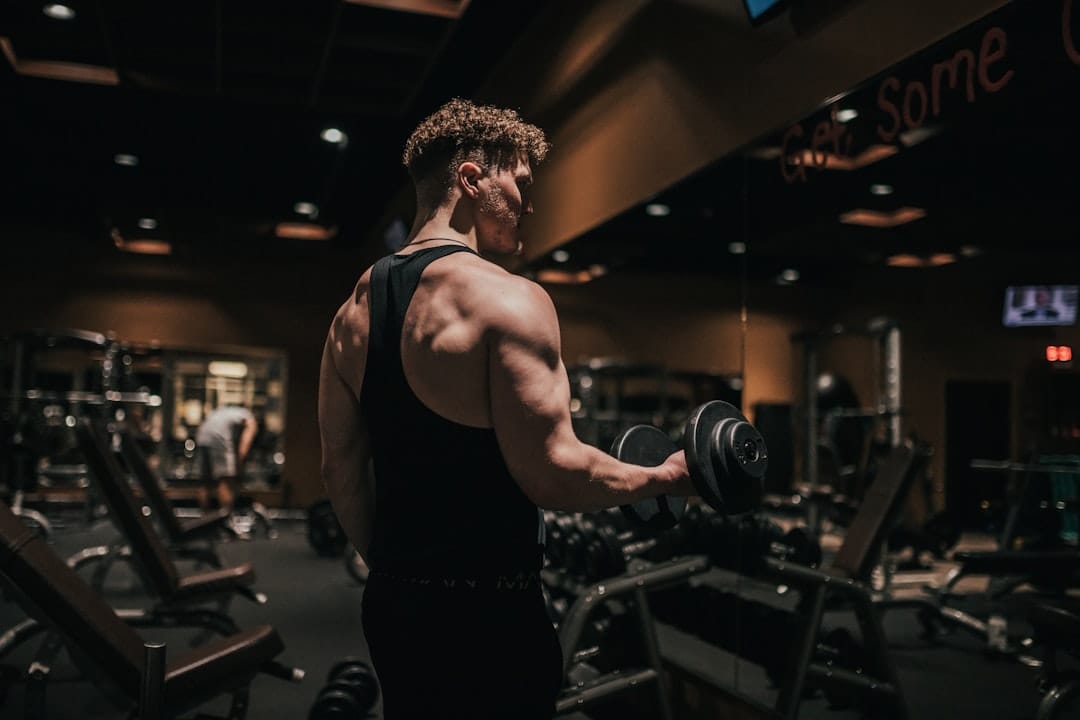
SaveFront raise. Stand with feet shoulder-width apart, a light dumbbell in each hand resting against your thighs, palms facing in. Raise both arms straight in front of you to shoulder height, then lower with control. Works the deltoids and upper chest.
Lateral raise. Same stance, but lift the dumbbells out to your sides until they reach shoulder level. This hits the shoulders and upper back.
Tricep extension. Kneel and hold one heavier dumbbell (5 to 10 pounds) overhead with both hands. Bend your elbows to lower it behind your head, then press back up. Exhale on the way up.
Bicep curl to press. Curl the dumbbells up with elbows tucked, rotate your wrists outward, and press the weights overhead. Reverse the motion to return. One move, three muscle groups: biceps, shoulders, triceps.
Hammer curl press. Similar idea with a neutral grip. Curl up, press overhead, pause, lower to the shoulders, then extend your arms back down.
Chest, Back, and Core
Glute bridge chest press. Lie on a mat, knees bent, a dumbbell in each hand with upper arms on the floor. Lift your hips so your thighs and torso form a straight line, then press the weights above your chest. Your chest, glutes, and core all fire at once.
Bent over flys. Hinge forward from the waist with arms hanging down, then lift the dumbbells out to the sides. Keep your core braced to protect your lower back, and skip this one entirely if you already have lower back pain.
Renegade row. Set the dumbbells on the floor and take a plank position gripping them. Row one weight up, driving your elbow back, then switch sides. This trains the lats, shoulders, arms, and core.
Full body crunch. Lie down holding one dumbbell with both hands, arms extended behind your head, and crunch your whole body toward center.
Putting It Together
A workable weekly rhythm is two or three dumbbell sessions with rest or light cardio days in between. Rotate through the moves above, keeping the shoulder and arm work on one day and the chest, back, and core moves on another if a full-body session feels like too much. Every couple of weeks, check whether your current weights still challenge you in the last few reps. If not, go up a size.
Progress here is quiet. You will notice grocery bags feel lighter and stairs feel easier before you notice anything in the mirror, and that is the point. Consistency with a simple plan beats intensity with a complicated one, this part is not controversial.
Frequently Asked Questions
How heavy should my dumbbells be?
Light enough to complete your sets with good form, heavy enough that the final reps feel challenging. Beginners often start with 2-pound weights for raises and 5 to 10 pounds for moves like tricep extensions, then progress from there.
Will dumbbells help me lose fat?
They can contribute. Dumbbell training can build lean mass and raise your metabolism, which may stay elevated for hours after a workout. Combining strength work with cardio supports fat loss further.
Can I do these workouts at home?
Yes. Every exercise in this plan needs only a pair of dumbbells and, for the floor moves, a mat.
The Bottom Line
A dumbbell workout plan for women does not need to be complicated to work. Nine well-chosen moves cover the shoulders, arms, chest, back, glutes, and core, and research suggests that lifting progressively heavier weights builds strength, may support bone health, and can lift confidence rather than creating bulk. Start light, learn the form, rest between sessions, and let the weights creep up over time.
This article is for informational purposes only and is not a substitute for professional medical advice. Consult your doctor or a qualified fitness professional before beginning any new exercise program, especially if you have existing injuries or health conditions.