
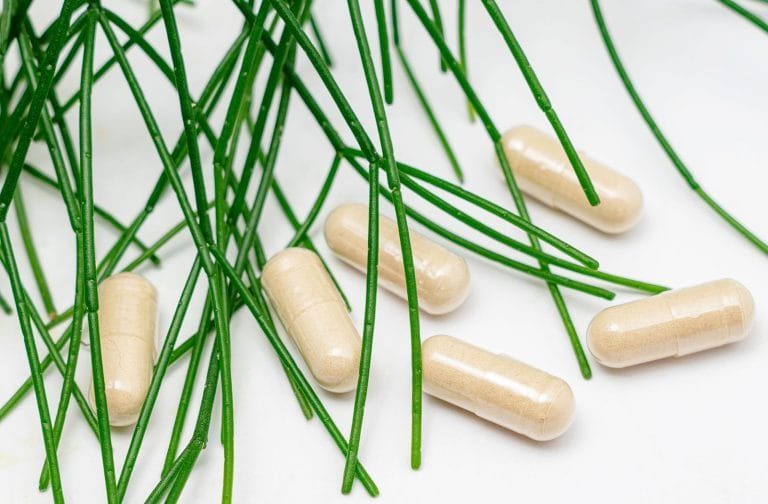
Magnesium glycinate explained: how it compares with other forms, what research shows for sleep, anxiety and cramps, safe amounts, side effects and drug interactions.
Magnesium glycinate is a supplement in which magnesium is bound to glycine, an amino acid. You may also see it labeled as magnesium bisglycinate or diglycinate. Early lab work suggested that part of it is absorbed intact through the pathway the gut uses for small protein fragments (3).
Magnesium itself is essential. It helps regulate muscle and nerve function, blood sugar and blood pressure, and it is needed to make protein, bone and DNA (2). The open question is whether the glycinate form offers anything special. As this guide shows, studies on glycinate specifically are few, and most claims borrow from research on magnesium in general.
Key Takeaways
- Adults need 310 to 420 mg of magnesium a day from all sources, depending on age and sex (2).
- The upper limit for magnesium from supplements and medicines is 350 mg a day for adults (2).
- A 2025 trial of magnesium bisglycinate found a small improvement in insomnia scores, but the overall evidence for sleep is low certainty (5, 6).
- Magnesium is unlikely to prevent night leg cramps in older adults (9).
- People with kidney disease are at the highest risk of dangerous magnesium buildup (12).
What Is Magnesium Glycinate?
Supplements contain many forms of magnesium, and absorption varies between them. In general, forms that dissolve well in liquid are absorbed better (1). Glycinate is a chelated form, which means the mineral is attached to an amino acid rather than to a salt such as oxide.
One of the few human studies tested it in people who had part of the small intestine removed. These patients struggle to absorb magnesium, and most supplements cause diarrhea at useful doses. In that small crossover trial of 12 patients, glycinate was better tolerated than magnesium oxide (3).
Magnesium Glycinate vs Other Forms
NIH names aspartate, citrate, lactate and chloride as forms that tend to be absorbed better than oxide and sulfate. Glycinate is not on that list, and it has been studied far less (1):
| Form | What research says about absorption | Good to know |
|---|---|---|
| Glycinate (bisglycinate, diglycinate) | In 12 patients with ileal resection, overall absorption was similar to oxide, but better in the 4 patients who absorbed oxide worst (3). An industry-funded single-dose study found no significant rise in blood magnesium over 6 hours (4) | Better tolerated than oxide in that small trial (3) |
| Citrate | Among the forms NIH lists as better absorbed (1) | Raised blood magnesium at 4 hours in the industry-funded comparison (4) |
| Aspartate, lactate, chloride | Also listed by NIH as better absorbed (1) | Forms that dissolve well in liquid tend to be absorbed better (1) |
| Oxide | Lower bioavailability than the forms above (1) | Found in some antacids and laxatives (12) |
| Sulfate | Lower bioavailability (1) | – |
The practical takeaway is modest. One small trial found glycinate easier on the stomach than oxide (3), so it may be worth asking a pharmacist about if other forms cause diarrhea. There is no good evidence that it is absorbed better than citrate.
What the Research Shows
Only a handful of trials tested glycinate itself. The table notes where results come from magnesium in general:
| Use | Best available evidence | Verdict |
|---|---|---|
| Sleep and insomnia | Glycinate trial in 155 adults with poor sleep: 250 mg elemental magnesium for 4 weeks improved insomnia scores slightly more than placebo, with a small effect size (5). A 2026 review of 12 trials found inconsistent results and low certainty (6) | Possible small benefit; weak evidence |
| Anxiety and stress | 18 studies of magnesium in general suggested a benefit in people prone to anxiety, but study quality was poor (8) | Uncertain |
| Night leg cramps in older adults | Cochrane review of 11 trials: magnesium is unlikely to give meaningful cramp prevention (9) | Probably not helpful |
| Leg cramps in pregnancy | A bisglycinate trial in 80 pregnant women found fewer and milder cramps (10), but a meta-analysis of 4 trials found no effect (11) | Conflicting |
| Migraine prevention | Neurology and headache societies rate magnesium as probably effective; this is not specific to glycinate (1) | Probably effective, with medical supervision |
| Blood pressure | Supplements lower blood pressure only marginally (1) | Small effect |
| Type 2 diabetes control | The American Diabetes Association says evidence is not enough to recommend magnesium for blood sugar control (1) | Not recommended for this purpose |
Sleep
The best glycinate-specific study is a 2025 randomized trial in Germany. It gave 155 adults with self-reported poor sleep either 250 mg of elemental magnesium as bisglycinate or a placebo. After 4 weeks, insomnia scores fell by 3.9 points with magnesium and 2.3 points with placebo. The authors described the benefit as modest (5).
Two points temper that result. One author runs a research company funded by supplement makers (5). A 2026 systematic review by the same group looked at 12 trials of magnesium for sleep and concluded that current evidence does not support it as a routine insomnia treatment (6). An earlier analysis in older adults found people fell asleep about 17 minutes faster, but the evidence was rated low to very low quality (7).
Anxiety
A systematic review of 18 studies found hints of benefit in people vulnerable to anxiety, including those with mild anxiety or premenstrual symptoms. The reviewers rated the evidence as poor and none of it was specific to glycinate (8).
Muscle cramps
For night leg cramps in older adults, a Cochrane review of 11 trials concluded that magnesium is unlikely to provide meaningful prevention (9). Our guide to charley horse remedies covers options with better evidence, such as stretching.
Pregnancy is less clear. One trial gave 80 pregnant women magnesium bisglycinate chelate at 300 mg a day or placebo. Cramp frequency halved in 86% of the magnesium group versus 60.5% on placebo (10). However, a meta-analysis of 4 trials with 332 pregnant women found no reduction in cramp frequency (11). Pregnant women should ask their doctor before taking any supplement.
Migraine
Low magnesium levels appear to be associated with migraine. The American Academy of Neurology and the American Headache Society concluded that magnesium is probably effective for preventing migraines (1). NIH advises using it for this only under the care of a health care provider (2).
How Much Magnesium Do You Need?
Recommended amounts include magnesium from food, drinks, supplements and medicines combined (2):
| Life stage | Recommended daily amount (all sources) |
|---|---|
| Children 1 to 3 years | 80 mg |
| Children 4 to 8 years | 130 mg |
| Children 9 to 13 years | 240 mg |
| Teen boys 14 to 18 years | 410 mg |
| Teen girls 14 to 18 years | 360 mg |
| Men | 400 to 420 mg |
| Women | 310 to 320 mg |
| Pregnant women | 350 to 360 mg |
| Breastfeeding women | 310 to 320 mg |
Separate upper limits apply only to magnesium from supplements and medicines, not food. That is why the limit can look lower than the recommended amount (2):
| Age | Upper limit from supplements and medicines |
|---|---|
| Children 1 to 3 years | 65 mg |
| Children 4 to 8 years | 110 mg |
| Children 9 to 18 years | 350 mg |
| Adults | 350 mg |
Many people in the United States get less than the recommended amount from food. Men over 70 and teenagers are most likely to fall short (2).
How to Take Magnesium Glycinate Safely
- Start with food. NIH advises getting most nutrients from food and using supplements when food alone is not enough (2).
- Keep supplemental magnesium at or below 350 mg a day as an adult unless a health care provider recommends more (2).
- Count all sources, including multivitamins, antacids and laxatives that contain magnesium (2).
- The trials above used 250 mg of elemental magnesium for sleep and 300 mg a day for pregnancy cramps (5, 10). Those doses were tested under study conditions, not as general advice.
- Tell your doctor and pharmacist about every supplement you take (2).
Side Effects and Drug Interactions
High doses of magnesium from supplements or medicines can cause diarrhea, nausea and abdominal cramping. Extremely high intakes can cause irregular heartbeat and cardiac arrest (2). In the Cochrane review, digestive side effects such as diarrhea affected 11% to 37% of people taking magnesium (9).
Magnesium from food is not harmful for healthy people, because the kidneys remove the excess (2). Dangerous buildup, called hypermagnesemia, occurs mainly in people with acute or chronic kidney disease. Older adults with reduced kidney function who use magnesium-containing laxatives or antacids are also at risk (12).
Magnesium can interact with several medicines (2):
| Medicine or supplement | What can happen |
|---|---|
| Bisphosphonates (for osteoporosis) | Poorly absorbed if taken too close to magnesium supplements |
| Some antibiotics | May not be absorbed if taken too soon before or after magnesium |
| Diuretics | Can raise or lower magnesium loss in urine, depending on the type |
| Long-term acid reflux or ulcer medicines | Can cause low blood magnesium |
| Very high-dose zinc supplements | Can interfere with magnesium absorption and regulation |
Who Should Check With a Doctor First
- People with kidney disease or reduced kidney function (12)
- Anyone taking bisphosphonates, antibiotics, diuretics or long-term acid reflux medicines (2)
- Pregnant or breastfeeding women (2, 11)
- Children, whose upper limits are much lower than adults’ (2)
- People considering magnesium for migraine, which NIH says should be supervised (2)
Foods Rich in Magnesium
 Save
SaveLegumes, nuts, seeds, whole grains and green leafy vegetables such as spinach are good sources (2). Based on USDA data, one serving of these foods can cover a meaningful share of your daily needs:
| Food | Serving | Magnesium |
|---|---|---|
| Pumpkin seed kernels, roasted | 1 oz | 156 mg (13) |
| Chia seeds, dried | 1 oz | 95 mg (14) |
| Spinach, boiled | 1/2 cup | 78 mg (15) |
| Almonds | 1 oz | 77 mg (16) |
| Cashews, dry roasted | 1 oz | 74 mg (17) |
| Black beans, boiled | 1/2 cup | 60 mg (18) |
| Peanut butter, smooth | 2 tbsp | 54 mg (19) |
| Edamame, prepared | 1/2 cup | 50 mg (20) |
For example, 1 ounce of roasted pumpkin seeds provides about 156 mg, roughly 37% to 50% of the recommended amount for adults. Seeds such as sesame seeds and foods like cacao also contribute, and a balanced diet with plenty of plant foods makes it easier to reach your target without supplements.
Frequently Asked Questions
What is magnesium glycinate good for?
It is a supplement form used to raise magnesium intake. Research on magnesium in general supports migraine prevention under medical supervision. For sleep, one glycinate trial found a small improvement in insomnia scores, but reviews rate the overall evidence as low certainty. It is unlikely to prevent night leg cramps in older adults.
Is it safe to take magnesium glycinate every day?
For healthy adults, daily use is generally considered safe if magnesium from supplements and medicines stays at or below 350 mg a day, the upper limit set for adults. Magnesium from food does not count toward that limit. People with kidney disease should not take magnesium supplements without medical advice, because they cannot clear excess magnesium well.
Is magnesium glycinate better than magnesium citrate?
There is no strong evidence that one is better. NIH lists citrate among the better-absorbed forms. Data on glycinate are limited: a small trial found it better tolerated than magnesium oxide, while an industry-funded single-dose study found citrate raised blood magnesium and bisglycinate did not.
When is the best time to take magnesium glycinate?
Research has not established a best time of day. If you take bisphosphonates or certain antibiotics, avoid taking magnesium close to those medicines, and ask a pharmacist how far apart to space them.
What are the side effects of magnesium glycinate?
High doses of magnesium from supplements can cause diarrhea, nausea and abdominal cramping. Extremely high intakes can lead to irregular heartbeat and cardiac arrest. Serious magnesium buildup mainly occurs in people with kidney disease.
The Bottom Line
Magnesium glycinate is a form of magnesium that may be gentler on the stomach than oxide, based on one small trial, but there is little evidence that it is absorbed better than other good forms such as citrate. Research supports magnesium for migraine prevention and suggests at most a small benefit for sleep. It is unlikely to prevent night leg cramps in older adults. Most adults should keep supplemental magnesium at or below 350 mg a day, get as much as possible from food, and talk to a doctor first if they have kidney disease or take medicines that interact with magnesium.
This article is for informational purposes only and is not a substitute for professional medical advice, diagnosis, or treatment. Talk to your doctor or pharmacist before taking magnesium supplements. This is especially important if you have kidney disease, are pregnant or take prescription medicines.
Related Articles
Charley Horse Relief: Fast Fixes and What Research Shows
Benefits of Sesame Seeds: Nutrition, Heart and Allergy Facts
Cacao Benefits for Skin, Hair and Heart: What Research Shows
Balanced Diet Guide With the 5 Food Groups