
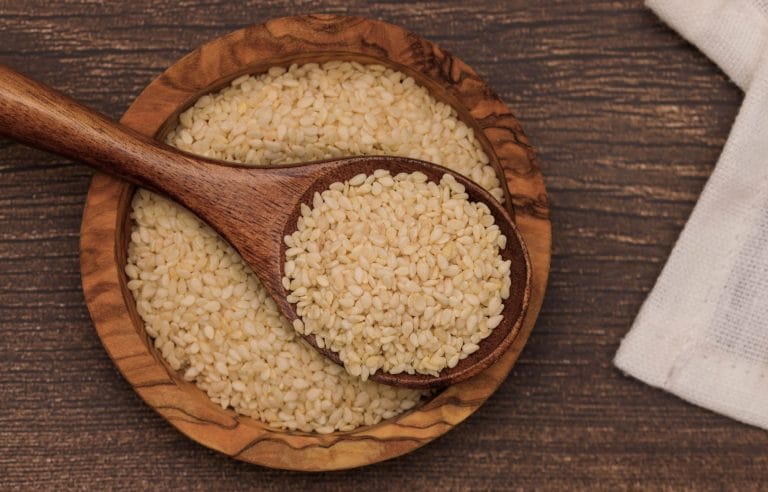
Sesame seed nutrition, the research behind the benefits of sesame seeds for heart health and blood sugar, what is unproven for skin and hair, and who needs to avoid them.
Sesame (Sesamum indicum) is one of the oldest cultivated oil crops. Its seeds are rich in fat and protein and contain lignans such as sesamin and sesamolin, along with vitamin E and phytosterols (3, 4).
Controlled trials suggest the benefits of sesame seeds include lower triglycerides and blood pressure (5, 6, 7), but many other claims come from laboratory studies. Sesame is also a major food allergen (16). This guide covers what the evidence shows.
Key Takeaways
- One tablespoon of whole sesame seeds provides about 52 calories and 88 mg of calcium (1).
- Hulled sesame kernels contain far less calcium and iron than whole seeds (1, 2).
- Meta-analyses found that sesame lowered triglycerides and systolic blood pressure (5, 6, 7).
- In people with type 2 diabetes, sesame lowered cholesterol and blood sugar (8, 9).
- Sesame is one of the nine major food allergens in the US, and severe reactions are common among people who are allergic (16, 17).
Sesame Seed Nutrition
| Nutrient | Whole seeds, per 100 g | Hulled kernels, per 100 g | Whole seeds, per tablespoon (9 g) |
|---|---|---|---|
| Calories | 573 kcal | 631 kcal | 52 kcal |
| Protein | 17.7 g | 20.4 g | 1.6 g |
| Fiber | 11.8 g | 11.6 g | 1.1 g |
| Calcium | 975 mg | 60 mg | 88 mg |
| Iron | 14.6 mg | 6.4 mg | 1.3 mg |
| Magnesium | 351 mg | — | 32 mg |
| Zinc | 7.8 mg | — | 0.7 mg |
| Copper | 4.08 mg | — | 0.37 mg |
Source: USDA FoodData Central, sesame seeds, whole, dried (1) and sesame seed kernels, dried, decorticated (2).
Most of the calcium in sesame is in the hull. Whole seeds provide about 975 mg of calcium per 100 g, while hulled kernels provide about 60 mg (1, 2). If you eat sesame for calcium, choose unhulled seeds or products made from them. Sesame oil is high in polyunsaturated omega-6 fat and low in omega-3, so it is best balanced with omega-3 sources in the rest of your diet (3).
Sesame Seed Benefits at a Glance
| Benefit | Best evidence | What it shows |
|---|---|---|
| Triglycerides | Meta-analyses of controlled trials (5, 6) | Lower triglycerides |
| Cholesterol | Meta-analyses (5, 6, 8) | Mixed; clearer reductions in people with type 2 diabetes |
| Blood pressure | Meta-analyses (6, 7) | Lower systolic blood pressure, about 3 mmHg in higher-quality trials |
| Blood sugar | Meta-analysis in people with diabetes (9) | Lower fasting glucose and HbA1c |
| Cancer | Laboratory and animal studies (12) | Sesamin slows cancer cells; not tested as a food in people |
| Hair and skin | No clinical studies found | Unproven |
Heart Health: Cholesterol, Triglycerides and Blood Pressure
 Save
SaveThe research on blood fats is mixed. A meta-analysis of 10 controlled trials found that sesame significantly lowered triglycerides but did not significantly change total or LDL cholesterol (5). A later meta-analysis of 16 randomized trials with 908 participants found reductions in total cholesterol, triglycerides, blood pressure and body weight (6). In a 60-day trial in 38 people with high cholesterol, eating 40 g of white sesame seeds a day in place of other calories lowered total and LDL cholesterol (10).
For blood pressure, a meta-analysis of 8 controlled trials found lower systolic and diastolic blood pressure. When the analysis was limited to the four higher-quality trials, systolic blood pressure fell by about 3 mmHg and the drop in diastolic pressure was not significant (7).
Reviews credit these effects to the seeds’ fiber, unsaturated fats, vitamin E and lignans, but note that more well-designed trials are needed (4, 5). Sesame seeds fit easily into a balanced diet.
Blood Sugar and Diabetes
In a meta-analysis of 13 studies with 731 people with diabetes, sesame products taken for 6 to 12 weeks lowered fasting glucose, HbA1c, after-meal glucose, LDL cholesterol, total cholesterol and triglycerides (9). A separate meta-analysis of 10 randomized trials in type 2 diabetes found lower triglycerides, total cholesterol and LDL cholesterol but no change in body weight (8). Both reviews called for larger trials. Sesame is a food, not a replacement for diabetes treatment.
Lignans and Cancer Research
In a crossover study in postmenopausal women, 25 g a day of whole sesame seeds produced as many mammalian lignans (compounds made by gut bacteria) as the same amount of flaxseed (11). Sesamin, the main sesame lignan, has shown anticancer activity in laboratory and animal studies (12). These findings have not been shown to prevent cancer in people.
Sesame Oil for Skin, Hair and Teeth
 Save
SaveWe found no clinical studies showing that sesame oil promotes hair growth or treats scalp problems. Antimicrobial activity has been reported in laboratory tests of extracts from sesame leaves, not the seeds or oil (15). If you are losing hair, see our guide to home remedies for hair fall.
Sesame oil is not a sunscreen. In a laboratory test of herbal oils used in cosmetics, non-volatile plant oils had sun protection factor (SPF) values of only 2 to 8 (14). Use a proper sunscreen instead.
Oil pulling, swishing oil such as sesame oil in the mouth, is a traditional Indian practice that a review describes as having several oral hygiene benefits (13). It should not replace brushing, flossing and regular dental care.
How to Eat Sesame Seeds
Sesame seeds can be sprinkled on salads, stir-fries, noodles and yogurt, toasted as a snack, or eaten as tahini, a paste made from ground sesame seeds. With 17.7 g of protein per 100 g (1), they add protein to a plant-based diet. Because sesame is energy-dense, keep portions moderate if you are watching calories.
Sesame Allergy and Side Effects
- Major allergen: sesame is one of the nine major food allergens identified by law in the United States, along with milk, eggs, fish, crustacean shellfish, tree nuts, peanuts, wheat and soybeans (16).
- How common: in a national US survey, about 0.23% of people had a convincing sesame allergy. Between 24% and 37% of them had experienced a severe reaction, and about one-third had used epinephrine (17).
- Outgrowing it: in a study of 190 patients, sesame allergy resolved on its own in about one-third (18).
- Other allergies: most people with sesame allergy also have another food allergy (17). People with other seed or peanut allergies should ask an allergist before trying sesame.
Frequently Asked Questions
What are the benefits of sesame seeds?
Sesame seeds provide protein, fiber, healthy fats, calcium, iron, magnesium, zinc and copper. In controlled trials, eating sesame lowered triglycerides and blood pressure, and in people with type 2 diabetes it also lowered cholesterol and blood sugar. The seeds also contain lignans such as sesamin.
Are black sesame seeds healthier than white?
The biggest difference is the hull. According to USDA data, whole sesame seeds provide about 975 mg of calcium and 14.6 mg of iron per 100 g, while hulled sesame kernels provide about 60 mg of calcium and 6.4 mg of iron. Unhulled seeds, whether black or tan, therefore supply much more calcium.
How many sesame seeds should I eat a day?
There is no official recommended amount. One tablespoon (9 g) of whole sesame seeds provides about 52 calories and 88 mg of calcium. Trials that found benefits often used larger amounts, such as 40 g a day, as part of a controlled diet.
Is sesame oil good for hair?
No clinical studies show that sesame oil helps hair grow. Sesame oil can be used as a conditioning oil, but claims about hair growth and scalp infections are not supported by research in people.
How common is sesame allergy?
About 0.23% of the US population has a convincing sesame allergy, and many have had severe reactions. Sesame is one of the nine major food allergens that must be labeled in the United States. About one in three people with sesame allergy outgrow it.
The Bottom Line
Sesame seeds are a nutrient-dense food with protein, fiber, healthy fats and minerals, especially calcium when the hull is kept. Controlled trials support modest benefits for triglycerides and blood pressure, and larger improvements in cholesterol and blood sugar in people with diabetes. Cancer, hair and skin claims are based on laboratory research or have no evidence. Enjoy sesame seeds as part of a varied diet, and avoid them completely if you have a sesame allergy.
This article is for informational purposes only and is not a substitute for professional medical advice, diagnosis, or treatment. If you have a food allergy or a medical condition, talk to your doctor or allergist before changing your diet.
Related Articles
Balanced Diet Guide With the 5 Food Groups
Plant-Based Diet Benefits and How to Start
Home Remedies to Control Hair Fall: What the Evidence Says
Peanut Oil Benefits for Skin, Hair and Health: The Evidence
Tahini Benefits and Nutrition: What the Evidence Shows