

Tahini nutrition from USDA data, what the evidence does and does not show for joints and bones, the sesame allergy rules, and simple ways to use it.
The tahini benefits worth knowing start with its nutrition: this paste of ground sesame seeds provides, per tablespoon, about 89 calories, 2.6 g of protein, 1.4 g of fiber and 64 mg of calcium, with most of its fat unsaturated (1).
It is genuinely useful in the kitchen, especially for people avoiding nuts. But several health claims that circulate about tahini go well beyond the evidence, and one important safety point often gets buried: sesame is now recognized as a major food allergen in the United States (2).
Key Takeaways
- One tablespoon of tahini has about 89 calories, 8 g of fat, 2.6 g of protein and 1.4 g of fiber (1).
- It is a good source of copper, selenium and thiamin, and contributes calcium (1).
- It is not a rich source of magnesium, contrary to a common claim (1).
- Sesame became the 9th US major food allergen, with labeling required from January 2023 (2).
- Evidence for health benefits is early: one small trial in knee osteoarthritis and laboratory work on sesame compounds (3, 4).
What Tahini Is
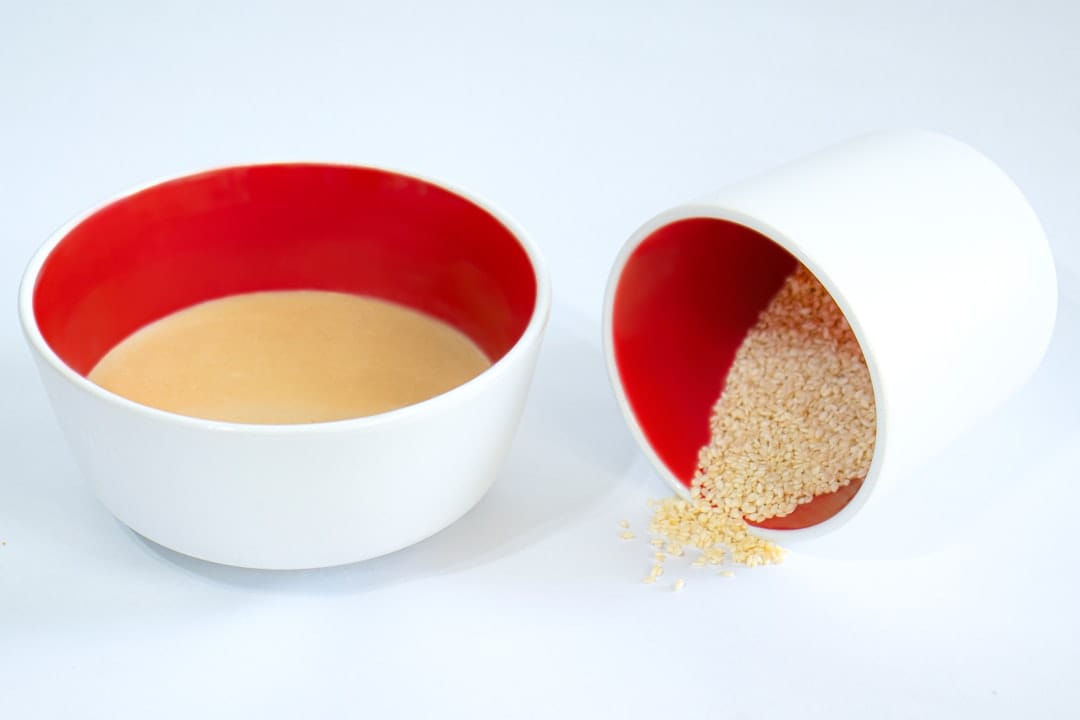
Tahini is made by grinding sesame seeds, usually roasted, into a smooth paste. It is a staple of Middle Eastern cooking and the backbone of hummus and baba ganoush. Because it contains no nuts, it is often used by people avoiding peanut or tree nut spreads, though it is not suitable for anyone with sesame allergy (2).
Tahini Nutrition Facts
 Save
SaveUSDA values for tahini made from roasted and toasted kernels, the most common type (1):
| Nutrient | Per 1 tbsp (15 g) | Per 100 g |
|---|---|---|
| Calories | 89 kcal | 595 kcal |
| Protein | 2.5 g | 17 g |
| Fat | 8.1 g | 53.76 g |
| Carbohydrate | 3.2 g | 21.19 g |
| Fiber | 1.4 g | 9.3 g |
| Calcium | 64 mg | 426 mg |
| Iron | 1.3 mg | 8.95 mg |
| Magnesium | 14 mg | 95 mg |
| Phosphorus | 110 mg | 732 mg |
| Copper | 0.24 mg | 1.61 mg |
| Selenium | 5.2 µg | 34.4 µg |
| Thiamin | 0.18 mg | 1.22 mg |
What stands out per tablespoon:
- Copper: about 0.24 mg, a meaningful share of daily needs
- Thiamin (vitamin B1): about 0.18 mg
- Selenium: about 5 µg
- Calcium: 64 mg, roughly 5% of the daily value
- Fat: about 8 g, of which most is mono- and polyunsaturated (1)
The magnesium claim you will see elsewhere does not hold up: tahini has 95 mg per 100 g, which is only about 14 mg per tablespoon (1). For comparison, our guide to high-fiber foods covers better sources of several of these nutrients.
What the Evidence Actually Shows
Knee osteoarthritis
This is the most direct human evidence. In a trial in Iran, 50 people with knee osteoarthritis were divided into two groups. One received standard treatment; the other received standard treatment plus 40 g of sesame a day for 2 months. Pain intensity and function scores were significantly better in the sesame group (3).
Two caveats: the study was small and not blinded, and 40 g of sesame daily is far more than a typical spoonful of tahini. If joint pain is your focus, see our arthritis diet guide.
Sesame compounds in the laboratory
Sesame contains lignans such as sesamin, sesamol and sesamolin. A review in Molecules describes anti-inflammatory and anticancer activity of these compounds in laboratory studies (4). That work is done in cells and animals. It does not show that eating tahini prevents or treats cancer in people, and we do not make that claim.
Sesame Allergy: What Changed
 Save
SaveSesame allergy can be serious. In April 2021, the FASTER Act declared sesame the 9th major food allergen recognized in the United States, and all FDA requirements for major allergens, including labeling, have applied to sesame since January 1, 2023 (2).
In practice, that means packaged foods sold in the US must declare sesame clearly. If you have a sesame allergy, avoid tahini, hummus and halva, and read labels on breads, crackers and dressings.
How to Use Tahini
- Whisk with lemon juice, garlic and water for a pourable dressing
- Stir into hummus, or spoon over roasted vegetables
- Blend a spoonful into a smoothie for creaminess
- Use in baking, where it works like other nut and seed butters
- Drizzle over porridge or yogurt with a little honey
If you are comparing spreads, see our guide to almond butter, and for more on the seed itself, sesame seeds.
Things to Watch
- Allergy. Avoid completely with sesame allergy (2).
- Calories. At 89 calories a tablespoon, it adds up quickly when drizzled freely (1).
- Sodium in some products. Plain tahini has about 17 mg of sodium per tablespoon, but prepared dips and dressings can have much more (1).
- Storage. The oil separates naturally; stir before use and keep opened jars refrigerated to slow rancidity.
Frequently Asked Questions
Is tahini healthy?
It is nutrient-dense but also calorie-dense. One tablespoon has about 89 calories, 2.6 g of protein, 1.4 g of fiber, 64 mg of calcium and useful amounts of copper, selenium and thiamin. Most of its fat is unsaturated. Portion size is the main thing to watch.
How much tahini should you eat a day?
There is no official limit. A tablespoon or two fits most diets, since a tablespoon is about 89 calories and 8 g of fat. If you are watching calories, measure it rather than pouring.
Is tahini good for bones?
It contributes calcium: 64 mg per tablespoon, roughly 5% of the daily value. That is helpful but not a substitute for dairy, fortified drinks or other major calcium sources. Tahini is not a rich source of magnesium, despite the claim appearing on many sites.
Can tahini cause an allergic reaction?
Yes. Sesame is recognized as the 9th major food allergen in the United States, and labeling rules for it took effect on January 1, 2023. Anyone with sesame allergy must avoid tahini entirely.
Does sesame help arthritis?
One small trial suggests it might help as an addition to treatment. Fifty people with knee osteoarthritis took either standard treatment or standard treatment plus 40 g of sesame daily for 2 months; pain scores were better in the sesame group. This is a single small study, not proof.
The Bottom Line
Tahini is a nutrient-dense sesame paste worth keeping in the cupboard: a tablespoon brings 89 calories, mostly unsaturated fat, plus copper, selenium, thiamin and a useful amount of calcium. The bigger health claims rest on laboratory work and one small trial in knee osteoarthritis, so treat them cautiously. Anyone with sesame allergy should avoid it entirely, and everyone else should watch portions because of the calories.
This article is for informational purposes only and is not a substitute for professional medical advice. Talk with a doctor or registered dietitian if you have a food allergy or a medical condition that affects your diet.
Related Articles
Benefits of Sesame Seeds: Nutrition, Heart and Allergy Facts
Almond Butter Benefits: The Verified Version
Arthritis Diet: Foods That Help, Foods to Limit and Evidence
High Fiber Foods List and How Much Fiber You Need
Seitan Nutrition: Protein, Benefits and Who Should Avoid It