
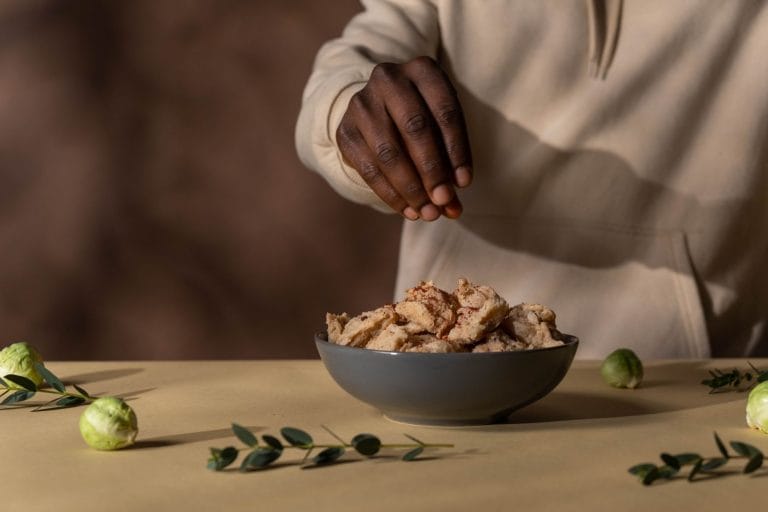
Seitan nutrition from USDA data, how it is made, its protein quality compared with other plant proteins, who must avoid it, and a simple homemade method.
Seitan is a chewy, high-protein meat substitute made from wheat gluten. Dry vital wheat gluten, the usual starting ingredient, is about 75% protein by weight, with very little fat (1). That makes seitan one of the most protein-dense plant foods available.
It is also the one plant protein that some people must avoid completely. Because it is concentrated gluten, it is off-limits for anyone with celiac disease, wheat allergy or gluten sensitivity (4).
Key Takeaways
- Dry vital wheat gluten has about 75 g of protein and 370 calories per 100 g (1).
- Wheat protein is low in lysine, so pair seitan with beans, lentils or peas (2).
- Seitan is not safe for people with celiac disease, wheat allergy or gluten sensitivity (4).
- Packaged meat substitutes tend to be higher in salt and additives than plain meat (5).
- Well-planned vegetarian and vegan diets can meet protein needs at all life stages (3).
What Seitan Is
 Save
SaveSeitan is what remains when the starch is washed out of wheat dough: an elastic mass of gluten protein. Most home cooks now skip the rinsing and start with vital wheat gluten, a flour-like ingredient, mixing it with water or broth and seasonings before simmering, steaming or baking it.
Because the flavor is mild, it takes on marinades and spices well, which is why it appears in stir-fries, sandwiches and burgers in place of meat. If you are moving toward more plant meals, see our plant-based diet guide.
Seitan Nutrition Facts
These USDA values are for dry vital wheat gluten, the main ingredient (1):
| Nutrient | Per 100 g dry vital wheat gluten | Per 30 g (about 3 tbsp) |
|---|---|---|
| Calories | 370 kcal | 111 kcal |
| Protein | 75.16 g | 23 g |
| Fat | 1.85 g | 0.6 g |
| Carbohydrate | 13.79 g | 4.1 g |
| Fiber | 0.6 g | 0.2 g |
| Iron | 5.2 mg | 1.6 mg |
| Calcium | 142 mg | 43 mg |
| Sodium | 29 mg | 8.7 mg |
Two points worth understanding:
- Cooked seitan has lower numbers per 100 g than the dry flour, because water and seasonings are added during cooking. Check the label on packaged seitan for its own values.
- Sodium depends entirely on preparation. Plain vital wheat gluten has only 29 mg of sodium per 100 g (1), but seitan is usually simmered in salty broth or soy sauce, and packaged versions can be high in salt (5).
What Packaged Seitan Actually Contains
The table above is for the dry flour, and nobody eats the dry flour. Here are three ready-made seitan products as they are sold, from the USDA branded food database, per 100 g 1:
| Product | Calories | Protein | Sodium |
|---|---|---|---|
| Seitan wheat protein, cubed (Hain Celestial) | 141 kcal | 24.7 g | 447 mg |
| Seitan original (Pacific Foods) | 107 kcal | 17.9 g | 298 mg |
| Seitan wheat protein, cubed (Wegmans) | 106 kcal | 21.2 g | 553 mg |
Two things fall out of that. The protein lands around 18 to 25 g per 100 g rather than 75, because the cooked product is mostly water. And the sodium goes from 29 mg per 100 g in the plain flour to between 298 and 553 mg once it is a product on a shelf, which is ten to nineteen times more 1. That is the single biggest reason to make it at home, and it is also why the brand matters more than the ingredient.
Protein Quality: Why Pairing Matters
Seitan is protein-dense, but wheat protein is not well balanced on its own. In cereals, lysine is usually the first-limiting amino acid, meaning it runs out before the others (2).
The practical fix is old and simple: eat cereals with pulses. Research measuring protein quality (DIAAS) in cooked cereal and pulse blends found that combining them complements most of the indispensable amino acids, raising the quality of the meal compared with the cereal alone (2).
In everyday cooking that means serving seitan with beans, lentils, chickpeas or peas, or simply eating a varied diet across the day. The Academy of Nutrition and Dietetics states that appropriately planned vegetarian and vegan diets are nutritionally adequate at all stages of life, including pregnancy, childhood and for athletes (3). Our vegetarian meal plan shows how this looks in practice.
Seitan vs Chicken Breast
You will see it written that seitan beats chicken on protein. That comparison is being made against the dry flour, and it does not survive being made against the food. Per 100 g, against skinless chicken breast cooked on a grill 1:
| Per 100 g | Packaged seitan | Grilled chicken breast |
|---|---|---|
| Calories | 106 to 141 kcal | 151 kcal |
| Protein | 17.9 to 24.7 g | 30.5 g |
| Fat | Low | 3.2 g |
| Sodium | 298 to 553 mg | 52 mg |
| Vitamin B12 | None unless fortified | 0.21 µg |
| Amino acids | Low in lysine, needs pairing | Complete on its own |
So chicken wins on protein per 100 g, wins clearly on sodium, and brings B12 that seitan does not have. Seitan is lighter in calories and fat, has no cholesterol, and is the point of the exercise for anyone not eating meat. The 2024 review of plant-based meat analogues makes the same point from the other direction: these products tend to be lower in protein and B12 and higher in salt than the meat they replace, and some of their protein and iron is less available to the body 5.
None of that makes seitan a bad food. It makes the slogan wrong.
Who Should Not Eat Seitan
- Celiac disease. Gluten must be avoided for life to prevent symptoms and damage to the small intestine, so seitan is not an option (4).
- Wheat allergy. Seitan is a wheat product and can trigger allergic reactions.
- Non-celiac gluten sensitivity. If gluten reliably causes symptoms for you, seitan is the most concentrated source you can eat.
Gluten also appears in barley, rye and triticale, and in foods made from them, so people avoiding gluten need to read labels carefully (4).
Packaged Seitan vs Homemade
A 2024 review comparing plant-based meat analogues with real meat found that these products tend to be lower in protein and vitamin B12 and higher in salt, sugar and food additives, with some nutrients, including protein and iron, less bioavailable. The authors concluded there is not enough evidence that meat analogues are automatically healthier, and that it depends on the specific product and how processed it is (5).
Making seitan at home solves most of that. A simple version:
- Mix 1 cup (about 120 g) of vital wheat gluten with seasonings such as garlic powder, onion powder and nutritional yeast.
- Stir in about 3/4 cup of water or low-sodium vegetable broth until a firm dough forms.
- Knead for a couple of minutes, then rest the dough for 10 minutes.
- Shape into cutlets or chunks and simmer gently in low-sodium broth for about 45 minutes, or steam wrapped in foil for a firmer texture.
- Cool, then slice and pan-fry, bake or add to stir-fries.
Homemade seitan lets you control the salt, which matters if you are watching blood pressure.
How to Use Seitan
- Sliced and pan-fried in sandwiches or wraps
- Cubed in stir-fries with vegetables and rice
- Shredded into tacos, chili or pasta sauce with beans for better protein quality (2)
- Grilled as skewers with a marinade
If you need protein without gluten, soy protein, tofu, tempeh and legumes are the usual alternatives, and homemade protein shakes can fill gaps.
Frequently Asked Questions
What is seitan made of?
Seitan is made from wheat gluten. You either rinse the starch out of wheat dough or start with vital wheat gluten flour, then mix it with liquid and simmer, steam or bake it. The result is dense and chewy, which is why it is used as a meat substitute.
How much protein is in seitan?
A lot, because it is concentrated wheat protein. Dry vital wheat gluten is about 75 g of protein per 100 g, so 30 g of the dry flour provides roughly 23 g of protein. Cooked seitan contains less per 100 g because water is added during cooking.
Is seitan a complete protein?
Wheat protein is low in the amino acid lysine, which is typically the first-limiting amino acid in cereals. Combining cereals with pulses such as beans, lentils or peas raises the overall protein quality of the meal.
Can people with celiac disease eat seitan?
No. Seitan is concentrated wheat gluten. People with celiac disease need to avoid gluten for life, and that includes seitan. The same applies to wheat allergy and non-celiac gluten sensitivity.
Is store-bought seitan healthy?
It depends on the product. A review comparing plant-based meat analogues with real meat found they tend to be higher in salt and food additives, and that some nutrients are less bioavailable. Check the label for sodium, or make seitan at home.
Does seitan have more protein than chicken?
Not as you eat it. Dry vital wheat gluten is about 75 g of protein per 100 g, which is where the claim comes from, but that is flour. Packaged seitan runs roughly 18 to 25 g of protein per 100 g, while skinless grilled chicken breast is about 30 g. Seitan is lower in calories and fat and has no cholesterol, but on protein per 100 g of food, chicken is ahead, and chicken also carries vitamin B12 that seitan does not.
What are the side effects of seitan?
For anyone with celiac disease, wheat allergy or gluten sensitivity, seitan is the most concentrated source of gluten you can eat and it is not a question of moderation. For everyone else it is a food rather than a risk, and the thing to watch is salt: packaged versions carry between ten and nineteen times the sodium of the plain flour they are made from. Some people also find a large portion heavy to digest, which is a texture and quantity matter rather than a reaction.
The Bottom Line
Seitan is one of the most protein-dense plant foods, with about 75 g of protein per 100 g of dry vital wheat gluten and very little fat. Its weak point is amino acid balance, since wheat is low in lysine, so pair it with beans or lentils. Packaged versions can be salty and heavily processed, so read labels or make it at home. Anyone with celiac disease, wheat allergy or gluten sensitivity should avoid seitan entirely.
This article is for informational purposes only and is not a substitute for professional medical advice. Talk with a doctor or registered dietitian if you have celiac disease, a food allergy, kidney disease or another condition that affects your diet.
Related Articles
Plant-Based Diet: Benefits, Risks and How to Start
Vegan Diet: The Evidence and the Nutrient Gaps
Vegetarian Diet Plan for Weight Loss: 7-Day Meal Plan
Soy Protein vs Whey Protein: What Trials Show
9 Homemade Protein Shakes Made With Real Food