
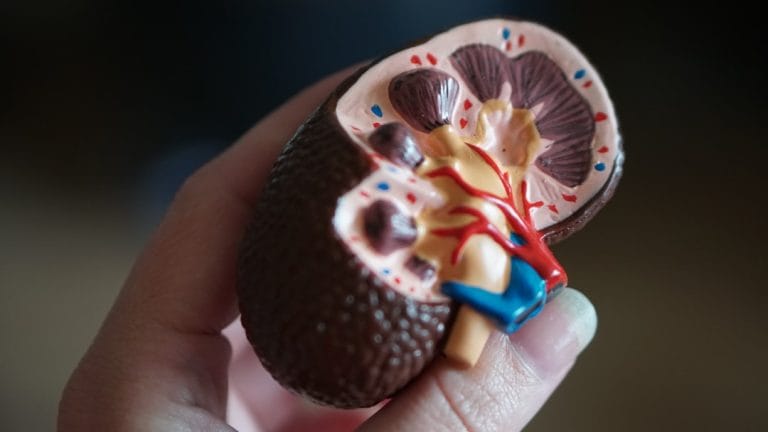
What actually protects kidneys, why most “kidney superfood” lists answer the wrong question, and when food advice changes completely.
Lists of foods for healthy kidneys usually fail in the same way: they mix up two different audiences. If your kidneys work normally, there is no special kidney diet, and the things that protect them are blood pressure, blood sugar, sodium and a few habits (1). If you already have chronic kidney disease, the diet becomes specific, individual and medical, and generic advice can do harm (2).
This guide keeps those two apart. It also corrects some claims that used to appear here, including a water target that does not match any official recommendation and a pH idea that is not how the body works.
Key Takeaways
- Diabetes and high blood pressure are the leading causes of kidney disease (1).
- For healthy kidneys, sodium under 2,300 mg a day is the number that matters (2).
- Regular use of ibuprofen or naproxen can damage kidneys (1).
- Potassium and phosphorus limits are for people with CKD, not for everyone (2).
- Early kidney disease has no symptoms; only testing shows it (3).
What Kidneys Do
Healthy kidneys filter about half a cup of blood every minute, removing waste and extra water to make urine. They also help control blood pressure, support red blood cell production and manage calcium and other minerals (4). In a single day they filter roughly 150 quarts of blood, of which only 1 to 2 quarts leave the body (4).
Nothing in a grocery bag changes that capacity. What food can do is reduce the conditions that damage it over years.
What Actually Protects Them
 Save
Save| What protects kidneys | Why it matters | Source |
|---|---|---|
| Keeping blood pressure near target | High blood pressure is one of the two leading causes of kidney disease | NIDDK (1) |
| Keeping blood glucose near target | Diabetes is the other leading cause | NIDDK (1) |
| Limiting sodium to 2,300 mg a day | Dietary guidance for adults; many people with CKD need less | NIDDK (2) |
| Caution with regular NSAID use | Regular ibuprofen or naproxen use can damage the kidneys | NIDDK (1) |
| Not smoking, limiting alcohol | Both raise blood pressure and overall risk | NIDDK (1) |
| Physical activity and 7 to 8 hours of sleep | Part of the same prevention package | NIDDK (1) |
Sodium is where diet has the clearest role. Most sodium comes from prepared, packaged and fast foods rather than the salt shaker, so the practical moves are choosing unprocessed meats over processed ones, checking the Nutrition Facts label, and treating a Daily Value of 20% or more per serving as high (2).
Popular Claims, Checked
| Claim in circulation | What is actually the case | Verdict |
|---|---|---|
| Drink 8 glasses a day, or 13 for men | Fluid needs vary; for stone prevention many clinicians suggest six to eight 8-ounce glasses unless you have kidney failure. Too much water causes hyponatremia (5, 6) | Oversimplified |
| Lemon water balances your body’s pH | Your body controls blood pH tightly; food does not shift it | No |
| Garlic protects kidneys alongside diabetes medication | That finding comes from animal work, not from people | Animal only |
| Asparagus preserves kidney function | Shown in hypertensive rats, and it is relatively high in potassium and phosphorus | Animal only |
| Cranberries help the kidneys | Cochrane evidence is about urinary tract infections in specific groups, not kidney function (7) | Different organ |
| Low-potassium vegetables are better for everyone | Potassium restriction applies to people whose blood potassium is high, not to healthy kidneys (2) | Depends on you |
On water specifically
The version of this article that stood here recommended “8 glasses a day for women and up to 13 for men”. That does not match official guidance. For preventing kidney stones, many clinicians suggest six to eight 8-ounce glasses a day unless you have kidney failure, and advise asking what is right for you (5). Drinking far more than you need can dilute blood sodium and cause hyponatremia, with symptoms from headache and nausea through to confusion and seizures (6).
A Sensible Everyday Pattern
 Save
SaveFor people with normal kidney function, this is not exotic:
- Vegetables and fruit at most meals. Peppers, cabbage, cauliflower, onions, apples and berries are all good foods. They are not medicines for the kidney, and they do not need to be low in potassium unless a doctor has told you so (2).
- Less sodium. The single most useful change, and mostly about packaged food (2).
- Fish and other whole protein sources in normal amounts. Protein is essential; people with CKD may need moderate amounts, which is a clinical decision rather than a general rule (2).
- Fluid to thirst, more in heat or hard exercise (5).
Cranberries are worth one clarification, since they appear on every kidney list. The Cochrane evidence supports cranberry products for reducing symptomatic urinary tract infections in women with recurrent UTIs and in children, and does not support their use in older adults or pregnancy (7). That is the bladder and urinary tract, not kidney function.
If You Already Have Kidney Disease
Here the advice changes, and generic lists stop being safe. NIDDK is direct: what you eat and drink affects how well CKD treatments work, nutritional needs change as CKD advances, and a registered dietitian should help build an individual plan (2).
- Sodium. Many people with CKD need less than the general 2,300 mg limit; your clinician sets the number (2).
- Potassium. High blood potassium can cause heart and muscle problems, so the right amount is worked out with a dietitian rather than guessed (2).
- Phosphorus and protein. Both may need adjusting, and too little protein risks malnutrition, so this is balanced case by case (2).
This is exactly why a food that is healthy for most people can be the wrong choice for someone on dialysis. For the related but separate question of stones, our kidney stone diet guide and low-oxalate diet guide go into detail, and the low-potassium diet covers restriction properly.
Get Tested Rather Than Guessing
Early kidney disease usually causes no symptoms, and testing is the only way to know how your kidneys are working. Get checked if you have diabetes, and then yearly; also if you have high blood pressure, heart disease or a family history of kidney failure (3).
Beyond that, the prevention list is unglamorous and effective: manage the conditions you have, take medicines as prescribed, be careful with regular over-the-counter painkillers, stay active, aim for 7 to 8 hours of sleep, stop smoking and limit alcohol (1). General healthy eating, as covered in our guide to eating well, supports all of it.
Frequently Asked Questions
What foods are best for healthy kidneys?
For people with normal kidney function there is no special kidney diet. The eating pattern that protects kidneys is the one that keeps blood pressure and blood sugar in range: plenty of vegetables and fruit, less sodium, less ultra-processed food. Sodium is the one number worth watching, with 2,300 mg a day as the general adult limit.
Should I limit potassium and phosphorus to protect my kidneys?
Not if your kidneys are healthy. Those restrictions exist for people whose blood levels are already high because their kidneys cannot clear them. Applying them without a reason can push you away from vegetables and fruit for no benefit.
How much water should I drink for my kidneys?
Enough that you are not habitually thirsty, and more if you are sweating heavily or prone to kidney stones. For stone prevention many clinicians suggest six to eight 8-ounce glasses a day unless you have kidney failure. Deliberately drinking far more than you need can dilute blood sodium dangerously.
Can diet reverse kidney disease?
No. Diet can help slow progression and manage symptoms, and it works alongside treatment of the underlying cause. If you have CKD, nutritional needs change as it advances, which is why a renal dietitian is part of the care team.
How do I know if my kidneys are healthy?
By testing. Early kidney disease usually has no symptoms, so blood and urine tests are the only way to know. Get checked if you have diabetes, high blood pressure, heart disease or a family history of kidney failure.
The Bottom Line
There is no kidney superfood. For healthy kidneys, protection comes from controlling blood pressure and blood sugar, keeping sodium under about 2,300 mg a day, being careful with regular anti-inflammatory painkillers, and getting tested if you are at risk, because early kidney disease is silent. For people who already have kidney disease, the diet becomes individual and belongs with a renal dietitian, since the potassium and phosphorus limits that help them are irrelevant, and sometimes counterproductive, for everyone else.
This article is for informational purposes only and is not a substitute for professional medical advice. If you have kidney disease, diabetes or high blood pressure, talk with your doctor or a registered dietitian before changing your diet.
Related Articles
Kidney Stone Diet: What to Eat, Drink and Avoid
Low-Oxalate Diet: Who It Helps and Where It Fits
Low-Potassium Diet: Who Needs It and How It Works
Positive Effects of Healthy Eating: What Research Shows
How to Flush Your Kidneys Naturally: What Works