
What coconut meat benefits actually hold up, what the nutrition label really says, and why the medium-chain triglyceride story is weaker than the packaging implies.
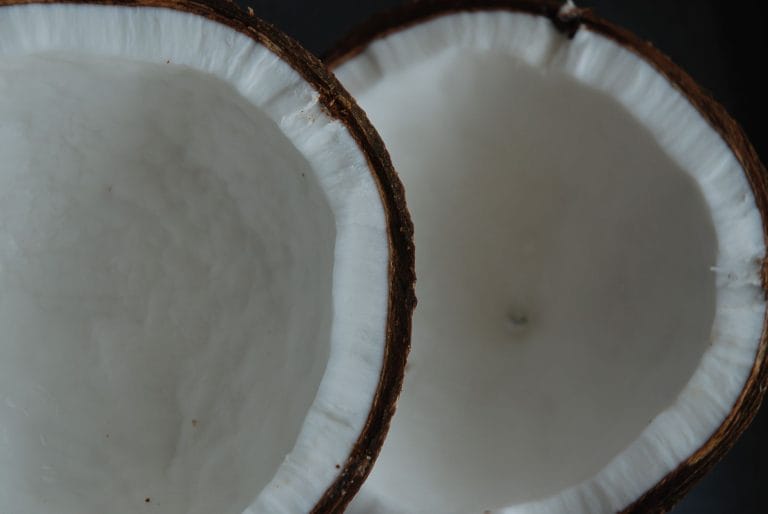
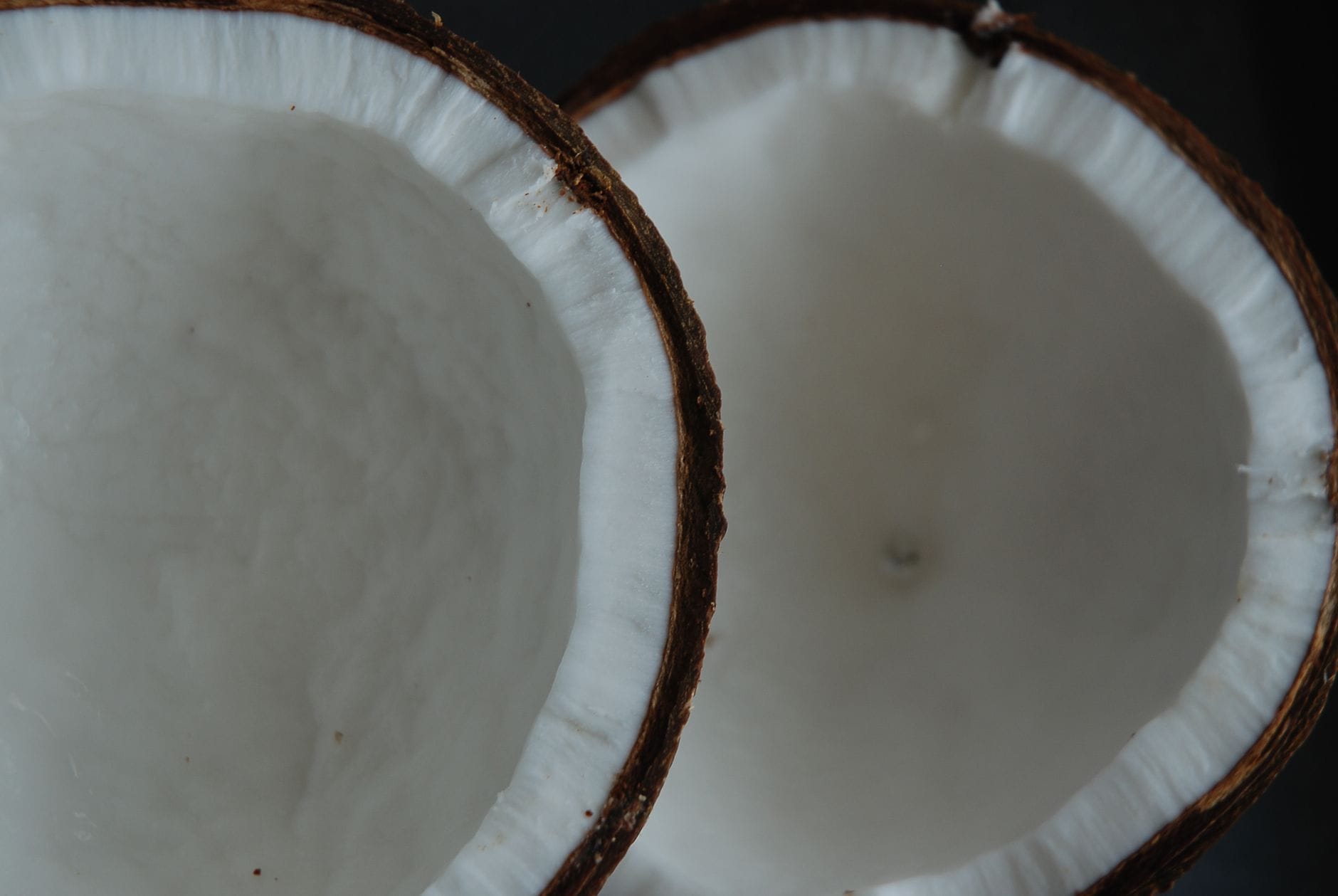
Coconut meat is the firm white flesh lining the shell of the fruit of the Cocos nucifera palm. You can eat it fresh, shredded or dried, and it brings something the oil and the milk do not: fibre, at 9 g per 100 g (1).
It also brings 29.7 g of saturated fat per 100 g, and that number changes how the rest of this page has to be written.
Key Takeaways
- Raw coconut meat gives 9 g of fibre and 354 kcal per 100 g, plus standout manganese and copper (1).
- The same 100 g holds 29.7 g of saturated fat. One cup of shredded coconut is about a full day’s allowance (1, 9).
- Coconut is not the MCT food it is sold as: only about 4.2 g per 100 g is the C8 and C10 fat the research used (1, 4).
- Coconut oil raised LDL cholesterol by 10.47 mg/dL versus non-tropical oils in a meta-analysis of 16 trials (2).
- A 120-person randomised trial of virgin coconut oil in Alzheimer’s disease found no cognitive benefit (5).
What Is Actually in It
 Save
SaveHere is the full picture for raw flesh, straight from the USDA database (1).
| Per 100 g, raw coconut meat (1) | Amount | What that means |
|---|---|---|
| Energy | 354 kcal | Dense. A cup of shredded coconut is 80 g, so about 283 kcal |
| Total fat | 33.5 g | Of which 29.7 g is saturated |
| Fibre | 9 g | Genuinely high, and the single best thing about eating the flesh rather than the oil |
| Protein | 3.33 g | Modest |
| Carbohydrate | 15.2 g | Including 6.23 g sugars |
| Manganese | 1.5 mg | Well above a day’s adequate intake for most adults |
| Copper | 0.435 mg | Roughly half a day’s requirement |
| Potassium | 356 mg | Useful, not remarkable |
| Selenium | 10.1 µg | About a fifth of a day |
| Iron | 2.43 mg | Non-haem, so absorption is limited |
Two things stand out, and neither is the one coconut is usually sold on.
The first is fibre. Nine grams per 100 g is a lot, and it is the honest advantage of eating the flesh over drinking the milk or cooking with the oil, neither of which contains any. In a meta-analysis of 16 randomised trials in adults with chronic constipation, 66% of people responded to added fibre against 41% on control, with stool frequency and consistency both improving, although the clear results came from doses above 10 g a day and from psyllium and pectin specifically (6). Coconut will contribute to that total; it will not carry it on its own. The broader high-fibre food list is the better place to start.
The second is the trace minerals. The manganese and copper figures here are genuinely high for a plant food, and the previous version of this page barely mentioned them while spending several paragraphs on claims that do not hold up.
The MCT Claim, Examined
This is the part of the coconut story that gets repeated most and checks out least.
The previous version of this page said coconut meat is “unusually high in medium-chain triglycerides” and pointed to research showing MCTs reduce fat storage. The research is real. The link to coconut is much weaker than it sounds, and the reason is in the fatty acid breakdown.
| Fatty acid in 100 g of coconut meat (1) | Grams | Is it really a medium-chain triglyceride? |
|---|---|---|
| Caprylic acid, C8:0 | 2.35 g | Yes — this is what MCT research means |
| Capric acid, C10:0 | 1.86 g | Yes |
| Lauric acid, C12:0 | 14.9 g | Chemically medium-chain, but it behaves largely like a long-chain fat and is the main reason coconut raises cholesterol |
| Myristic acid, C14:0 | 5.87 g | No — long-chain saturated fat |
| Palmitic acid, C16:0 | 2.84 g | No — long-chain saturated fat |
| Unsaturated fat, total | 1.79 g | Almost none |
The meta-analysis people cite for MCTs looked specifically at C8:0 and C10:0. Across 13 trials in 749 adults, replacing long-chain fats with those MCTs produced a weight difference of 0.51 kg, along with small reductions in waist circumference and body fat. The authors also noted that many trials lacked enough information for a full quality assessment and that commercial bias was detected, and they called for independent replication (4).
So the honest version is: the effect is half a kilo, the evidence has commercial fingerprints on it, and coconut meat contains about 4.2 g of the relevant fats per 100 g while containing 14.9 g of lauric acid. Lauric acid is sometimes counted as medium-chain on a label, but it is absorbed and handled much more like a long-chain saturated fat, which is precisely why coconut affects blood cholesterol the way it does.
Coconut and Cholesterol
The previous version of this page presented coconut as an ally to the cardiovascular system. That framing does not survive the evidence.
A systematic review and meta-analysis in Circulation pooled 16 trials comparing coconut oil with other cooking fats. Coconut oil raised LDL cholesterol by 10.47 mg/dL and raised HDL by 4.00 mg/dL compared with non-tropical vegetable oils. It did not significantly change blood glucose, inflammatory markers or body fatness. The authors’ conclusion was that this should inform choices about coconut oil (2).
An umbrella review of nine meta-analyses found a slightly softer picture for coconut specifically: replacing polyunsaturated oils with coconut oil raised total cholesterol by 5.88 mg/dL and HDL by 2.27 mg/dL, with the LDL change not reaching significance. The same review found the clearest harm came from animal-source saturated fat, and concluded that swapping unsaturated plant fats for saturated plant fats raises LDL slightly while also raising HDL (8).
Behind both sits the American Heart Association’s advisory on dietary fats, which found that randomised trials replacing saturated fat with polyunsaturated vegetable oil cut cardiovascular disease by around 30%, comparable to statin treatment (3).
Two fair qualifications. All of this used coconut oil, not flesh, and whole coconut meat brings fibre and a food matrix that pressed oil does not. And HDL going up alongside LDL is not nothing. But the claim that coconut is good for your heart is not what this literature says. If you are choosing cooking fats, the olive oil comparison is the more useful page.
What We Removed
Three claims from the previous version did not survive checking.
The Alzheimer’s paragraph. The old text said compounds in coconut “may help with the prevention and management” of the disease. Since then a proper test has been run: 120 Sri Lankan adults with mild-to-moderate Alzheimer’s were randomised to 30 mL a day of virgin coconut oil or canola oil for 24 weeks. There was no significant difference in cognitive scores, lipid profile or HbA1c between the groups (5). A subgroup of APOE ε4 carriers showed a change, which is a hypothesis for a future trial, not a finding to build a health page on.
The nutritionist quote. The old page quoted a named nutritionist saying coconut’s fats carry antiviral, antifungal and tumour-suppressing properties. We could not verify the person or the source, and claims at that level require far better evidence than an unsourced quotation. It is gone.
The blood sugar section. It rested on a study we could only find through a paper aggregator rather than a journal or PubMed record, plus animal research described as though it applied to people. The Circulation meta-analysis, which did look at this, found no significant effect of coconut on measures of glycaemia (2). If blood sugar is your concern, the blood sugar guide and the insulin resistance guide are built on stronger ground.
How Much, and How to Use It
 Save
SaveThere is no official recommended amount for coconut meat. The number that matters is the saturated fat.
The Dietary Guidelines for Americans advise keeping saturated fat below 10% of daily calories (9), which works out at roughly 22 g on a 2,000-calorie day. The American Heart Association’s target is stricter. A cup of shredded coconut carries about 23.8 g (1). That is the whole allowance in one bowl, before any cheese, meat or chocolate enters the day.
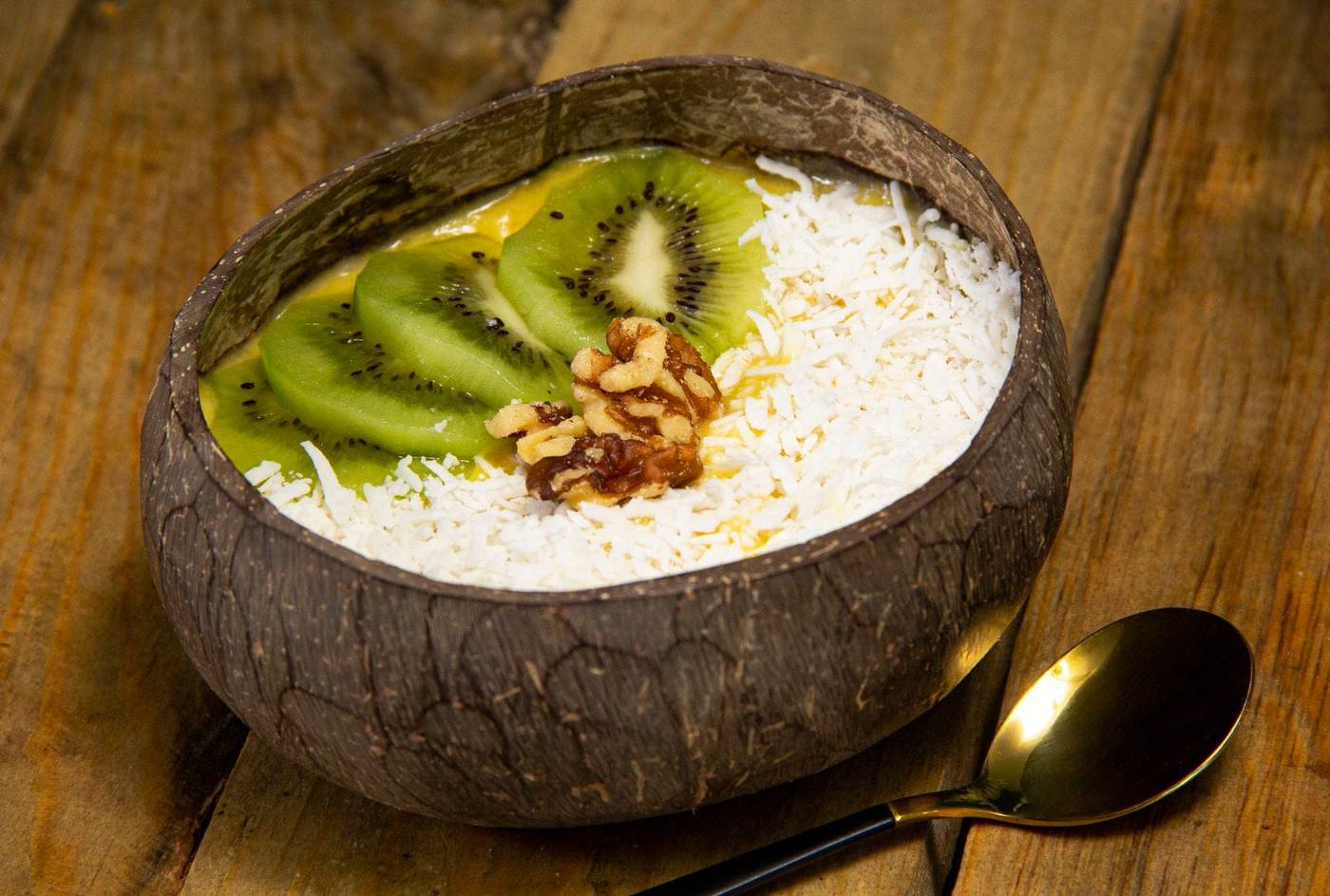
A practical portion is more like 20 to 30 g, a couple of tablespoons of shredded coconut, which gives you 2 to 3 g of fibre and 6 to 9 g of saturated fat. At that size it fits easily into a normal day.
Sensible ways to use it:
- A scattering over yoghurt, porridge or overnight oats, where a little goes a long way
- Fresh chunks stirred through a curry, stew or grain bowl near the end of cooking
- Blended into a smoothie, counting it as one of the fats rather than a free extra
- As a coating for fish, chicken or tofu before baking
- Tossed raw with cucumber, tomato, red onion, coriander and lime for something savoury
If you are eating coconut mainly for weight loss, it is the wrong lever; our look at coconut water covers a related overclaim.
The Allergy Question
Coconut was added to the US Food and Drug Administration’s list of tree nuts in 2006, which has caused a great deal of unnecessary avoidance. Botanically it is a drupe, and most people with tree nut allergy tolerate coconut without trouble.
A single-centre analysis of 298 coconut-specific IgE results found 30% were positive, and that the apparent link with tree nuts was largely explained by almond and macadamia: the adjusted odds ratio was 7.39 for macadamia and 5.32 for almond, with other nuts not statistically significant (7). Sensitisation on a blood test is not the same as clinical allergy, which the authors were careful to say. If you are allergic to macadamia or almond, raise coconut with your allergist rather than deciding either way yourself.
Frequently Asked Questions
Is coconut meat healthy?
It is a real whole food with real fibre: 9 g per 100 g, which is more than most fruit and more than you get from any coconut oil or coconut milk. It also carries 29.7 g of saturated fat per 100 g, which is the part that decides how much of it belongs in your week. A small daily portion alongside other foods is reasonable. Treating it as a health food you can eat freely is not.
How much saturated fat is in coconut meat?
About 29.7 g per 100 g of raw flesh, or roughly 23.8 g in a standard cup of shredded coconut. The Dietary Guidelines for Americans advise keeping saturated fat under 10% of calories, which is about 22 g on a 2,000-calorie day, and the American Heart Association suggests a stricter target still. One cup of shredded coconut therefore uses up a whole day, or more.
Is coconut meat a good source of MCTs?
Less than the marketing suggests. The trials behind MCT claims used caprylic and capric acid, C8 and C10. Raw coconut meat contains about 4.2 g of those per 100 g. What it actually has a lot of is lauric acid, 14.9 g, which is often counted as an MCT on labels but is absorbed and handled more like a long-chain fat.
Does coconut raise cholesterol?
A meta-analysis of 16 trials found that coconut oil raised LDL cholesterol by 10.47 mg/dL compared with non-tropical vegetable oils, while also raising HDL by 4.00 mg/dL. Those trials used oil rather than flesh, and the whole flesh brings fibre that the oil does not, but nothing in that research supports calling coconut a cholesterol-lowering food.
Who should be careful with coconut?
Anyone with a diagnosed coconut allergy. Coconut has been on the US list of tree nuts since 2006, which causes a lot of confusion, and most people with tree nut allergy tolerate it fine. One analysis found the overlap is largely explained by almond and macadamia sensitisation rather than tree nuts in general, so if you are allergic to either of those, it is a question for your allergist rather than a guess.
The Bottom Line
Coconut meat is a good source of fibre, manganese and copper, and the fibre in particular is a real reason to eat the flesh rather than the oil. It is not a heart food, it is not a meaningful source of the fats that MCT research studied, and the Alzheimer’s claim has now been tested and did not hold. The number that should drive your portion is 29.7 g of saturated fat per 100 g. Two tablespoons on your breakfast is a pleasure with a nutritional upside. A cup of it is a day’s saturated fat in one sitting.
This article is for informational purposes only and is not a substitute for professional medical advice. If you have high cholesterol, heart disease or a suspected food allergy, discuss your diet with a qualified healthcare provider.
Related Articles
Coconut Water for Weight Loss: Does It Actually Help?
Diabetes Diet: Plate Method, Carbs and the Evidence
Insulin Resistance Diet: What the Evidence Backs
High Fiber Foods List and How Much Fiber You Need
MCT Oil Benefits: What the Trials Actually Show