
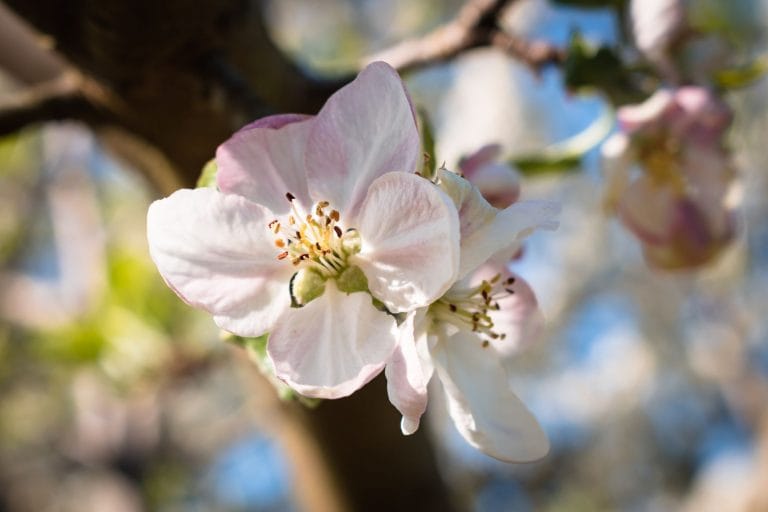
Most crab apples are edible, the seeds are the part to avoid, and USDA figures put more vitamin C and potassium in them than in an eating apple. Here is what the research actually shows, and where it stops.
You have probably walked past a crab apple tree without knowing it. In spring the branches froth with pink or white blossoms, and by late summer they hang heavy with fruit that looks like an apple shrunk in the wash. People plant them for looks and rarely stop to ask whether the fruit is worth eating.
The short answer: most crab apples are edible, the fruit is genuinely richer in some nutrients than a supermarket apple (1, 2), and the seeds are the one part to keep out of your mouth (10).
Key Takeaways
- Crab apple is not one species. The name covers small, mostly sour wild apples across dozens of Malus varieties, and some ornamental types are not worth eating.
- Per 100 g, USDA gives crab apples 76 calories, 8 mg vitamin C and 194 mg potassium, against 52 calories, 4.6 mg and 107 mg for an eating apple with skin (1, 2). USDA reports no fibre figure for crab apples.
- They are a genuinely strong source of phenolic compounds. Across 10 wild Malus species, polyphenol content ran 302 to 1,266 mg GAE per 100 g, which the authors noted was much higher than previously reported in apples (3).
- The anticancer work is laboratory work on cell lines, and the best known study used crabapple leaves, not fruit (7). The cholesterol work is in mice (8, 9). Neither has been tested in people.
- Seeds and core contain amygdalin. Cut around them, and keep children from chewing whole cores (10).
What Exactly Is a Crab Apple?
“Crab apple” is not a single species. The name covers wild apples that stay small or grow underdeveloped, and with a handful of exceptions they taste sour. The trees differ widely in height, blossom colour, and whether they set useful fruit at all; some produce nothing but flowers.
The small size is not an accident of growing conditions. Comparing five Malus cultivars from blossom to maturity, researchers found that the smallest-fruited species, M. floribunda, showed no cell proliferation at all through fruit development — the fruit stays small because the cell count never rises, not because the cells stay tiny (11).
Common Varieties You Might Spot
 Save
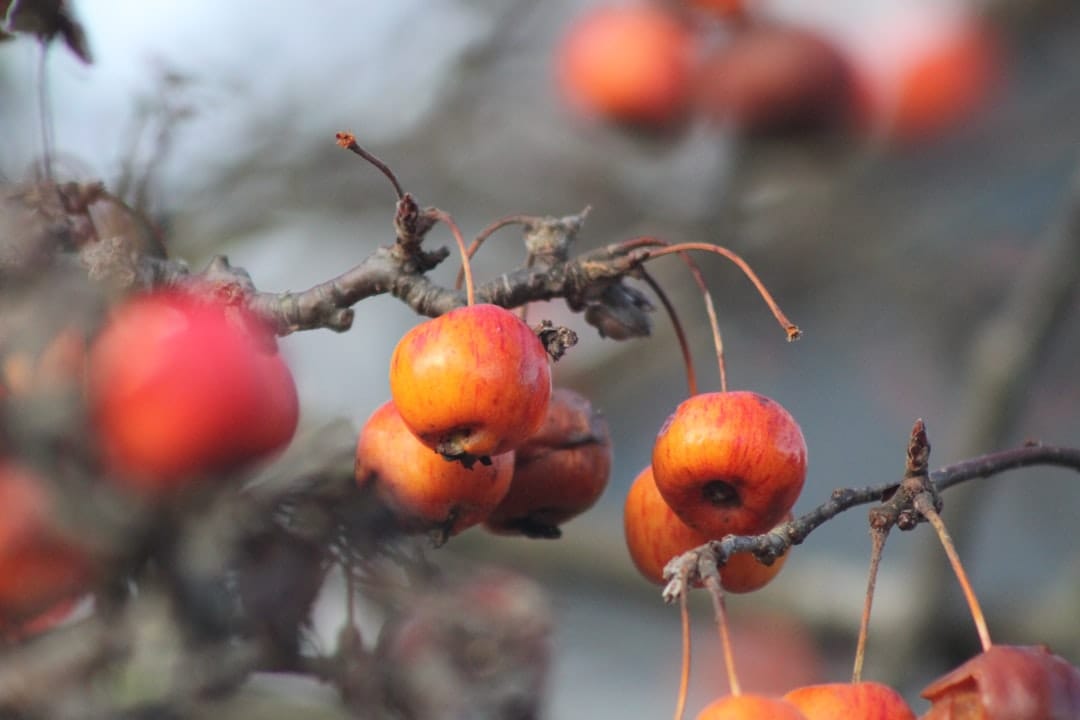
SaveThere are more hybrids than anyone can track, and a good number are purely ornamental. A few worth knowing:
- Dolgo — a tall grower prized for disease resistance. The fruit leans ornamental but works well in jams and jellies.
- Whitney — stays smaller, with pink-and-white summer flowers. It yields larger, sweeter fruit that cans and pickles well.
- Centennial — a dwarf tree, and one of the better varieties for eating fresh as well as for jelly and apple butter.
- Chestnut — handles cold climates, with a sweet, nutty flavour that suits baking.
- Hopa — striking pink flowers, though it catches disease more easily than most.
- Pink Spires — good autumn colour, but the fruit is not worth eating.
Nutrient content varies a great deal between cultivars, which is worth remembering before treating any single figure as the number for crab apples in general. One survey compared 12 crabapple cultivars and found their nutrient and functional compounds differed substantially from one another (4).
Can You Actually Eat Them?
Yes, most varieties are safe to eat, but safe and pleasant are not the same thing. Raw crab apples run from dry and bitter to sharply tart. A few taste agreeable straight off the tree. The rest earn their keep once cooked down into jam, jelly, pickles, sauce or butter, where sugar and heat mellow the sourness.
One rule holds across all of them: cut around the core and discard the seeds (10).
Crab Apple Nutrition, Against an Eating Apple
 Save
SaveThis is the comparison most articles skip. Both columns are USDA SR Legacy figures, per 100 g (1, 2):
| Per 100 g | Crab apples | Eating apple, with skin |
|---|---|---|
| Calories | 76 kcal | 52 kcal |
| Carbohydrate | 20 g | 13.8 g |
| Fibre | not reported | 2.4 g |
| Vitamin C | 8 mg | 4.6 mg |
| Potassium | 194 mg | 107 mg |
| Calcium | 18 mg | 6 mg |
| Protein | 0.4 g | 0.26 g |
Crab apples come out ahead on vitamin C, potassium and calcium, and they carry about half again as many calories. The honest caveat is in the third row: USDA does not report a fibre value for crab apples at all, so any article giving you one is not getting it from there.
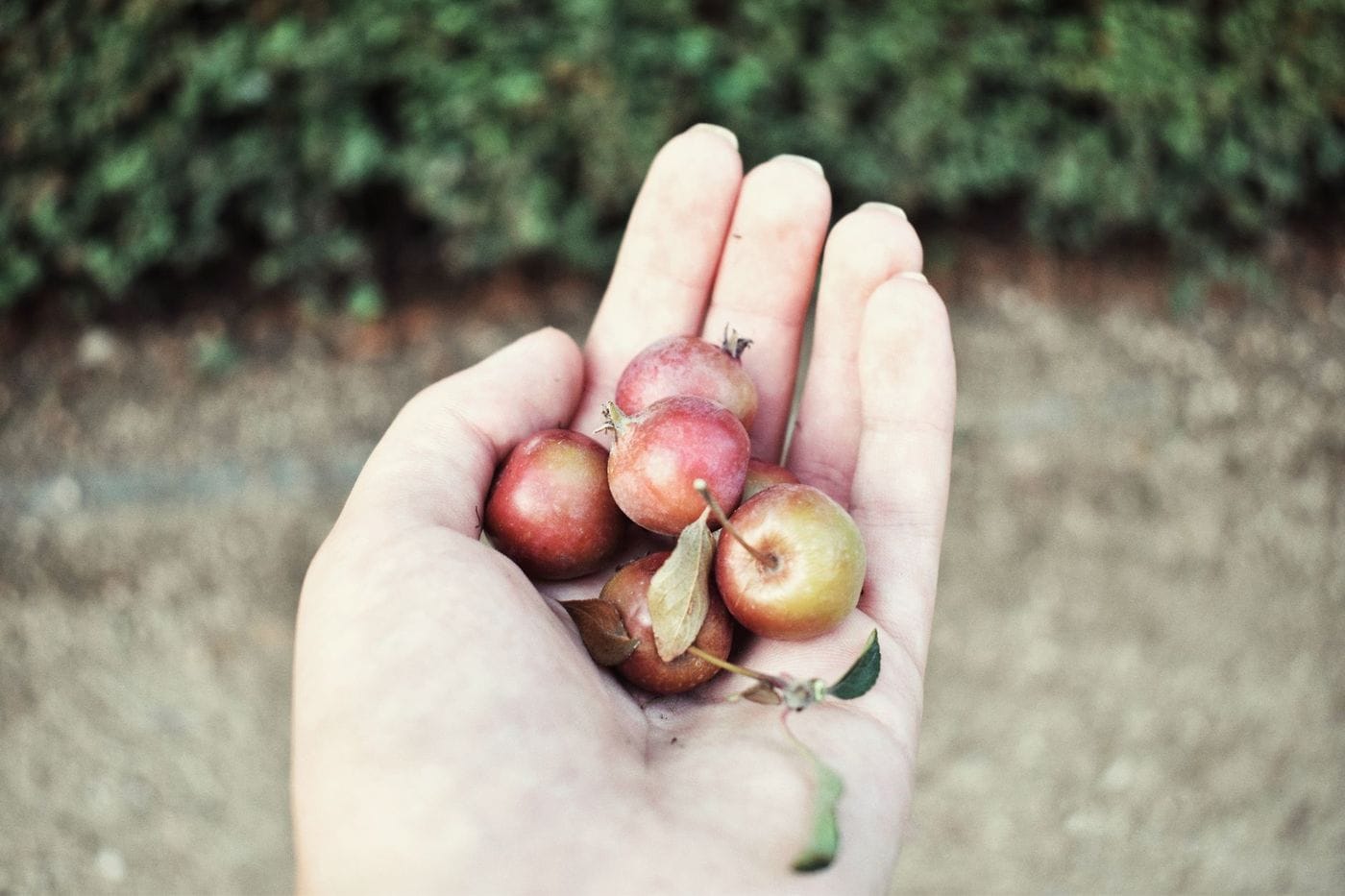
The other catch is size. A medium eating apple is about three inches across, while crab apples measure three-quarters of an inch to two inches, so you need roughly four of them to add up to one ordinary apple. If you are weighing up fruit generally, our breakdown of whether apples support weight loss covers the bigger picture.
Where the Health Perks Come From
Antioxidant phenolics: the best-supported part
This is where the evidence is strongest, and it is chemistry rather than clinical outcomes. Extracts from 10 wild Malus species contained 302.83 to 1,265.94 mg GAE of polyphenols per 100 g and 352.45 to 2,351.74 mg RE of flavonoids, with chlorogenic acid, epicatechin, rutin, hyperin and phlorizin as the main compounds. The authors stated these levels were much higher than those previously reported in cultivated apples (3).
A separate analysis of high-altitude Himalayan crab apples (Malus baccata) measured phloretin at 88.39 µg/mg and phloridzin at 83.03 µg/mg, and found the pulp had higher antioxidant activity than the seeds (5) — a useful detail, given that the seeds are the part you throw away anyway.
If antioxidant-dense fruit interests you, tart cherry juice and the deeply pigmented maqui berry travel in similar company.
The anticancer research, and what it actually tested
This needs stating plainly, because it is usually reported loosely. The most cited study isolated seven dihydrochalcone compounds from crabapple leaves, not the fruit, and tested them in an MTT assay against human cancer cell lines in a dish: A549 lung, Bel 7402 liver, HepG2 and HT-29 colon. Several compounds inhibited growth, and one newly described compound acted on all four lines (7). Work on the fruit itself has reported anti-proliferative activity along the same lines (6).
What that means in practice: compounds extracted from a plant, concentrated, applied directly to cells in a laboratory. No human has been tested, and eating the fruit is not the same experiment. It is a reason for researchers to keep looking, not a reason to eat crab apples for cancer.
Cholesterol: mice, not people
Two studies point the same way, and both are animal work. Extracts of five crabapple varieties lowered total cholesterol and LDL cholesterol in high-fat-diet obese mice, also reducing triglycerides and improving fasting glucose, and raised liver CYP7A1, the enzyme central to clearing cholesterol (8). A second team saw serum cholesterol fall in the same mouse model using extracts of three other Malus types, and traced the effect to compounds including hyperoside, quercetin, kaempferol and ursolic acid (9).
Both used concentrated extracts in mice bred to be obese. That is a long way from a bowl of fruit in a person, and the authors do not claim otherwise.
The Seed Problem and Other Cautions
Here is the one thing not to shrug off. Crab apple seeds and cores contain amygdalin, a cyanogenic glycoside the body can convert to cyanide. It is the same compound found in the seeds, pips and kernels of apples, peaches, almonds, cherries, plums and apricots (10).
The numbers put it in proportion. The estimated lethal dose of cyanide for an adult is about 1.5 mg per kilogram of body weight, and the lethal dose swallowed with food is roughly 200 to 300 mg (10). A few seeds do not approach that. The sensible practice is simply to cut around the core, avoid deliberately chewing quantities of seeds, and keep children from eating whole cores.
Beyond that, tart fruit and its natural acids can be rough on a sensitive stomach, so keep portions moderate. Our fruit diet guide walks through balancing fruit without overdoing any single one.
Picking and Storing Them
- Harvest when the fruit has fully coloured and gives slightly to a gentle squeeze, usually late summer into autumn depending on the variety.
- Sort out bruised or blemished fruit before storing; one spoiling apple really does hasten the rest.
- Kept cool they last a while. For longer storage, cook them into preserves and can or freeze the result.
- Only forage from trees you can identify and that have not been sprayed.
What To Actually Do With Them: Crab Apple Jelly
Almost nobody eats a bowl of crab apples, and that is the point of them. They are too tart and too small to work as an eating fruit, and they are unusually rich in pectin — the setting agent that most jam makers have to buy. That is why the traditional answer to a loaded tree is jelly rather than a recipe book.
The method is old kitchen practice rather than anything from a study, and it is simple enough to describe in full:
- Do not core or peel them. Wash, pull off the stalks, and halve anything larger than a cherry tomato. The skins and cores hold most of the pectin.
- Barely cover with water and simmer until the fruit collapses, usually 20 to 30 minutes. More water means a weaker set.
- Strain through a jelly bag or a muslin-lined sieve overnight. Let it drip; squeezing it gives you a cloudy jelly.
- Measure the juice, add sugar, and boil to setting point. Roughly equal weights of juice and sugar is the usual starting ratio, adjusted to taste and to how tart the fruit is.
Notice what that method does about the concern in the section above. The fruit goes in whole, the solids are strained out and discarded, and nothing crushes or serves the seeds. Jam made by pulping the fruit is the version worth being more careful with: sieve the pulp rather than mashing cores into it.
The same juice is the base for crab apple cider vinegar, and the strained pulp is sometimes cooked down further into a fruit cheese. Either way the fruit is cooked and strained, never eaten whole.
Frequently Asked Questions
What can you make with crab apples?
Jelly, mostly, and for a practical reason: crab apples are unusually rich in pectin, so they set without the added pectin most jams need. Simmer the washed fruit whole in barely enough water to cover until it collapses, strain it through a jelly bag overnight without squeezing, then boil the juice with roughly its own weight in sugar to setting point. That method also sidesteps the seed question entirely, because the solids are strained out and discarded rather than crushed or eaten. The same strained juice is used for crab apple cider vinegar.
Are crab apples poisonous?
The flesh of most varieties is not. What carries the risk is the seeds and core, which contain the cyanogenic glycoside amygdalin, the same compound found in the pips of apples, cherries, plums and apricots. The estimated lethal dose of cyanide for an adult is about 1.5 mg per kilogram of body weight, or roughly 200 to 300 mg swallowed with food, which is far above anything a few seeds deliver. Cut around the core anyway, and do not let children chew whole cores.
Can you eat crab apples raw?
Yes, most are edible raw, but edible and enjoyable are different things. Expect sharp, tart, sometimes dry fruit. Sweeter cultivars such as Whitney and Centennial are pleasant straight off the tree; the rest are better cooked into jelly, pickles, sauce or butter.
Are crab apples more nutritious than ordinary apples?
Per 100 g, USDA figures give crab apples more vitamin C (8 mg against 4.6 mg), nearly twice the potassium (194 mg against 107 mg), three times the calcium and about 50% more calories. The catch is size: crab apples run three-quarters of an inch to two inches across, so you need several to equal one eating apple. USDA does not report a fibre figure for them.
Do crab apples lower cholesterol?
That has only been shown in mice. Extracts of five crabapple varieties lowered total and LDL cholesterol in high-fat-diet obese mice, and a second study found the same with three other varieties. There are no human trials, and these were concentrated extracts rather than the whole fruit.
How many crab apples equal one regular apple?
Roughly four, going by size alone. A medium eating apple is about three inches across while crab apples range from three-quarters of an inch to two inches.
The Bottom Line
Crab apples are more than yard decoration. USDA figures put more vitamin C, potassium and calcium in them than in an eating apple (1, 2), and their polyphenol content is measurably higher than cultivated apples (3). The anticancer and cholesterol headlines, though, rest on cell lines and mice (7, 8, 9) — worth watching, not worth eating fruit for. Skip the seeds, cook the tart varieties into something good, and treat them as a small seasonal pleasure rather than a health strategy.
This article is for general information only and is not a substitute for professional medical advice. Talk to your doctor or a registered dietitian before making changes to your diet, especially if you have a health condition or take medication.
Related Articles
Are Apples Good for Weight Loss? What Science Says
Tart Cherry Juice Benefits: 7 Proven Reasons to Sip
8 Health Benefits of Mangosteen, Backed by Science
Maqui Berry Benefits, Nutrition, and How to Eat It
Fruit Diet Guide: Benefits, Risks & 7-Day Plan