
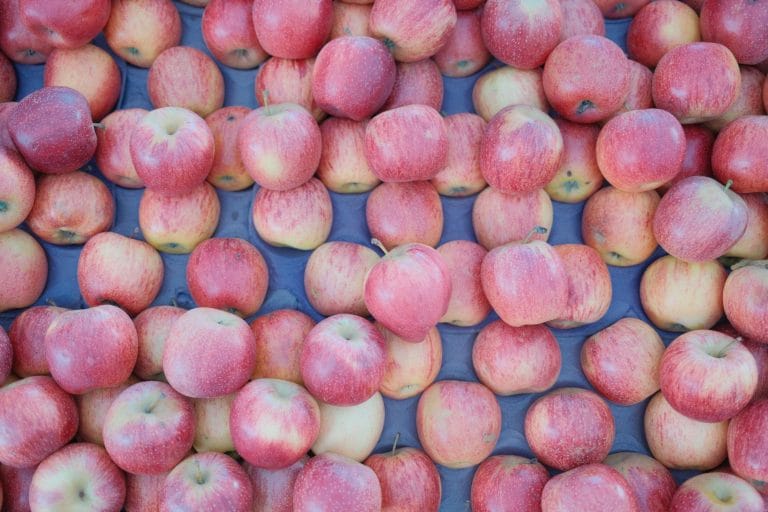
Are apples good for weight loss? What apples contain, what the studies on fullness and body weight found, and how to eat them to support weight loss.
Apples are a low-calorie, high-water fruit. A medium apple with its skin provides about 95 calories, 4.4 g of fiber and 156 g of water (1). That combination makes apples filling for relatively few calories. Their wild relatives are a different proposition — crab apples are far more tart, and their seeds carry a caution.
So, are apples good for weight loss? The research suggests they can help, mainly by keeping you full and replacing higher-calorie snacks (2, 3). But most human studies are small or observational, so apples are a helpful tool rather than a weight-loss treatment (6).
Key Takeaways
- A medium apple has about 95 calories and 4.4 g of fiber (1).
- Eating a whole apple before a meal reduced total calories at that meal by 15% (2).
- Whole apples were more filling than applesauce or apple juice (2).
- In a 12-week trial, women eating three apples or pears a day with a weight-loss diet lost 1.22 kg (3).
- In large US cohorts, eating more apples and pears was linked to less weight gain over time (4).
Apple Nutrition
| Raw apple with skin | Per 100 g | Medium apple (182 g) |
|---|---|---|
| Calories | 52 kcal | 95 kcal |
| Water | 86 g | 156 g |
| Carbohydrate | 13.8 g | 25.1 g |
| Fiber | 2.4 g | 4.4 g |
| Potassium | 107 mg | 195 mg |
| Vitamin C | 4.6 mg | 8.4 mg |
Source: USDA FoodData Central, apples, raw, with skin (1).
Apples also contain polyphenols such as quercetin, catechin, phloridzin and chlorogenic acid (12). Many apple polyphenols and fiber reach the large intestine, where gut bacteria break them down (11).
What the Research Shows
 Save
Save| Study | What was tested | Result |
|---|---|---|
| Randomized trial, 49 women (3) | 3 apples or pears vs 3 oat cookies a day, with a weight-loss diet, 12 weeks | Fruit group lost 1.22 kg; oat group lost a non-significant 0.88 kg |
| Meal study, 58 adults (2) | Whole apple, applesauce or apple juice before lunch | Whole apple cut total lunch calories by 15% and was more filling than sauce or juice |
| Cohorts, 133,468 US adults (4) | Changes in fruit intake over 4-year periods | Each extra daily serving of apples or pears linked to 1.24 lb less weight gain |
| NHANES, 13,339 children (5) | Whole apple eaters vs non-consumers | 30% lower odds of obesity; observational, one-day diet recall |
Clinical trial in women
In a Brazilian trial, 49 overweight women with high cholesterol followed a diet designed for gradual weight loss and were randomly assigned to eat three apples, three pears or three oat cookies a day. After 12 weeks, the fruit groups lost 1.22 kg, while the oat cookie group’s 0.88 kg loss was not statistically significant. The fruit groups also had a greater drop in blood glucose (3).
Long-term observational studies
In three large US cohorts of 133,468 adults followed for up to 24 years, increasing fruit intake was associated with less weight gain over 4-year periods. Each additional daily serving of apples or pears was linked to 1.24 lb less weight gain (4). In children, whole apple eaters had better diet quality and 30% lower odds of obesity than non-consumers, though this study relied on a single day’s diet recall (5).
A review of animal and human studies found that apples may help weight loss, but noted that it is still unclear how much, which type and for how long people need to eat them (6).
Why Apples Keep You Full
In a study of 58 adults, participants ate a whole apple, applesauce, apple juice, apple juice with added fiber, or nothing 15 minutes before lunch. All the apple snacks had the same weight and calories. The whole apple reduced total calories (snack plus lunch) by 15%, about 187 calories, compared with no snack, and it was more filling than applesauce or juice. Adding fiber to the juice did not make it more filling (2).
This suggests the solid, intact structure of the fruit matters, so whole apples work better for fullness than juice or purée (2). For other ways to add fiber, see our list of high-fiber foods.
Blood Sugar
 Save
SaveIn a crossover study of 18 healthy women, eating an apple before a rice meal cut the blood sugar response by about half compared with rice alone (7). In a study including 9 people with impaired glucose tolerance, eating an apple before rice lowered the peak blood sugar rise compared with eating the apple after rice (8). These were small, short studies.
In large US cohorts, eating more apples and pears was associated with a lower risk of type 2 diabetes, while more fruit juice was associated with a higher risk (9). A review also found that eating 100 to 150 g of whole apples a day was associated with lower cardiovascular risk and improvements in cholesterol and blood pressure (10).
How to Eat Apples for Weight Loss
- Choose whole apples over juice or applesauce for more fullness (2, 9).
- Eat one before a meal to help reduce how much you eat at that meal (2).
- Use apples to replace, not add to, snacks: weight loss depends on total calories. See our guide to low-calorie diets and menus.
- Keep the skin on: USDA values for a raw apple with skin are shown above (1).
- Avoid apple-only diets: the studies showing benefits used apples within a normal, balanced diet (3). For a full meal plan, see our vegetarian weight loss plan.
- Swap sugary drinks: water and unsweetened drinks are better choices than apple juice; see our article on weight loss drinks.
Frequently Asked Questions
Are apples good for weight loss?
They can help. A medium apple has about 95 calories and 4.4 g of fiber, and in a meal study, eating a whole apple before lunch reduced total calories at that meal by 15%. In a small trial, women who ate three apples or pears a day with a weight-loss diet lost slightly more weight than women who ate oat cookies instead. Apples help most when they replace higher-calorie snacks.
How many apples should I eat a day to lose weight?
There is no specific number proven for weight loss. The trial that found a benefit gave overweight women three apples or pears a day as part of a calorie-controlled diet. For most people, eating whole apples as part of a varied diet with other fruits and vegetables is a sensible approach.
Is apple juice as good as a whole apple?
No. Whole apples were more filling than applesauce or apple juice, and adding fiber to the juice did not make it more filling. In large US studies, whole apples and pears were linked to lower type 2 diabetes risk, while fruit juice was linked to higher risk.
Should I eat an apple before a meal?
It may help. Eating a whole apple 15 minutes before lunch reduced total calorie intake at the meal, and in small studies an apple eaten before rice lowered the blood sugar rise after the meal, especially in people with impaired glucose tolerance.
Does an apple-only diet work?
Eating only apples is not studied and is not a balanced diet. The research showing benefits used apples as part of a normal, calorie-controlled diet rather than as a replacement for meals.
The Bottom Line
Apples are good for weight loss in a practical sense: a medium apple has about 95 calories and 4.4 g of fiber, and whole apples are more filling than juice or applesauce. A small trial and large observational studies link apples to modest weight loss or less weight gain, but apples work best as part of a balanced, calorie-controlled diet. Eat them whole, ideally before a meal or instead of a higher-calorie snack, and skip apple-only diets.
This article is for informational purposes only and is not a substitute for professional medical advice, diagnosis, or treatment. Always consult a qualified healthcare provider before making changes to your diet, especially if you have diabetes or another health condition.
Related Articles
800 Calorie Diet: Benefits, Risks and Sample Menu
High Fiber Foods List and How Much Fiber You Need
Vegetarian Diet Plan for Weight Loss: 7-Day Meal Plan
7 Homemade Weight Loss Drinks That Can Make It Easier