
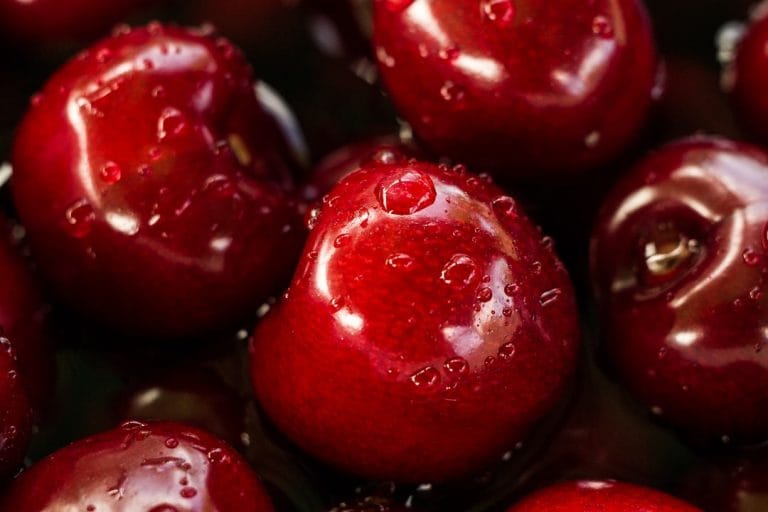
Tart cherry juice benefits checked against clinical trials and meta-analyses: exercise recovery, sleep, gout, arthritis and heart health, plus USDA nutrition facts and how much people drink in studies.
The best-supported tart cherry juice benefits are for exercise recovery, where a meta-analysis found smaller losses of strength and power after hard exercise (2). For gout, the research is promising but mostly observational (8). For sleep, blood pressure and cholesterol, newer trials and reviews have been disappointing (6, 11, 12).
This guide sums up what the research shows for each claim, including the studies that found no effect.
Key Takeaways
- One cup of tart cherry juice has about 159 calories and 37 g of carbohydrate (1).
- Tart cherry supplements modestly improved recovery of strength and power after strenuous exercise (2).
- Sleep results are mixed: small pilot studies were positive, but two later trials found no effect (4, 6, 7).
- Cherry intake was linked with 35% fewer gout attacks in one study, but trials show only a modest uric acid drop (8, 9).
- Meta-analyses found no effect on blood pressure, cholesterol or body weight (11, 12).
Tart Cherry Juice Nutrition
Tart cherry juice comes from sour cherries such as the Montmorency variety. USDA values for unsweetened tart cherry juice (1):
| Nutrient | Per 1 cup (269 g) | Per 100 g |
|---|---|---|
| Calories | 159 kcal | 59 kcal |
| Carbohydrate | 37 g | 13.7 g |
| Protein | 0.8 g | 0.31 g |
| Potassium | 433 mg | 161 mg |
| Vitamin C | 0.0 mg | 0 mg |
Almost all of the calories come from natural sugars in the juice. Two cups a day, a dose used in several studies, add about 320 calories, which matters if you are watching your weight or blood sugar.
Tart Cherry Juice Benefits: What the Evidence Shows
| Claim | What the research shows | Verdict |
|---|---|---|
| Faster exercise recovery | A meta-analysis of 14 studies found a small reduction in muscle soreness and moderate benefits for recovery of strength and power (2). A 2026 review of 19 trials in athletes found strength recovery improved, but not soreness, with very low to moderate certainty (3) | Some support |
| Better sleep | Two small pilot trials in older adults with insomnia reported benefits, one in 8 completers (4, 5). Two later trials, with 44 and 34 participants, found no effect on sleep (6, 7) | Mixed, weak |
| Fewer gout attacks | In 633 people with gout, cherry intake over 2 days was linked with a 35% lower risk of an attack (8). Tart cherry lowered uric acid only modestly in 4 trials (9) | Promising, not proven |
| Osteoarthritis pain relief | In 58 people with knee osteoarthritis, symptoms improved with the juice, but not significantly more than with placebo (10) | Not shown |
| Lower blood pressure | 7 trials found cherries did not significantly lower blood pressure (11) | Not supported |
| Better cholesterol or weight | A meta-analysis of 10 trials found no effect on cholesterol, BMI or fat mass, and a very small drop in fasting blood sugar (12) | Not supported |
1. Exercise Recovery
 Save
SaveRecovery is the best-studied benefit. A 2021 meta-analysis of 14 studies found that tart cherry supplements had a small effect on muscle soreness and moderate effects on recovery of strength and power after strenuous exercise. Two markers of inflammation, CRP and IL-6, also dropped slightly (2).
A larger 2026 review of 19 trials in trained athletes found improved recovery of maximal strength and lower CRP, but no significant effect on muscle soreness. The authors rated the certainty of evidence as very low to moderate and advised cautious interpretation (3).
2. Sleep: Mixed Results
 Save
SaveTart cherry juice is often promoted for sleep, but the evidence is weaker than its reputation.
- A 2010 pilot study in 15 older adults with insomnia found the juice reduced time awake after falling asleep. It did not improve total sleep time or time to fall asleep compared with placebo (5).
- A 2018 pilot study found sleep time increased by 84 minutes, but only 8 people completed it (4).
- A trial in 44 healthy adults who drank two 240 ml bottles a day for 30 days found no difference in sleep time or quality versus placebo (6).
- A crossover trial in 34 people with overweight or obesity and sleep problems found no effect from tart cherry capsules (7).
The authors of the 2010 study noted that the effects were considerably smaller than those of proven insomnia treatments such as cognitive behavioral therapy (5).
3. Gout
A study of 633 people with gout found that eating cherries over a 2-day period was linked with a 35% lower risk of a gout attack. Combined with the gout drug allopurinol, the risk was 75% lower than with neither (8). This was an observational case-crossover study, so it cannot prove cherries caused the difference.
A 2026 meta-analysis of 4 randomized trials with 392 participants found tart cherry lowered blood uric acid only modestly, with inconsistent results between studies (9). If you have gout, tart cherry may be a reasonable addition, but not a replacement for prescribed treatment. Our arthritis diet guide covers wider eating patterns for joint health.
4. Osteoarthritis
In a crossover trial, 58 people with mild to moderate knee osteoarthritis drank two 8 oz bottles of tart cherry juice or a placebo daily for 6 weeks. Symptoms improved with the juice, but the difference compared with placebo was not statistically significant. The juice did lower CRP, a marker of inflammation (10).
5. Blood Pressure, Cholesterol and Weight
Here the evidence is largely negative. A meta-analysis of 7 trials found cherries did not significantly lower systolic or diastolic blood pressure (11). A 2022 meta-analysis of 10 trials found tart cherry juice had no effect on total, LDL or HDL cholesterol, triglycerides, BMI, fat mass or blood pressure. It found only a very small reduction in fasting blood sugar (12).
Side Effects and Who Should Be Careful
- Calories and sugar: about 159 calories and 37 g of carbohydrate per cup (1). People with diabetes should count it as part of their carbohydrate intake.
- Digestive upset: fruit juices can cause loose stools in some people, so start with a small amount.
- Gout medication: do not stop prescribed gout treatment in favor of cherry juice (8).
- Sweetened products: choose 100% juice without added sugar.
Frequently Asked Questions
How much tart cherry juice should I drink a day?
There is no official dose. Many studies used two 8-ounce (240 ml) servings a day, for example the insomnia and knee osteoarthritis trials. One cup of tart cherry juice has about 159 calories and 37 grams of carbohydrate, so two cups add about 320 calories.
Does tart cherry juice help you sleep?
The evidence is mixed. Small pilot studies in older adults with insomnia reported improvements, but two later randomized trials in healthy adults and in people with overweight found no effect on sleep. It is not a substitute for proven insomnia treatments.
Is tart cherry juice good for gout?
It may help, but it is not proven. In a study of 633 people with gout, eating cherries was linked with a 35% lower risk of attacks. Trials show only a modest drop in uric acid. It should not replace gout medication.
Does tart cherry juice help muscle recovery?
There is some support. A meta-analysis of 14 studies found tart cherry supplements reduced muscle soreness slightly and helped strength and power recover. A newer review of 19 trials in athletes found strength benefits but no clear effect on soreness.
Does tart cherry juice lower blood pressure?
Not according to meta-analyses. A review of 7 randomized trials found cherries did not significantly lower systolic or diastolic blood pressure, and a review of 10 trials of tart cherry juice found no effect on blood pressure.
The Bottom Line
Tart cherry juice has some evidence for helping muscles recover after hard exercise and a promising, but unproven, link with fewer gout attacks. Sleep studies are mixed, with the most recent trials finding no benefit. Meta-analyses found no effect on blood pressure, cholesterol or weight. If you enjoy it, one or two cups of unsweetened juice is generally reasonable, but count the sugar and calories, and do not use it in place of medical treatment.
This article is for informational purposes only and is not a substitute for professional medical advice. Talk to your doctor before using tart cherry juice for a health condition, especially if you have diabetes or gout or take medication.
Related Articles
Arthritis Diet: Foods That Help, Foods to Limit and Evidence
Maqui Berry Benefits: What Human Studies Show
Celery Juice Benefits: What Holds Up and What Does Not
Aloe Vera Juice Benefits and Risks: What the Research Shows