

The health benefits of mangosteen explained with the evidence: what the fruit contains, what human trials found for acne and insulin sensitivity, which claims rest on animal studies, and who should be careful.
Mangosteen (Garcinia mangostana) is a tropical fruit native to Southeast Asia, with a thick purple rind and soft white segments. The fruit is eaten as food and has been used in traditional medicine for skin infections, wounds and diarrhea (2). Today, mangosteen juice is marketed as a health drink, and the rind (pericarp) is used in supplements (2).
Many of the claimed health benefits of mangosteen come from compounds called xanthones, especially alpha-mangostin, which are concentrated in the rind (11, 14). Most of the research is in cells and animals. Human studies are few and small, and mangosteen has not been shown to treat cancer in people (2).
Key Takeaways
- Mangosteen xanthones have antioxidant, anti-inflammatory and antibacterial effects in lab studies (2, 14).
- A 0.5% rind extract gel improved acne about as well as 1% clindamycin gel in a small 12-week trial (3).
- In a pilot trial of 22 women with obesity, mangosteen extract improved insulin sensitivity (5).
- Blood sugar and cholesterol benefits have been shown mainly in animals (7, 8).
- There is not enough evidence to recommend mangosteen for weight loss (9).
- Mangosteen supplements may interact with some drugs and cancer treatments, and daily mangosteen juice was linked to one case of severe lactic acidosis (2, 13).
Mangosteen Nutrition
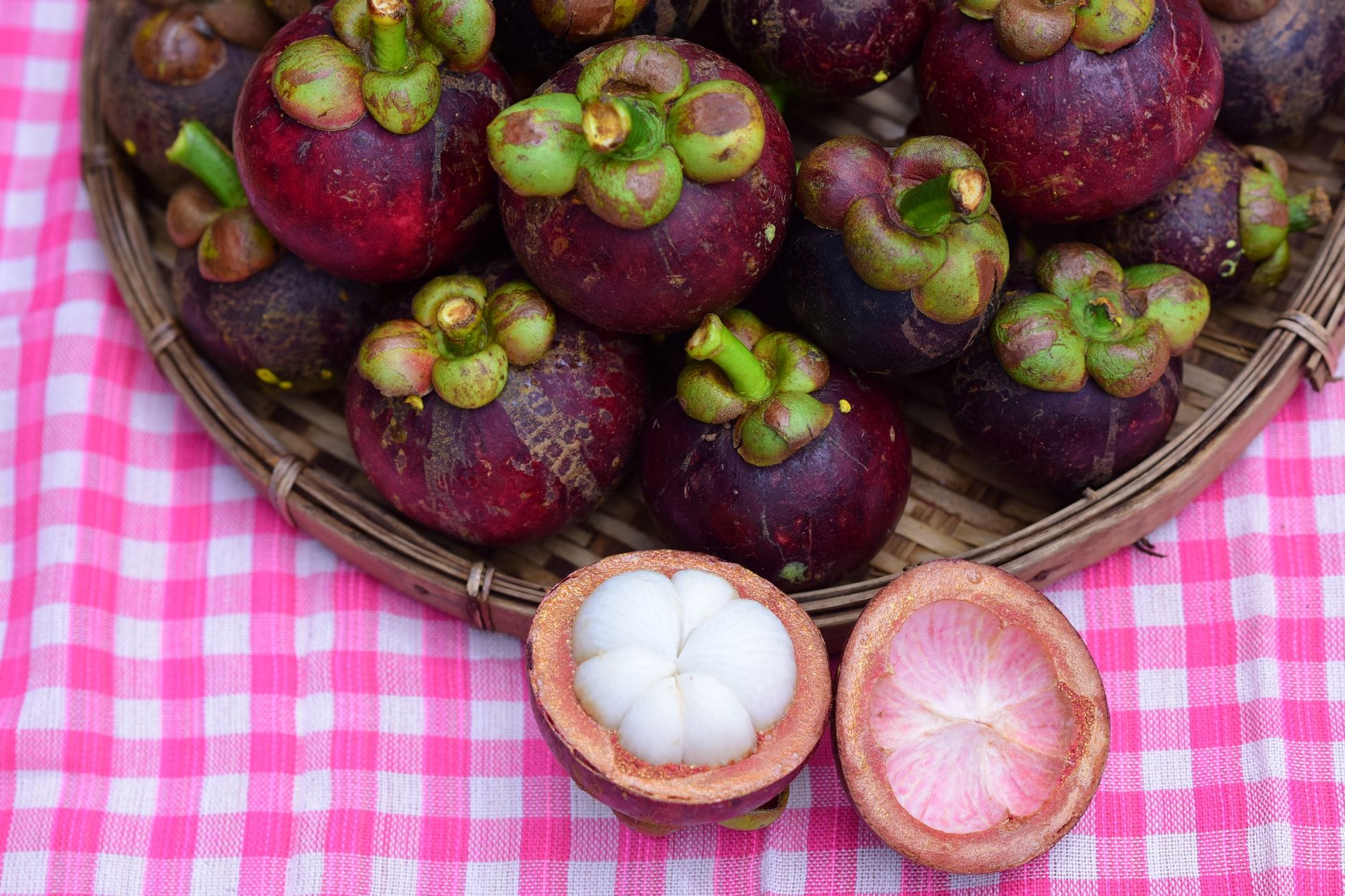 Save
SaveFresh mangosteen is not listed in USDA FoodData Central, but canned mangosteen in syrup is (1):
| Mangosteen, canned in syrup | Per 100 g | 1 cup, drained (196 g) |
|---|---|---|
| Calories | 73 kcal | 143 kcal |
| Carbohydrate | 17.9 g | 35.1 g |
| Fiber | 1.8 g | 3.5 g |
| Protein | 0.4 g | 0.8 g |
| Vitamin C | 2.9 mg | 5.7 mg |
| Folate | 31 mcg | 61 mcg |
| Potassium | 48 mg | 94 mg |
Source: USDA FoodData Central, mangosteen, canned, syrup pack (1). Canned fruit in syrup contains added sugar, so fresh fruit will differ.
Canned mangosteen is not a significant source of vitamin C or protein. Its interest for health comes from xanthones rather than vitamins and minerals (1, 14).
Health Benefits of Mangosteen: What the Research Shows
| Claim | Best evidence | Evidence type |
|---|---|---|
| Acne (3, 4) | 0.5% rind extract gel vs 1% clindamycin, split-face, 28 adults, 12 weeks; lab tests on acne bacteria | Small human trial of a gel |
| Insulin sensitivity (5) | Mangosteen extract plus behavioral therapy in 22 women with obesity, 26 weeks | Small pilot trial |
| Blood sugar (7) | Pooled studies in diabetic rats and mice | Animal |
| Cholesterol (8) | Pooled studies of alpha-mangostin in animals | Animal |
| Antioxidants and inflammation (6, 10) | Mangosteen-based drink in 60 adults, 30 days; human cell studies | One company-run trial; cells |
| Weight loss (9) | Few trials, mostly combination products | Insufficient |
| Cancer (2, 11, 12) | Cancer cells and animals | Not shown in humans |
Acne
In lab tests, mangosteen rind extracts inhibited Propionibacterium acnes and Staphylococcus epidermidis, two bacteria involved in acne, and alpha-mangostin was the main active compound (4).
In a Thai split-face trial, 28 adults with mild-to-moderate acne applied a 0.5% mangosteen rind extract gel on one side of the face and 1% clindamycin gel on the other, twice daily for 12 weeks. Both sides were also washed with benzoyl peroxide. The mangosteen side had about 67% fewer comedones and inflammatory lesions, with no significant difference from clindamycin and no severe side effects (3). This was a specially formulated gel, so it does not show that eating mangosteen improves acne.
Blood sugar and insulin sensitivity
A network meta-analysis of studies in diabetic rats and mice found that mangosteen extracts lowered blood glucose and improved blood lipids. The authors noted that human trials are needed (7).
In an Italian pilot trial, 22 women with obesity and insulin resistance were randomized to behavioral therapy alone or behavioral therapy plus mangosteen extract for 26 weeks. The mangosteen group had a greater improvement in insulin resistance (HOMA-IR fell 53% vs 15%), and no side effects were attributed to the extract (5). The trial was small, and 20 women completed it. For another plant studied for blood sugar, see our article on mango leaves.
Cholesterol and weight
A meta-analysis of nine animal studies found that alpha-mangostin lowered triglycerides, total cholesterol and LDL and raised HDL in animals with high blood lipids (8). Human trials are needed.
For weight loss, a systematic review of herbal medicines found statistically and clinically significant results for a combination of Sphaeranthus indicus and mangosteen, but based on few, generally poor-quality trials. The authors concluded there is not enough evidence to recommend any of the herbal medicines they reviewed for weight loss (9). A balanced diet and a structured plan such as a vegetarian weight loss meal plan are better supported.
Antioxidants and inflammation
In a 30-day randomized trial of 60 healthy adults, a mangosteen-based drink increased blood antioxidant capacity by 15% compared with placebo, and C-reactive protein fell 46% within the mangosteen group (6). The study was run by a commercial testing laboratory and used a proprietary drink formula.
In human cell studies, alpha-mangostin reduced the release of inflammatory messengers in several cell lines, but it increased TNF-alpha output in primary human macrophages, so its effects are not uniformly anti-inflammatory (10).
Cancer
Xanthones from mangosteen rind slowed the growth of human colon cancer cells in the lab, and alpha-mangostin had a preventive effect in a rat cancer model (11). However, mangosteen has not been studied as a cancer treatment in humans (12), and it may interfere with chemotherapy or radiation because of its antioxidant effects (2).
Mangosteen for Skin
 Save
SaveThe best human evidence for skin is the topical acne gel trial above (3). Claims that eating mangosteen improves skin elasticity, moisture or wrinkles have not been tested in people. Lab studies show xanthones have antibacterial and antifungal effects, but human data for skin infections are lacking (2).
Safety and Drug Interactions
- Chemotherapy and radiation: mangosteen products have antioxidant effects that may interfere with some cancer treatments (2, 12).
- Cytochrome P450 drugs: mangosteen may affect enzymes that process many medications; the clinical relevance is not known (2).
- Cyclosporine and tacrolimus: a mangosteen compound may add to the immunosuppressant effects of these drugs (2).
- Diabetes: mangosteen products can be high in sugar (2).
- Juice and supplements: one case of severe lactic acidosis was reported after daily mangosteen juice for 12 months (2, 13).
- Colitis: alpha-mangostin worsened experimental colitis in mice; relevance to people is unknown (2).
Frequently Asked Questions
What are the health benefits of mangosteen?
Mangosteen contains xanthones such as alpha-mangostin, which have antioxidant, anti-inflammatory and antibacterial effects in lab studies. In people, the evidence is limited to small trials: a rind extract gel improved mild-to-moderate acne, and an extract improved insulin sensitivity in a pilot study of women with obesity. Benefits for blood sugar, cholesterol and cancer come mainly from animal and cell studies.
Does mangosteen help with acne?
A topical gel may help. In a 12-week split-face trial in 28 adults, a 0.5% mangosteen rind extract gel reduced comedones and inflammatory lesions by about 67%, similar to 1% clindamycin gel. Both sides of the face were also treated with benzoyl peroxide. Eating mangosteen has not been tested for acne.
Can mangosteen lower blood sugar?
In diabetic rodent studies, mangosteen extracts lowered blood glucose. In a small 26-week pilot trial, women with obesity who took mangosteen extract with behavioral therapy had a larger improvement in insulin resistance than those receiving behavioral therapy alone. Human trials are still limited, and mangosteen should not replace diabetes treatment.
Is mangosteen juice safe?
Mangosteen fruit is generally eaten as food, but concentrated juices and supplements are different. A case of severe lactic acidosis was reported in a person who drank mangosteen juice daily for 12 months. Mangosteen may also interact with some medications, so check with a doctor before using supplements.
Who should avoid mangosteen supplements?
Memorial Sloan Kettering advises caution for people having chemotherapy or radiation, people taking drugs processed by cytochrome P450 enzymes, and people taking the immunosuppressants cyclosporine or tacrolimus. People with diabetes should also note that mangosteen products can be high in sugar.
The Bottom Line
Mangosteen is a tropical fruit rich in xanthones that show antioxidant, anti-inflammatory and antibacterial activity in the lab. The health benefits of mangosteen with human support are limited to small trials: a topical rind extract gel for acne and an extract for insulin sensitivity in women with obesity. Blood sugar, cholesterol and cancer claims rely mostly on animal and cell research, and weight loss evidence is insufficient. Enjoy mangosteen as a fruit, and talk to a doctor before taking juices or supplements, especially if you have cancer, diabetes or take regular medication.
This article is for informational purposes only and is not a substitute for professional medical advice, diagnosis, or treatment. Always consult a qualified healthcare provider before making changes to your diet, supplements, or medications.
Related Articles
Mango Leaves Benefits, Uses, and How to Brew Them
Balanced Diet Guide With the 5 Food Groups
Vegetarian Diet Plan for Weight Loss: 7-Day Meal Plan
Positive Effects of Healthy Eating: What Research Shows