
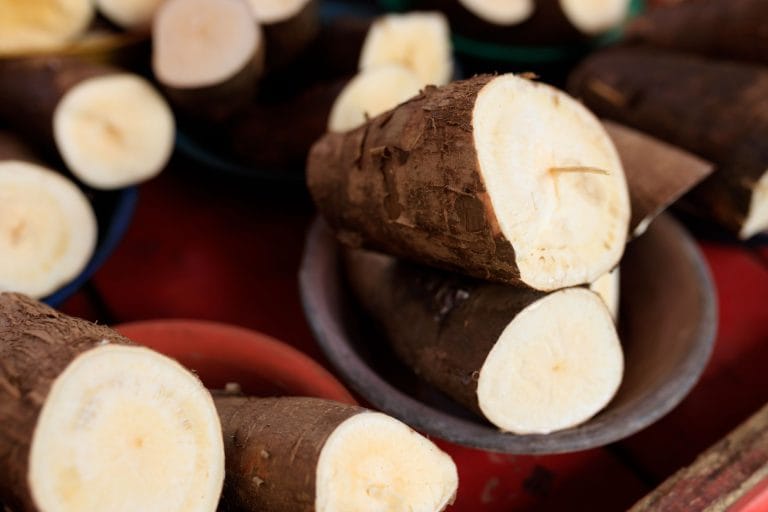
What USDA’s laboratory analysis says about cassava flour, how it really compares with wheat and tapioca, and the cyanide question most articles get wrong.
Cassava flour is the whole dried root of Manihot esculenta, ground to a fine powder, and it substitutes for wheat at roughly one to one in baking. It is naturally gluten-free, higher in fiber than white wheat flour, and has a mild, faintly nutty taste (1, 3).
It is also widely written about inaccurately. Cassava flour is not high in protein, it is not a meaningful source of vitamin C or vitamin A, and the symptoms people describe as a “cassava allergy” are usually the symptoms of cyanide exposure from under-processed root (1, 5). Here are the numbers and the safety picture, from USDA and published outbreak investigations.
Key Takeaways
- Cassava flour is 87 g carbohydrate and 0.9 g protein per 100 g, far less protein than wheat (1, 3).
- It has 4.8 g of fiber per 100 g, more than white wheat flour’s 2.7 g (1, 3).
- USDA’s analysis of the flour finds no vitamin C, despite the claim being everywhere (1).
- Raw cassava contains cyanogenic compounds; processing removes them, and poor processing has caused poisoning outbreaks (5, 7).
- It is genuinely gluten-free and suitable for celiac disease (10).
What Cassava Flour Is
 Save
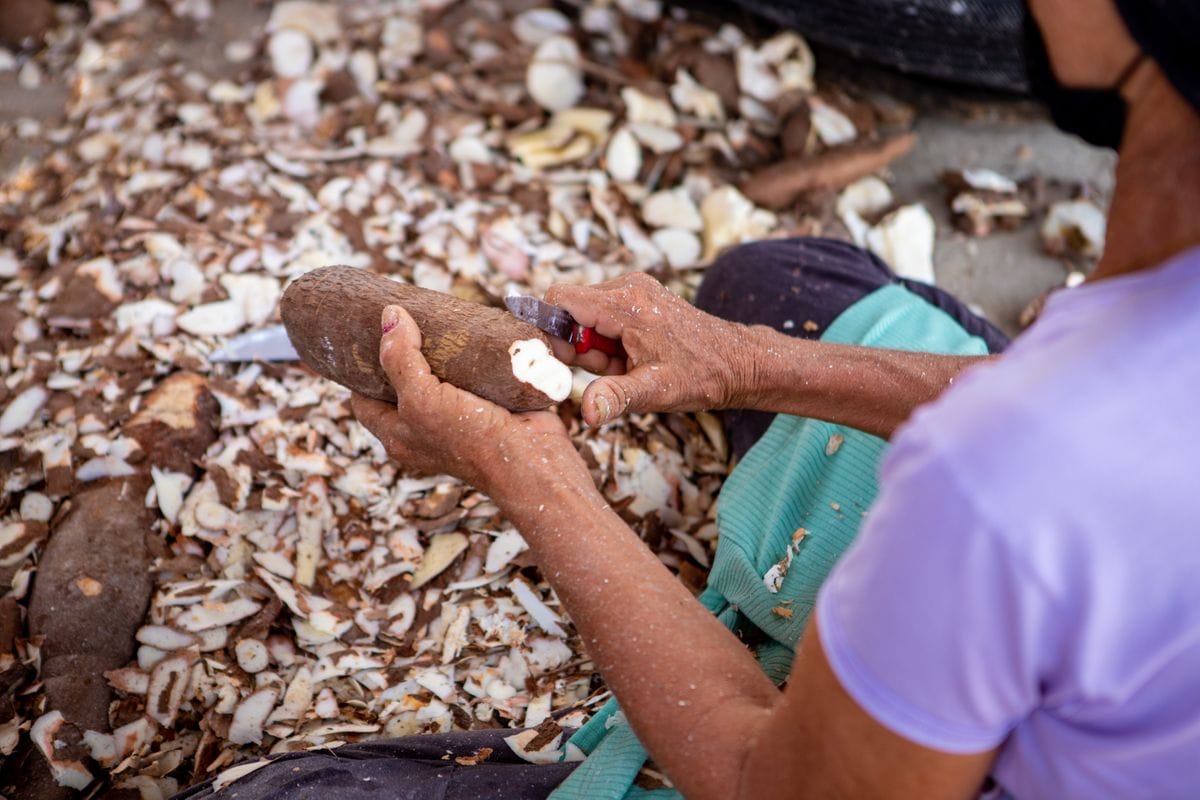
SaveCassava, also called manioc or yuca, is a starchy tropical root and one of the cheapest reliable sources of calories in the tropics. To make the flour, the root is peeled, grated, soaked or fermented, dried and milled. To make tapioca, the grated root is washed and only the settled starch is kept.
That is why the two are not interchangeable. Cassava flour keeps the fiber and minerals of the whole root; tapioca is almost pure starch and works as a thickener rather than a flour (1, 4).
How It Compares, by the Numbers
USDA has a laboratory-analyzed entry for cassava flour, so we can compare it directly with wheat flour and tapioca (1, 3, 4):
| Per 100 g | Cassava flour | White wheat flour | Tapioca (pearl, dry) |
|---|---|---|---|
| Calories | ~357 kcal (calculated) | 364 kcal | 358 kcal |
| Protein | 0.9 g | 10.3 g | 0.2 g |
| Carbohydrate | 87.3 g | 76.3 g | 88.7 g |
| of which starch | 79.7 g | not listed | not listed |
| Fiber | 4.8 g | 2.7 g | 0.9 g |
| Calcium | 75 mg | 15 mg | 20 mg |
| Iron | 4.0 mg | 4.6 mg | 1.6 mg |
| Potassium | 198 mg | 107 mg | 11 mg |
| Vitamin C | not detected | 0 mg | 0 mg |
USDA’s entry for cassava flour does not carry a calorie figure, so the value above is calculated from its macronutrients using standard conversion factors.
The honest summary is that cassava flour is a starch, much like wheat flour, with a better mineral and fiber profile and a much worse protein profile. Swapping wheat for cassava in a recipe removes almost all of the flour’s protein, which is part of why baked goods made with it behave differently and why recipes often add eggs.
What a realistic serving gives
USDA uses 30 g as a reference serving for flour. That works out to about 107 calories, 1.4 g of fiber and 59 mg of potassium (1). Fiber is useful, adding bulk and helping regularity (9), but a serving of cassava flour is not a significant fiber source on its own.
Claims You Will See, Checked Against the Data
| Common claim | What USDA data shows | Verdict |
|---|---|---|
| More protein than wheat flour | 0.9 g per 100 g versus 10.3 g in white wheat flour (1, 3) | False |
| A cup supplies most of a day’s vitamin C | USDA’s laboratory analysis of the flour reports no vitamin C. The raw root has 20.6 mg per 100 g, but it is lost in drying (1, 2) | False |
| Provitamin A supports eyesight | Plain cassava flour has no meaningful vitamin A; the raw root has 1 mcg RAE per 100 g (1, 2) | False |
| Higher in fiber than wheat flour | 4.8 g versus 2.7 g in white wheat flour, though whole wheat beats both (1, 3) | True |
| Higher in minerals than wheat flour | More calcium and potassium, slightly less iron (1, 3) | Partly true |
| Resistant starch keeps blood sugar steady | It is 79.7 g starch per 100 g. Some resistant starch forms when cooked food cools, but this is a high-starch flour (1) | Overstated |
The vitamin C claim is worth dwelling on because it appears in almost every article about this flour. The raw root does contain vitamin C, about 20.6 mg per 100 g (2). Vitamin C is destroyed by heat and drying, and USDA’s analysis of the finished flour reports none (1). Figures showing a cup of cassava flour supplying nearly a day’s vitamin C come from user-submitted nutrition databases, not laboratory analysis.
The Cyanide Question, Properly Explained
This is the part most articles skip or misdescribe. Cassava root contains cyanogenic glycosides, mainly linamarin, which release hydrogen cyanide when the plant tissue is damaged. Proper processing, meaning peeling, grating, soaking or fermenting and thorough drying, breaks them down. Properly processed cassava is a safe and cheap staple food (8).
When processing is inadequate, people get hurt. In September 2017 an outbreak in Kasese District, Uganda, sent 33 people to hospital with diarrhea, vomiting and abdominal pain after eating a dish made from cassava flour; investigators traced it to one wholesaler’s batch with high cyanogenic content (5). Long-term reliance on poorly processed bitter cassava is linked to konzo, a permanent and irreversible paralysis of the legs seen mainly in children and women of childbearing age in parts of sub-Saharan Africa (6). A simple wetting method applied to flour reduces its cyanide content and has stopped new konzo cases in treated villages (7).
Two practical points follow from that literature:
- The symptoms are not an allergy. Dizziness, vomiting, headache and rapid breathing after eating cassava products are the recognized signs of cyanide exposure, not an allergic reaction (5). If they happen, stop eating the product and seek medical care.
- Protein status matters. The body detoxifies cyanide using sulfur amino acids, so a diet short on protein makes exposure more dangerous, another reason cassava should not be someone’s protein source (8).
Commercial cassava flour sold in regulated markets is processed with this in mind, and the flour on a supermarket shelf in Europe or North America is not the same risk as village-processed bitter cassava. Do not, however, grind raw cassava root at home into flour and treat it as a wheat substitute without following a proper processing method.
Cooking and Baking With It
 Save
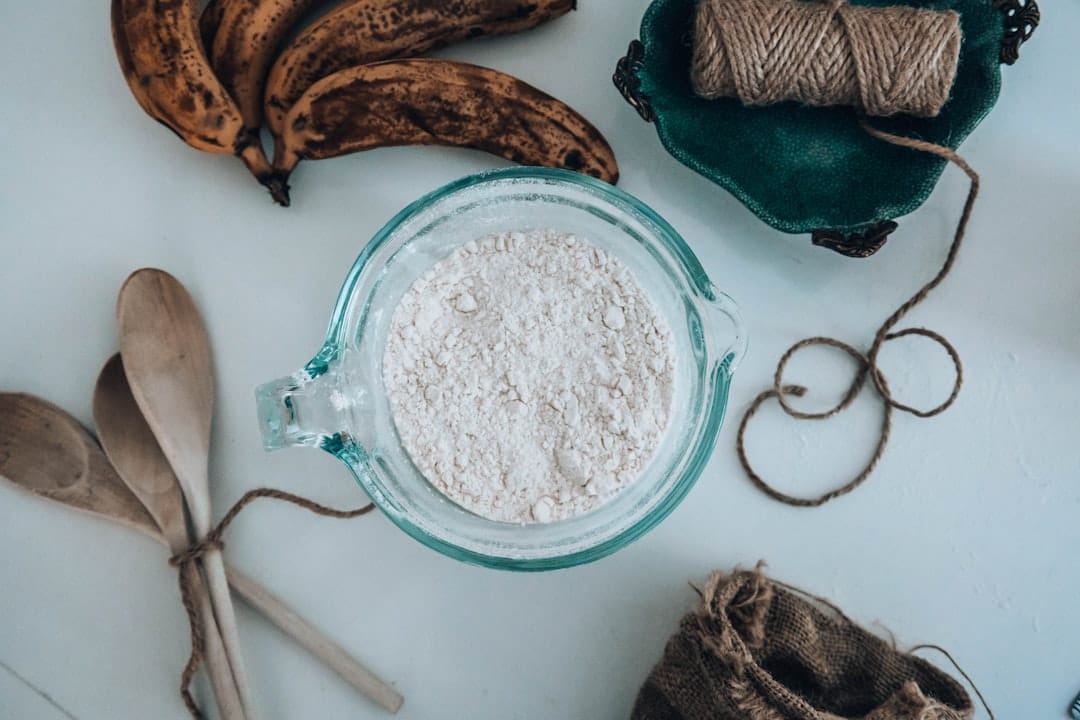
SaveCassava flour swaps in at about one to one for wheat, but it absorbs more liquid, so most recipes need a little extra. It works well for:
- Cakes, cookies, doughnuts and quick breads
- Tortillas and other flatbreads
- Thickening soups, sauces and gravies
- Blending with almond flour, which adds back the protein and fat that cassava lacks
Because the flour has almost no protein or gluten to build structure, recipes lean on eggs, starch blends and binders. It is also naturally suited to grain-free eating patterns, which is much of the reason it became popular outside the tropics.
Who It Suits
For celiac disease, a gluten-free diet is lifelong and medically necessary, and cassava flour is one of the options for it (10). For everyone else it is a choice about texture and taste rather than health. If you are watching carbohydrate load, it belongs with the other starch-dense foods and fits the portion thinking in our low-glycemic diet guide. If your reason for using it is nutrition, higher-fiber foods and whole grains such as black rice do more per serving.
Frequently Asked Questions
Is cassava flour the same as tapioca flour?
No. Cassava flour is the whole dried root, ground. Tapioca is the starch washed out of the root. That difference shows in the numbers: cassava flour has 4.8 g of fiber and 198 mg of potassium per 100 g, while tapioca pearls have 0.9 g and 11 mg.
Does cassava flour contain cyanide?
Raw cassava root contains cyanogenic compounds that release cyanide. Proper processing, which means peeling, grating, soaking or fermenting and thorough drying, removes most of them, and commercial flour sold in regulated markets is processed for this reason. Outbreaks of poisoning, including a 2017 outbreak in Uganda traced to one batch of flour, happen when processing is inadequate.
Is cassava flour good for people with celiac disease?
Yes, it contains no gluten. People with celiac disease must avoid wheat, barley, rye and triticale for life, and cassava flour is one of several naturally gluten-free options. It is not, however, nutritionally equivalent to wheat flour, since it has almost no protein.
Is cassava flour healthy for blood sugar?
It is a starch-dense flour at nearly 80 g of starch per 100 g, so it should be treated like other refined starches and eaten in measured portions. Claims that it is inherently blood-sugar friendly overstate what the composition supports.
How much cassava flour is one serving?
USDA uses 30 g as a reference serving for flour, which is about 107 calories and 1.4 g of fiber. Recipes calling for cups of flour are divided among several portions.
The Bottom Line
Cassava flour is a useful gluten-free baking flour with more fiber and minerals than white wheat flour and almost no protein. It is not a vitamin C source, it is not a vitamin A source, and it is not a low-carbohydrate food. The safety issue that matters is cyanogenic content in inadequately processed cassava, which is a documented cause of poisoning and of permanent paralysis where processing is poor, and is the real explanation behind symptoms often labelled an allergy. Buy commercially processed flour, use it as the starch it is, and get your protein elsewhere.
This article is for informational purposes only and is not a substitute for professional medical advice. Consult a qualified healthcare provider before making significant dietary changes, especially if you have celiac disease or another health condition.
Related Articles
Paleo Diet Plan Benefits, Foods, and Risks
High Fiber Foods List and How Much Fiber You Need
Low-Glycemic Diet: GI Food List, Benefits and Limits
Black Rice Benefits: Nutrition and What Studies Show
Foods High in Starch: 6 Smart Picks and 4 to Skip