
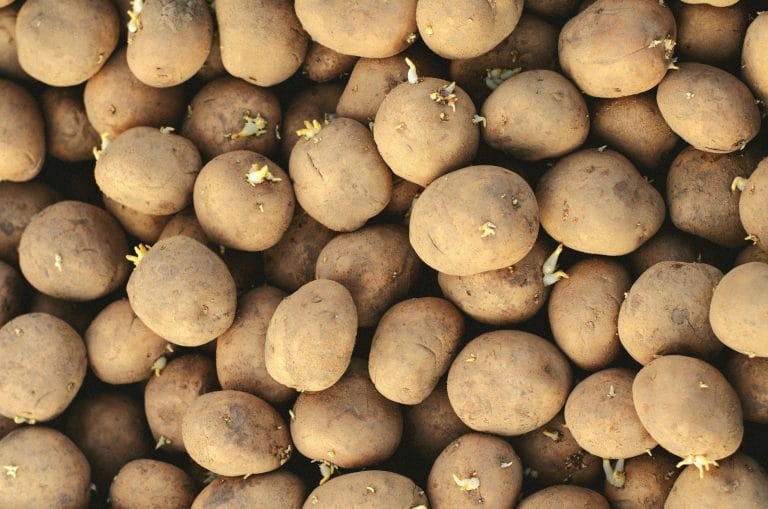
Sprouted potatoes are usually fine. Green ones are not. The distinction is the whole answer, and most advice blurs it.
Sprouted potatoes get thrown away by the sackful on a rule that is half right. The official guidance is more specific than “when in doubt, bin it”, and the word that decides it is not sprouted.
Key Takeaways
- MedlinePlus: potatoes that are not green, with sprouts removed, are safe to eat (1).
- Never eat potatoes that are spoiled or green below the skin (1).
- Green, sprouting or rotting flesh measured 2 to 5 times above the recommended limit (3).
- Symptoms are mostly gastrointestinal and are often delayed 8 to 10 hours (1).
- EFSA found no evidence of harm from long-term intake via normal potatoes (2).
Sprouted Potatoes: The Rule, In One Table
| What the potato looks like | What to do | Why |
|---|---|---|
| A few small sprouts, flesh not green | Remove the sprouts and eat it | MedlinePlus: potatoes that are not green and have had any sprouts removed are safe to eat (1) |
| Green under the skin | Throw it away | MedlinePlus: never eat potatoes that are spoiled or green below the skin (1) |
| Long sprouts, soft, wrinkled | Throw it away | Flesh of sprouting and rotting potatoes measured 2 to 5 times above the recommended limit (3) |
| Bitter taste when cooked | Stop eating it | Bitterness is the practical warning sign that glycoalkaloids are high |
MedlinePlus puts the whole thing in two sentences: never eat potatoes that are spoiled or green below the skin, always throw away the sprouts, and potatoes that are not green and have had any sprouts removed are safe to eat (1).
So a potato with a few small sprouts and firm, pale flesh is not a hazard once the sprouts are off. A potato that is green under the skin is, whatever you do to it.
What The Toxin Actually Is
The compounds are glycoalkaloids, chiefly alpha-solanine and alpha-chaconine. MedlinePlus describes solanine as very toxic even in small amounts and notes it is found throughout the plant but particularly in green potatoes and new sprouts (1).
They are a defence chemical. The potato makes more of them when it is stressed — by light, by damage, by age — which is exactly why greening and sprouting are the visible signals. The same defence chemistry runs through the rest of the nightshade family: turkey berry, a Solanum fruit eaten across West Africa and South India, carries glycoalkaloids of its own for the same reason.
The numbers back up the warning. A study isolating glycoalkaloids from the flesh of green, sprouting and rotting potatoes found levels from 2,578 to 5,063 mg per kg of dry weight, exceeding the recommended limit by two to five fold (3). Its recommendation was that such potatoes should be systematically set aside (3).
Note that this was the flesh, not the peel or the sprout. By the time a potato is properly rotting or heavily sprouted, the problem is not confined to the bits you can cut off.
What Poisoning Looks Like — And Why People Miss It
This is the part worth knowing, because the timing hides the cause.
Effects are mostly gastrointestinal and are often delayed 8 to 10 hours (1). By then most people have stopped thinking about dinner.
The symptom list from MedlinePlus: abdominal or stomach pain, nausea and vomiting, diarrhoea, headache, fever. In larger ingestions, central nervous system effects may occur — delirium, hallucinations, dilated pupils, vision changes, loss of sensation, slow pulse, slowed breathing, low body temperature, paralysis and shock (1). MedlinePlus states these poisonings can be very dangerous (1).
The advice if it happens: seek immediate medical help, and do not make the person vomit unless told to by poison control or a health professional (1).
How Much It Takes
| Figure | Source | |
|---|---|---|
| Acute reference point (LOAEL) | 1 mg total potato glycoalkaloids per kg body weight per day | EFSA (2) |
| For a 70 kg adult | About 70 mg in a day | calculated from (2) |
| Green, sprouting or rotting flesh | 2,578 to 5,063 mg/kg dry weight — 2 to 5 times the recommended limit | (3) |
| Long-term intake from normal potatoes | No evidence of health problems identified | EFSA (2) |
EFSA’s risk assessment identified a lowest-observed-adverse-effect level of 1 mg of total potato glycoalkaloids per kg of body weight per day as the reference point for acute exposure (2). For a 70 kg adult that is about 70 mg in a day.
Their margin-of-exposure analysis found a health concern for younger age groups in the surveys with the highest mean exposure, and at the 95th percentile in all surveys; for adults, only at the highest exposures (2). Children are the group to be careful with, which matches the fact that dose is per kilogram of body weight.
And one reassurance that deserves equal weight: EFSA states that in humans, no evidence of health problems associated with repeated or long-term intake of glycoalkaloids via potatoes has been identified (2). This is an acute problem with a bad potato, not a slow accumulation from eating potatoes.
Cooking Reduces It, But Will Not Rescue A Green Potato
A study comparing boiling, baking and microwaving across white, yellow, red and purple-fleshed potatoes found that all three cooking methods reduced total glycoalkaloids, alpha-chaconine and alpha-solanine included (4). Boiling peeled tubers came out best of the three (4).
That is genuinely useful for ordinary potatoes. It is not a reason to cook one you would otherwise discard, because a reduction from several times the limit still leaves you above it.
One practical sign the lab cannot give you: bitterness. Glycoalkaloids taste bitter, and a potato that tastes sharp or bitter when cooked is telling you something. Stop eating it.
Storing Them So This Stops Happening
 Save
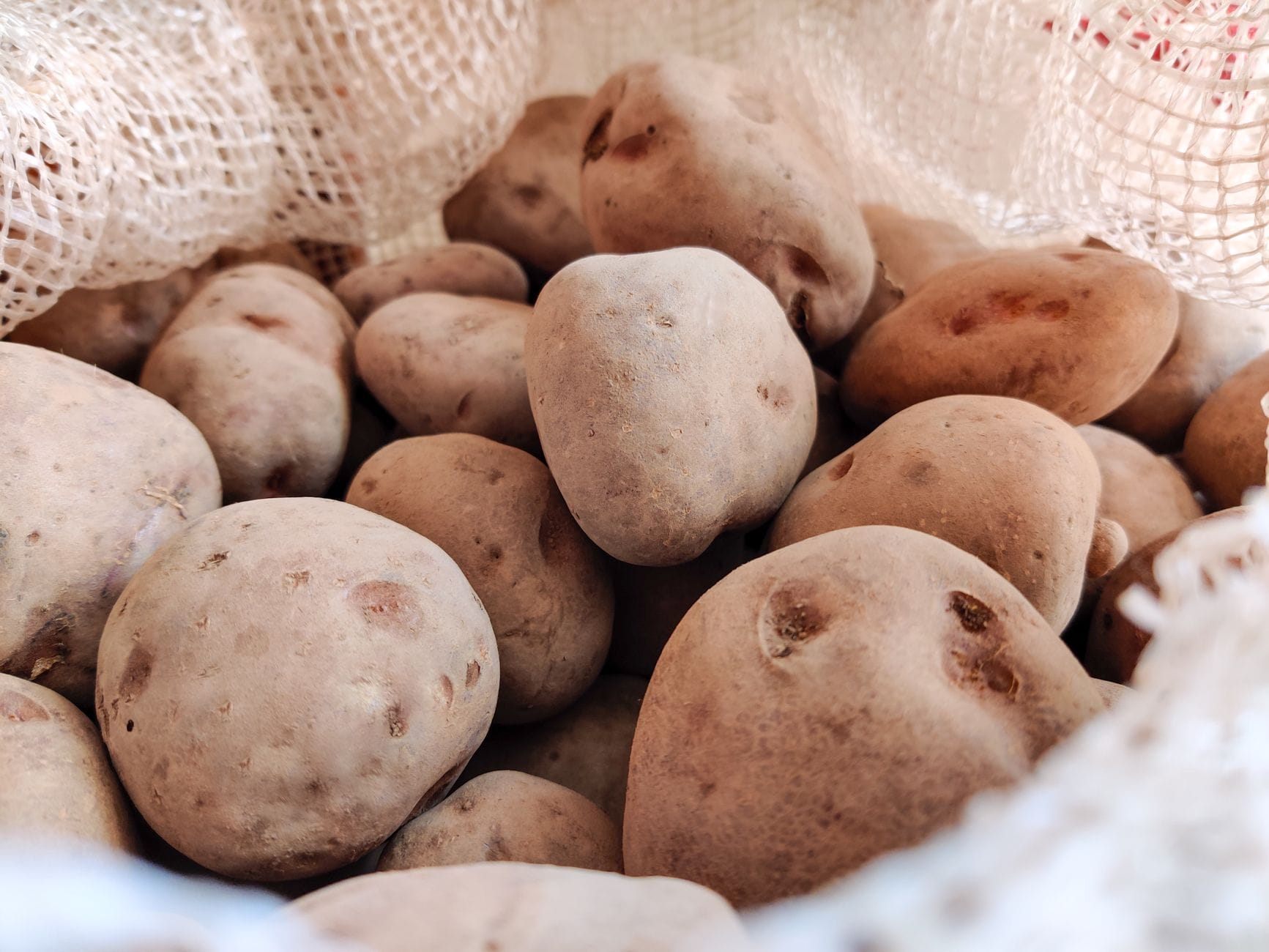
SaveGreening and sprouting are storage problems, not age problems.
Light causes greening. The green is chlorophyll, which is harmless in itself, but it forms under the same conditions that raise glycoalkaloids — which is why it works as a visible warning.
Warmth causes sprouting. A cool, dark, dry place with some air movement is the answer; a sealed plastic bag and a sunny worktop are the opposite.
Check the sack. One rotting potato speeds up the rest.
For where potatoes sit in the bigger picture of how you eat, see our balanced diet guide, and for their effect on blood glucose, the low-glycaemic diet.
Frequently Asked Questions
Can you eat sprouted potatoes?
In most cases yes, with one condition. MedlinePlus states it plainly: always throw away the sprouts, and potatoes that are not green and have had any sprouts removed are safe to eat. The line that matters is green, not sprouted. What changes the answer is how far gone the potato is. A laboratory study measuring the flesh of green, sprouting and rotting potatoes found glycoalkaloid levels of 2,578 to 5,063 mg per kg of dry weight, exceeding the recommended limit by two to five times, and concluded such potatoes should be set aside. A potato with a couple of small sprouts is not the same object as one that is soft, wrinkled and covered in long shoots.
What happens if you eat a green potato?
The toxin is solanine, which MedlinePlus describes as very toxic even in small amounts and says is concentrated particularly in green potatoes and new sprouts. Effects are mostly gastrointestinal and are often delayed by 8 to 10 hours, which is why people frequently do not connect the two. Symptoms can include abdominal pain, nausea, vomiting, diarrhoea, headache and fever, and larger amounts can affect the central nervous system, producing confusion, hallucinations, vision changes, slow pulse and slowed breathing. MedlinePlus advises seeking immediate medical help rather than trying to induce vomiting.
How much solanine is dangerous?
EFSA’s risk assessment identified a lowest-observed-adverse-effect level of 1 mg of total potato glycoalkaloids per kilogram of body weight per day as the reference point for acute exposure, which for a 70 kg adult is roughly 70 mg in a day. Their assessment also found that the margins of exposure indicate a health concern for younger age groups in the surveys with the highest mean exposure, and at the 95th percentile of exposure in all surveys. For adults the concern appears only at the highest exposures.
Does cooking destroy solanine?
It reduces it but does not remove it, so cooking is not a rescue for a green potato. A study comparing boiling, baking and microwaving across potatoes with different flesh colours found that all three cooking treatments reduced total glycoalkaloids including alpha-chaconine and alpha-solanine, and that boiling peeled tubers was the most favourable of the three. That is useful for ordinary potatoes. It is not a reason to cook a potato you would otherwise throw away, because the starting level in green or rotting flesh is several times the limit.
Is long-term exposure a problem?
EFSA looked for this specifically and did not find it. Their opinion states that in humans no evidence of health problems associated with repeated or long-term intake of glycoalkaloids via potatoes has been identified, and that no reference point for chronic exposure could be established from the animal studies. So the concern with potato glycoalkaloids is an acute one, tied to eating a bad potato, rather than a slow accumulation from eating potatoes regularly.
How should I store potatoes to stop them sprouting?
Sprouting and greening are both driven by storage conditions rather than by age alone. Light causes greening, which is the visible sign that chlorophyll has formed and usually that glycoalkaloids have risen alongside it. Warmth encourages sprouting. The practical version is a cool, dark, dry place with air circulation, not a sealed bag and not the windowsill. Checking the sack occasionally matters too, since one rotting potato accelerates the rest.
The Bottom Line
Sprouted potatoes and green potatoes are two different questions with two different answers. MedlinePlus is explicit: throw away the sprouts, and a potato that is not green with its sprouts removed is safe to eat. A potato that is green below the skin, spoiled, soft or heavily sprouted is not, and the measurements back that up — flesh from green, sprouting and rotting potatoes ran two to five times above the recommended limit. Solanine poisoning is mostly gastrointestinal, often delayed 8 to 10 hours, and can be serious in quantity, with children more exposed because the reference point is per kilogram of body weight. Cooking lowers glycoalkaloids but does not rescue a bad potato, and bitterness is the signal to stop. Reassuringly, EFSA found no evidence of harm from long-term intake through ordinary potatoes.
This article is for informational purposes only and is not a substitute for professional medical advice. If you suspect solanine poisoning, seek immediate medical help and do not induce vomiting unless instructed to by poison control or a health professional. In the United States the Poison Help hotline is 1-800-222-1222; elsewhere, contact your local poison centre or emergency service.
Related Articles
Balanced Diet Guide With the 5 Food Groups
Low-Glycemic Diet: GI Food List, Benefits and Limits
Foods High in Starch: 6 Smart Picks and 4 to Skip
High Fiber Foods List and How Much Fiber You Need