
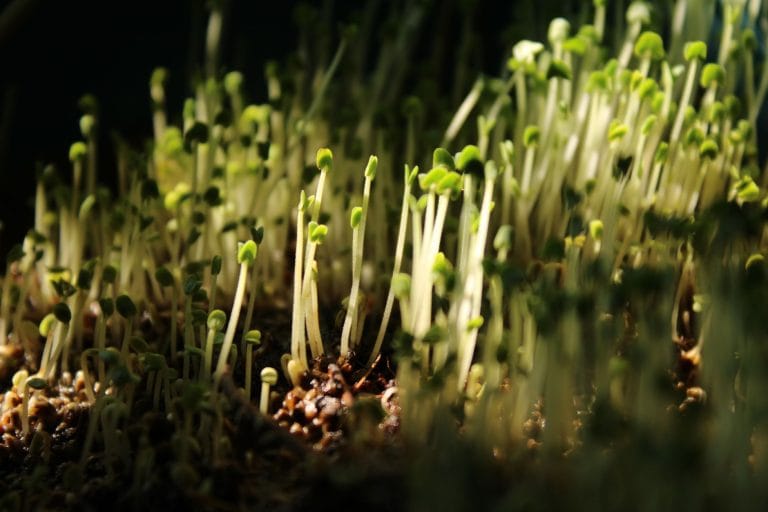
What laboratory analysis shows about microgreens, the one human trial that exists, and the food-safety details most articles skip.
Microgreens are the seedlings of vegetables and herbs, cut at 2 to 8 cm once the first leaves open. They are genuinely more concentrated than mature leaves: an analysis of 25 varieties found vitamin C ranging from 20 to 147 mg per 100 g, with higher nutrient density than the grown-up versions of the same plants (1).
What they are not, yet, is a proven health treatment. The cholesterol research was done in mice, the blood sugar research in test tubes, and the cancer research in cell cultures. Only one human trial has been published, and it measured whether people could tolerate eating them daily (3). Here is the honest picture.
Key Takeaways
- Microgreens are seedlings harvested at 2 to 8 cm, between a sprout and a baby leaf (9).
- They are more nutrient-dense per gram than mature leaves, confirmed by direct analysis (1).
- Portions are small, so a garnish delivers a fraction of those per-100-g numbers.
- Cholesterol, blood sugar and cancer claims come from mice, test tubes and cell cultures (4, 5, 6).
- Their warm, humid growing conditions also favor Salmonella, Listeria and E. coli (7, 8).
What Microgreens Are
Microgreens sit between sprouts and baby greens. Sprouts are germinated seeds grown in water and eaten whole, roots included. Microgreens are grown in soil or on a mat and harvested once the cotyledons, and sometimes the first true leaves, have opened, at roughly 2 to 8 cm tall (9).
The common types come from several plant families: brassicas such as broccoli, radish, arugula and red cabbage; beet, chard and amaranth; herbs like basil, cilantro and dill; alliums such as leek and onion; and cereals including wheatgrass and barley. Flavor follows the family, so radish and mustard are peppery while pea and sunflower are mild and sweet.
What the Nutrition Analysis Found
The most useful data comes from a 2012 laboratory analysis of 25 commercially grown microgreens, which is still the reference study on the subject (1). Values per 100 g of fresh weight:
| Nutrient (per 100 g fresh) | Range across 25 microgreens | Highest variety tested |
|---|---|---|
| Vitamin C | 20.4 – 147 mg | Red cabbage |
| Beta-carotene | 0.6 – 12.1 mg | Cilantro |
| Lutein and zeaxanthin | 1.3 – 10.1 mg | Cilantro |
| Vitamin K1 (phylloquinone) | 60 – 410 mcg | Garnet amaranth |
| Alpha-tocopherol (vitamin E) | 4.9 – 87.4 mg | Green daikon radish |
| Gamma-tocopherol | 3.0 – 39.4 mg | Green daikon radish |
Two things are worth pulling out of that table.
The ranges are enormous. Vitamin C varies more than sevenfold between varieties. Saying “microgreens are high in vitamin C” is only true for some of them, red cabbage above all (1).
Portion size changes the picture. These are per-100-g figures, and a typical garnish is 15 to 30 g. At 25 g, even the richest variety contributes about 37 mg of vitamin C, against an adult requirement of 75 mg for women and 90 mg for men (1, 10). That is a useful contribution, not a replacement for eating vegetables.
You will also see very high mineral figures quoted, such as 15.9 mg of iron per 100 g. That number comes from a manufacturer’s nutrition label stored in USDA’s branded-foods database, not from laboratory analysis (2). USDA has no standard-reference entry for microgreens, so label figures like that should be treated with caution.
What the Research Does and Does Not Show
| Claim | What the study actually was | Verdict |
|---|---|---|
| Lower LDL cholesterol | Mice on a high-fat diet fed red cabbage microgreens (4) | Animal only |
| Help manage blood sugar | Test-tube inhibition of alpha-amylase and alpha-glucosidase, no people involved (5) | In vitro only |
| Protect against cancer | Extracts slowed growth of Ewing sarcoma cells in culture (6) | Cell culture only |
| More nutrient-dense than mature leaves | Direct laboratory analysis of 25 microgreens compared with USDA values for mature leaves (1) | Supported |
| Tested in humans | One 2-week crossover trial in 24 healthy adults: tolerable, but no change in blood pressure or gut bacteria (3) | Early and limited |
| 15.9 mg of iron per 100 g | A manufacturer’s label figure in USDA’s branded database, not a laboratory analysis (2) | Unreliable |
The one human trial
In 2025, researchers randomized 26 healthy middle-aged and older adults to eat two cups a day of either beet or red cabbage microgreens for two weeks, in a crossover design (3). Compliance was 95.6%, and the greens were well tolerated. Red cabbage microgreens improved scores on inflammation-related gastrointestinal symptoms.
But there were no changes in blood pressure or aortic measurements, and no changes in the diversity of gut bacteria. The authors describe the study as a feasibility trial and say studies designed to evaluate health effects are still needed (3). That is the state of the human evidence in one sentence.
Why the other headlines do not count yet
The LDL result everyone quotes comes from male mice fed a high-fat diet alongside red cabbage microgreens (4). The anti-diabetic finding is enzyme inhibition measured in a test tube, with no people or animals involved (5). The cancer finding is extracts applied to Ewing sarcoma cell lines in a dish (6). Each is a legitimate early step. None of them tells you what happens when a person eats a handful of greens.
Food Safety, Honestly
 Save
SaveThis is where a lot of microgreen articles get it backwards. The warm, humid conditions that make seeds sprout quickly are also ideal for Salmonella, Listeria and E. coli. The FDA notes that if even a few harmful bacteria are present on the seed, they can multiply to high levels during sprouting, even when you grow them yourself under sanitary conditions (7). A 2025 review of contamination routes in sprouts and microgreens reached the same conclusion and described outbreaks linked to them (8).
Practical handling, following FDA produce guidance (7):
- Keep them refrigerated at 40 degrees F (4 degrees C) or below.
- Rinse under running water before eating; do not use soap or produce wash.
- Wash your hands for 20 seconds before and after handling them.
- Keep them away from raw meat, poultry and seafood, and their cutting boards.
- Throw away anything slimy, discolored or off-smelling.
If you are pregnant, over 65, or have a weakened immune system, cooking them is the safer choice, as it is for sprouts and other raw seedlings.
Growing Them at Home
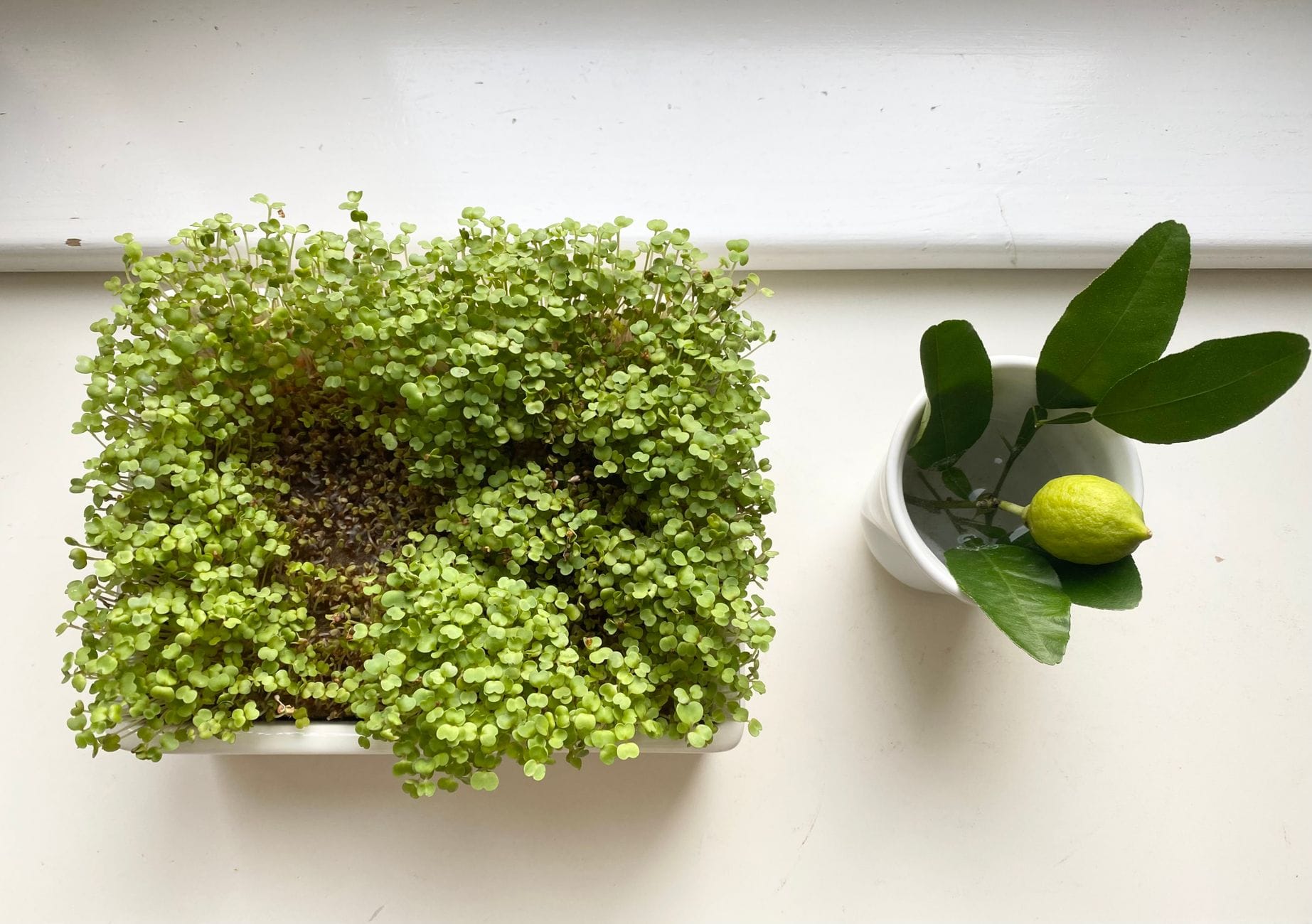
Microgreens are one of the few crops that genuinely work on a windowsill. Spread seeds densely over a shallow tray of moist potting mix or a growing mat, mist them, cover for the first couple of days, then move the tray into bright light. Most varieties are ready in one to three weeks.
Cut with clean scissors just above the growing medium, and rinse and dry the harvest before storing it cold. The short cycle means home growers rarely need pesticides, but as above, a short cycle is not a guarantee of microbial safety, so clean seed, clean water and clean hands still matter (8).
Use them the way you would any fresh herb: scattered over light, simple meals, folded into salads and grain bowls, or laid on sandwiches after cooking, so the heat does not wilt them.
Where They Fit in a Diet
Treat microgreens as a flavor and freshness upgrade with a nutritional bonus, rather than as a supplement. The eating patterns with real outcome evidence behind them are the boring ones: plenty of vegetables, high-fiber foods, and a plant-forward pattern overall. If you are managing blood sugar, our diabetes diet guide covers what has actually been tested in people. Their green color comes from chlorophyll, which has its own, similarly early, research.
Frequently Asked Questions
Are microgreens actually healthier than regular vegetables?
Gram for gram they are often more concentrated. A laboratory analysis of 25 microgreens found their cotyledon leaves generally held higher vitamin and carotenoid levels than the mature leaves of the same plants. The catch is portion size: you eat a handful of microgreens, not a plateful, so the totals end up similar to an ordinary serving of vegetables.
Do microgreens lower cholesterol or blood sugar?
Not proven in people. The cholesterol finding comes from mice fed a high-fat diet, and the blood sugar findings come from enzyme experiments in test tubes. The single human trial published so far looked at tolerability over two weeks and found no change in blood pressure or gut bacteria.
Are microgreens safe to eat raw?
For most people, yes, but they are not risk-free. The warm, humid conditions that microgreens and sprouts need also suit Salmonella, Listeria and E. coli. Buy fresh, keep them refrigerated at 40 degrees F or below, and rinse them under running water before eating.
What is the difference between microgreens and sprouts?
Sprouts are germinated seeds eaten whole, roots included, grown in water. Microgreens are grown in soil or on a mat, harvested at 2 to 8 cm once the first leaves appear, and only the stem and leaves are eaten.
How long do microgreens keep?
A few days to about a week in the fridge. Cold slows bacterial growth, so store them in a clean, breathable container and discard any that look slimy or smell off.
The Bottom Line
Microgreens are a real nutritional step up per gram, and that part is measured rather than marketed. Everything beyond it, the cholesterol, blood sugar and cancer headlines, currently rests on mice, test tubes and cell cultures, with one small human trial showing only that people can eat them comfortably. Grow them, enjoy them, handle them like the raw seedlings they are, and keep your expectations in proportion to a 25-gram garnish.
This article is for informational purposes only and is not a substitute for professional medical advice. Consult a qualified healthcare provider before making dietary changes, especially if you are pregnant, elderly or have a weakened immune system.
Related Articles
High Fiber Foods List and How Much Fiber You Need
Chlorophyll Benefits: What Holds Up in People
Diabetes Diet: Plate Method, Carbs and the Evidence
Plant-Based Diet: Benefits, Risks and How to Start
Light Food Recipes: Six Easy Everyday Meals