
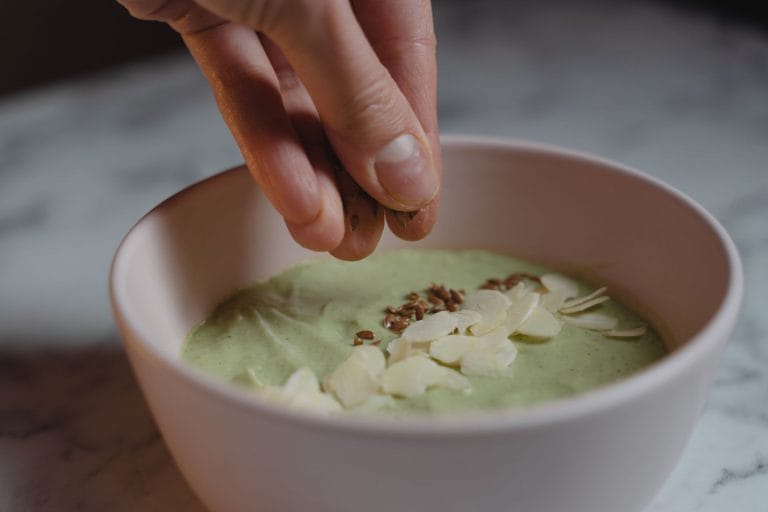
Flax seeds for skin: what flaxseed contains, what human studies found for skin hydration and sensitivity, which beauty claims are unproven, and how to use flax safely.
Flaxseed (Linum usitatissimum), also called linseed, has a long history of traditional use, including poultices for cuts and burns (4). It is one of the richest plant sources of the omega-3 fat alpha-linolenic acid (ALA), and it also provides fiber and lignans (5, 6).
Many articles promise that flax seeds for skin will clear acne, soften fine lines and add a glow. The human evidence is much narrower: two small trials found that flaxseed oil supplements improved skin hydration and reduced sensitivity in women (2, 3). Most other beauty claims have not been tested in people.
Key Takeaways
- One tablespoon of ground flaxseed has about 37 calories, 1.6 g of ALA omega-3 and 1.9 g of fiber (1).
- In two 12-week trials, flaxseed oil capsules improved skin hydration and reduced roughness, scaling and sensitivity in women (2, 3).
- Acne and wound-healing benefits have only been shown in lab or animal studies (7, 8).
- No studies support claims that flax reduces wrinkles, fades tans or controls oil production.
- Flaxseed can cause severe allergic reactions, and it may interact with blood thinners (4, 9).
What Flax Seeds Contain
| Flaxseed | Per 100 g | 1 tbsp ground (7 g) |
|---|---|---|
| Calories | 534 kcal | 37.4 kcal |
| Protein | 18.3 g | 1.3 g |
| Fat | 42.2 g | 3.0 g |
| Alpha-linolenic acid (omega-3, 18:3) | 22.8 g | 1.6 g |
| Fiber | 27.3 g | 1.9 g |
| Magnesium | 392 mg | 27.4 mg |
| Thiamin (vitamin B1) | 1.64 mg | 0.11 mg |
Source: USDA FoodData Central, seeds, flaxseed (1).
Flaxseed does not contain EPA or DHA, the long-chain omega-3 fats found in fish; its omega-3 is ALA (1, 6). Its fiber and lignans are the other compounds most studied for health (5). For heart and other uses, a government review notes that research on flaxseed supplements is of varying quality (4).
Flax Seeds for Skin: What the Research Shows
 Save
Save| Claim | What was studied | Evidence |
|---|---|---|
| Better skin hydration and barrier (2, 3) | Flaxseed oil capsules taken by women for 12 weeks | Two small human trials |
| Less skin sensitivity and redness (2, 3) | Skin reaction to an irritant after flaxseed oil supplements | Two small human trials |
| Fights acne (7) | Flaxseed extracts against acne bacteria in a lab dish | Lab only |
| Wound healing (8) | Flaxseed lignan cream on wounds in rats | Animal only |
| Fewer wrinkles, faded tan, sebum control | No studies found | Not supported |
Skin hydration and barrier function
In a German double-blind trial, women took either flaxseed oil or borage oil capsules (2.2 g of fatty acids a day) or a placebo for 12 weeks. In the flaxseed oil group, water loss through the skin fell by about 10% after 6 weeks, with a further drop by 12 weeks, and skin roughness and scaling decreased. Skin hydration rose with both oils, but it also rose in the placebo group, so that result is less clear (3).
A second 12-week trial by the same research group gave flaxseed oil or safflower oil to two groups of 13 women with sensitive skin. Flaxseed oil reduced skin sensitivity to an irritant, water loss, roughness and scaling, and increased smoothness and hydration. Safflower oil had smaller, later effects (2).
These trials were small, used oil capsules rather than seeds, and included only women, so the results are promising but not definitive. For other ways to care for dry skin, see our guide to home remedies for moisturizing skin.
Skin sensitivity and redness
In both trials, skin reddening after applying an irritant was reduced after flaxseed oil supplementation (2, 3). This does not show that flaxseed treats eczema, rashes or other skin conditions, which were not studied.
Acne
In a lab study, extracts of flaxseed slowed the growth of bacteria linked to acne, including P. acnes and S. aureus (7). No human trials have tested whether eating flax seeds or applying them to the skin improves acne.
Wound healing
A cream made from flaxseed lignan extract helped wound healing in rats (8). It has not been tested on human wounds.
How to Use Flax Seeds
 Save
Save- In food: add ground flaxseed to oatmeal, yogurt, smoothies or baking. One tablespoon (7 g) gives about 1.6 g of ALA (1).
- Start small: higher doses of flaxseed or flaxseed oil can cause bloating, fullness and diarrhea (4).
- Avoid raw or unripe seeds: they may contain potentially toxic compounds (4).
- Face masks: a flaxseed gel mask (seeds soaked in hot water) is a popular DIY option, but no studies have tested it. Patch-test on your inner arm first (9). Natural options such as sandalwood oil also carry allergy risks.
Safety and Side Effects
- Allergy: flaxseed is an emerging food allergen, and reported reactions include severe anaphylaxis (9).
- Blood thinners: flaxseed and flaxseed oil may interact with anticoagulant or antiplatelet drugs (4).
- Pregnancy and breastfeeding: some studies suggest flaxseed may be unsafe during pregnancy, though the evidence is not conclusive, and little is known about breastfeeding (4).
- Short-term use: limited amounts of flaxseed or flaxseed oil supplements may be safe for up to 6 months (4).
Frequently Asked Questions
Are flax seeds good for your skin?
There is some evidence. In two small 12-week trials, women who took flaxseed oil supplements had better skin hydration, less water loss through the skin, less roughness and scaling, and less reaction to a skin irritant. Claims that flax seeds reduce wrinkles, fade tans or control acne have not been tested in people.
Can flax seeds help with acne?
Not proven. Flaxseed extracts slowed the growth of acne-causing bacteria in a lab study, but no human trials have tested flax seeds or flaxseed oil for acne.
How much flaxseed should I eat for skin?
No dose has been established for skin benefits. The skin trials used flaxseed oil capsules, not seeds. One tablespoon of ground flaxseed provides about 37 calories, 1.6 g of the omega-3 fat ALA and 1.9 g of fiber. Higher amounts can cause bloating and diarrhea.
Is it safe to put flaxseed on your face?
Flaxseed face masks have not been studied in people. Flaxseed can cause allergic reactions, including rare but severe anaphylaxis, so test a small amount on your inner arm first and stop if you notice itching, redness or swelling.
Who should avoid flaxseed?
People allergic to flaxseed should avoid it. Talk to a doctor first if you take blood thinners or antiplatelet drugs, or if you are pregnant or breastfeeding, because safety is not well established. Do not eat raw or unripe flaxseeds, which may contain potentially toxic compounds.
The Bottom Line
Flax seeds are a nutritious source of ALA omega-3, fiber and lignans. For skin, the best evidence comes from two small trials in which flaxseed oil capsules improved hydration and reduced roughness and sensitivity in women over 12 weeks. Claims about acne, wrinkles, tans and oil control are not supported by human studies. Adding ground flaxseed to your diet is a reasonable choice for most people, but patch-test any homemade mask and check with a doctor if you take blood thinners or are pregnant.
This article is for informational purposes only and is not a substitute for professional medical advice, diagnosis, or treatment. Consult a qualified healthcare provider before making changes to your diet or skincare routine, especially if you have allergies, are pregnant, or take medication.
Related Articles
Home Remedies for Moisturizing Dry Skin: The Evidence
Sandalwood Oil Benefits: Skin, Hair, Sleep and Safety
Vanilla Benefits for Skin, Hair and Health: The Evidence
Positive Effects of Healthy Eating: What Research Shows
Budwig Diet: What It Is and What the Evidence Says on Cancer