
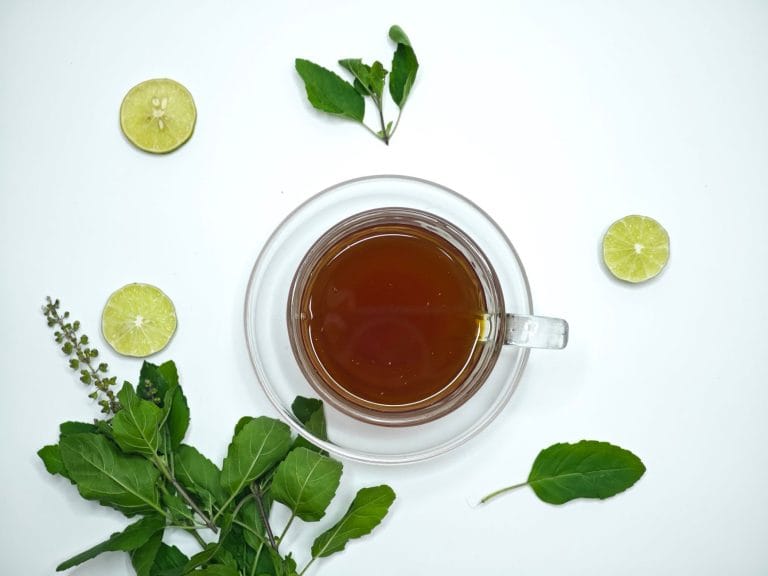
What human studies show about tulsi’s safety, the real side effects of tulsi to watch for, and who should talk to a doctor before using it.
Tulsi, or holy basil (Ocimum sanctum, also called Ocimum tenuiflorum), is a revered herb in Ayurvedic medicine, used as a tea, as fresh leaves, and increasingly as a supplement. Human studies on tulsi are generally reassuring: a systematic review of 24 clinical studies found no significant adverse events (1).
That does not mean it is risk-free. The side effects of tulsi mostly come down to specific situations: combining it with diabetes or blood-thinning medicines, pregnancy, fertility, and concentrated products. This guide separates what has been shown in people from what comes only from animal or laboratory research.
Key Takeaways
- In 24 human studies lasting up to 13 weeks, tulsi was well tolerated; only occasional nausea was reported (1).
- Tulsi can lower blood sugar, which may add to the effect of diabetes medicines (2, 3).
- Animal and lab studies suggest tulsi may slow blood clotting, but human data are lacking (5, 6).
- A rabbit study linked tulsi leaves to lower sperm count; safety in pregnancy has not been studied (8, 9).
- Concentrated clove oil, which is rich in eugenol, is toxic in overdose, but normal dietary amounts of eugenol are considered safe (10, 11).
How Safe Is Tulsi? What Human Studies Show
The best overview comes from a 2017 systematic review of 24 human studies of tulsi. Doses ranged from about 300 mg to 3,000 mg of leaf extract per day, and study durations ranged from 2 to 13 weeks. Fifteen studies reported no adverse events, eight did not describe any, and only one reported occasional nausea (1). In a double-blind trial in healthy volunteers, 300 mg of tulsi leaf extract a day for four weeks was studied for immune effects (12), and in overweight young adults, 250 mg of tulsi extract twice daily for eight weeks did not significantly change liver enzymes (3).
There are important limits. Only 7 of the 24 studies were considered high quality, many did not report the exact dose or product — the same gap that matters with algae powders, where the very ability to absorb metals from water makes arsenic contamination a documented risk, and the longest study lasted only 13 weeks, so long-term side effects cannot be ruled out (1).
Possible Side Effects and Risks of Tulsi
1. Low blood sugar with diabetes medicines
Tulsi’s ability to lower blood sugar is one reason people take it, but it can be a problem if you already use glucose-lowering medicine. In a small randomized, placebo-controlled crossover trial in people with type 2 diabetes, holy basil leaves lowered fasting blood sugar by about 21 mg/dL and after-meal blood sugar by about 16 mg/dL (2). In overweight adults, tulsi extract improved insulin levels and insulin resistance (3).
Adding a blood-sugar-lowering herb to diabetes medication may increase the risk of hypoglycemia, which can cause shakiness, sweating, confusion, and, if severe, serious complications (4). If you have diabetes, monitor your blood sugar and talk to your doctor before using tulsi regularly. Our diabetes diet guide covers food-based approaches.
2. Possible effects on blood clotting
In animal research, tulsi fixed oil increased blood-clotting time to a degree comparable with aspirin, possibly by inhibiting platelet aggregation (5). A 2026 laboratory study also found that tulsi leaf extract inhibited collagen-induced aggregation of human platelets in a dose-dependent way (6). These findings have not been confirmed in people, but they are a reasonable basis for caution. If you take anticoagulants or antiplatelet drugs, have a bleeding disorder, or are scheduled for surgery, ask your doctor before using tulsi supplements.
3. Possible interactions with medicines
 Save
SaveEvidence on drug interactions comes from animals. Tulsi fixed oil prolonged pentobarbitone-induced sleeping time in rats, suggesting it may slow the liver enzymes that break down some drugs (5). In another rat study, a herbal formula containing tulsi and four other herbs changed the activity of drug-metabolizing enzymes, which the authors said could lead to herb-drug interactions (7). Because human studies are lacking, tell your doctor or pharmacist if you use tulsi supplements alongside prescription medicines.
4. Fertility
In male rabbits given 2 g of fresh tulsi leaves daily for 30 days, sperm count fell significantly and reproductive hormone levels changed; the researchers suggested tulsi could act as a male contraceptive (8). Tulsi has also been described as having anti-fertility actions in reviews of its pharmacology (9). These are not human findings, but couples trying to conceive may want to avoid regular medicinal doses.
5. Pregnancy and breastfeeding
The safety of tulsi supplements in pregnancy and breastfeeding has not been established, and the human studies reviewed did not address these groups (1). Given the animal findings on fertility (8, 9), it is sensible to avoid concentrated tulsi products and large medicinal amounts while pregnant or breastfeeding, unless a healthcare provider advises otherwise. If you are looking for gentle remedies during pregnancy, see our guide to constipation during pregnancy.
6. Eugenol and concentrated oils
Eugenol is one of tulsi’s main active compounds (9). It is also the main component of clove oil, making up 70% to 90% of it. According to LiverTox, low amounts of eugenol in foods and herbal products have not been convincingly linked to liver injury, but overdoses of concentrated clove oil can cause severe liver damage (10). In one reported case, a 15-month-old developed liver failure after swallowing 10 ml of clove oil (11). Keep concentrated essential oils away from children, and do not swallow them.
7. Digestive upset
Occasional nausea was the only side effect reported in the human studies reviewed (1). Taking tulsi with food and keeping doses moderate may help if it upsets your stomach.
Who Should Be Careful With Tulsi
Talk to a doctor or pharmacist before using tulsi supplements if you:
- Have diabetes and take insulin or other glucose-lowering medicines (2, 4).
- Take blood thinners, have a bleeding disorder, or have surgery coming up (5, 6).
- Take prescription medicines that could interact (7).
- Are pregnant, breastfeeding, or trying to conceive (8).
The same cautious approach applies to other herbs and supplements, including aloe vera juice and nitric oxide supplements. The same goes for kitchen spices taken in quantity: mace and nutmeg have a documented toxic dose.
Frequently Asked Questions
Is tulsi safe to take every day?
For most healthy adults, tulsi used as tea or in food appears to be well tolerated. A systematic review of 24 human studies lasting up to 13 weeks found no significant adverse events. Long-term safety has not been studied, so talk to a healthcare provider before taking concentrated tulsi supplements for long periods.
What are the common side effects of tulsi?
Side effects reported in human studies are uncommon; one study reported occasional nausea. The main concerns are situations such as taking diabetes medicines, blood thinners, being pregnant, or planning surgery.
Can tulsi lower blood sugar too much?
It may. In a small controlled trial in people with type 2 diabetes, holy basil leaves lowered fasting blood sugar by about 21 mg/dL. If you take insulin or other glucose-lowering medicines, check your blood sugar and talk to your doctor before using tulsi regularly.
Is tulsi safe during pregnancy?
Its safety in pregnancy and breastfeeding has not been studied in humans, and tulsi has been reported to have anti-fertility effects in animal research. Avoid tulsi supplements and large medicinal amounts while pregnant, trying to conceive, or breastfeeding unless your doctor approves.
Does tulsi thin the blood?
Possibly. Tulsi oil increased blood-clotting time in animals, and tulsi leaf extract reduced platelet clumping in laboratory tests. Human data are lacking, so people on blood thinners or with bleeding disorders should ask their doctor first and stop tulsi supplements before surgery.
Is eugenol in tulsi dangerous?
Eugenol is found in tulsi and at much higher concentrations in clove oil. Swallowing concentrated clove oil can cause severe liver injury, especially in young children, but normal dietary amounts of eugenol are considered safe.
The Bottom Line
Tulsi has a good safety record in short-term human studies, with occasional nausea the only reported side effect. The main side effects of tulsi to watch for are situational: it can lower blood sugar alongside diabetes medicines, animal and lab studies suggest it may affect blood clotting and drug metabolism, and animal research raises fertility concerns. Enjoy tulsi tea or leaves in normal amounts, keep concentrated oils away from children, and check with your doctor before using supplements if you have diabetes, take blood thinners or other medicines, have surgery planned, or are pregnant, breastfeeding, or trying to conceive.
This article is for informational purposes only and is not a substitute for professional medical advice. Consult a qualified healthcare provider before using tulsi supplements, particularly if you are pregnant, nursing, taking medication, or managing an underlying condition.
Related Articles
Giloy Side Effects: What the Liver Injury Reports Show
Ashwagandha Drug Interactions and Who Must Avoid It
Methi Seeds for Hair: What Fenugreek Can and Can’t Do
Aloe Vera Juice Benefits and Risks: What the Research Shows
Nitric Oxide Side Effects: Supplements vs Medical Nitric Oxide Gas
Constipation During Pregnancy: Home Remedies That Help