
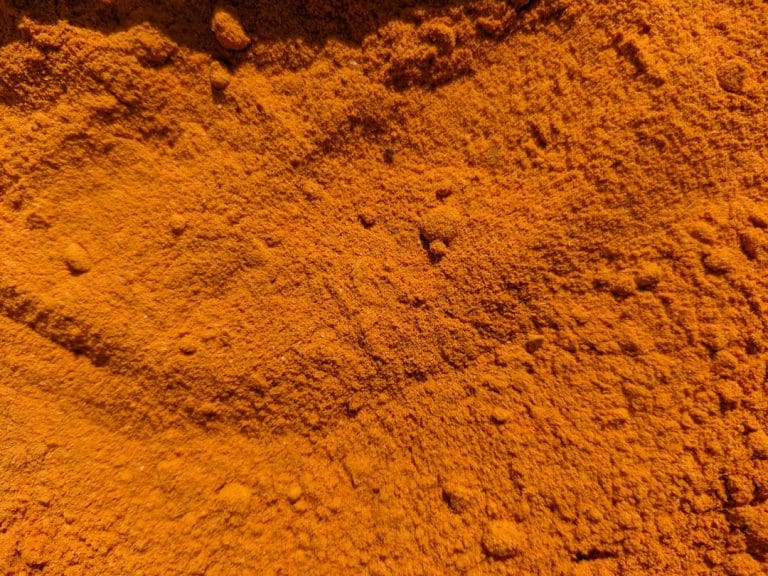
What mace spice is, what it tastes like and how it differs from nutmeg: whole blades against ground, USDA nutrition facts, kitchen uses, what the research does and does not show, and why large amounts of nutmeg spices can be toxic.
Mace is the dried, lacy red covering (aril) of the nutmeg seed from the Myristica fragrans tree. Nutmeg has been used for centuries as a kitchen spice and in traditional remedies for stomach and kidney disorders, and researchers have isolated many biologically active compounds from both the nutmeg kernel and mace (2).
Most mace spice benefits described online are based on laboratory studies or on animal research with nutmeg rather than mace. Mace is a flavorful ingredient for a balanced diet, but no human trials show it treats any condition, and large amounts of nutmeg are toxic (9, 10).
Key Takeaways
- Mace and nutmeg come from the same fruit; mace is the aril surrounding the seed (2).
- Mace extracts showed antioxidant, anti-inflammatory and anti-H. pylori activity in the lab (3).
- Mood, libido and fatty liver effects have been shown only in animals, mainly with nutmeg (5, 7, 8).
- A teaspoon of ground mace has about 8 calories, so it adds little nutrition in cooking amounts (1).
- Large amounts of nutmeg cause poisoning, and accidental exposures in young children have been reported — the same pattern as bitter apricot kernels, where the dangerous amount is small enough to be worth knowing (9, 10).
What Is Mace?
 Save
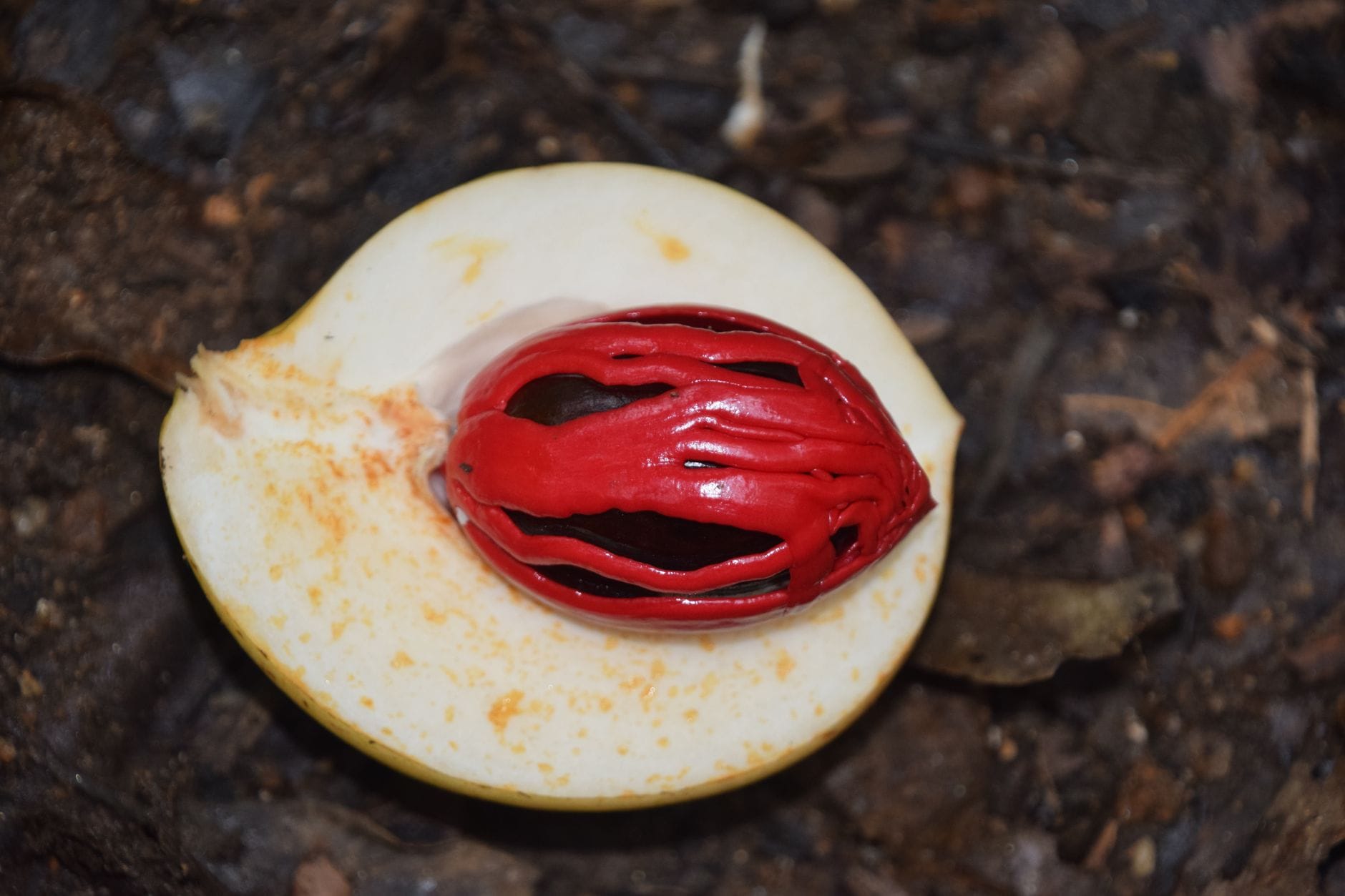
SaveWhen the nutmeg fruit is opened, the seed is wrapped in a bright red, web-like aril. This is dried to make mace, while the seed kernel becomes nutmeg. Nutmeg and mace are rich sources of fixed and essential oils, triterpenes and phenolic compounds (2).
In Thai traditional medicine, mace is used for stomach discomfort, peptic ulcer and nausea, and it is an ingredient in several traditional remedies for dyspepsia (3).
Blades, ground mace and other names
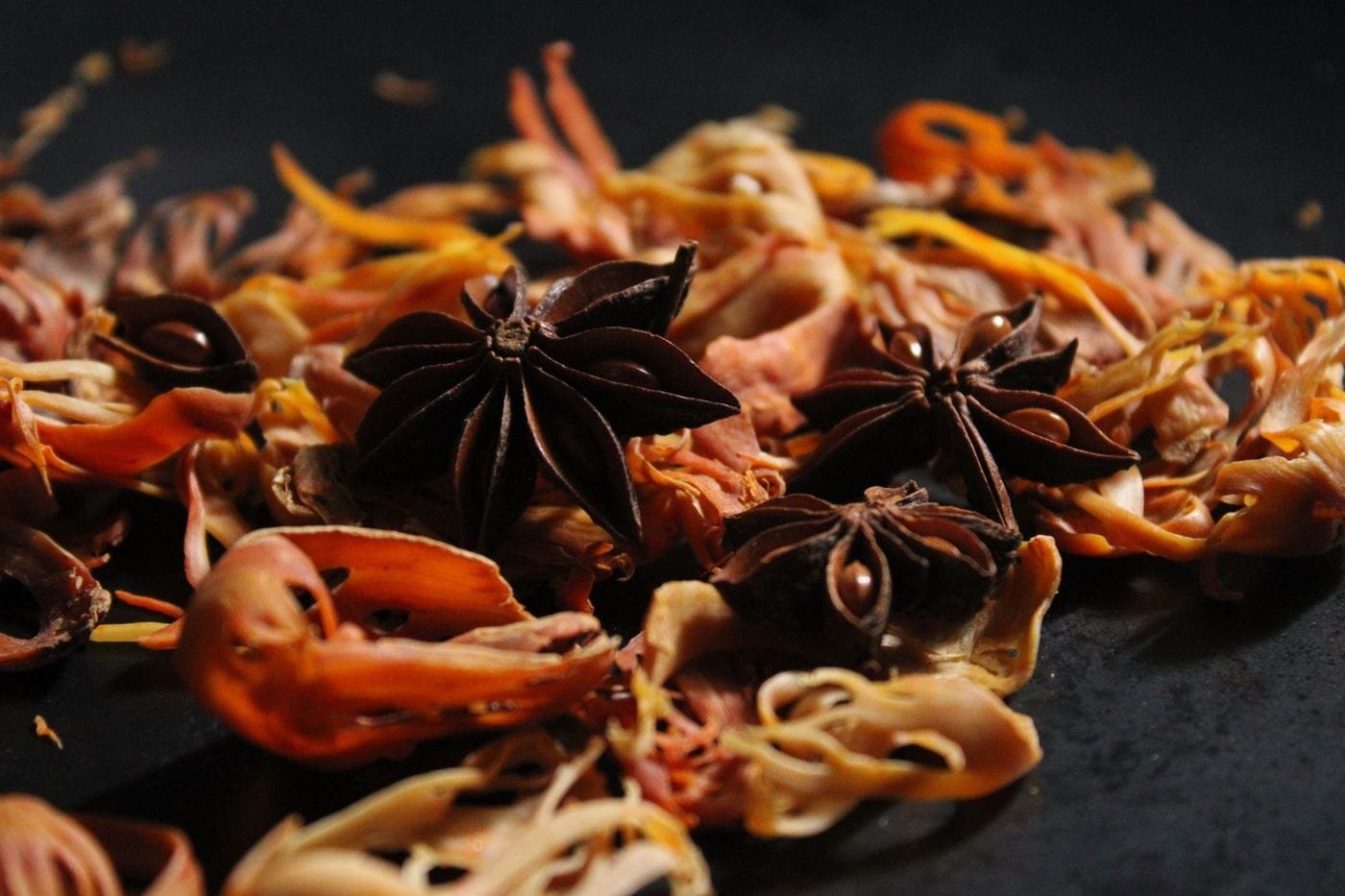
To turn the aril into a spice it is peeled off the nutmeg, flattened and dried for 10 to 14 days, over which the crimson colour fades to pale yellow, orange or tan. Whole dried mace comes as flat, branched pieces called blades, about 40 mm (1.6 inches) long, smooth and brittle; ground mace is simply those blades milled. Almost the whole world supply comes from Indonesia (about 75 percent) and Grenada (about 20 percent), and roughly 2,000 tonnes are produced a year (12).
 Save
SaveIn Indian kitchens and in Ayurvedic practice mace is called javitri, while the nutmeg seed itself is jaiphal (13).
Mace nutrition
Mace is used in small amounts. USDA values for ground mace (1):
| Nutrient (ground mace) | Per 1 tsp (1.7 g) | Per 1 tbsp (5.3 g) |
|---|---|---|
| Energy | 8 kcal | 25 kcal |
| Fiber | 0.3 g | 1.1 g |
| Iron | 0.2 mg | 0.7 mg |
| Calcium | 4 mg | 13 mg |
Mace Spice Benefits: What the Evidence Shows
| Claim | What was studied | Evidence |
|---|---|---|
| Stomach and H. pylori (3) | Mace extracts tested against H. pylori and inflammation markers in the lab | Lab study only |
| Teeth and gums (4) | Mace, seed and fruit extracts against oral bacteria in the lab | Lab study only |
| Mood and anxiety (5, 6) | Nutmeg extract in rats; a purified nutmeg compound in a rodent anxiety test | Animal studies of nutmeg, not mace |
| Libido (7) | Nutmeg extract in male mice | Animal study of nutmeg |
| Fatty liver (8) | Nutmeg seed extract in mice on a high-fat diet | Animal study of nutmeg, not mace |
| Appetite, memory, circulation, kidneys, colds | No reliable studies | Not supported |
Digestion and stomach
In laboratory tests, an ethanol extract of mace inhibited Helicobacter pylori, the bacterium linked to peptic ulcers, including clinical strains, although it was far weaker than the antibiotic clarithromycin. The extract also reduced nitric oxide release from inflamed immune cells and showed antioxidant activity (3). The authors called for further preclinical and clinical studies. For practical help with an upset stomach, see our guide to home remedies for diarrhea.
Teeth and gums
Ethanol extracts of mace and nutmeg seed showed antibacterial activity against bacteria involved in tooth decay and gum disease in laboratory tests (4). This does not show that eating mace improves dental health, so brushing, flossing and dental visits remain essential.
Mood and anxiety
A nutmeg extract reduced immobility time in the forced swim test and other depression models in rats (5), and a purified nutmeg compound had anti-anxiety effects in a rodent test (6). These studies used nutmeg extracts or isolated compounds, not culinary mace, and have not been tested in people.
Libido and fatty liver
A nutmeg extract increased mating behavior in male mice (7), and a nutmeg seed extract reduced body weight, liver fat and inflammation in mice fed a high-fat diet (8). Neither effect has been shown in humans or with mace.
Inflammation and joints
Mace extract reduced an inflammation marker in immune cells in the lab (3), but there are no human studies of mace for arthritis or joint pain. For eating patterns studied in arthritis, see our arthritis diet guide.
Cooking With Mace
What mace tastes like: the flavour of both mace and nutmeg has been described as warm, woody, fruity, peppery and herbal, though some tasters find mace coarser, less sweet and spicier than the kernel. Mace holds more essential oil than nutmeg does (8.1 to 10.3 percent against 6.2 to 7.6 percent), which is why a little goes a long way (12). If you have no mace, nutmeg is the nearest substitute, since the two come from the same fruit. Use it in small amounts:
- Baked goods such as cakes, muffins and breads.
- Cream sauces, mashed potatoes and soups; about an eighth of a teaspoon is enough for a pot of cream of chicken soup.
- Spiced tea, masala chai, curries, rice dishes and pickles.
- Pair with other warm spices such as cumin, cinnamon and cloves.
Safety and Side Effects
- Large amounts are toxic: nutmeg’s toxic effects are thought to be mainly due to myristicin oil (9). A German poison center recorded poisonings after people ate 20 to 80 g of nutmeg powder, and a fatal case involved nutmeg combined with the sedative flunitrazepam (10).
- Misuse: nutmeg powder is sometimes misused for hallucinogenic effects, and a man was hospitalized after swallowing 75 g of nutmeg powder (11).
- Children: in 10 years of Illinois Poison Center data, more than half of 32 nutmeg exposures were unintentional, and most of those involved children under 13 (9). Store spices out of reach.
- Cooking amounts: the pinch used in recipes is far below the amounts linked to poisoning (10). Pregnant and breastfeeding women should avoid concentrated nutmeg or mace products, as their safety has not been studied.
Frequently Asked Questions
What are the benefits of mace spice?
Mace adds warm, peppery flavor to food. In laboratory studies, mace extracts showed antioxidant, anti-inflammatory and anti-H. pylori activity and inhibited some oral bacteria. Mood, libido and fatty liver effects have been studied only in animals, and mostly with nutmeg rather than mace. No human trials show health benefits from mace.
What does mace spice taste like?
Warm, woody, fruity, peppery and herbal, much like nutmeg, although mace is often described as coarser, less sweet and spicier. Mace contains more essential oil than the nutmeg kernel, 8.1 to 10.3 percent against 6.2 to 7.6 percent, so small amounts carry a long way.
What is mace spice used for?
Mace flavours baked goods, meat, fish, sauces and vegetables, and it is also used in preserving and pickling. It is sold either as whole blades, the flat dried pieces about 40 mm long, or ground. In Indian cooking, where it is called javitri, it appears in spice blends such as garam masala.
What is the difference between mace and nutmeg?
Both come from the same fruit of the Myristica fragrans tree. Nutmeg is the seed kernel, and mace is the lacy red aril that surrounds it, which is dried and used as a spice. Researchers have isolated many of the same types of compounds from both.
Is mace safe to eat?
Small culinary amounts, such as the pinch used in recipes, are widely used. Large amounts of nutmeg have caused poisoning, with poison centers reporting both intentional misuse and accidental exposures in young children. Keep spices away from children and do not consume large amounts.
Can mace or nutmeg be toxic?
Yes, in large amounts. Nutmeg’s toxic effects are thought to be mainly due to myristicin. A German poison center recorded poisonings after people ate 20 to 80 grams of nutmeg powder, and a fatal case involved nutmeg combined with a sedative drug. These amounts are far above normal cooking use.
Does mace help digestion?
Mace has been used in Thai traditional medicine for stomach discomfort and nausea, and nutmeg has been used traditionally for stomach disorders. Lab studies show mace extracts can inhibit H. pylori, but no human trials have tested mace for digestive problems.
The Bottom Line
Mace is the lacy aril of the nutmeg seed and a warm, flavorful spice for baking, sauces and chai. Lab studies show mace extracts have antioxidant, anti-inflammatory, anti-H. pylori and antibacterial activity, and animal studies of nutmeg suggest effects on mood, libido and fatty liver, but none of these benefits has been shown in people eating mace. Enjoy it by the pinch, keep it away from children, and never consume large amounts, since nutmeg spices can cause poisoning.
This article is for informational purposes only and is not a substitute for professional medical advice, diagnosis, or treatment. Always consult a qualified healthcare provider before using herbal remedies, especially if you are pregnant, nursing, taking medication, or managing a health condition.
Related Articles
Balanced Diet Guide With the 5 Food Groups
Cumin (Jeera) Benefits: Evidence, Uses and Safety
Home Remedies for Diarrhea That Actually Help
Arthritis Diet Guide | Best & Worst Foods for Joints