

The real side effects of olive oil, from skin reactions to calories, and which popular warnings are not supported by research.
Olive oil is mostly monounsaturated fat and a staple of the Mediterranean diet. In a large Spanish trial, people at high cardiovascular risk who followed a Mediterranean diet with extra-virgin olive oil had fewer heart attacks, strokes and cardiovascular deaths than those on a low-fat diet (2).
Like any food, olive oil has some downsides. This guide explains the side effects of olive oil that research supports, mainly on the skin and through calories, and corrects several common claims that do not hold up.
Key Takeaways
- One tablespoon of olive oil provides about 119 calories (1).
- Applied to the skin, olive oil weakened the skin barrier and caused mild redness in a controlled study (7).
- Allergic contact dermatitis from olive oil is rare but has been reported, including in massage workers (6).
- Eating olive oil is linked to better blood sugar control (4) and had no significant effect on blood pressure in trials (5).
- We found no evidence that olive oil makes blood thinners less effective (9).
Olive Oil Nutrition
 Save
Save| Olive oil | Per 100 g | Per tablespoon (13.5 g) |
|---|---|---|
| Calories | 884 kcal | 119 kcal |
| Monounsaturated fat | 73.0 g | 9.9 g |
| Polyunsaturated fat | 10.5 g | 1.4 g |
| Saturated fat | 13.8 g | 1.9 g |
| Vitamin E | 14.3 mg | 1.9 mg |
| Vitamin K | 60.2 mcg | 8.1 mcg |
Source: USDA FoodData Central, olive oil (1).
About 73% of olive oil’s fat is monounsaturated and about 14% is saturated (1). Extra-virgin olive oils that are higher in polyphenols improved some cardiovascular risk markers, such as oxidized LDL and total cholesterol, more than low-polyphenol olive oils in a meta-analysis of clinical trials (10).
Olive Oil Side Effects at a Glance
| Possible side effect | What the evidence shows |
|---|---|
| Weakened skin barrier | Olive oil on the skin for 4 to 5 weeks weakened the outer skin layer and caused mild redness (7) |
| Allergic contact dermatitis | Rare; about 20 cases described, some in massage workers (6) |
| Baby skin | Oil on newborn skin slowed skin barrier development in a small trial (8) |
| Weight gain | 119 calories per tablespoon (1) |
| Acne from eating it | No evidence; olive oil is part of eating patterns linked to less acne (11) |
| Low blood pressure | Trials found no significant effect on blood pressure (5) |
| Blood thinner interactions | No studies found showing olive oil makes blood thinners less effective (9) |
Skin Barrier Damage and Redness
This is the best-documented side effect. In a study of 19 adult volunteers, applying six drops of olive oil to one forearm twice a day for 4 to 5 weeks significantly reduced the integrity of the outer skin layer and caused mild redness, in people with and without a history of eczema. Sunflower seed oil applied to the other forearm preserved the skin barrier and improved hydration. The researchers concluded that olive oil should not be used to treat dry skin (7).
If you want a natural moisturizer, see our guide to home remedies for moisturizing dry skin.
Does Olive Oil Cause Acne?
We did not find clinical studies showing that olive oil applied to the face causes acne. Because it can weaken the skin barrier (7), people with sensitive, dry or acne-prone skin may prefer a non-comedogenic moisturizer. Eating olive oil is a different matter: in a controlled study of acne and rosacea patients, diets including vegetables, legumes, oily fish, olive oil and nuts appeared beneficial (11).
Allergic Contact Dermatitis
Contact allergy to olive oil is considered rare. A 1999 case report described a masseur who developed hand eczema from olive oil, with about 20 cases of olive oil contact allergy described at the time. Patch tests and a use test were positive, but eating olive oil did not cause a reaction. The authors advised against using olive oil on the skin under occlusion or on long-standing skin conditions (6). An umbrella review also noted that only a few adverse skin reactions to topical olive oil have been reported (3).
Olive Oil on Baby Skin
Olive oil is traditionally used for baby massage and dry skin. In a pilot randomized trial of 115 healthy newborns, olive oil or sunflower oil applied twice daily for 4 weeks improved skin hydration but led to significantly less improvement in the structure of the skin’s lipid layers than no oil. The authors advised caution when recommending oils for newborn skin until larger trials are done (8).
Calories and Weight
 Save
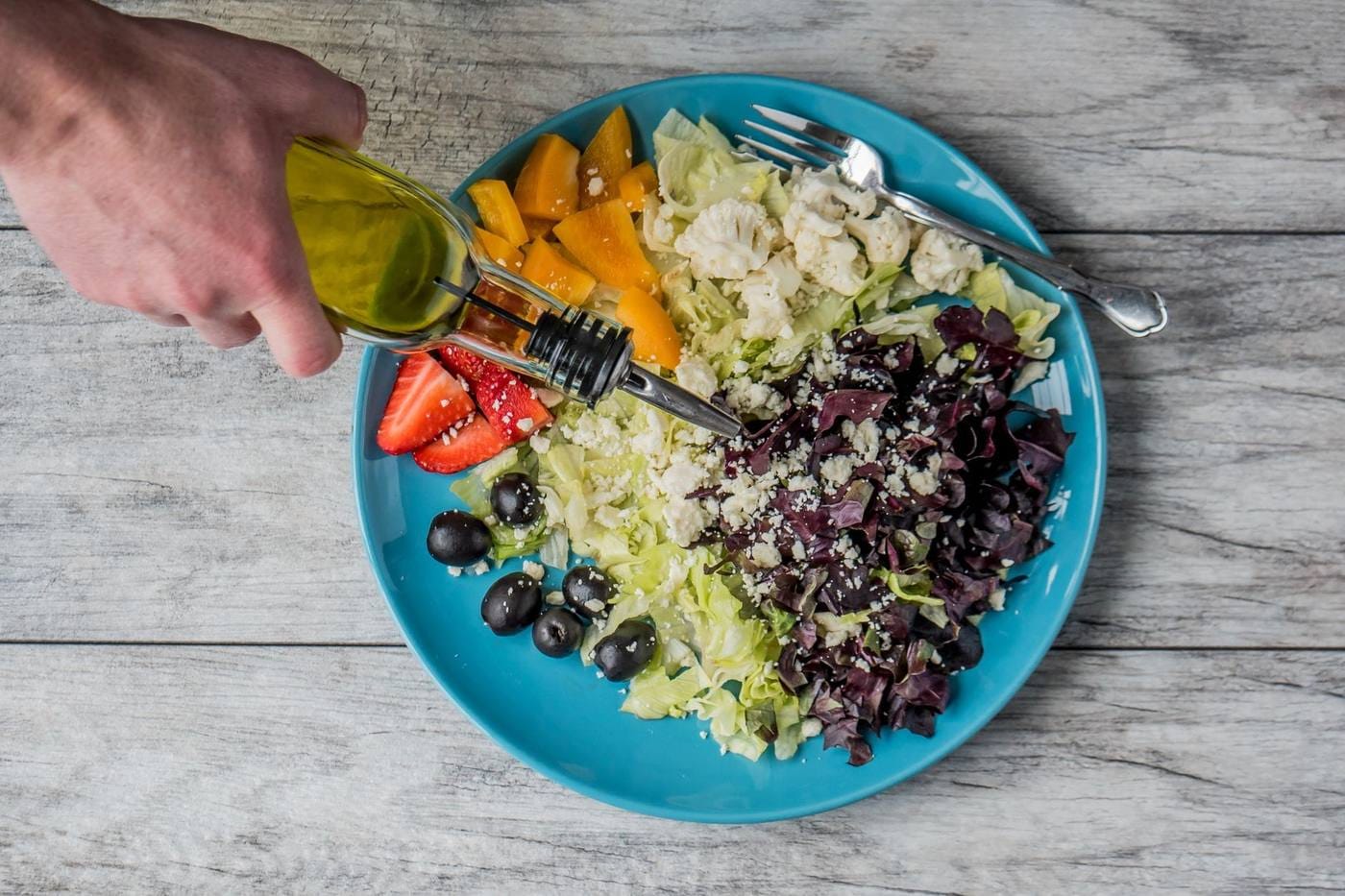
SaveOlive oil is 100% fat, and each tablespoon provides about 119 calories (1). Free-pouring can add hundreds of calories to a meal. Measuring with a spoon and using olive oil in place of butter or other fats, rather than on top of them, helps keep calories in check. Other cooking oils, such as peanut oil, have a similar calorie count.
Blood Sugar and Blood Pressure
A meta-analysis found that people who consumed the most olive oil had a 16% lower risk of type 2 diabetes, and that olive oil lowered HbA1c by 0.27 percentage points and fasting glucose in people with type 2 diabetes (4). These are modest benefits, not a risk of dangerously low blood sugar. If you take diabetes medication, keep monitoring your glucose as usual when you change your diet.
Concerns about olive oil causing low blood pressure are not supported: a meta-analysis of randomized trials found no significant effect of olive oil supplementation on systolic or diastolic blood pressure (5).
Olive Oil and Blood Thinners
We found no studies showing that olive oil reduces the effectiveness of blood thinners. In a secondary analysis of the PREDIMED trial, people assigned to a Mediterranean diet with extra-virgin olive oil were less likely to start vitamin K antagonist drugs such as warfarin than those on a low-fat diet (9). Olive oil contains a small amount of vitamin K, about 8 micrograms per tablespoon (1). If you take warfarin, talk to your doctor before making big changes to your diet.
Frequently Asked Questions
What are the side effects of olive oil?
Eaten in normal amounts, olive oil is safe for most people. The main downsides are its calories (about 119 per tablespoon) and, when applied to the skin, a possible weakening of the skin barrier and rare allergic contact dermatitis.
Is it bad to put olive oil on your skin?
It can be for dry or eczema-prone skin. In a study in adult volunteers, olive oil applied for 4 to 5 weeks weakened the outer skin layer and caused mild redness, while sunflower seed oil did not. Allergy to olive oil on the skin is rare.
Is olive oil safe for babies’ skin?
Researchers advise caution. In a pilot trial in 115 newborns, olive oil and sunflower oil improved skin hydration but led to less improvement in the skin’s lipid structure than using no oil.
Can olive oil interact with blood thinners?
We found no studies showing that olive oil makes blood thinners less effective. Olive oil contains a small amount of vitamin K, about 8 micrograms per tablespoon. If you take warfarin, discuss major diet changes with your doctor.
How much olive oil per day is too much?
There is no official upper limit. In the PREDIMED trial, people following a Mediterranean diet who were given free extra-virgin olive oil had fewer cardiovascular events than a group advised to cut dietary fat. Because olive oil is calorie-dense, use it in place of other fats rather than in addition to them.
The Bottom Line
For most people, eating olive oil is safe and part of a heart-healthy diet. Its main drawback in food is calories, at about 119 per tablespoon. On the skin, olive oil can weaken the skin barrier and rarely causes allergic reactions, so it is not a good choice for dry, eczema-prone or newborn skin. Claims that olive oil dangerously lowers blood pressure or blocks blood thinners are not supported by research. Use it in place of other fats, measure portions, and choose a different moisturizer for sensitive skin. For a related oil, see our article on pomace olive oil, and for the bigger picture, the effects of healthy eating.
This article is for informational purposes only and is not a substitute for professional medical advice. If you take medication for diabetes or blood clotting, or have a skin condition, talk to your doctor before making major changes to your diet or skincare.
Related Articles
Olive Oil vs Vegetable Oil: The Honest Answer
Pomace Olive Oil: What It Is, Uses, and Is It Healthy?
Home Remedies for Moisturizing Dry Skin: The Evidence
Peanut Oil Benefits for Skin, Hair and Health: The Evidence
Positive Effects of Healthy Eating: What Research Shows