
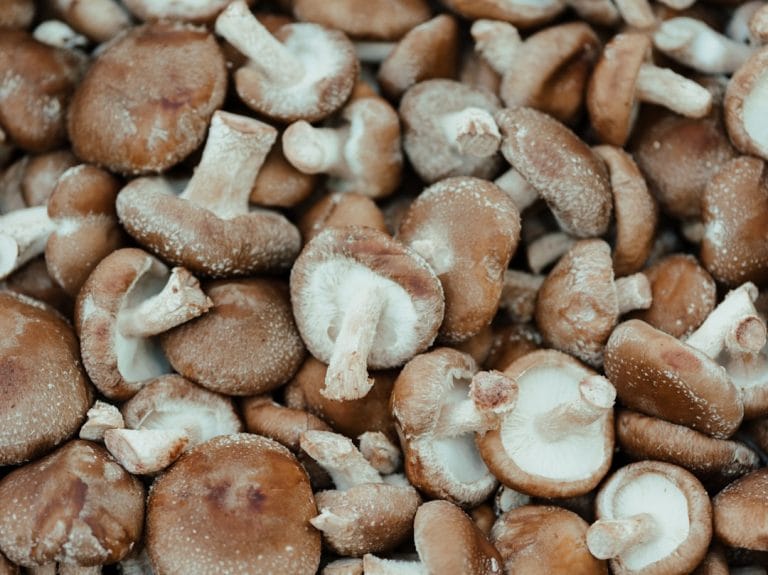
What shiitake mushrooms genuinely deliver, the trial that tested them properly, and the reaction you need to know about before you eat one raw.
Shiitake are excellent food. They are also the subject of a lot of claims that trace back to laboratory dishes and cosmetic testing rather than to people.
This page has been rewritten. The previous version quoted a physician we could not verify, promoted shiitake for cancer on the strength of cell studies, credited them with wrinkle reduction, gave an invented daily portion, and never named the one reaction anyone eating shiitake should recognise.
Key Takeaways
- Never eat them raw. Raw and undercooked shiitake cause a distinctive whip-mark rash (1).
- One good human trial, in 52 adults, measured immune cell changes after 5 to 10 g dried daily (2).
- The lentinan cancer evidence is about an injected drug with chemotherapy, not about eating mushrooms (3).
- Copper is the real nutritional standout, not vitamin D (5, 7).
- In a trial, mushrooms did not improve most cardiometabolic risk factors (4).
The Warning That Was Missing
 Save
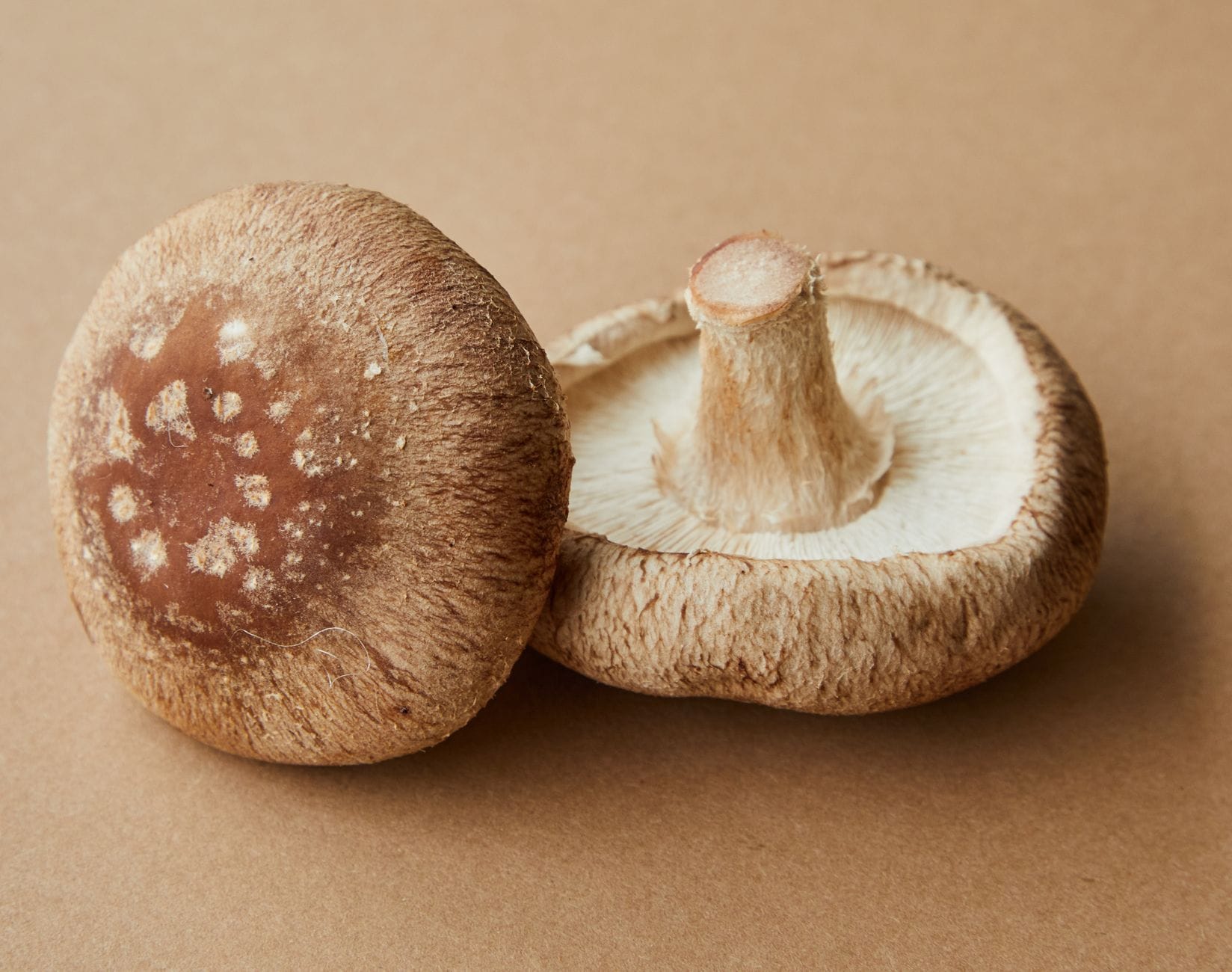
SaveThis belongs at the top rather than buried under side effects, because it is specific, common enough to have its own name, and entirely preventable.
Shiitake dermatitis is a cutaneous reaction to lentinan, a polysaccharide in the cell walls of Lentinula edodes. A systematic review of 50 reported cases found the majority occurred after eating raw mushrooms, and 22% after eating lightly cooked or undercooked ones (1).
What it looks like is unmistakable once you know it:
- Linear flagellate dermatitis in 98% of cases: raised red streaks in whip-like lines, usually across the trunk and limbs
- Itching in 78%
- Sometimes fever, diarrhoea and mucosal ulcers (1)
It is self-limiting, resolving in about 12.5 days on average without treatment, and perhaps 9 to 11 days with it. Diagnosis is clinical: blood tests, skin biopsy and patch testing are non-specific and inconsistent. The recommended management is symptom relief, reassurance, and avoiding re-exposure (1).
So: cook them thoroughly, every time. The previous version of this page mentioned “allergic reactions” and “blood abnormalities” vaguely and never named the condition or its cause.
What Is Actually in Them
| Per 100 g | Cooked | Dried | Note |
|---|---|---|---|
| Energy | 56 kcal | 296 kcal | Dried are concentrated; you eat far less |
| Fibre | 2.1 g | 11.5 g | |
| Copper | 0.896 mg | 5.17 mg | The standout. Copper supports immune function, blood vessels and bone (7) |
| Selenium | 24.8 mcg | 46.1 mcg | Genuinely good |
| Pantothenic acid | 3.59 mg | — | Among the best plant sources |
| Vitamin D | 0.7 mcg | 3.9 mcg | Far less than the reputation suggests (8) |
| Protein | 1.56 g | 9.58 g | Not a protein food |
Two corrections here.
The vitamin D reputation is overstated. The previous version made a lot of vitamin D being “genuinely rare in the plant world”. Cooked shiitake supply about 0.7 micrograms per 100 g, roughly 5% of an adult’s daily requirement (5, 8). Mushrooms can produce vitamin D2 from ergosterol when exposed to ultraviolet light, but most commercially grown mushrooms are raised in the dark. If a pack says UV-exposed, that is a different product and worth reading.
Copper was buried. Cooked shiitake give 0.896 mg of copper per 100 g, close to a full adult daily requirement, and dried ones considerably more (5, 6). Copper is needed for immune function, blood vessels, nerves and bone (7). That is a genuine, checkable nutritional strength, and the old page mentioned it in passing while devoting paragraphs to skin creams.
We also removed the claim that shiitake protein contains every one of eighteen amino acids, which is not a meaningful statement about anything.
Every Claim, Checked
| Claim | What the human evidence shows | Verdict |
|---|---|---|
| Improves immune function | A 4-week trial in 52 healthy adults eating 5 or 10 g of dried shiitake daily found more γδ-T and NK-T cell proliferation, higher salivary IgA and lower CRP. These are laboratory immune measures, not fewer infections (2) | Real trial, laboratory endpoints |
| Helps your heart | In a randomised trial, 60 adults ate 84 g of mushrooms daily for 8 weeks within a Mediterranean diet. Mushrooms did not influence most cardiometabolic risk factors; the cholesterol improvement came from the diet, not the mushrooms (4) | Not supported |
| Lowers cancer risk | The lentinan evidence is real but is about an injected drug given with chemotherapy for gastric cancer, not about eating mushrooms (3). Cancer questions belong with an oncology team (9) | Rewritten |
| Excellent source of vitamin D | Cooked shiitake supply 0.7 mcg per 100 g, roughly 5% of an adult’s daily requirement (5, 8) | Overstated |
| Rich in copper | This one is true and was buried. Cooked shiitake give 0.896 mg per 100 g, around the whole adult daily requirement (5, 7) | Supported |
| Good for skin and wrinkles | Those findings came from extracts in laboratory and cosmetic testing, not from eating mushrooms | Claim removed |
The Immune Trial, Read Carefully
There is one properly conducted human study, and it is worth describing precisely because it is usually reported as more than it is.
Fifty-two healthy adults aged 21 to 41 ate either 5 g or 10 g of whole dried shiitake daily for four weeks. Afterwards, their γδ-T cells proliferated 60% more and NK-T cells twofold more in culture, both showed greater expression of activation receptors, salivary IgA rose, and C-reactive protein fell (2).
Those are real, measured changes. They are also changes in immune cells in a laboratory, over four weeks, in healthy young people. Nobody counted infections. “Improved immune markers” and “you will get ill less often” are different claims, and only the first was tested.
It does give one useful number, though: 5 to 10 g of dried mushrooms a day is what was actually studied. That replaces the “6 to 8 mushrooms” figure that used to appear here, which had no source.
The Cancer Section, Corrected
The previous version listed lentinan alongside compounds said to suppress leukemia cell growth, and mentioned activity against breast, bladder, colon, lung and prostate cancers “in research settings”.
Here is what is actually established, and it is more interesting than the vague version. Lentinan is used clinically in some countries as an injectable adjunct to chemotherapy for gastric cancer. A meta-analysis of 31 randomised trials in 2,729 patients found injectable lentinan plus chemotherapy improved treatment response and quality of life compared with chemotherapy alone, with GRADE ratings of high or moderate for those outcomes (3).
That is a purified compound, given by injection, alongside chemotherapy, under oncology supervision. It is not a reason to eat mushrooms for cancer prevention, and the distinction matters. If you have cancer or are in treatment, the National Cancer Institute’s advice is to tell your care team about anything you are taking or considering (9).
Heart Claims, Tested
 Save
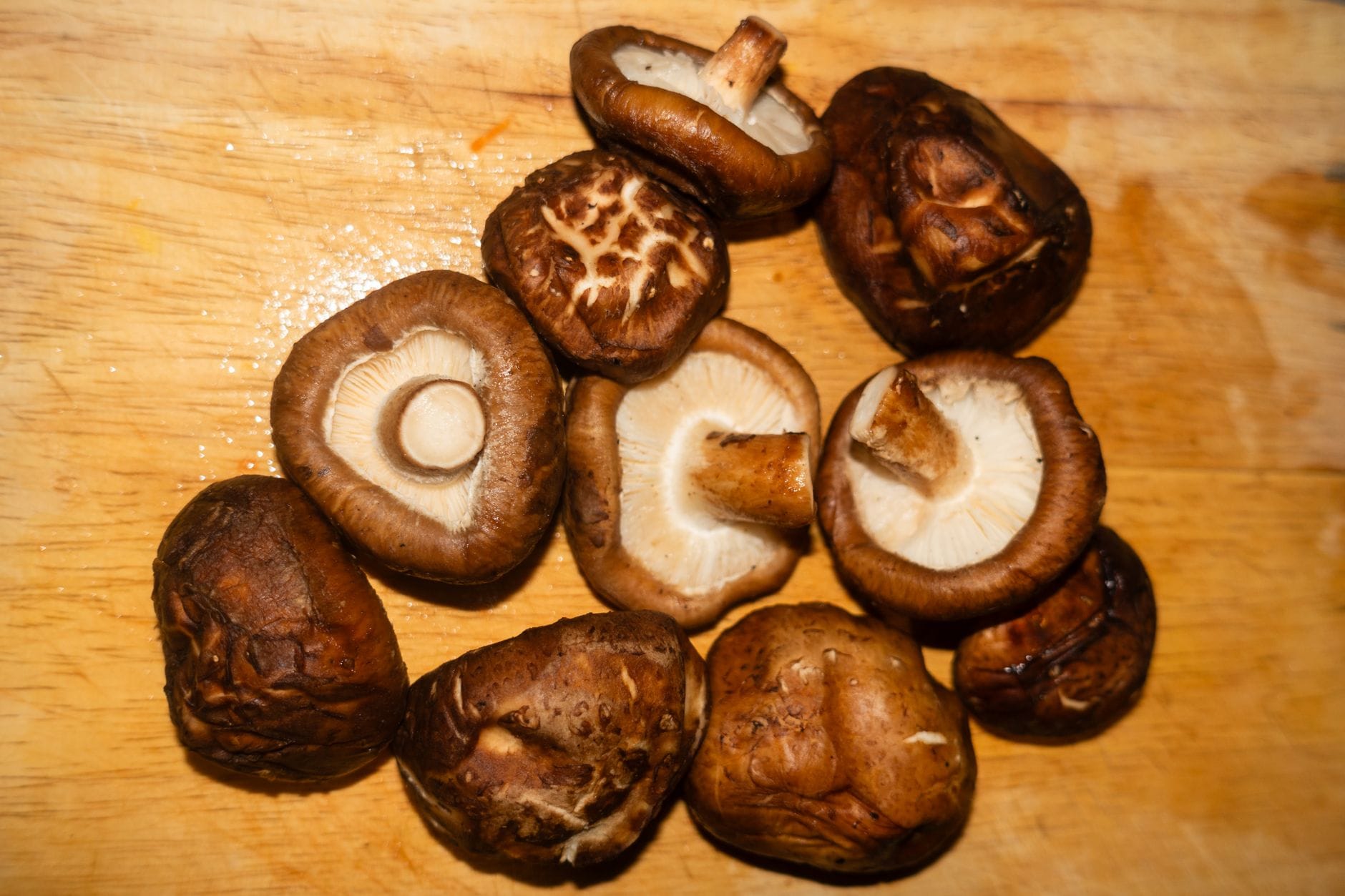
SaveThe old heart section listed antioxidants, LDL oxidation, vitamin E, oleic acid, ergosterol and butyric acid, and concluded that mushrooms shift lipids favourably.
A randomised trial put that to the test. Sixty adults adopted a Mediterranean-style diet for eight weeks, with all food provided, either with 84 g of mushrooms daily or without. Adopting the Mediterranean diet reduced total cholesterol by about 10 mg/dL. That happened independently of the mushrooms. The only measure the mushrooms themselves improved was fasting glucose, by a small amount (4).
The conclusion in the title is blunt: consuming mushrooms when adopting a healthy Mediterranean-style pattern does not influence short-term changes in most cardiometabolic risk factors.
How to Eat Them
The rule is the only rule that matters: always cook them thoroughly (1).
Slice the caps and sauté until the edges crisp. Add them to stir-fries, omelettes, broths or a tray of roast vegetables. Dried shiitake rehydrate into something intensely savoury, and the soaking liquid is worth keeping for stock. The stems are tough but make good stock too.
They are a genuinely good swap for less interesting ingredients, they bring depth without meat, and per 100 g cooked they cost you 56 calories (5). Our balanced diet guide covers where they fit, the plant-based guide covers meat-free cooking, and the fibre guide covers the fibre side.
Frequently Asked Questions
Can you eat shiitake mushrooms raw?
No. Raw and undercooked shiitake cause shiitake dermatitis, a reaction to lentinan in the cell walls. In a systematic review of 50 reported cases, most followed eating raw mushrooms and 22% followed lightly or undercooked ones. It produces a striking linear, whip-mark rash in 98% of cases, with itching, and sometimes fever, diarrhoea and mouth ulcers.
How long does shiitake dermatitis last?
It settles on its own in about 12.5 days on average. Treatment may shorten it to around 9 to 11 days, but reassurance, symptom relief and not eating them raw again are usually enough. If you develop an unexplained rash in whip-like lines after a meal, mention the mushrooms to your doctor.
Do shiitake mushrooms boost immunity?
There is one good human trial. Fifty-two healthy adults ate 5 or 10 g of dried shiitake daily for four weeks and showed increased proliferation of γδ-T and NK-T cells, more salivary IgA and lower CRP. Those are immune-cell measurements in a laboratory, not fewer colds. It is promising, and it is not the same as being protected from illness.
Are they a good source of vitamin D?
Less than you would think. Cooked shiitake carry about 0.7 micrograms per 100 g, roughly 5% of the adult daily requirement. Mushrooms make vitamin D2 when exposed to ultraviolet light, and most commercially grown ones are not. What shiitake are genuinely rich in is copper.
How many should I eat?
There is no established amount, and we have removed the figure that used to be here. The trial that measured anything used 5 to 10 g of dried mushrooms a day. Cook them, eat them as food, and do not treat a portion size as a dose.
The Bottom Line
Shiitake are worth eating for flavour, for copper and selenium, and for the fact that they make vegetables taste like a meal. The one thing to take seriously is cooking them properly, because raw and undercooked shiitake cause a distinctive whip-mark rash that lasts about two weeks. The immune trial that exists measured immune cells in a laboratory rather than illness. The cancer evidence is about lentinan injected alongside chemotherapy, not about dinner. And in a controlled trial, mushrooms did not move most cardiometabolic markers. Cook them, enjoy them, and let them be food.
This article is for informational purposes only and is not a substitute for professional medical advice. Always cook shiitake mushrooms thoroughly, and see a doctor if you develop an unexplained rash, fever or mouth ulcers after eating them.
Related Articles
Balanced Diet Guide With the 5 Food Groups
Plant-Based Diet: Benefits, Risks and How to Start
High Fiber Foods List and How Much Fiber You Need
Vegetarian Diet Plan for Weight Loss: 7-Day Meal Plan