
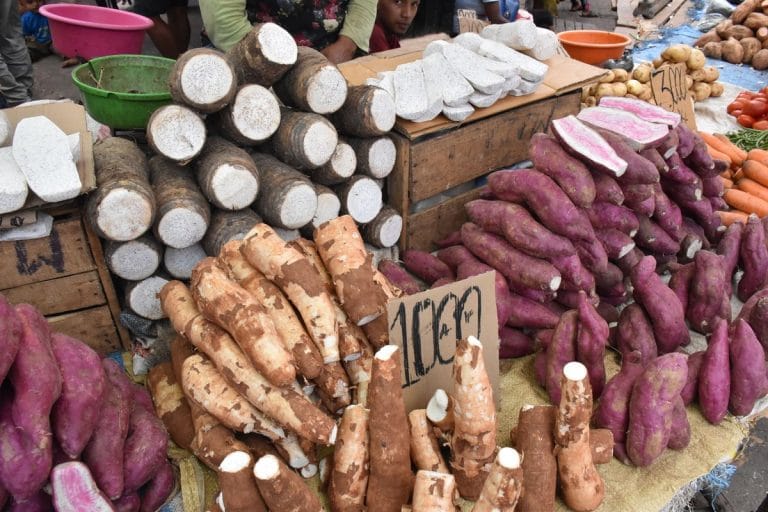
A vividly colored tuber that eats like a sweet potato and brings real nutrition along for the ride.
Cut into a purple yam and you get a splash of deep violet that no other root vegetable quite matches. That color is more than a party trick. It comes from anthocyanins, the same family of plant pigments celebrated in blueberries and black rice, and it hints at the nutrition packed inside this humble tuber.
Purple yam, sometimes called greater yam, has fed people across the Asian tropics for centuries and now shows up in kitchens worldwide. It cooks down to a soft, sweet-potato-like texture, works in both sweet and savory dishes, and carries a respectable load of fiber, potassium, and antioxidants. If you already appreciate the understated appeal of yams in your kitchen, the purple variety adds a bright new dimension worth exploring.
Key Takeaways
- Purple yam (Dioscorea alata) is a starchy Asian tuber with grayish skin and striking purple flesh.
- Its potassium and anthocyanin content may support blood circulation and vascular health.
- The soluble fiber inside it can help digestion and ease constipation.
- It works in everything from smoothies and soups to jams and roasted salad toppers.
- Purple yam is not purple sweet potato, and much of the research quoted for it was done on the sweet potato.
Nutrition Facts of Purple Yam
| Per 100 g, raw | Amount | Worth knowing |
|---|---|---|
| Energy | 118 kcal | Denser than potato, lighter than rice |
| Carbohydrate | 27.9 g | Of which only 0.5 g is sugar |
| Fibre | 4.1 g | A real amount for a starchy root |
| Protein | 1.5 g | Not a protein food |
| Fat | 0.17 g | Negligible |
| Potassium | 816 mg | The standout number here |
| Vitamin C | 17.1 mg | Falls sharply with long boiling |
| Vitamin B-6 | 0.29 mg | About a fifth of a day’s intake |
| Manganese | 0.40 mg | Plus 0.18 mg copper |
| Magnesium | 21 mg | Modest |
| Phosphorus | 55 mg | Modest |
One honest caveat about that table. The USDA database has no separate entry for Dioscorea alata. These are the figures for yam, raw, the general entry for the genus (1). They are the right order of magnitude for purple yam, but they are not a measurement of the purple one specifically.
The potassium is the number that stands out: 816 mg in 100 g is more than most everyday vegetables carry, and potassium is vasoactive, meaning it has a direct say in how blood vessels behave and how blood flows (2). The fibre puts it in good company with other foods worth eating for their fibre (4). None of this is dramatic on its own, but it adds up when the yam replaces something less nourishing.
Purple Yam Is Not Purple Sweet Potato
This is the single most useful thing to get straight, and almost nothing written about purple yam bothers to. Purple yam is Dioscorea alata: a large, elongated tuber with rough greyish skin like bark, in the yam family. Purple sweet potato is Ipomoea batatas: the Okinawan or Stokes variety, smooth-skinned, in the morning glory family. They are not related, they do not taste the same and they are not nutritionally interchangeable.
It matters more than a naming quibble, because a large share of the research people cite for purple yam was done on purple sweet potato. The two studies most often quoted for the brain claim are a mouse study and a rat study, and both of them are purple sweet potato (8, 9). That is interesting work about a different vegetable. Shops and photographs confuse the two constantly, so if the tuber you bought is smooth-skinned and tapered at both ends, it is a sweet potato.
What the Color Actually Does for You
Anthocyanins give purple yam its hue, and they may be its most interesting feature. Research on anthocyanin-rich foods points to benefits for the blood vessels, which in turn supports heart health (3). The potassium plays a role here too. Potassium is vasoactive, meaning it can influence how blood vessels behave, and studies suggest it helps promote blood flow.
Put those two together and you get a food that may quietly support circulation. This part is less settled than a headline would suggest, and no single tuber fixes cardiovascular health. Still, swapping in nutrient-dense roots is the kind of small, steady change that fits into eating well without obsessing over calories.
A Friend to Your Gut
Purple yam contains pectin, a type of soluble fiber. Fiber like this helps sweep the intestines along and keeps things moving, which is why fiber-rich foods are a go-to strategy for preventing and easing constipation (4). Better gut motility usually means fewer uncomfortable days.
Pectin has another trick worth mentioning. Some research suggests it may help guard against certain intestinal infections. Between the fiber and the pectin, purple yam earns its place as a gut-friendly staple, especially for anyone trying to eat more whole plants.
Fewer Calories, More Fullness
If weight management is on your mind, the fiber story matters again. Fiber slows digestion and helps you feel satisfied, which naturally discourages the reach for a second helping (5, 7). Purple yam is also relatively low in calories for how filling it is, so it fits comfortably into a lower-calorie approach to eating.
That combination, more satiety for fewer calories, is the same logic behind plenty of sensible eating plans. Roasting a batch of purple yam cubes to toss into meals throughout the week is an easy way to lean on it.
Anthocyanins, Diosgenin, and Your Brain
Here the evidence is better than the usual hand-waving, and also narrower than the headlines. Anthocyanin content varies a great deal between yam varieties, so not every purple yam carries the same load (11).
The compound actually tested in people is diosgenin, a steroidal saponin the tuber contains. A randomised, double-blind, placebo-controlled crossover trial gave 28 healthy volunteers aged 20 to 81 a diosgenin-rich yam extract for 12 weeks. Their total score on a standard neurocognitive battery rose significantly, and no adverse effects were reported. Among the 12 individual subtests, exactly one improved significantly: semantic fluency (10).
Now the part that decides what it means for dinner. The capsules were made with olive oil, and deliberately so: the animal work beforehand showed that an oil carrier was what got diosgenin into the blood and the brain at all, and the researchers called it a critical factor (10). A 12-week course of an oil-based extract is not the same intervention as a bowl of boiled yam, and the trial does not tell us the bowl does anything.
So: one small human trial, one subtest, one formulation. That is a real finding and a thin one at the same time, and it is worth holding loosely.
Calming Inflammation
Purple yam holds saponins, anthocyanins, and other phytochemicals that may lower pro-inflammatory signals in the body and mop up the reactive oxygen species that trigger inflammation in the first place. Since chronic inflammation is linked to conditions like heart disease and diabetes, foods that help keep it in check are worth having around (12, 13). More human trials would strengthen the case, but the ingredients are the right ones.
The vitamin C in purple yam contributes here too. As an antioxidant, it neutralizes free radicals that can otherwise damage DNA, part of why vitamin-C-rich foods get attention for their protective role against cellular harm (6).
The Hormone Question
Yams carry diosgenin, and diosgenin is the starting material the pharmaceutical industry once used to manufacture steroid hormones. That industrial fact got turned into a health claim, and wild yam creams have been sold on it ever since. The claim has been tested.
A double-blind, placebo-controlled crossover study gave 23 women with troublesome menopausal symptoms a wild yam cream for three months. There was no change in oestradiol, FSH, or progesterone in blood or saliva, no change in cholesterol or blood pressure, and no difference from placebo on symptoms (14). Your body is not a chemistry plant; it does not turn diosgenin into progesterone.
The picture is not entirely empty, though, and the one trial that used purple yam itself is worth knowing. Fifty menopausal women took a standardised Dioscorea alata extract, two 12 mg sachets daily, for 12 months. Total scores on the Greene climacteric scale fell significantly against placebo, with the clearest improvements in the psychological items: feeling tense, insomnia, and anxiety. It was safe over the full year (15).
Both of those are extracts at a measured dose, not food. Eating purple yam is not the tested intervention in either direction. If you take hormone medication, that is a conversation with whoever prescribes it, not a reason to avoid a vegetable.
Cooking With Purple Yam
 Save
SaveThe best thing about purple yam might be how easygoing it is in the kitchen. It leans sweet and earthy, and the color makes almost any dish look intentional.
Fold cooked, mashed yam into muffins or a quick bread for a naturally tinted crumb.
Blend it with fruit and yogurt for a vivid smoothie.
Drop chunks into soups and stews to make them heartier.
Mash it with coconut milk and a little sweetener for a simple pudding.
Roast cubes and scatter them over a salad.
Simmer it into a homemade jam.
A Simple Purple Yam Jam
Boil about 750 grams of peeled purple yam until tender, then grate the flesh. Melt a quarter cup of butter in a pan, stir in a can of condensed milk, the yam, and a teaspoon of vanilla, and cook on low for around 30 minutes until sticky. Add half a can of unsweetened condensed milk and cook another 15 minutes before transferring to a clean glass jar.
Frequently Asked Questions
How much purple yam can I eat in a day?
About one cup a day is a reasonable amount for most people. It gives you the fiber and nutrients without tipping into the range where side effects tend to show up.
Is purple yam the same as a sweet potato?
No, though they’re easy to confuse. Purple yam belongs to the Dioscoreaceae family, while sweet potatoes are a different plant entirely. The texture is similar once cooked, but they aren’t botanically related.
Can everyone eat purple yam?
Most people can enjoy it freely. If you take hormone medications or birth control, check with your doctor first, since compounds in the yam may interact.
Is purple yam the same as purple sweet potato?
No, and they are not even related. Purple yam is Dioscorea alata, a yam, with rough greyish bark-like skin on a large elongated tuber. Purple sweet potato is Ipomoea batatas, smooth-skinned and tapered, in the morning glory family. They are sold interchangeably and photographed interchangeably, and a good deal of the research quoted for purple yam was actually done on purple sweet potato.
Does purple yam affect hormones?
Not from eating it. Yams contain diosgenin, which industry uses as a raw material for making steroid hormones, but the human body does not perform that conversion. In a placebo-controlled crossover trial, three months of wild yam cream left oestradiol, FSH and progesterone unchanged. A separate year-long trial of a standardised Dioscorea alata extract did improve menopausal symptom scores, mainly the psychological ones, but that was a measured extract rather than food.
The Bottom Line
Purple yam is a genuinely useful vegetable, tasty, colorful, and carrying a real payload of fiber, potassium, and anthocyanins. The evidence for circulation, digestion, and satiety is reasonably solid, while the brain and anti-inflammatory claims lean more on animal research and deserve a wait-and-see attitude. Eat it in sensible portions, around a cup a day, and it can stand in nicely for less nourishing snacks. Just ease off if you notice headaches or nausea, both signs you’ve had more than your body wants.
This article is for informational purposes only and is not a substitute for professional medical advice. Talk to a qualified healthcare provider before making significant changes to your diet, especially if you take medication or have a health condition.
Related Articles
Why Black Rice Was Once Reserved for Chinese Royalty
Why Yams Deserve More Credit Than They Get in Your Kitchen
The High Fiber Foods Worth Putting on Your Plate Every Day
How to Eat a Balanced Diet Without Counting Every Calorie