

Which patchouli oil benefits have actually been tested in people, which ones come from mice, and the safety point these articles almost never make.
Patchouli oil smells extraordinary and is genuinely pleasant to use. Whether it does the things it is credited with is a separate question, and the previous version of this page answered it too generously.
That version credited patchouli with building collagen, softening wrinkles, protecting against sun damage, clearing dandruff and calming the mind. It supported those claims with one PubMed reference and several links to paywalled aggregators, and it quoted an unnamed dermatologist we could not verify. The single PubMed reference was a study in mice.
Key Takeaways
- The skin and collagen research was done on shaved mouse skin (2, 3).
- One human randomised trial exists: inhaled patchouli lowered stress scores in 50 nurses (1).
- No trial supports patchouli for dandruff. That section has been removed.
- Essential oils cause allergic contact dermatitis; 8 of 42 sensitised patients needed hospital care (4).
- Always dilute, and patch-test before using it on skin (5, 7).
What It Is
 Save
SavePatchouli oil is steam-distilled from the dried leaves of Pogostemon cablin, a tropical perennial in the mint family, alongside peppermint, lavender and rosemary. It is thick, dark gold to brown, and unusual among essential oils in that the scent deepens with age.
The characteristic smell comes largely from patchoulol, also called patchouli alcohol, which makes up roughly 28% of the oil by weight in the batch used in one study (2).
What Has Been Tested, and in What
| Claim | What the study behind it actually was | Verdict |
|---|---|---|
| Softens fine lines, improves elasticity, boosts collagen | Two studies, both in mice. Shaved mouse skin was treated with 6 to 9 mg of patchouli oil before UV exposure; collagen content rose about 22 to 26% versus the irradiated control (2, 3) | Mouse data, not human |
| Protects against sun damage | Same mouse experiments. No human trial has tested this, and nothing here replaces sunscreen (2, 3, 9) | Not shown in people |
| Fades stretch marks | The previous version already admitted this had little behind it. We found nothing, so it has gone | Removed |
| Clears dandruff and oily scalp | We found no trial of patchouli oil on the scalp. The nearest study tested a cinnamon-and-patchouli oil capsule against intestinal Candida, uncontrolled, with a reported cure rate that does not survive scrutiny | Not supported |
| Calms stress | This one has a real human trial. Fifty emergency nurses inhaled 5% patchouli oil or plain almond oil; stress scores were significantly lower and compassion satisfaction higher in the patchouli group (1) | Modest support, inhaled |
| Helps other products absorb | True, and it is a reason for caution rather than a benefit: anything that carries substances through skin also carries irritants and allergens through it | Reframed |
The skin claims are mouse claims
This is the correction that matters most, because it is the reason most people buy the oil.
In the study behind the collagen and elasticity claims, the dorsal skin of mice was shaved and treated with patchouli oil for two hours before UV irradiation. At 6 mg and 9 mg per mouse, wrinkle formation was inhibited, loss of elasticity was reduced, and collagen content rose by about 21.9% and 26.3% compared with the irradiated controls (2). A companion study on patchouli alcohol specifically found similar effects, also in mice (3).
Those are decent experiments. They are also mice, pretreated before a controlled UV dose, at concentrations nobody applies to a face. Writing that up as “softens fine lines and improves elasticity” quietly moves the finding from a laboratory animal to your bathroom shelf.
Human skin ageing is driven mostly by sun exposure, and the intervention that has been tested for it is sun protection (9). Patchouli oil is not a substitute.
The dandruff section is gone
We looked for trials of patchouli oil on the scalp and found none. The closest study tested a capsule combining cinnamon and patchouli oils against intestinal Candida, which is neither the same preparation nor the same body part, and it had no control group.
Dandruff is usually seborrheic dermatitis, a common condition with treatments that have been properly tested (8). If yours is persistent, that is a better route than a scalp oil.
The One Human Trial
 Save
SaveThere is a genuine randomised controlled trial, and it is about the scent rather than the skin.
Fifty emergency nurses at a university hospital were randomly assigned to inhale either 5% patchouli oil in sweet almond oil or plain sweet almond oil, at the end of an afternoon shift and again 24 hours later. Stress levels were significantly lower in the patchouli group, and compassion satisfaction significantly higher. Blood pressure, heart rate, compassion fatigue and burnout showed no significant difference (1).
Fifty people, two inhalations, one hospital, self-reported outcomes. It is a real result and a small one, and it is more than most essential oils have. NCCIH’s broader position on aromatherapy is worth keeping alongside it: little rigorous research has been done, and the evidence for most uses is limited (6).
If you find the smell grounding at the end of a long day, that is a reasonable thing to do. It just is not a treatment.
The Part Most Articles Skip
Essential oils are marketed as gentle because they are natural. Dermatologists see the other side of that.
In a French study of 42 patients with allergic contact dermatitis caused by the essential oils they were using themselves, eight required hospitalisation. Seventy-one per cent had positive patch tests to fragrance mix I or II. Two details stand out: 40% did not spontaneously mention that they used essential oils when asked about their skin problem, and only 33% had received any advice about safe use when they bought them (4). Fragrance is one of the most common causes of allergic contact dermatitis generally (5).
Contact dermatitis shows up as redness, itching, swelling or blistering where the substance touched, and it can appear after you have used something uneventfully for a long time (7).
Practical rules:
- Dilute, always. One to two drops in a tablespoon or two of a carrier oil.
- Patch-test the diluted blend on a small area and wait a day before using it more widely.
- Not on broken skin, not near eyes or mucous membranes, not on children’s faces.
- Stop at the first sign of a reaction, and tell a clinician you have been using an essential oil, because many people do not think to mention it (4).
- Ask first if you are pregnant or breastfeeding, or taking prescription medicine.
We have removed the previous version’s specific warning that people on blood-thinning medication should avoid patchouli “entirely”, because we could not find a source for it. That is not a reason to be casual: the general advice above applies to everyone, and your clinician is the right person to ask about your own medication.
Using It Sensibly
For the scent, a few drops in a diffuser is the whole method, and it is the use with the only supporting trial (1). Patchouli blends well with citrus oils for brightness, with lavender and ylang-ylang for florals, and with cedarwood, sandalwood and vetiver for depth.
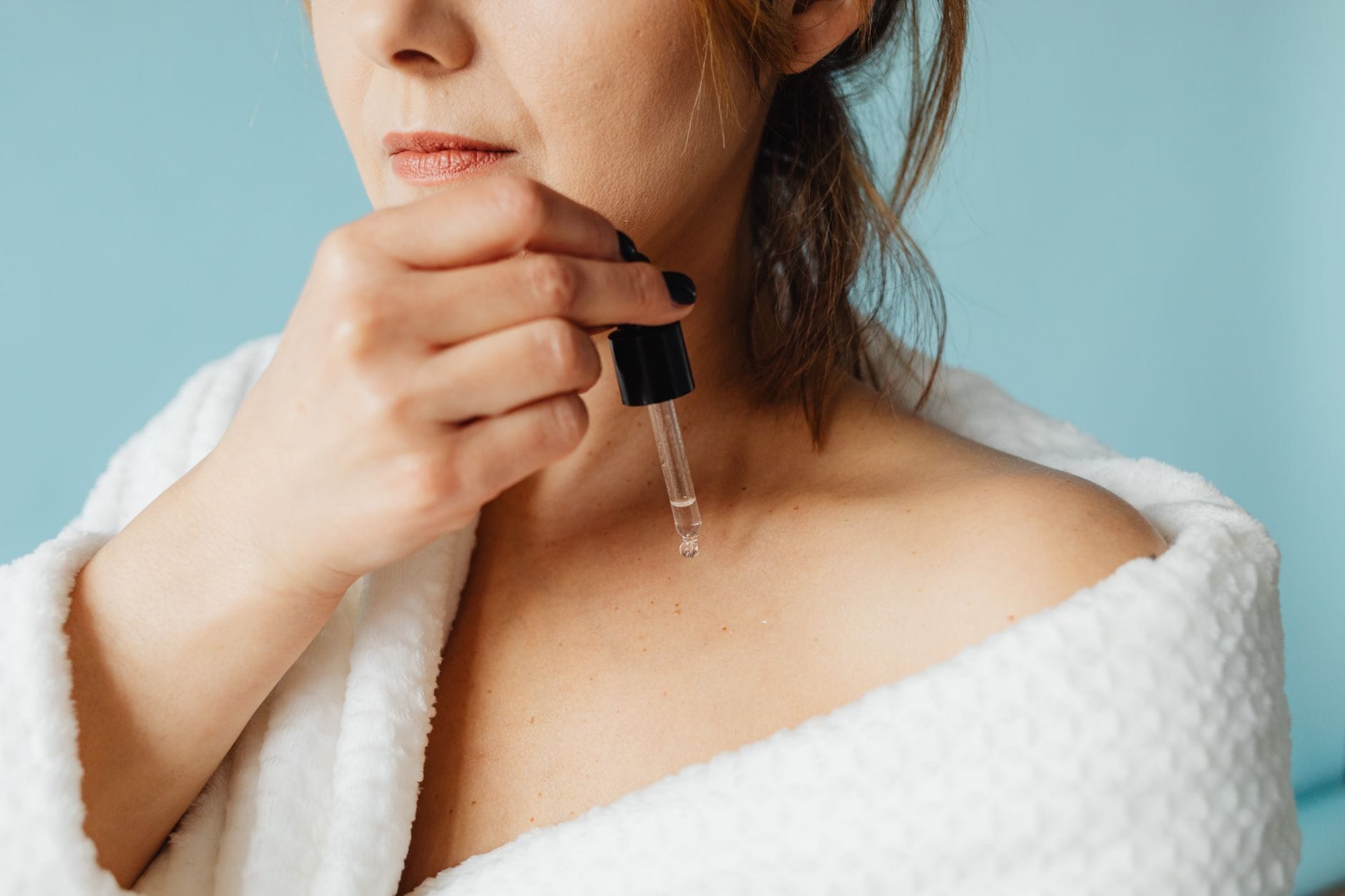
For skin, treat it as a fragrance you are adding to a carrier oil rather than an active ingredient. If your goal is genuinely better skin, our moisturiser guide covers what to put on dry skin, the facial rash guide covers what to do when skin reacts, and the balanced diet guide covers the part that actually works from the inside.
Frequently Asked Questions
Does patchouli oil actually do anything?
One randomised trial in 50 emergency nurses found that inhaling 5% patchouli oil lowered stress scores compared with plain almond oil, though blood pressure, heart rate and burnout did not change. That is the only human trial we could find. The skin research that gets quoted everywhere was done in mice.
Is it good for wrinkles?
Nobody has tested that in people. The studies behind the claim applied 6 to 9 mg of patchouli oil to shaved mouse skin before UV exposure. Collagen content rose in the mice. Skin ageing in humans is driven mostly by sun exposure, and the tool with evidence behind it is sunscreen.
Can I put it straight on my skin?
No. Essential oils are a recognised cause of allergic contact dermatitis, and in one French series of 42 people sensitised to their own oils, eight needed hospital treatment. Always dilute, and patch-test a small area first.
Does it help dandruff?
We could not find a trial of patchouli on the scalp, so we have removed that section. Dandruff is usually seborrheic dermatitis, which has treatments that have been tested properly. See a clinician if it is persistent or severe.
Who should avoid it?
Anyone who has reacted to a fragrance or an essential oil before. Keep it away from broken skin, the eyes and mucous membranes, and away from children’s faces. If you are pregnant or breastfeeding, or you take prescription medicine, ask your clinician first.
The Bottom Line
Patchouli oil has one human randomised trial behind it, in which inhaling it lowered self-reported stress in fifty emergency nurses while changing nothing measurable about their blood pressure or heart rate. Everything else this page used to claim about collagen, wrinkles and sun damage comes from patchouli applied to shaved mouse skin, and the dandruff section had no trial behind it at all. Meanwhile the thing these articles rarely mention is real: essential oils are a recognised cause of allergic contact dermatitis, serious enough in one series to put eight of forty-two patients in hospital. Enjoy the smell. Dilute it, patch-test it, and do not ask it to do a dermatologist’s job.
This article is for informational purposes only and is not a substitute for professional medical advice. Always dilute essential oils before applying them to skin, patch-test first, stop if a reaction develops, and speak to a clinician before use if you are pregnant or breastfeeding, have a skin condition, or take prescription medicine.
Related Articles
Home Remedies for Moisturizing Dry Skin: The Evidence
Home Remedies for Face Rashes: What Is Safe
Homemade Toners for Oily Skin: What Works and What to Skip
Balanced Diet Guide With the 5 Food Groups