

Non stick pans are blamed for a Group 1 carcinogen classification that was never about cooking. Here is what the classification covered, and the one risk that is real.
Non stick pans — Teflon is the best known brand name for the coating, which chemists call PTFE — attract more fear than almost any other kitchen object, and the fear traces back to a real scientific decision that has been widely misread. Separating the two is worth doing, because there is something to be careful about — just not the thing people worry about.
Three questions about Teflon, answered from the primary sources: what was actually classified, whether it is still in your pan, and what genuinely goes wrong. Teflon is a brand name; the non stick coating itself is PTFE; and the chemical at the centre of the scare, PFOA, is a third thing again. Keeping those three apart is most of the answer.
Key Takeaways
- IARC classified PFOA the chemical as Group 1 in December 2023 — not cooking on a pan (1).
- That Group 1 rested on animal and mechanistic evidence; human cancer evidence was limited (1).
- EPA had manufacturers cut PFOA by 95% by 2010 and target elimination by 2015 (3).
- FDA: very small amounts of PFAS can enter food through processing and cookware (4).
- The documented risk is overheating, which can cause polymer fume fever — the thing people call Teflon flu (6).
What Was Actually Classified
A working group of 30 international experts from 11 countries met in Lyon in November 2023 to evaluate two “forever chemicals” (1). They classified PFOA as carcinogenic to humans, Group 1, and PFOS as possibly carcinogenic, Group 2B (1). The summary was published in The Lancet Oncology (2).
Now the detail that almost every article leaves out.
| Processed meat | PFOA | |
|---|---|---|
| IARC group | Group 1 (7) | Group 1 (1) |
| What the Group 1 rested on | Sufficient evidence of cancer in humans (7) | Sufficient evidence in experimental animals plus strong mechanistic evidence in exposed humans. Evidence for cancer in humans was limited (1) |
| So the label means | Convincing human epidemiology (7) | Convincing overall case, but built mainly on animal and mechanistic data (1) |
PFOA was placed in Group 1 on the basis of sufficient evidence for cancer in experimental animals and strong mechanistic evidence in exposed humans — and the press release adds that there was limited evidence for cancer in humans (1).
That is a different footing from processed meat, which reached Group 1 on sufficient evidence in humans (7). Both labels are Group 1; the evidence underneath them is not the same shape.
And critically, the evaluation is of the chemical, across every route of exposure — occupational exposure in factories, contaminated drinking water, environmental contamination. It is not an evaluation of cooking.
Is Teflon Bad For You? Is PFOA Even In Your Pan?
| Common worry | What the sources actually say |
|---|---|
| My pan contains PFOA | EPA asked eight major manufacturers to cut PFOA from emissions and product content by 95% by 2010 and work toward eliminating it by 2015 (3). A pan bought recently in the US or EU should not contain it |
| Non-stick pans give you cancer | The Group 1 classification is for the chemical PFOA, evaluated across all exposure routes including occupational and drinking water — not for cooking on a pan (1) |
| PFAS get into my food from the pan | FDA states it is possible for very small amounts of PFAS to enter foods through processing and cookware (4) |
| The coating is dangerous when scratched | A 2017 perspective notes the toxicity and fate of ingested PTFE coating are not understood, and calls for research rather than reporting harm (5) |
| Overheating a pan is risky | This is the one with a documented mechanism: heated fluoropolymers can cause an illness resembling polymer fume fever (6) |
Probably not, if the pan is reasonably recent and from a regulated market.
EPA launched the PFOA Stewardship Program in January 2006 over concerns about persistence, presence in the blood of the general US population, long half-life in people, and adverse effects in laboratory animals (3). It asked eight major manufacturers — including 3M/Dyneon, DuPont, Daikin, Arkema, Asahi, BASF, Clariant and Solvay Solexis — to reduce PFOA from facility emissions and product content by 95% no later than 2010, and to work toward eliminating it no later than 2015 (3). All eight committed (3).
So the chemical at the centre of the scare was being removed from production a decade before most people heard of it.
The FDA’s position on food is measured: it is possible for very small amounts of PFAS to enter foods through processing and cookware, and the agency has tested over 1,900 food samples on the US market since 2019 (4). In February 2024 it announced that all grease-proofing agents containing PFAS were no longer being sold in the US — that is food packaging, not pans (4).
The Risk That Is Real: Overheating
 Save
SaveIf you take one practical thing from this article, take this.
Heated fluoropolymers can cause a respiratory illness resembling polymer fume fever — abrupt respiratory symptoms accompanied by flu-like features (6). A review of fluoropolymer-associated illness found that most people improve with fresh air, supportive measures and supplemental oxygen, and that serious outcomes including acute respiratory distress syndrome and death are uncommon (6).
Worth being precise: that review covered waterproofing and leather-proofing products rather than cookware specifically (6). But the mechanism is the same family of chemistry, and it is the one place where heat, fluoropolymers and human illness are documented together. That comparison with processed meat is not a throwaway: what Group 1 actually means is the single most misread idea in food safety.
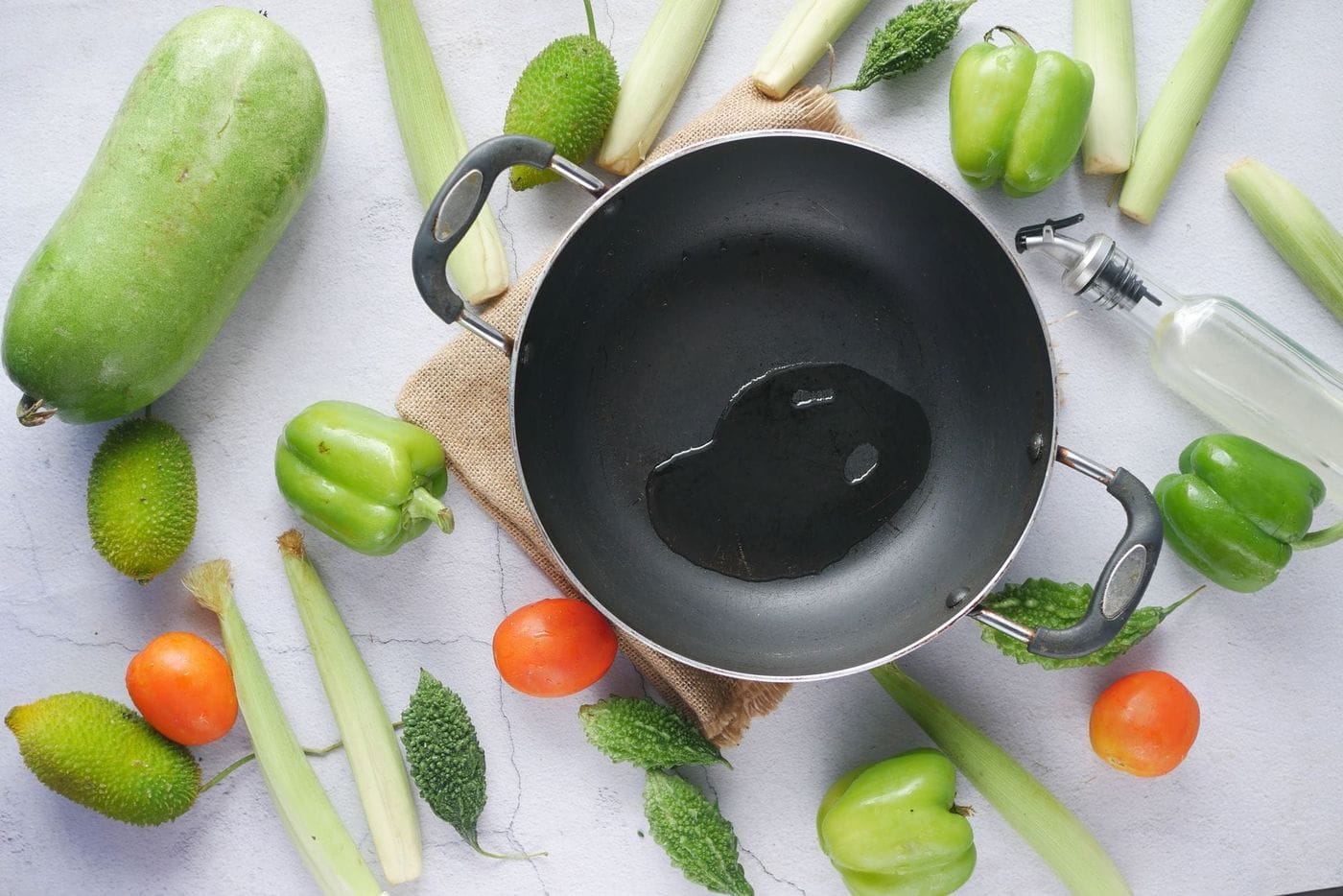
The practical rule follows directly: never leave an empty non-stick pan on high heat. The same practical logic applies to aluminium foil and to reheating rice: the danger is almost always in how the food is handled, not in the material itself. An empty pan climbs in temperature far faster than one with food or oil in it, which is why the classic incident is a forgotten pan preheating on a hob.
What Is Honestly Not Known About The Non Stick Coating
Two things deserve to be admitted rather than papered over.
A 2017 perspective on PTFE-coated cookware stated that at normal cooking temperatures such cookware releases various gases and chemicals, while also noting that only a few studies describe the toxicity of PTFE, and without solid conclusions (5). It added that the toxicity and fate of ingested PTFE coating are not understood (5). Its conclusion was a call for more extensive and systematic research, not a finding of harm (5).
Second, the replacements. PFOA was substituted with chemicals such as GenX, and the same paper notes these alternatives are also suspected of similar toxicity (5). The substitute was adopted before it was fully characterised, which is a pattern worth remembering whenever a product advertises itself as free of the last thing people worried about.
Non Stick Pans: What To Actually Do
Nothing here requires throwing out a working pan.
Do not preheat an empty pan on high heat. This is the only recommendation with a documented mechanism behind it (6).
Use moderate heat and avoid metal utensils, which keeps the coating intact for longer.
Replace a badly scratched pan — because it has stopped doing its job, not because the evidence shows it is poisoning you. The honest state of knowledge is that nobody has established what ingested coating does (5).
If you would rather sidestep the question, stainless steel, cast iron and carbon steel have no coating at all, at the cost of more oil and more maintenance. That is a preference, not a health requirement.
Frequently Asked Questions
Is Teflon toxic?
Teflon is a brand name for PTFE, the coating itself. On the evidence, the pan sitting in your cupboard is not the problem: the Group 1 classification that started the fear was about PFOA, a processing chemical phased out of cookware, not about the coating. What a 2017 perspective does say plainly is that the toxicity and fate of ingested PTFE coating are not understood and that only a few studies exist, which is a call for research rather than a finding of harm.
What is Teflon flu?
It is the everyday name for polymer fume fever, which happens when a non-stick pan is overheated. Heated fluoropolymers can cause abrupt respiratory symptoms with flu-like features. Most people improve with fresh air and supportive care, and severe outcomes are uncommon. It is the one risk here with a documented mechanism, and it comes from heat, not from ordinary cooking.
Do non-stick pans cause cancer?
The classification people have read about is for PFOA, a chemical formerly used in making the coating, not for cooking on a pan. In December 2023 an IARC working group of 30 experts from 11 countries classified PFOA as carcinogenic to humans, Group 1. The basis matters: it was sufficient evidence for cancer in experimental animals plus strong mechanistic evidence in exposed humans, while the evidence for cancer in humans itself was limited. That evaluation covers exposure of every kind, including occupational and contaminated drinking water. It is not a finding about frying an egg.
Is PFOA still in non-stick pans?
It should not be in pans made recently in the US or EU. The EPA launched a stewardship programme in 2006 and asked eight major PFAS manufacturers to reduce PFOA from facility emissions and product content by 95% no later than 2010, and to work toward eliminating it entirely by 2015. All eight companies committed. So the chemical at the centre of the scare was removed from production years ago, though older pans and products from less regulated supply chains are a different question.
What actually happens if you overheat a non-stick pan?
This is the one genuine, documented mechanism. Heated fluoropolymers can produce fumes that cause an illness resembling polymer fume fever: abrupt respiratory symptoms with flu-like features. A review of fluoropolymer-associated illness, mostly from waterproofing products rather than cookware, found that most people improve with fresh air, supportive care and supplemental oxygen, and that serious outcomes including acute respiratory distress syndrome and death are uncommon. The practical rule is simple: do not leave an empty non-stick pan on high heat.
Is it dangerous to eat off a scratched non-stick pan?
Honestly, nobody knows, and anyone telling you otherwise is guessing. A 2017 perspective paper on PTFE cookware stated plainly that the toxicity and fate of ingested PTFE coating are not understood, and that only a few studies describe PTFE toxicity, without solid conclusions. Its conclusion was that more extensive and systematic research is needed. The sensible response to a badly scratched pan is to replace it because it no longer works well, not because the evidence shows it is harming you.
Are the PFOA replacements safer?
That is not settled either. PFOA has been replaced with other chemicals such as GenX, and the same 2017 perspective notes these alternatives are also suspected of similar toxicity, calling for research into them. It is one of the more honest sentences in the field: the substitute was adopted before it was fully characterised.
What should I use instead?
There is no evidence requiring you to throw out a working non-stick pan. If you would rather reduce the question entirely, stainless steel, cast iron and carbon steel have no coating to worry about, at the cost of more oil and more care. If you keep non-stick, use it as intended: moderate heat, no empty preheating, no metal utensils, and replace it when the surface is visibly damaged.
The Bottom Line
The Group 1 classification that made non stick pans frightening was for PFOA the chemical, evaluated across occupational and environmental exposure, and it rested on sufficient evidence in animals plus mechanistic evidence in humans, with only limited human cancer evidence. PFOA was also phased out of production, with EPA securing commitments from eight manufacturers to cut it 95% by 2010 and eliminate it by 2015. The FDA describes only very small amounts of PFAS entering food through processing and cookware. What remains genuinely documented is the overheating risk, where fluoropolymer fumes can cause polymer fume fever. So the sensible response is not fear and not dismissal: keep the heat moderate, never preheat an empty pan, replace it when the surface is wrecked, and be aware that the replacement chemicals have not been fully characterised either.
This article is for informational purposes only and is not a substitute for professional medical advice. If you develop breathing difficulty or flu-like symptoms after fumes from an overheated pan, get fresh air and seek medical attention.
Related Articles
Balanced Diet Guide With the 5 Food Groups
High Fiber Foods List and How Much Fiber You Need
Olive Oil vs Vegetable Oil: The Honest Answer
How to Lower Blood Sugar Naturally: 8 Evidence-Based Habits