
What happens when researchers test fish oil for weight loss, what the studies on metabolism, appetite and muscle actually found, and how to take fish oil safely.
Fish oil supplies EPA and DHA, two long-chain omega-3 fatty acids best known for lowering triglycerides (1). It is also marketed for weight loss, with claims that it speeds up metabolism and burns fat.
When the randomized trials are pooled, the effect of fish oil on weight is small or absent (3, 4, 5, 6). This guide explains what the research found and why some of the more dramatic claims come from small or short studies.
Key Takeaways
- Meta-analyses found that fish oil led to no weight loss or about 0.6 kg more weight loss than control (3, 4, 5).
- A Cochrane review of 86 trials lasting at least a year found little or no effect of omega-3s on body fat (6).
- Fish oil may slightly reduce waist circumference, by less than 1 cm on average (3, 4, 5).
- Studies on metabolism, fat burning and muscle were small and gave mixed results (8, 9, 10, 11).
- Omega-3 supplements lower triglycerides by about 15% but can raise the risk of atrial fibrillation, especially at doses above 1 g a day (6, 15).
What Is Fish Oil?
Fish oil comes from fatty fish and contains the omega-3 fatty acids EPA (eicosapentaenoic acid) and DHA (docosahexaenoic acid). A third omega-3, ALA (alpha-linolenic acid), comes from plant oils such as flaxseed, soybean and canola oil. EPA and DHA are made by microalgae and build up in fish through the food chain (1).
The body can convert ALA into EPA and DHA, but only in small amounts (1): less than 5% to 10% for EPA and 2% to 5% for DHA, according to one review. This means vegetarians may need more omega-3s overall (2). Adults need 1.6 g (men) or 1.1 g (women) of ALA a day (1); there is no official intake for EPA and DHA.
People who eat fish at least once a week have lower rates of death from coronary heart disease in observational studies (14). For weight loss specifically, the evidence is weaker.
Does Fish Oil Help With Weight Loss?
 Save
Save| Review | Studies | Body weight | Waist |
|---|---|---|---|
| Bender 2014 (3) | Randomized trials of fish or fish oil | 0.59 kg more weight loss | 0.81 cm smaller |
| Du 2015 (4) | 21 trials in overweight or obese adults | No effect | Smaller when combined with lifestyle changes |
| Zhang 2017 (5) | 11 trials, 617 overweight or obese adults | No difference | 0.53 cm smaller |
| Cochrane 2020 (6) | 86 trials, 162,796 adults, at least 12 months | Little or no effect on adiposity | — |
The largest reviews agree that fish oil is not an effective weight loss treatment on its own. One meta-analysis found that people taking fish or fish oil lost 0.59 kg more weight and 0.81 cm more from their waist than controls, with no difference in fat mass or lean mass (3). Two meta-analyses in overweight and obese adults found no effect on body weight, but a small reduction in waist circumference (4, 5). The Cochrane review of long-term trials found no evidence that omega-3s changed adiposity (6).
Metabolism, Appetite and Muscle: What the Studies Found
Appetite
In an 8-week weight loss study, overweight and obese adults eating a calorie-restricted diet with more than 1,300 mg of long-chain omega-3s a day reported feeling fuller after a test dinner than those getting less than 260 mg (7). The study measured hunger ratings, not weight loss.
Metabolic rate and fat burning
The results conflict. In a 12-week trial in 24 healthy women aged about 66, taking 3 g of EPA and DHA a day increased resting metabolic rate by 14% and fat oxidation at rest by 19% compared with olive oil (8). In a 3-week study of 6 young adults, replacing 6 g a day of dietary fat with fish oil increased fat burning at rest and lowered body fat by 0.88 kg, but did not change resting metabolic rate after adjusting for lean mass (9). In a 6-week trial of 44 adults, 4 g of fish oil a day did not change resting metabolic rate or body weight, although fat mass fell by 0.5 kg and lean mass rose by 0.5 kg compared with safflower oil (10).
Muscle
In two small 8-week studies, omega-3 supplements did not change baseline muscle protein building but increased the response to infused insulin and amino acids, in 16 older adults (11) and 9 younger adults (12). These lab conditions do not show that fish oil builds muscle during normal training. For strength training that preserves muscle, see our dumbbell workout plan.
Omega-6 to omega-3 ratio
Western diets contain far more omega-6 than omega-3 fat, and some researchers link a high omega-6 to omega-3 ratio to obesity risk (13). This is largely based on experimental and observational research and does not prove that fish oil supplements cause weight loss. Many cooking oils, such as peanut oil, are rich in omega-6 fats.
Triglycerides and Heart Health
The Cochrane review found that increasing EPA and DHA lowered triglycerides by about 15% and may slightly reduce coronary heart disease deaths and events, but had little or no effect on overall mortality, cardiovascular events, stroke, LDL cholesterol or blood pressure (6).
Dose and Safety
 Save
Save- Upper amounts: no official upper limit exists for omega-3s. The FDA and the European Food Safety Authority consider supplements providing up to 5 g a day of EPA and DHA safe (1).
- Atrial fibrillation: in a meta-analysis of 7 cardiovascular trials with 81,210 people, omega-3 supplements were linked to a 25% higher risk of atrial fibrillation, and the risk was greater at doses above 1 g a day (15).
- Bleeding: high doses can reduce platelet clumping, and fish oil may raise clotting time (INR) in people taking warfarin (1).
- Side effects: common side effects are usually mild and include unpleasant taste, bad breath, heartburn, nausea, stomach discomfort, diarrhea and headache (1).
Talk to your doctor before taking fish oil if you take blood thinners, have heart rhythm problems, are pregnant or have a chronic condition.
What Actually Helps With Weight Loss
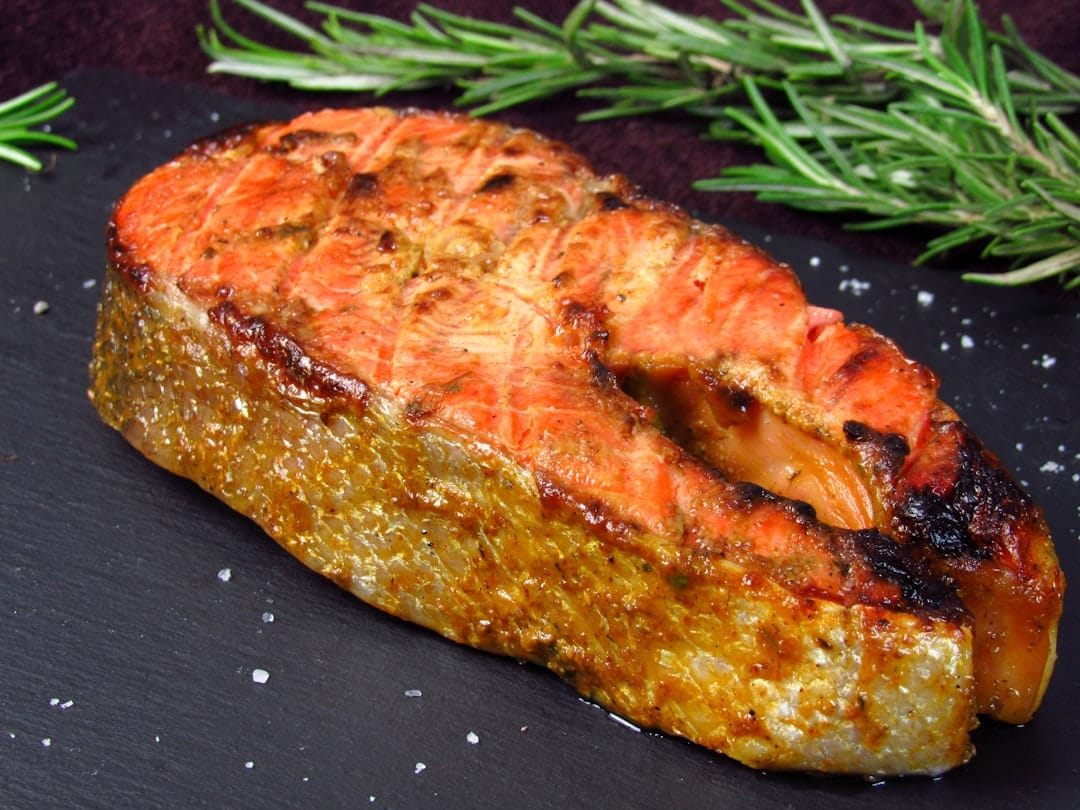
Fish oil cannot replace the basics. Weight loss depends mainly on eating fewer calories than you use, and a varied, balanced diet with regular physical activity is the foundation. Eating fatty fish such as salmon once or twice a week adds omega-3s along with protein. If you do not eat fish, a vegetarian weight loss plan can include plant sources of ALA.
Frequently Asked Questions
Does fish oil help you lose weight?
Not by much. Meta-analyses of randomized trials found either no effect on body weight or an extra loss of about 0.6 kg, and a Cochrane review of 86 long-term trials found little or no effect on body fat. Several analyses found a small reduction in waist circumference of less than 1 cm.
Does fish oil reduce belly fat?
Some meta-analyses found a small reduction in waist circumference, about 0.5 to 0.8 cm, especially when fish oil was combined with diet and exercise changes. This is a modest effect, and the included trials were small and of varying quality.
Does fish oil boost metabolism?
Results are inconsistent. A 12-week trial in 24 older women found that 3 g a day of EPA and DHA raised resting metabolic rate by 14%, but a 6-week trial in 44 adults taking 4 g of fish oil a day found no change in resting metabolic rate.
How much fish oil is safe per day?
The FDA and the European Food Safety Authority consider EPA and DHA supplements up to 5 g a day safe. However, trials of cardiovascular outcomes found a higher risk of atrial fibrillation with omega-3 supplements, especially above 1 g a day. Talk to your doctor before taking high doses.
Can vegetarians get omega-3s without fish oil?
Vegetarians can get ALA from foods such as flaxseed, soybean and canola oils, but the body converts only a small share of ALA into EPA and DHA. EPA and DHA are made by microalgae, so algae-based supplements are an option.
The Bottom Line
Fish oil is not an effective weight loss supplement. Pooled trials show no effect or about 0.6 kg of extra weight loss, and a long-term Cochrane review found little or no effect on body fat, although waist size may shrink slightly. Small studies on metabolism, fat burning and muscle gave mixed results. Fish oil does lower triglycerides, but high doses raise the risk of atrial fibrillation. Focus on diet and exercise for weight loss, include fatty fish in your meals, and ask your doctor before taking fish oil supplements.
This article is for informational purposes only and is not a substitute for professional medical advice, diagnosis, or treatment. Always consult a qualified healthcare provider before starting supplements, especially if you take medication or have a heart condition.
Related Articles
Vegetarian Diet Plan for Weight Loss: 7-Day Meal Plan
Dumbbell Workout Plan for Women: 9 Moves and Weekly Plan
Peanut Oil Benefits for Skin, Hair and Health: The Evidence
Balanced Diet Guide With the 5 Food Groups