
The benefits of cordyceps explained with the evidence: what human trials show for exercise, which cancer, aging and blood sugar claims come from lab and animal studies, and who should avoid it.
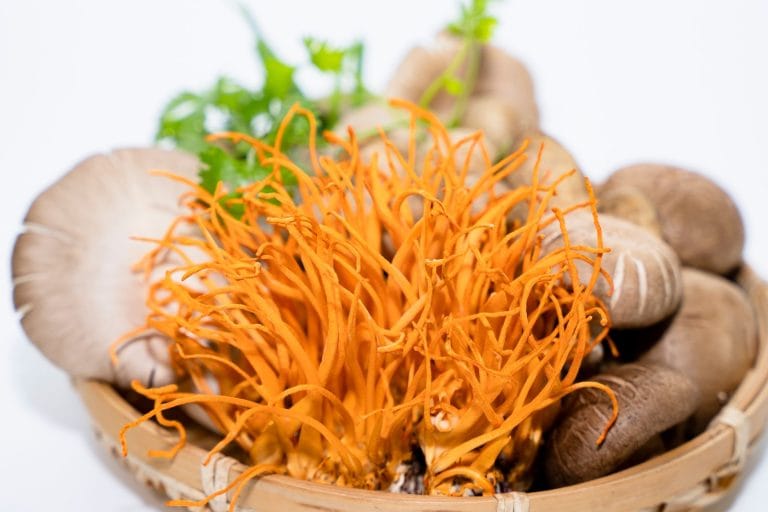
Cordyceps is a fungus that grows on the caterpillars of a moth and has long been used in traditional Chinese medicine for fatigue, coughs, sexual dysfunction and as a tonic (1). Today it is sold as capsules, powders and liquid extracts, usually made from Cordyceps sinensis (now called Ophiocordyceps sinensis) or Cordyceps militaris (1, 5).
Many of the claimed benefits of cordyceps are based on lab and animal research. In people, the best-studied area is exercise performance, and those results are mixed (1, 4, 5).
Key Takeaways
- A meta-analysis in athletes found that C. sinensis improved endurance and aerobic capacity, but individual trials are small and mixed (4, 7).
- Human studies of C. militaris for exercise and recovery have produced inconsistent results (5).
- Anticancer, anti-aging and blood sugar effects have mainly been shown in cells, fruit flies and rodents (9, 13, 15).
- In China, cordyceps has been studied as an add-on to conventional treatment for lung cancer and kidney problems; it has not been shown to work on its own, and kidney evidence is mixed (1, 12, 16).
- Cordyceps may lower blood sugar and increase bleeding risk, and should not be used by people with myelogenous cancers (1).
Exercise Performance
 Save
Save| Study | What was tested | Result |
|---|---|---|
| 20 healthy adults aged 50–75, 12 weeks (2) | Cs-4 (C. sinensis) 333 mg 3 times a day vs placebo | Metabolic threshold +10.5%, ventilatory threshold +8.5%; no change in VO2max |
| 28 young adults, 1–3 weeks (3) | 4 g/day mushroom blend containing C. militaris vs placebo | No significant change after 1 week; VO2max +4.8 ml/kg/min in the 10 people who continued 3 weeks |
| 8 male cyclists (7) | C. sinensis plus Rhodiola rosea formula vs placebo | No change in VO2max, muscle oxygen or time to exhaustion |
| 12 young men, single dose (6) | 1 g C. militaris extract 30 minutes before exercise | Higher resting oxygen uptake and faster reaction time after exercise; peak VO2 unchanged |
| 14 trials in 528 athletes (4) | Meta-analysis of fungal supplements | C. sinensis improved endurance, ventilatory threshold and VO2peak, with borderline significance for endurance |
In a double-blind trial at UCLA, 20 healthy adults aged 50 to 75 took Cs-4, a fermented C. sinensis product, or placebo for 12 weeks. The cordyceps group raised their metabolic threshold by 10.5% and ventilatory threshold by 8.5%, meaning they could exercise harder before lactate built up, but VO2max did not change (2).
At the University of North Carolina, 28 young adults took 4 g a day of a mushroom blend containing C. militaris or placebo. After 1 week there were no significant differences between groups. In the 10 people who continued for 3 weeks, VO2max improved by 4.8 ml/kg/min with the blend but not with placebo (3). Because the product was a blend, the effect cannot be attributed to cordyceps alone.
Not all studies are positive. A formula of C. sinensis and Rhodiola rosea did not improve oxygen uptake or time to exhaustion in 8 male cyclists (7). A 2026 review of 5 C. militaris trials in 321 people found inconsistent results, limited by small samples, poor reporting and multi-ingredient products (5). A 2025 meta-analysis of fungal supplements in athletes found that C. sinensis improved endurance, ventilatory threshold and peak oxygen uptake, with low heterogeneity (4).
In mice, C. militaris polysaccharides prolonged swimming time before exhaustion (8). Supplements will not replace training; see our guide to workouts for a lean, strong body.
Cancer
Cordycepin, a compound first isolated from C. militaris, has antiproliferative and anti-metastatic effects in laboratory research (11). C. militaris extracts slowed the growth of human colorectal cancer cells and of tumors implanted in mice (9), and reduced the growth of lung cancer cells in the lab (10).
In people, a meta-analysis of 12 randomized trials in 928 lung cancer patients, conducted in China, found that adding C. sinensis to conventional treatment improved tumor response, immune markers and quality of life and reduced some side effects of treatment (12). However, cordyceps has not been shown to treat cancer on its own, and Memorial Sloan Kettering notes that it increased red blood cell precursors in animals and should not be used by people with myelogenous cancers (1). Talk to your oncology team before using it.
Anti-Aging
A C. sinensis oral liquid extended the lifespan of fruit flies and increased antioxidant enzyme activity (13). Polysaccharides from Cordyceps cicadae also extended fruit fly lifespan, in a study with one author from a pharmaceutical company (14). There are no human studies showing that cordyceps slows aging.
Blood Sugar
In diabetic rats, the fruiting body of cordyceps reduced high blood sugar, excessive thirst and weight loss (15). Lab studies suggest cordyceps may add to the effect of blood sugar-lowering drugs, although the clinical relevance is not known (1). Cordyceps should not replace diabetes treatment; a balanced diet remains the foundation.
Kidney Health
In clinical studies, cordyceps products improved kidney function in kidney transplant patients and in people with diabetes and kidney problems undergoing coronary angiography, but other analyses found the evidence insufficient for transplant and hemodialysis patients (1). A 2025 meta-analysis of 15 studies with 1,310 patients reported that C. sinensis as an add-on treatment lowered blood creatinine and improved kidney function markers, based largely on studies from China (16). People with kidney disease should only use it under medical supervision.
Other Claims
Cordyceps stimulated testosterone production in mice, but whether it has similar effects in people is not known (1). Claims about heart health, inflammation and liver protection are based mainly on preclinical research, and human evidence is lacking. For whole-food mushrooms with a stronger place in everyday eating, see our article on the benefits of mushrooms.
Cordyceps Supplements and Dosage
 Save
SaveCordyceps supplements come as capsules, powders and liquid extracts (1). Products differ in species, part used (fruiting body or fermented mycelium) and strength, and many sports products combine cordyceps with other ingredients (5).
No dose has been established. Doses used in studies include 333 mg of Cs-4 three times a day for 12 weeks (2), 4 g a day of a mushroom blend (3), and 1 g of C. militaris extract as a single dose (6). Powder can be added to smoothies or homemade protein shakes.
Safety and Interactions
- Side effects: no major side effects have been reported (1).
- Bleeding: cordycepin inhibits platelet aggregation in the lab, and excessive bleeding after a tooth extraction was reported in someone taking cordyceps daily. Talk to your doctor if you take blood thinners such as warfarin or antiplatelet drugs (1).
- Blood sugar: cordyceps may add to the effects of insulin and other diabetes drugs (1).
- Cancer: it should not be used by people with myelogenous cancers (1).
- Children: a 9-year-old with cerebral palsy and epilepsy developed seizures, hallucinations and confusion after escalating doses of a supplement containing several medicinal fungi, including C. sinensis; symptoms resolved after stopping (17).
Frequently Asked Questions
What are the proven benefits of cordyceps?
The best human evidence is for exercise capacity, and it is mixed. A 2025 meta-analysis in athletes found that Cordyceps sinensis improved endurance, ventilatory threshold and peak oxygen uptake, but a review of C. militaris studies found inconsistent results. Claims about cancer, aging, diabetes and inflammation come mainly from lab and animal studies.
Does cordyceps improve exercise performance?
It may slightly. In a 12-week trial in older adults, Cs-4 raised the metabolic and ventilatory thresholds without changing VO2max, and some small trials in younger people found improvements after several weeks. Other small trials found no effect, and many studies used multi-ingredient products.
How much cordyceps should I take?
No dose has been established. Studies used 1 g of C. militaris extract as a single dose, 333 mg of Cs-4 three times a day, and 4 g a day of a mushroom blend. Products vary widely, so follow the label and talk to your doctor first.
Is cordyceps safe?
No major side effects have been reported, according to Memorial Sloan Kettering. However, cordyceps may lower blood sugar and slow blood clotting, and a case of excessive bleeding after a tooth extraction was reported in someone taking it daily. People with myelogenous cancers should not use it.
Who should avoid cordyceps?
People taking insulin or other blood sugar-lowering drugs, blood thinners or antiplatelet drugs should talk to a doctor first. It should not be used by people with myelogenous cancers. Be especially cautious with children: a child with cerebral palsy and epilepsy developed seizures and hallucinations after taking a supplement with several medicinal fungi, including cordyceps.
The Bottom Line
The benefits of cordyceps are most studied for exercise performance, where a meta-analysis in athletes found modest improvements in endurance and aerobic capacity, but individual trials are small, often use blends and sometimes find no effect. Anticancer, anti-aging and blood sugar effects come mostly from cell and animal studies, and trials in lung cancer and kidney disease tested it only as an add-on to conventional treatment. Cordyceps may lower blood sugar and increase bleeding risk, so talk to a doctor before using it, especially if you take diabetes medication or blood thinners.
This article is for informational purposes only and is not a substitute for professional medical advice. Talk to a qualified healthcare provider before starting any supplement, particularly if you are pregnant, nursing, managing a chronic condition, or taking prescription medication.
Related Articles
Ashwagandha Drug Interactions and Who Must Avoid It
Benefits of Mushrooms: Nutrition, Evidence, and Safety
15 Best Workouts for a Lean and Fit Body
9 Homemade Protein Shakes Made With Real Food
Balanced Diet Guide With the 5 Food Groups