
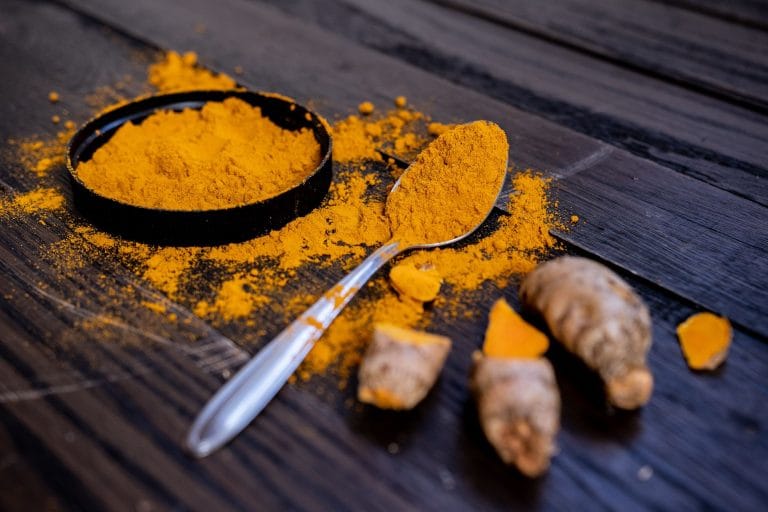
Turmeric side effects, sorted by how solid the evidence actually is: the two documented harms, which medicines genuinely warrant a conversation, and why the supplement form matters far more than the dose.
Turmeric is one of the most-used supplements in the world and one of the most-asked-about in pharmacies. Searches for turmeric side effects sit between the two things you usually read: that it is a harmless kitchen spice, or that it is a hidden danger.
It is not dangerous in food. But concentrated curcumin supplements are a different product from the spice, and the interaction questions are fair ones.
Key Takeaways
- The mechanism is real: curcumin inhibits CYP enzymes and P-glycoprotein, which is how drug levels shift (1).
- But human evidence is thin. That review found only one clinical trial showing a significant change in a conventional drug (1).
- Form matters more than dose. Piperine raised curcumin absorption by 2000% in human volunteers (3).
- Every acute liver injury case in an Italian series involved high-dose, high-bioavailability products (2).
- One documented human case of iron deficiency anaemia from turmeric capsules, which resolved on stopping (4).
Why Turmeric Can Affect Medicines at All
Most drugs are broken down by a family of liver enzymes called cytochrome P450, and many are pushed back out of cells by a transporter called P-glycoprotein. Anything that slows those systems can leave more of a drug circulating than intended.
A review of curcuminoid pharmacokinetics searched the literature for exactly this and found that curcumin can alter the Cmax and AUC — the peak blood level and the total exposure — of several drug classes, naming cardiovascular drugs, antidepressants, anticoagulants, antibiotics, chemotherapeutic agents and antihistamines. The mechanisms were inhibition of CYP isoenzymes and of P-glycoprotein (1).
Here is the part that most articles leave out. That same review concluded that only one clinical trial had actually demonstrated a significant alteration of a conventional drug alongside curcumin, and that in vitro and animal work “do not provide enough evidence to judge the clinical drug interactions of curcumin”. Its recommendation was caution, not prohibition (1).
So: a real mechanism, mostly unproven consequences in living patients, and a sensible reason to mention it to whoever prescribes for you.
Which Medicines Are Actually Raised
| Medicine group | Why turmeric is raised as a concern | How strong is the evidence? |
|---|---|---|
| Anticoagulants — warfarin, apixaban, rivaroxaban | Curcumin inhibited platelet aggregation in laboratory work, and warfarin already carries a long list of interactions and needs INR monitoring (5, 8) | Mechanism only. The platelet work was done on isolated platelets, not in people. Still the group where caution costs least |
| Antiplatelets — aspirin, clopidogrel | Same laboratory antiplatelet signal, stacked on a drug already reducing clotting (5) | Mechanism only |
| Diabetes medicines — metformin and others | Curcumin changed Cmax and AUC of several drug classes through CYP and P-glycoprotein effects (1) | Mostly preclinical. Worth telling your prescriber, not worth panic |
| Statins and other cardiovascular drugs | Named explicitly among the classes where curcumin altered pharmacokinetics (1) | Mostly preclinical |
| Antidepressants | Also named in the same review (1) | Mostly preclinical |
| Chemotherapy | Named in the review; narrow therapeutic windows make any shift in blood levels serious (1) | Ask your oncologist. This is not a self-managed decision |
| Iron supplements | Curcumin binds ferric iron in the gut. One documented human case of iron deficiency anaemia (4) | A real case report, with recovery after stopping |
About the blood-thinning claim
This deserves a precise answer, because it is stated far too confidently online.
Curcumin has been shown to inhibit platelet aggregation. In the study usually cited, curcumin blocked aggregation triggered by several agonists, most strongly platelet-activating factor and arachidonic acid, at concentrations around 20 to 25 µM (5).
That work was done on isolated platelets in a laboratory, not in people taking medication. It shows a plausible mechanism; it does not show that a curcumin capsule measurably thins the blood of someone on warfarin.
The reason to be careful anyway is the drug, not the spice. Warfarin has a narrow margin between effective and dangerous, which is why it is monitored with regular INR blood tests and carries an unusually long interaction list (8). When a drug is that finely balanced, “the evidence is only preclinical” is not a good enough reason to add an unknown.
The Form Matters More Than the Dose
 Save
SaveThis is the single most useful thing on this page, and it is rarely explained.
Curcumin on its own is poorly absorbed. It is metabolised quickly in the liver and intestinal wall, and after an oral dose the amount reaching the bloodstream is very low (6). That is a problem for anyone selling it, so the industry solved it.
In a study in healthy human volunteers, 2 g of curcumin alone produced serum levels that were undetectable or very low. Adding just 20 mg of piperine, the active compound in black pepper, raised bioavailability by 2000% (3).
| What you are taking | Roughly how much curcumin reaches your blood | Risk profile |
|---|---|---|
| Turmeric in cooking | Very little. Curcumin is poorly absorbed and rapidly metabolised (6) | No realistic interaction concern |
| Plain turmeric capsules | Still low, though much more than a curry | Low, but tell your prescriber |
| Curcumin + piperine (black pepper) | Piperine 20 mg raised curcumin bioavailability by 2000% in human volunteers (3) | This is the category that matters |
| “High bioavailability” / phytosome / nano formulations | Engineered specifically to overcome poor absorption | Every liver injury case in the Tuscan series involved high-bioavailability, high-dose products (2) |
Read that table alongside the liver findings below and the pattern becomes obvious: the products engineered to deliver more curcumin into your blood are the ones with the safety signal.
The Liver Cases
Researchers analysed the Italian phytovigilance database for acute hepatitis linked to Curcuma longa supplements and described seven cases in Tuscany, adding 23 more identified through a systematic review of published reports.
Two details matter more than the headline. In all the Tuscan cases, the product was a formulation with high bioavailability and a high dose of curcumin or curcuminoids. And among the reviewed cases, the majority of patients were taking at least one other medicine at the same time. Most showed a positive dechallenge, meaning they improved once the supplement stopped (2).
Acute liver injury from turmeric is rare against how many people take it. But it is not mythical, and it clusters exactly where this article has been pointing: concentrated products, high doses, and other drugs on board.
Symptoms worth acting on promptly: nausea, unusual fatigue, abdominal pain, dark urine, or yellowing of the skin or eyes.
The Iron Case
A separate and more specific finding. Curcumin binds ferric iron in the gut, which had been shown to cause iron deficiency in mice.
A 66-year-old physician treated an osteoarthritis flare with six turmeric extract capsules of 538 mg daily. His haemoglobin never rose above 12, and his iron and ferritin were consistent with deficiency, despite his usual iron supplement. Upper and lower endoscopy found no bleeding. Two weeks after stopping the turmeric, his haemoglobin returned to normal and his iron studies normalised (4).
That is a single case report, which is weak evidence in isolation. It is also a clean one, with a plausible mechanism, a negative bleeding workup and recovery on stopping. If you are being treated for iron deficiency (9), this is worth knowing.
What to Actually Do
- Cooking with turmeric needs no changes. Nothing in this article is about the spice jar.
- Tell your prescriber before starting a curcumin supplement, particularly on anticoagulants, antiplatelets, diabetes medicines, statins, antidepressants or chemotherapy (1).
- Treat “enhanced absorption” as a warning, not a feature. Piperine, phytosome and nano formulations are the ones in the liver reports (2, 3).
- Do not stack products. A turmeric capsule plus a joint blend plus a “golden latte” powder is an unknown total dose.
- Separate it from iron supplements if you are correcting a deficiency (4).
- Stop and seek care for dark urine, jaundice, or persistent abdominal pain.
- NCCIH’s overview is a good second opinion on what turmeric has and has not been shown to do (7).
If you mainly want turmeric for flavour and a modest anti-inflammatory contribution, turmeric milk keeps the dose in food territory, where none of this applies. For inflammation more broadly, the arthritis diet guide covers the dietary pattern rather than a single compound.
Frequently Asked Questions
What are the side effects of turmeric?
In food, none worth worrying about. The documented problems come from concentrated supplements, and there are two. The first is liver injury: an Italian analysis reviewed cases of acute liver damage following turmeric use in Tuscany. The second is iron: a case report describes iron deficiency anaemia caused by high-dose turmeric. Beyond those, the concern is interaction rather than direct harm, because curcumin inhibits CYP enzymes and P-glycoprotein. Stop and seek medical advice if you develop nausea, dark urine, abdominal pain or yellowing of the skin or eyes.
Does turmeric interact with warfarin?
It is the interaction most worth respecting, even though the human evidence is thin. Curcumin inhibited platelet aggregation in laboratory studies, and a review of curcuminoid pharmacokinetics lists anticoagulants among the drug classes where curcumin altered blood levels through cytochrome P450 and P-glycoprotein. Warfarin has a narrow therapeutic window and is monitored by INR for exactly this reason. If you take warfarin, do not start a curcumin supplement without telling the clinician who manages your INR.
Is turmeric in food a problem with medication?
Almost certainly not. Curcumin is very poorly absorbed and rapidly metabolised in the liver and gut wall, which is the whole reason supplement makers add piperine or build phytosome formulations. Cooking with turmeric delivers a small fraction of what a concentrated capsule does. The concern in this article is about supplements, not your curry.
Can turmeric damage your liver?
It can, rarely, and the pattern is specific. Researchers analysing the Italian phytovigilance database described seven cases of acute hepatitis in Tuscany, plus 23 more from the published literature. In every Tuscan case the product was a high-dose, high-bioavailability curcumin formulation, and most patients in the reviewed cases were taking at least one other medicine at the same time. Most improved after stopping. Ordinary culinary turmeric was not what caused this.
Does turmeric affect iron levels?
There is one documented human case. A 66-year-old physician took six turmeric extract capsules of 538 mg daily for an osteoarthritis flare and developed iron deficiency anaemia; his haemoglobin never rose above 12 despite an iron supplement, and endoscopy found no bleeding. Two weeks after stopping the turmeric his levels normalised. Curcumin binds ferric iron in the gut, which is the proposed mechanism. If you are treating iron deficiency, separate the two or skip the supplement.
How much turmeric is safe?
There is no single number, because it depends entirely on the formulation. Culinary use is not a concern. For supplements, the honest guidance is to stay within the product’s stated dose, avoid stacking several curcumin products, treat “enhanced absorption” labels as a reason for more caution rather than less, and stop if you develop nausea, dark urine, abdominal pain or yellowing of the skin or eyes, which warrant prompt medical attention.
The Bottom Line
Turmeric drug interactions are a real mechanism with thin human proof, and that combination calls for a conversation rather than either alarm or dismissal. Curcumin inhibits CYP enzymes and P-glycoprotein, which is how it could shift the levels of anticoagulants, diabetes medicines, statins, antidepressants and chemotherapy — but only one clinical trial has shown a significant change in an actual patient. What the documented harms do share is a pattern: high-dose, high-bioavailability formulations, usually alongside other medication. Cooking with turmeric is not the issue. A concentrated capsule marketed on how much better it absorbs is the one to mention to your doctor.
This article is for informational purposes only and is not a substitute for professional medical advice. Never start or stop a supplement or a prescribed medicine without speaking to your doctor or pharmacist, especially if you take anticoagulants or are undergoing cancer treatment.
Related Articles
Turmeric Milk Benefits: What Research Shows and Liver Risks
Arthritis Diet: Foods That Help, Foods to Limit and Evidence
Cumin (Jeera) Benefits: Evidence, Uses and Safety
Fennel Tea Benefits: Evidence for Gas, and the Estragole Risk
Turkey Berry Side Effects, Disadvantages and Benefits