
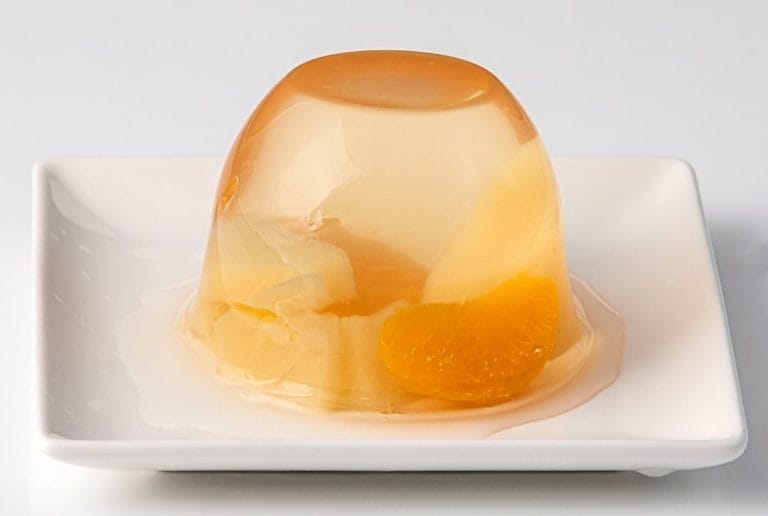
What gelatin is made of, the benefits that survive contact with the research, the one nutritional fact almost every article gets wrong, and the allergy warning that genuinely matters.
Gelatin benefits are usually sold on one number: it is nearly pure protein. True, and also the most misleading thing said about it — because USDA data records gelatin’s tryptophan content as zero, which formally makes it an incomplete protein (1, 2).
 Save
SaveThat does not make gelatin useless. It makes it a specific kind of ingredient — useful for specific things, and useless as a replacement for real protein.
Key Takeaways
- Gelatin is 85.6% protein but has no tryptophan, so it is classed as incomplete (1, 2).
- Almost all skin and joint research used collagen peptides, not gelatin (3, 4, 5).
- For skin, hydration is the most consistent finding across 26 trials and 1,721 people (4).
- Gelatin allergy links strongly to red meat allergy and to some vaccines (7, 8).
- There is no vegetarian gelatin; agar-agar, pectin and carrageenan are the substitutes.
What Is Gelatin Made Of?
Gelatin is collagen broken down partway. Heat collagen — the structural protein in animal skin, bone and connective tissue — in water long enough and it degrades into shorter chains that dissolve when hot and set into a gel when cold. That gelling behaviour is the entire reason it exists as an ingredient. So what is gelatin made of, in plain terms? Always an animal — most commonly pork (pig skin), beef (cattle hide and bone, labelled bovine), or fish. That single fact is why the vegetarian question has a short answer and the halal and kosher ones have longer ones.
What Is Actually In It
| Per 100 g, dry powder | Amount | Note |
|---|---|---|
| Calories | 335 kcal | — |
| Protein | 85.6 g | Not 100 g, as is often claimed |
| Fat | 0.1 g | Effectively none |
| Carbohydrate | 0 g | Plain gelatin has no sugar |
| Tryptophan | 0.0 g | The reason it is an incomplete protein |
| Glycine | 19.049 g | By far the dominant amino acid |
| Proline | 12.295 g | The other signature amino acid |
| Sodium | 196 mg | Not sodium-free |
| Calcium | 55 mg | Minor |
Three of those rows correct claims that circulate widely. It is 85.6 g of protein per 100 g, not 100 g; the rest is water and a small mineral fraction. It is not sodium-free, carrying 196 mg per 100 g, though a normal serving is a few grams so this matters little in practice (1, 11). And tryptophan is zero — not low, absent. That is the row determining how you should use gelatin.
The Protein Quality Problem
This is where most articles about gelatin benefits go wrong.
Your body cannot manufacture nine amino acids, so they must come from food, and gelatin supplies none of one of them. Under PDCAAS, the standard method for scoring protein quality, that absence means collagen protein is categorised as an incomplete protein source (2). What it has instead is an unusual concentration of two amino acids — 19 g of glycine and 12.3 g of proline per 100 g (1) — which is why researchers treat it as a functional food rather than a protein staple (2).
The rule follows directly: add gelatin on top of your protein intake, not in place of it. One analysis calculated collagen could supply up to 36% of daily protein while leaving the diet’s amino acid balance intact, putting typical doses well inside a safe margin (2) — though its authors declared a working relationship with a collagen supplement manufacturer. For protein that does the structural job, a proper protein source or a complete protein powder is the comparison to make.
Gelatin vs Collagen Peptides
| Gelatin | Collagen peptides (hydrolysed collagen) | |
|---|---|---|
| What it is | Collagen broken down partway | Collagen broken down further, into short peptides |
| Does it gel? | Yes — that is its whole culinary purpose | No. It dissolves and stays liquid |
| Dissolves in cold liquid? | No, needs heat then cooling | Yes |
| Amino acids | Essentially the same profile | Essentially the same profile |
| What the trials used | Rarely. One notable exception on tendon collagen (6) | Almost all of the skin and joint research (3, 4, 5) |
| Typical studied dose | 5 to 15 g in the tendon study (6) | 2.5 to 15 g a day (2) |
The row that matters is the second-to-last. When you see gelatin marketed with impressive research attached, the research was usually done on collagen peptides. The amino acids are the same, so the findings may carry across — but that is an inference, not a demonstration.
The Gelatin Benefits With Evidence Behind Them
 Save
SaveSkin
The strongest consumer-facing evidence, with two caveats. A meta-analysis pooled 19 randomised, double-blind trials in 1,125 participants aged 20 to 70, finding hydrolysed collagen improved hydration, elasticity and wrinkles against placebo over about 90 days (3). A larger 2023 analysis of 26 trials and 1,721 people is more useful for its nuance: hydration improved clearly, elasticity was weaker and less consistent, and the reviewers flagged several biases among the included trials (4).
The caveats: 95% of participants in the first analysis were women, and both tested peptide supplements rather than gelatin. From food, collagen-rich foods cover similar ground.
Joints and tendons
A 2025 meta-analysis of 11 randomised controlled trials in 870 people with knee osteoarthritis found significant improvement in both pain and function versus placebo (5). That sounds decisive, but the studies disagreed substantially, so the pooled figure hides a wide spread. A signal, not a settled case — and the wider dietary approach to arthritis is worth weighing alongside it.
The one study using gelatin is smaller than its fame suggests: eight healthy men took 5 or 15 g of vitamin C-enriched gelatin, blood levels of glycine, proline and hydroxyproline rose, and serum taken afterwards increased collagen content in lab-grown ligaments (6). A genuine mechanistic finding in eight people and engineered tissue — nowhere near a clinical result.
Claims that gelatin treats disease, builds bone on its own or produces dramatic hair growth have no human trial evidence behind them.
The Allergy Warning That Matters
Most articles skip this, and it is the most clinically important thing on the page.
Gelatin allergy is linked to red meat allergy. Among 1,335 patients evaluated for suspected allergy, 40 had positive gelatin skin tests — and 30 of those 40 were allergic to red meat. The connection is a sugar molecule called alpha-gal, measured in bovine gelatin at roughly 0.44 to 0.52 micrograms per gram (7). Alpha-gal sensitisation is the syndrome associated with tick bites, so this affects more people than it used to.
Gelatin is a stabiliser in some vaccines. Anaphylaxis to MMR vaccine mediated by IgE to gelatin was documented as far back as 1993 (9). Investigation in Japan found most children with immediate systemic reactions to measles, mumps, rubella and varicella vaccines had anti-gelatin IgE, traced to earlier gelatin-containing DTaP vaccines — after which manufacturers removed gelatin from all DTaP and live-virus vaccines produced in Japan by 2000 (8). It remains a recognised vaccine excipient capable of causing hypersensitivity (10).
None of this argues against vaccination. It argues for telling the clinician if you have a gelatin or red meat allergy beforehand, so precautions can be arranged.
If You Cannot Or Will Not Eat It
Gelatin is never vegetarian or vegan, but three plant gelling agents do the job: agar-agar from seaweed, the closest direct substitute though acidic ingredients mean using more; pectin from citrus peel, the setting agent behind jams; and carrageenan from Irish moss, which gives a softer set.
For halal and kosher, gelatin may be porcine, bovine or fish, and a label often just reads “gelatin”. Fish-derived and certified sources are treated differently from porcine gelatin. Look for a certification mark rather than inferring from the ingredient list, and take borderline questions to your own religious authority rather than to a nutrition article.
Who Should Be Careful
- Allergic to red meat — the alpha-gal link makes this the one to take seriously; speak to an allergist (7).
- Reacted to a vaccine before — tell the clinician, since gelatin is a stabiliser in some of them (8, 9, 10).
- Vegetarian or vegan — there is no vegetarian gelatin; use agar-agar, pectin or carrageenan.
- Keeping halal or kosher — look for certification, not just the ingredient name.
- Replacing real protein with it — it contains no tryptophan at all (1, 2).
Frequently Asked Questions
What is gelatin made of?
Gelatin is collagen that has been broken down partway by heat and water. The collagen always comes from an animal: most often pork, meaning pig skin, or beef, meaning cattle hide and bone, which is usually labelled bovine. Fish gelatin also exists. There is no plant gelatin, which is why agar and pectin are sold as substitutes rather than as gelatin.
What is the difference between gelatin and collagen?
They are the same molecule at different stages of breakdown. Collagen is the structural protein in animal skin, bone and connective tissue. Break it down partway and you get gelatin, which sets into a gel when it cools. Break it down further and you get collagen peptides, which dissolve in cold liquid and do not gel at all. The amino acid profile is essentially the same. The practical differences: gelatin sets and peptides do not, and almost all published skin and joint research used peptides rather than gelatin. That last point is worth remembering when you see gelatin marketed with study results attached.
Is gelatin a complete protein?
No, and this is the most important thing to know about it. Gelatin is about 85.6% protein by weight, but USDA data records its tryptophan content as zero, and tryptophan is one of the nine indispensable amino acids your body cannot make. Under the standard PDCAAS method, that omission formally classes collagen protein as incomplete. It does not mean gelatin is useless; it is unusually rich in glycine and proline. It does mean you should add it on top of your protein intake rather than using it to replace meat, eggs, dairy or legumes.
Does gelatin actually help skin or joints?
There is a reasonable signal in both, but it is evidence about collagen peptides rather than gelatin. For skin, a meta-analysis of 19 double-blind trials in 1,125 people found improvements in hydration, elasticity and wrinkles over about 90 days; a larger 2023 analysis of 26 trials in 1,721 people confirmed a clear effect on hydration but found elasticity less consistent. For joints, a 2025 meta-analysis of 11 trials in 870 people with knee osteoarthritis found significant improvement in pain and function, though the trials disagreed substantially. Effect sizes are modest, and 95% of the skin participants were women.
Who should not eat gelatin?
Four groups. Anyone allergic to red meat, because of a strong documented link with gelatin sensitisation through alpha-gal. Anyone who has reacted to a gelatin-containing vaccine or has known gelatin allergy. Vegetarians and vegans, since gelatin is always animal-derived. And anyone keeping halal or kosher who cannot confirm the source, since gelatin may be porcine, bovine or fish and packaging often does not say. Beyond those groups, gelatin in normal food amounts is not considered risky for healthy people.
Is gelatin halal or vegetarian, and how much should you take?
Gelatin is never vegetarian or vegan, because it is made from the skin, bones and connective tissue of animals. There is no plant gelatin, though agar-agar, pectin and carrageenan do a similar job in recipes. For halal and kosher the answer depends on the source and slaughter method, since gelatin may come from pigs, cattle or fish, and a label often just says “gelatin” — so look for a certification mark rather than guessing, and take borderline cases to your own religious authority. On dose, the research on collagen peptides clusters between 2.5 and 15 g a day; give it the 8 to 12 weeks the skin trials ran for.
The Bottom Line
The real gelatin benefits are narrower than the marketing and more specific than the sceptics allow. It is 85.6% protein but contains no tryptophan, which formally makes it incomplete — so it belongs on top of your protein intake, never instead of it. The skin and joint research is reasonably encouraging but was done almost entirely on collagen peptides, with hydration the most consistent finding across 26 trials and 1,721 people. The single most useful thing here is not a benefit at all: gelatin allergy is strongly linked to red meat allergy through alpha-gal, and gelatin is a vaccine excipient with a documented history of causing anaphylaxis. If either applies to you, say so before you are vaccinated.
This article is for informational purposes only and is not a substitute for professional medical advice. Tell your doctor or vaccination clinic if you have a gelatin or red meat allergy, and speak to an allergist before consuming gelatin if you have reacted to it or to red meat in the past.
Related Articles
Foods High in Collagen: Why Eating It Doesn’t Reach Your Skin
9 Homemade Protein Shakes Made With Real Food
Arthritis Diet: Foods That Help, Foods to Limit and Evidence
Balanced Diet Guide With the 5 Food Groups