
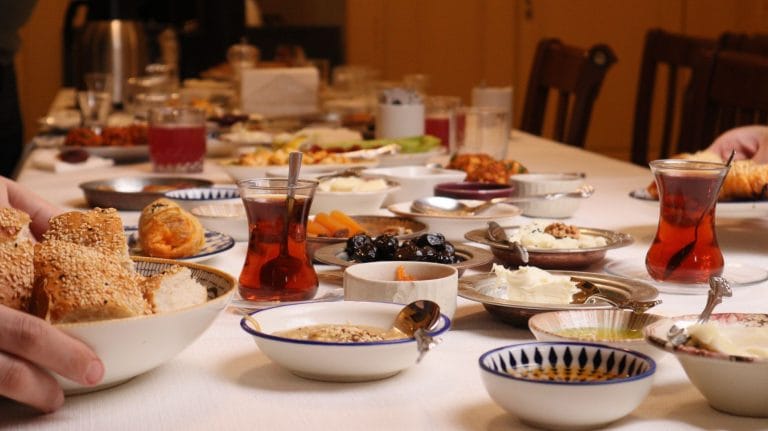
Mediterranean diet breakfast ideas that hold up. What the pattern includes, five workable morning plates, the nutrition numbers behind them, and what research does and does not show.
A Mediterranean diet breakfast is built from vegetables, fruit, whole grains, olive oil, nuts, seeds, eggs and plain dairy. Red meat, processed meat and added sugar stay at the edges (1). That is the whole rule. Everything below is a way of arranging those ingredients before you leave the house.
The pattern has more evidence behind it than most eating styles, though not for every claim made about it. This guide separates the two, and gives the per-serving numbers so you can see what each breakfast actually delivers.
Key Takeaways
- The core of the pattern is vegetables, fruit, whole grains, olive oil, nuts, fish and plain dairy (1).
- A meta-analysis of four randomized trials found fewer major cardiovascular events on this pattern, but no change in all-cause mortality (2).
- Each extra 25 g of olive oil a day was linked to 16% lower cardiovascular risk in pooled observational data (3).
- In people with type 2 diabetes, a protein-rich or lower-carbohydrate breakfast improved blood glucose control (5, 6).
- Most of the work is prep, not cooking: yogurt bowls and overnight oats are assembled the night before.
What Counts as a Mediterranean Breakfast
 Save
SaveThe pattern is usually described as daily fruit and vegetables, whole grains, legumes, nuts, fish and olive oil. Fermented dairy is moderate and red meat is rare (1). Applied to the morning, that rules out very little. Eggs, yogurt, cheese, bread, tomatoes, olives, fruit and nuts are all in.
What it does rule out is the standard rushed breakfast of sugary cereal, pastries or processed breakfast meat. Those are the foods the pattern deliberately keeps at the margins (1).
Five Breakfasts for Five Kinds of Morning
| Morning type | Breakfast | Prep time |
|---|---|---|
| No time at all | Greek yogurt with berries, walnuts and a spoon of chia | 2 minutes |
| Cold and ready | Overnight oats with milk, chia, banana and blueberries | 5 minutes the night before |
| Savoury and quick | Whole-grain toast with olive oil, tomato and feta | 5 minutes |
| Weekend cooking | Shakshuka with eggs, tomatoes, peppers and feta | 25 minutes |
| Leftovers style | Greek salad plate with a boiled egg | 10 minutes |
Yogurt bowl
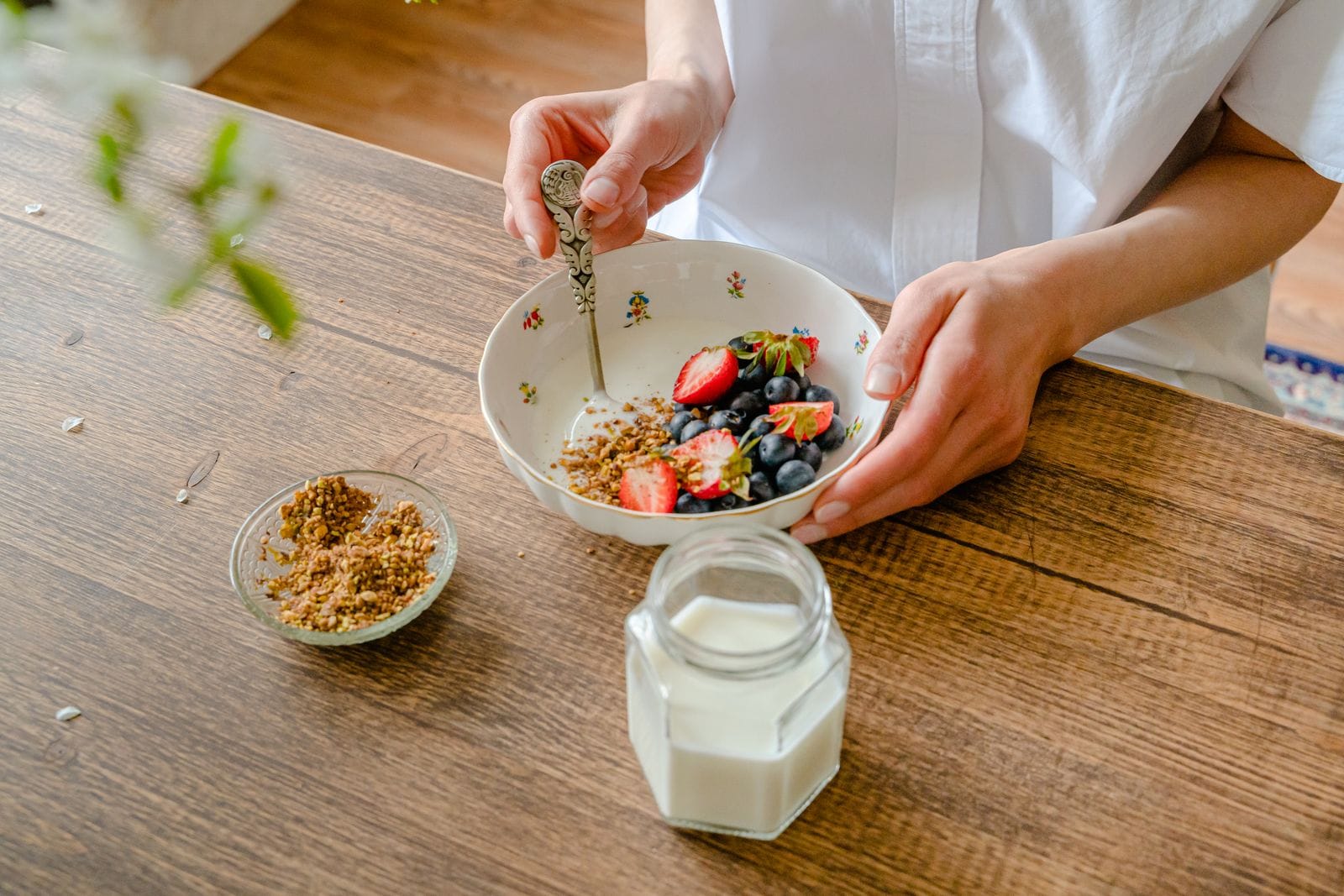
Plain Greek yogurt, berries, a handful of walnuts and a spoon of chia. Add a drizzle of honey if you want it. It takes two minutes. A 170 g pot delivers around 16 g of protein before toppings, based on USDA data (8).
Overnight oats
Stir 40 g of oats with milk or yogurt, a spoon of chia, mashed banana and blueberries. Leave it in the fridge overnight. The oats alone bring about 4 g of fiber (10), and the chia adds roughly the same again (12).
Toast with olive oil and tomato
Whole-grain toast, a tablespoon of olive oil, sliced or grated tomato and a pinch of salt. Add feta if you want more protein. This is the everyday breakfast across much of the Mediterranean. It is also where choosing olive oil over refined vegetable oil actually matters.
Shakshuka
 Save
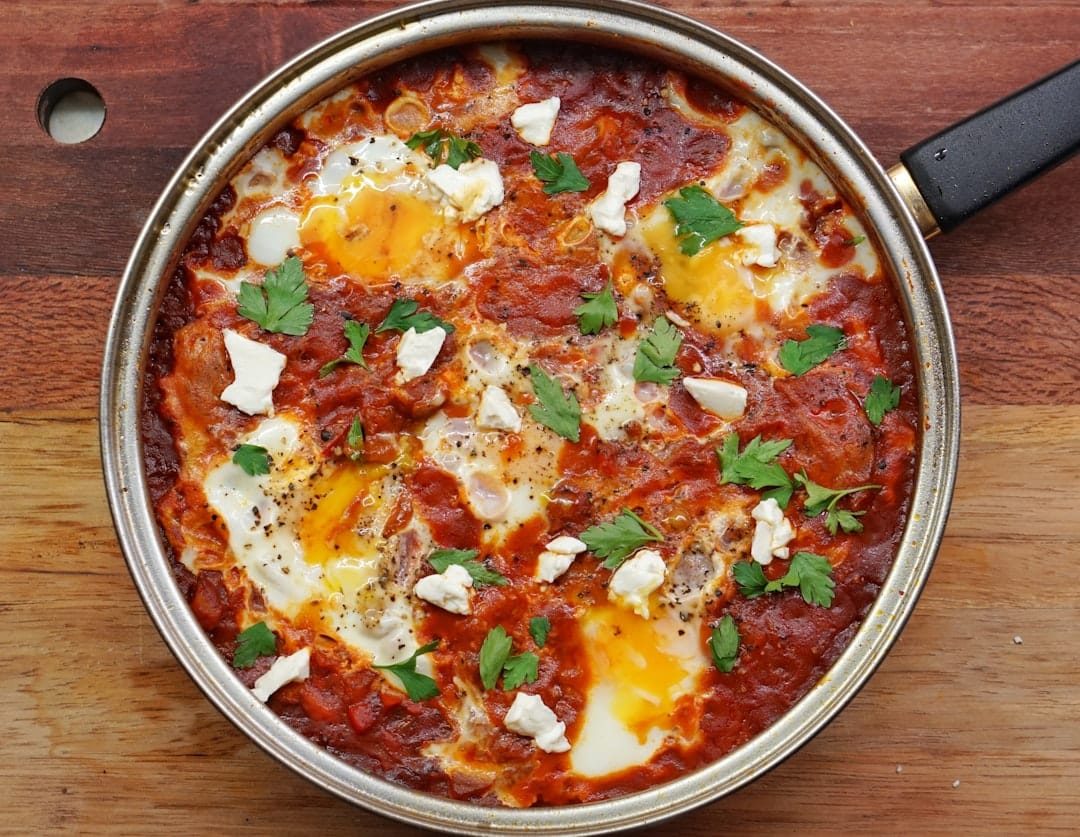
SaveSoften a chopped onion and a sliced pepper in olive oil. Add four chopped tomatoes with paprika and cumin, then simmer for five minutes. Make wells in the sauce and crack in three eggs. Cover and cook for five to seven minutes, until the whites set. Finish with parsley and crumbled feta, and serve with bread.
Greek salad plate
Cucumber, tomato, olives, feta and red onion with olive oil and oregano. Add a boiled egg or a slice of bread. It works as well at 8am in summer as it does at lunch.
The Numbers Behind the Ingredients
All values are from USDA FoodData Central, calculated for a realistic serving rather than per 100 g:
| Food | Serving | Calories | Protein | Fiber |
|---|---|---|---|---|
| Greek yogurt, plain, nonfat (8) | 170 g pot | 92 kcal | 16.2 g | 0.3 g |
| Egg, whole, hard-boiled (9) | 2 eggs (100 g) | 155 kcal | 12.6 g | 0.0 g |
| Oats, regular and quick, dry (10) | 40 g dry | 152 kcal | 5.3 g | 4.0 g |
| Olive oil (11) | 1 tbsp (14 g) | 124 kcal | 0.0 g | 0.0 g |
| Chia seeds, dried (12) | 1 tbsp (12 g) | 58 kcal | 2.0 g | 4.1 g |
| Walnuts, english (13) | 30 g | 196 kcal | 4.6 g | 2.0 g |
| Feta cheese (14) | 30 g | 80 kcal | 4.3 g | 0.0 g |
| Whole-wheat bread (15) | 1 slice (43 g) | 108 kcal | 5.3 g | 2.6 g |
| Olives, ripe, canned (16) | 10 olives (40 g) | 46 kcal | 0.3 g | 0.6 g |
| Tomato, red, ripe, raw (17) | 1 medium (123 g) | 22 kcal | 1.1 g | 1.5 g |
What the Research Actually Shows
| What people claim | What the studies found | How strong |
|---|---|---|
| The Mediterranean pattern protects the heart | A meta-analysis of 4 randomized trials in 10,054 people found fewer major cardiovascular events (odds ratio 0.52), fewer heart attacks (0.62) and strokes (0.63), and lower cardiovascular death (0.54), with no change in all-cause mortality (2) | Good, though the trials varied a lot between each other |
| Olive oil is the key ingredient | Pooling 27 studies, each extra 25 g of olive oil a day was linked to 16% lower cardiovascular risk, 22% lower type 2 diabetes risk and 11% lower all-cause mortality, with no link to cancer (3) | Observational, so it shows association rather than proof |
| It helps with weight | A review notes that four meta-analyses of randomized trials found greater reductions in body weight and BMI with the Mediterranean diet than with comparison diets (4) | Reasonable, effects are modest |
| A protein-rich breakfast steadies blood sugar | In 59 adults with type 2 diabetes, a large breakfast rich in protein and fat lowered HbA1c more than a small carbohydrate-rich one over 3 months (5). A separate trial in 121 adults with type 2 diabetes found a low-carbohydrate breakfast improved continuous glucose monitoring measures (6) | Specific to type 2 diabetes, not general advice |
| Eggs at breakfast keep you full | In 156 adolescents with obesity, an egg breakfast reduced lunch intake and raised fullness hormones compared with a bread breakfast (7) | One trial, in adolescents only |
Two honest caveats. The cardiovascular meta-analysis found high statistical heterogeneity, meaning the four trials differed considerably in design and population (2). The olive oil findings also come mostly from observational cohorts. People who use more olive oil often differ in other ways too (3).
Making It Work on a Weekday
- Assemble overnight oats in jars for two or three days at a time.
- Boil six eggs at the weekend and keep them in the fridge.
- Wash and chop fruit and vegetables once, not every morning.
- Keep a good olive oil, a jar of olives and a block of feta as the standing base.
- If protein is what your mornings lack, a simple homemade shake fills the gap without sugar.
More fiber is the other quiet win here, and our list of high-fiber foods shows where it comes from. If you are managing blood sugar specifically, our diabetes diet guide covers the plate method and carbohydrate counting in detail. The wider balanced diet guide puts the whole day together. The broader effects of eating well build up over months, not mornings.
Frequently Asked Questions
What does a Mediterranean breakfast look like?
It is built from vegetables, fruit, whole grains, olive oil, nuts, seeds, eggs and plain yogurt or cheese. Processed and sugary foods stay minimal. A bowl of yogurt with fruit and nuts fits the pattern. So do toast with olive oil and tomato, and eggs cooked in tomato sauce.
Is the Mediterranean diet good for your heart?
The evidence is reasonably strong. A meta-analysis of four randomized trials in 10,054 people found fewer major cardiovascular events, heart attacks and strokes, and lower cardiovascular death. It found no difference in all-cause mortality, and the trials differed a lot from each other.
Can you eat eggs every day on a Mediterranean breakfast?
Eggs are part of the pattern and appear in classic dishes like shakshuka. Research on egg breakfasts points to better fullness rather than harm, though those trials were small and in specific groups. If you have a heart or metabolic condition, check the details with your own clinician.
Is oatmeal Mediterranean?
Oats are not traditional to the region, but they fit the principles. They are a whole grain, high in fiber, usually eaten with fruit, nuts and yogurt. Based on USDA data, 40 g of dry oats provides about 4 g of fiber. That is before you add anything to it.
How do I make breakfast quicker on weekday mornings?
Do the assembly the night before. Overnight oats, chopped fruit, boiled eggs and cooked grains all keep for days. That turns a Mediterranean breakfast into a two-minute job.
The Bottom Line
A Mediterranean breakfast is not a recipe list. It is a set of ingredients you keep in the house: yogurt, eggs, fruit, vegetables, whole grains, olive oil and nuts. Assemble them cold on busy days and cook them at the weekend. The pattern has real evidence behind it for heart health and modest evidence for weight. For people with type 2 diabetes, there is a good case for making breakfast higher in protein and lower in refined carbohydrate.
This article is for informational purposes only and is not a substitute for professional medical advice. Consult a qualified healthcare provider before making significant changes to your diet. This is especially important if you are pregnant, breastfeeding, or managing a health condition.
Related Articles
Positive Effects of Healthy Eating: What Research Shows
High Fiber Foods List and How Much Fiber You Need
Olive Oil vs Vegetable Oil: The Honest Answer
Balanced Diet Guide With the 5 Food Groups
9 Homemade Protein Shakes Made With Real Food