
Why home remedies for goiter is the wrong question to start with, what actually determines the treatment, and the remedies that have made real people worse.
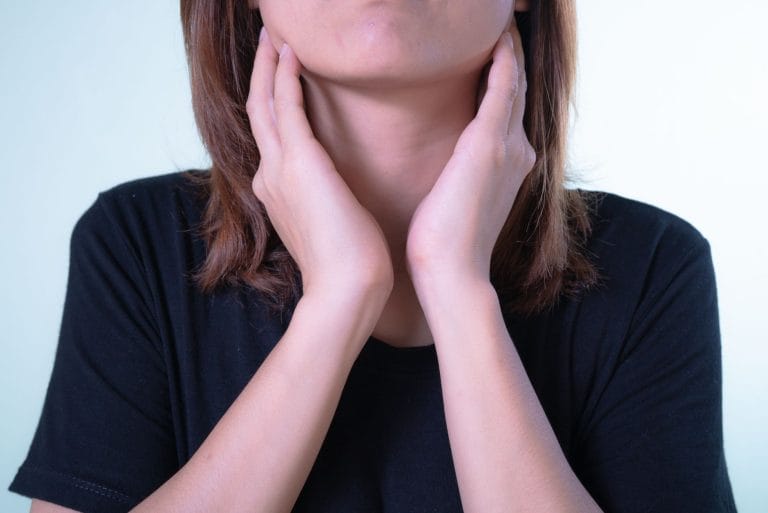
A goiter is an enlarged thyroid, the gland at the base of the neck. It is a sign, not a diagnosis. The swelling can come from iodine deficiency, from a gland that has become underactive or overactive, from nodules, or from thyroid cancer (1, 2).
That is the whole problem with the phrase home remedies for goiter. The treatments for those causes are not just different, they point in opposite directions. Iodine can help one of them and make another worse. Which is why this article has been rewritten: the version that stood here recommended seaweed, ashwagandha, castor oil neck massage and clay masks, and there are published cases of people harmed by exactly the first of those.
Key Takeaways
- A goiter is a sign with several possible causes; treatment depends on which one (1).
- Kelp and seaweed have caused thyrotoxicosis, including in a woman given kelp tea for her goiter (4, 5).
- NCCIH says ashwagandha is not recommended for people with thyroid or autoimmune disorders (6).
- A few thyroid nodules are cancer, which is why ultrasound and sometimes biopsy are done (2).
- A simple goiter only needs treating if it is causing symptoms (1).
What a Goiter Is
 Save
SaveThe thyroid makes thyroxine (T4) and triiodothyronine (T3), the hormones that control metabolism, and with it weight, energy, temperature and mood (1).
Iodine deficiency is the most common cause of a goiter worldwide. Without enough iodine the gland enlarges trying to capture all it can, so the swelling is the thyroid working harder, not a lump of waste to be dissolved (1).
Often there are no symptoms beyond the swelling. When a goiter grows large enough to press on the windpipe or food pipe it can cause breathing difficulty, especially lying flat or reaching up, cough, hoarseness, difficulty swallowing solid food, or pain over the thyroid (1).
The Cause Decides Everything
| Cause of the swelling | What it means for treatment | Would iodine help? |
|---|---|---|
| Iodine deficiency | The gland enlarges trying to capture enough iodine. Small doses of Lugol’s or potassium iodide solution may be prescribed (1) | Only under medical supervision |
| Underactive thyroid | Treated with thyroid hormone replacement tablets (1) | No |
| Overactive thyroid | May be treated with radioactive iodine to shrink the gland (1) | No — extra iodine can make it worse (4) |
| Thyroid nodules | Ultrasound, and fine needle biopsy if needed, because a few nodules are cancer (2) | No |
| Thyroid cancer | Surgery, decided after biopsy (2) | No |
Look at the right-hand column. Iodine is useful in one row and harmful in another. You cannot know which row you are in by looking in the mirror, which is why MedlinePlus gives one instruction: contact your provider if you notice any swelling in the front of your neck (1).
What the assessment involves
Your clinician feels the neck while you swallow, then usually orders blood tests for TSH and free T4. Depending on those, a thyroid ultrasound, a thyroid scan and uptake, or a fine needle biopsy may follow (1, 2).
The biopsy exists for a specific reason. Thyroid nodules are very common and only a few are cancer, but the risk is higher if a nodule is hard, is stuck to nearby structures, or if you have had radiation to the head or neck (2). A remedy applied to the skin cannot tell you any of that.
The Remedies We Removed, and Why
 Save
SaveSeaweed and kelp
The previous version suggested eating a handful of boiled seaweed once or twice a week. Seaweed is genuinely rich in iodine, and that is precisely the problem: the amount is large and unpredictable.
Two published cases make the point better than any argument. In one, a 39-year-old woman with a multinodular goiter was treated for four weeks with a kelp-containing herbal tea specifically because of her enlarged thyroid, and developed hyperthyroidism (4). In another, a 45-year-old woman with no previous thyroid disease took a kelp-containing marketed diet and developed hyperthyroidism, which was then followed by an overt underactive thyroid requiring levothyroxine for three months (5).
For reference, the recommended intake of iodine for adults is 150 micrograms a day, 220 in pregnancy and 290 while breastfeeding (3). Where iodine genuinely is the answer, it is given as measured doses of Lugol’s or potassium iodide solution by a clinician, not as an unmeasured food (1).
Ashwagandha
NCCIH is direct: ashwagandha is not recommended for people who have autoimmune or thyroid disorders (6). It adds that while it may be safe short term, there have been a number of cases linking liver injury to ashwagandha supplements, and that it should be avoided in pregnancy and breastfeeding.
Recommending it for a thyroid condition is the opposite of the guidance.
Castor oil, flax paste and clay masks
Rubbing oil, seed paste or bentonite clay on the neck has no evidence behind it for thyroid disease. The thyroid sits beneath skin, fat and muscle; nothing applied to the surface reaches it in any meaningful way. The real cost is not the oil, it is the weeks spent on it instead of a blood test.
Apple cider vinegar for “pH” and iodine absorption
Your body controls blood pH tightly and food does not shift it. There is no mechanism by which vinegar improves iodine uptake by the thyroid.
What Genuinely Helps
- Get the blood test. TSH and free T4 are inexpensive and they determine everything that follows (1).
- Use iodised table salt. This is the actual public-health answer: MedlinePlus states that using iodised table salt prevents most simple goiters (1).
- Meet, do not exceed, the recommended intake. 150 mcg a day for adults, from ordinary food and iodised salt (3).
- Take prescribed treatment properly. Hormone replacement, measured iodine, radioactive iodine or surgery, depending on cause (1).
- Tell your clinician about every supplement. Herbal products are a documented cause of drug-induced liver injury and some interact with thyroid medication (7).
A generally balanced diet supports overall health while this is sorted out, which our balanced diet guide and healthy eating guide cover. For the wider picture on mineral intake, see our piece on trace minerals.
Does a Goiter Go Away on Its Own?
This is the question behind most of the searching, and the answer is genuinely three answers at once. A simple goiter may disappear on its own, or it may get larger 1.
Two other things can happen over time. The gland may gradually stop making enough hormone, which is hypothyroidism. Or the goiter can become toxic and start producing thyroid hormone on its own, which is hyperthyroidism 1.
So waiting is not neutral. You are not choosing between shrinking it and leaving it alone; you are choosing between knowing which of those four paths you are on and not knowing. That is also why a goiter only needs treating if it is causing symptoms 1 is a clinical judgement made after tests, not a reason to skip them.
When to Seek Care Promptly
- Any new swelling at the front of the neck (1)
- Difficulty breathing, particularly lying flat or when reaching up (1)
- Difficulty swallowing solid food, hoarseness, cough or pain over the thyroid (1)
- A hard lump, or one that feels stuck to surrounding tissue (2)
- Any lump in the neck if you have had radiation to the face or neck (2)
Frequently Asked Questions
Does a goiter go away on its own?
Sometimes, but that is only one of four possible paths. MedlinePlus states that a simple goiter may disappear on its own or may become larger. Over time the gland may also stop making enough thyroid hormone, which is hypothyroidism, or the goiter can become toxic and start producing thyroid hormone by itself, which is hyperthyroidism. A goiter only needs treating if it is causing symptoms, but that is a decision made after blood tests and usually an ultrasound, not something you can judge by looking at your neck.
Can you shrink a goiter naturally at home?
Not reliably, and trying to without a diagnosis is the risk. A goiter is a sign, not a diagnosis: it can come from iodine deficiency, an underactive or overactive thyroid, nodules, or thyroid cancer. The treatment for each of those is different, and two of them are made worse by extra iodine. Blood tests and usually an ultrasound come first.
Should I eat seaweed or take kelp for a goiter?
Not on your own. Seaweed can carry very large and unpredictable amounts of iodine. In one published case a woman with a multinodular goiter was given kelp-containing tea for her enlarged thyroid and developed hyperthyroidism; in another, a kelp-containing diet caused hyperthyroidism followed by months of an underactive thyroid. If iodine is what you need, it is prescribed in measured doses.
Is ashwagandha good for the thyroid?
NCCIH states plainly that ashwagandha is not recommended for people who have autoimmune or thyroid disorders. There have also been cases linking liver injury to ashwagandha supplements. This is one to avoid rather than try.
Does a goiter always need treatment?
No. A simple goiter only needs to be treated if it is causing symptoms. But that decision comes after the cause is known, not before.
When is neck swelling urgent?
Difficulty breathing, especially when lying flat or reaching up, difficulty swallowing solid food, hoarseness, cough or pain in the thyroid area all mean a large goiter may be pressing on the windpipe or food pipe. A hard lump, or one stuck to surrounding tissue, needs prompt assessment.
The Bottom Line
There is no reliable way to shrink a goiter at home, and the attempt is where the danger lies. The swelling is a sign whose cause has to be identified, because iodine helps a deficiency and worsens an overactive gland, and because a small number of thyroid nodules are cancer. The kelp and seaweed advice that fills this topic online has put real, documented patients into thyrotoxicosis, one of them while taking it specifically for her goiter. Get TSH and free T4 measured, use iodised salt, keep intake near 150 micrograms a day rather than piling it on, and let the diagnosis decide the treatment.
This article is for informational purposes only and is not a substitute for professional medical advice, diagnosis, or treatment. Any swelling at the front of the neck should be assessed by a healthcare provider, and iodine or herbal supplements should not be taken for a thyroid condition without medical guidance.
Related Articles
Balanced Diet Guide With the 5 Food Groups
Positive Effects of Healthy Eating: What Research Shows
Manganese Benefits, Daily Needs, Food Sources and Safety
Turmeric Milk Benefits: What Research Shows and Liver Risks
Castor Oil for Eyes: What Research Shows and Safe Use