

How the FODMAP diet is meant to run, what the food lists get wrong, and why the restriction phase is supposed to end.
The FODMAP diet is the most thoroughly tested dietary approach to irritable bowel syndrome, and it is also one of the most frequently misused. It is not a list of banned foods. It is a three-step process, developed for people with a confirmed IBS diagnosis, whose entire purpose is to get you back to eating as widely as possible (2).
This page has been rewritten to follow the food data from Monash University, the team that developed the diet and laboratory-tested the foods, because the version that was here repeated some of the list errors that Monash itself warns about.
Key Takeaways
- It is a three-step diet for medically diagnosed IBS, not a permanent restriction (2).
- Monash warns that the food lists circulating online are often inaccurate (1).
- Strict long-term use is advised against: it lowers bifidobacteria and butyrate (5).
- Rule out celiac disease before cutting wheat (3, 8).
- Dairy, meat and many plant milks are not excluded (1).
What FODMAPs Are
 Save
SaveFODMAP stands for fermentable oligosaccharides, disaccharides, monosaccharides and polyols. These are short-chain carbohydrates that the small intestine absorbs poorly. They draw water into the bowel and are fermented by gut bacteria, and in a sensitive gut that produces gas, distension and pain (9).
Food-related symptoms are close to universal in IBS. In a study of 197 patients, 84% reported symptoms from at least one of 56 surveyed foods, and 70% reported symptoms from foods containing incompletely absorbed carbohydrates. The more severe someone’s IBS, the longer their list of suspect foods (6). Bloating is the symptom people most want gone, and the trial evidence on what actually reduces it is worth reading alongside this.
That last detail is worth holding onto, because it cuts both ways: a long list of trigger foods may be telling you about symptom severity rather than about the foods.
The Three Steps
- Restriction, about two to six weeks. High-FODMAP foods are swapped for low-FODMAP alternatives while you see whether symptoms settle (2).
- Reintroduction, over roughly six to eight weeks. The FODMAP groups go back one at a time, in measured amounts, to find which ones you react to and at what dose (2).
- Personalisation. You keep only the restrictions your own results justify, and eat everything else (2).
Step two is the one that makes the whole thing worthwhile, and it is the one people abandon. In a long-term follow-up, IBS patients’ beliefs about which foods were their triggers at the start of the diet differed considerably from what the reintroduction phase actually showed (7). You cannot skip to the answer.
The Food Lists, Corrected
 Save
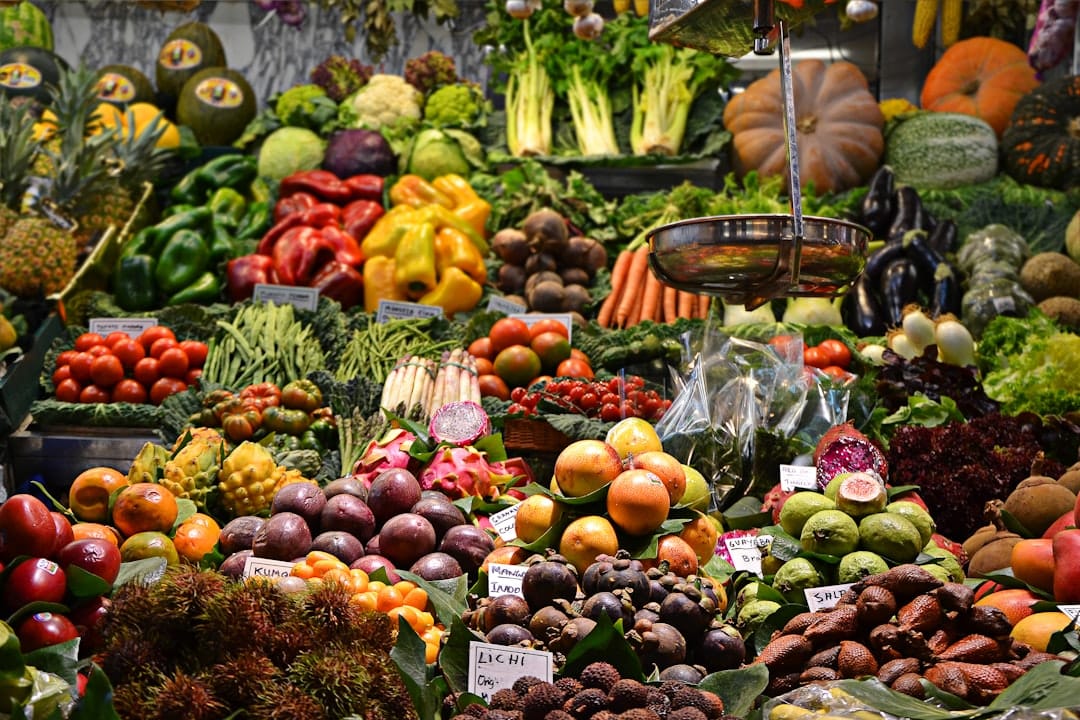
SaveMonash is direct about this: because FODMAPs are spread across fruit, vegetables, grains, nuts, legumes, dairy and manufactured foods, you cannot simply guess which foods will be high or low, and the lists people rely on from the internet are often inaccurate. The laboratory-tested values sit in their app, with a traffic-light rating and the specific FODMAPs each food contains (1).
| Food group | Which FODMAP is usually the problem | Named high-FODMAP examples |
|---|---|---|
| Fruit | Excess fructose and sorbitol | Excess fructose: apples, pears, mangoes, cherries, figs, watermelon, dried fruit. Sorbitol: apples, cherries, peaches, plums (1) |
| Vegetables | Fructans and mannitol | Fructans: artichoke, garlic, leek, onion, spring onion. Mannitol: mushrooms and celery (1) |
| Grains and cereals | Fructans, and GOS to a lesser extent | Wholemeal bread, rye bread, muesli containing wheat, wheat pasta, rye crispbread (1) |
| Legumes and pulses | GOS | Red kidney beans, split peas, falafel, baked beans (1) |
| Dairy | Lactose | Soft cheeses, milk and yoghurt. Butter and cheese are naturally low in lactose, so dairy is not excluded from the diet (1) |
| Nuts and seeds | GOS and fructans | High: cashews and pistachios. Low: macadamias and peanuts. Most seeds are low (1) |
| Meat, poultry and fish | None naturally | Plain cooked meat, poultry, seafood and eggs are free of FODMAPs. Marinated and processed meats may not be, because of added garlic and onion (1) |
| Sugars and sweeteners | Fructose and polyols | High: honey, high-fructose corn syrup, sugar-free confectionery. Low: table sugar, maple syrup, dark chocolate (1) |
What the old version of this page got wrong
Four things, all of which made the diet look more restrictive than it is:
- Soy milk was listed as a drink to avoid. Monash lists soy milk made from soy protein, along with almond and rice milk, among the low FODMAP alternatives. They add a practical point: choose calcium-fortified versions, because plant milks do not naturally contain calcium (1).
- Broccoli was on the avoid list. The vegetables Monash names as particularly high are artichoke, garlic, leek, onion, spring onion, mushrooms and celery (1).
- Cashews and pistachios were missing. Those are the two nuts Monash names as high FODMAP, while macadamias and peanuts are low (1).
- Dairy was treated as a category to remove. Lactose is the problem, not dairy. Butter and cheese are naturally low in lactose, and Monash states that dairy foods are definitely not excluded (1).
One more thing the old list missed entirely: plain meat, poultry, seafood and eggs contain no FODMAPs at all. It is the marinade, the sausage seasoning and the gravy that do, because of the garlic and onion in them (1).
What the Evidence Supports
The ACG clinical guideline for IBS recommends a limited trial of a low FODMAP diet to improve global symptoms (3). The word limited is doing real work in that sentence.
A 2025 network meta-analysis pooled 28 randomised trials in 2,338 patients across 11 dietary interventions. A low FODMAP diet ranked fourth for global symptoms across 24 trials, and for bloating or distension it was the only intervention that beat habitual eating. A starch-reduced and sucrose-reduced diet ranked first for global symptoms, but on only two trials. For bowel habit, no diet beat control (4).
So: the best-supported diet for IBS symptoms, and particularly for bloating, with honest limits on what it does for bowel habit.
Why It Has to End
This is the part most guides leave out, and it is the reason the reintroduction phase is not optional.
In a randomised controlled trial, the low FODMAP diet lowered the proportion of Actinobacteria and reduced faecal butyrate compared with a sham diet, and adding a prebiotic supplement did not prevent the fall in bifidobacteria. The authors’ conclusion was explicit: strict long-term use should not be advised (5).
Butyrate is a fuel for the cells lining the colon, and bifidobacteria are among the bacteria the diet’s own prebiotic fibres feed. Staying in the restriction phase for months to avoid the discomfort of testing foods trades a symptom problem for a different one.
The reassuring counterpart: in a long-term follow-up, once patients moved to an adapted, personalised version after reintroduction, the diet remained effective and was nutritionally adequate, although adherence dropped over time (7).
Get Diagnosed First
Monash is specific that this is a diet for medically diagnosed IBS (2), and there is a practical reason beyond formality.
The ACG guideline suggests serologic testing to rule out celiac disease in patients with IBS and diarrhoea (3). NIDDK advises against starting a gluten-free diet before that testing, because it affects the results (8). A low FODMAP diet cuts wheat, barley and rye substantially, so starting it first can blur exactly the test you need.
Bleeding, unintentional weight loss, fever, anaemia or a family history of bowel disease are reasons to see a doctor rather than to adjust your diet (9).
Who Should Be Careful
- Anyone with a history of disordered eating. A measured, rule-heavy diet is the wrong tool.
- Pregnancy and breastfeeding. Requirements are higher and the restriction is broad.
- People without diagnosed IBS. There is nothing to gain and fibre, calcium and gut bacteria to lose (5).
- Anyone who cannot get dietetic support. The reintroduction phase is fiddly and it is the phase that produces the result.
Fibre and calcium are the two that slip most often. Our fibre guide covers keeping intake up, the elimination diet guide covers the general method and its pitfalls, the autoimmune protocol is a stricter relative with far less evidence, and the balanced diet guide covers where you should land afterwards.
Frequently Asked Questions
What does FODMAP stand for?
Fermentable oligosaccharides, disaccharides, monosaccharides and polyols: a group of short-chain carbohydrates that are poorly absorbed in the small intestine, draw water in and are fermented by gut bacteria, which produces gas, distension and pain in sensitive people.
Can I trust a FODMAP food list I found online?
Monash University, which developed the diet and laboratory-tested the foods, says that the lists people find on the internet are often inaccurate and that you cannot simply guess which foods are high or low. Their app carries the tested values, and portion size changes the answer for many foods.
Do I need a diagnosis first?
Yes. Monash describes this as a diet for medically diagnosed IBS. The ACG guideline also suggests testing to rule out celiac disease in people with IBS and diarrhoea, and starting a diet that cuts wheat before that testing can make the results unreliable.
How long should the restriction phase last?
Two to six weeks, then reintroduction. Strict long-term restriction is specifically advised against, because it lowers gut bifidobacteria and faecal butyrate. The endpoint is the broadest diet that keeps you comfortable, not the narrowest one you can tolerate.
Is it gluten-free?
No, although the shopping list overlaps. Wheat, barley and rye are limited for their fructan content, not their gluten, and a low FODMAP diet still allows small amounts of wheat in some forms. It is not a treatment for celiac disease.
The Bottom Line
The FODMAP diet has the best trial evidence of any diet for IBS, and the ACG recommends it as a limited trial rather than a way of life. It works in three steps, and the middle one, reintroduction, is where the value is: patients’ own guesses about their triggers turned out to differ considerably from what testing showed. Take the food lists from Monash rather than from a website, because the circulating lists are often wrong, and because dairy, plain meat, soy milk and most seeds are not the enemy. Keep the strict phase to a few weeks. Strict long-term restriction lowers bifidobacteria and butyrate, and the researchers who measured that said plainly it should not be advised.
This article is for informational purposes only and is not a substitute for professional medical advice. Get an IBS diagnosis and rule out celiac disease before starting a low FODMAP diet, and run it with a registered dietitian where you can.
Related Articles
Elimination Diet: How to Do It and What to Ignore
AIP Diet: What the Evidence Shows and Who Should Skip It
High Fiber Foods List and How Much Fiber You Need
Balanced Diet Guide With the 5 Food Groups