
Moon salutation (Chandra Namaskar) explained: the 14-step sequence with modifications, how it differs from the Sun Salutation, what yoga research shows for stress and sleep, and safety tips.
The Moon Salutation, or Chandra Namaskar, is a slow flowing yoga sequence that is traditionally practiced in the evening. It resembles the Sun Salutation but is usually done at a gentler pace, and variations differ between yoga schools.
No published trials have studied the moon salutation itself. Research on yoga in general suggests possible benefits for stress, sleep and anxiety symptoms, while noting that injuries such as sprains and strains can occur (1, 2, 3). This guide walks through a 14-step version with modifications and explains what the evidence does and does not show.
Key Takeaways
- This version of Chandra Namaskar has 14 steps, starting and ending in Pranamasana (Prayer Pose).
- It adds a raised-arm backbend in the low lunge and is usually practiced slowly, often in the evening.
- The Moon Salutation has not been studied specifically; yoga in general may help with stress, sleep quality and anxiety symptoms (1, 2, 3).
- Yoga is generally safe for healthy people with proper guidance, but sprains and strains can happen (1).
- People with spine problems, severe high blood pressure, balance issues or glaucoma may need to modify poses (1).
How the Moon Salutation Differs From the Sun Salutation
The Sun Salutation is often used as an energizing warm-up and moves at a brisker pace. The Moon Salutation is typically slower and more meditative, which is why many teachers suggest it for the evening.
In the version below, Ardha Chandrasana, a raised-arm backbend in the low lunge, follows Ashwa Sanchalanasana (Low Lunge). Names and sequences vary between traditions; some schools use the name Ardha Chandrasana for a different standing balance pose.
The 14 Poses, Step by Step
 Save
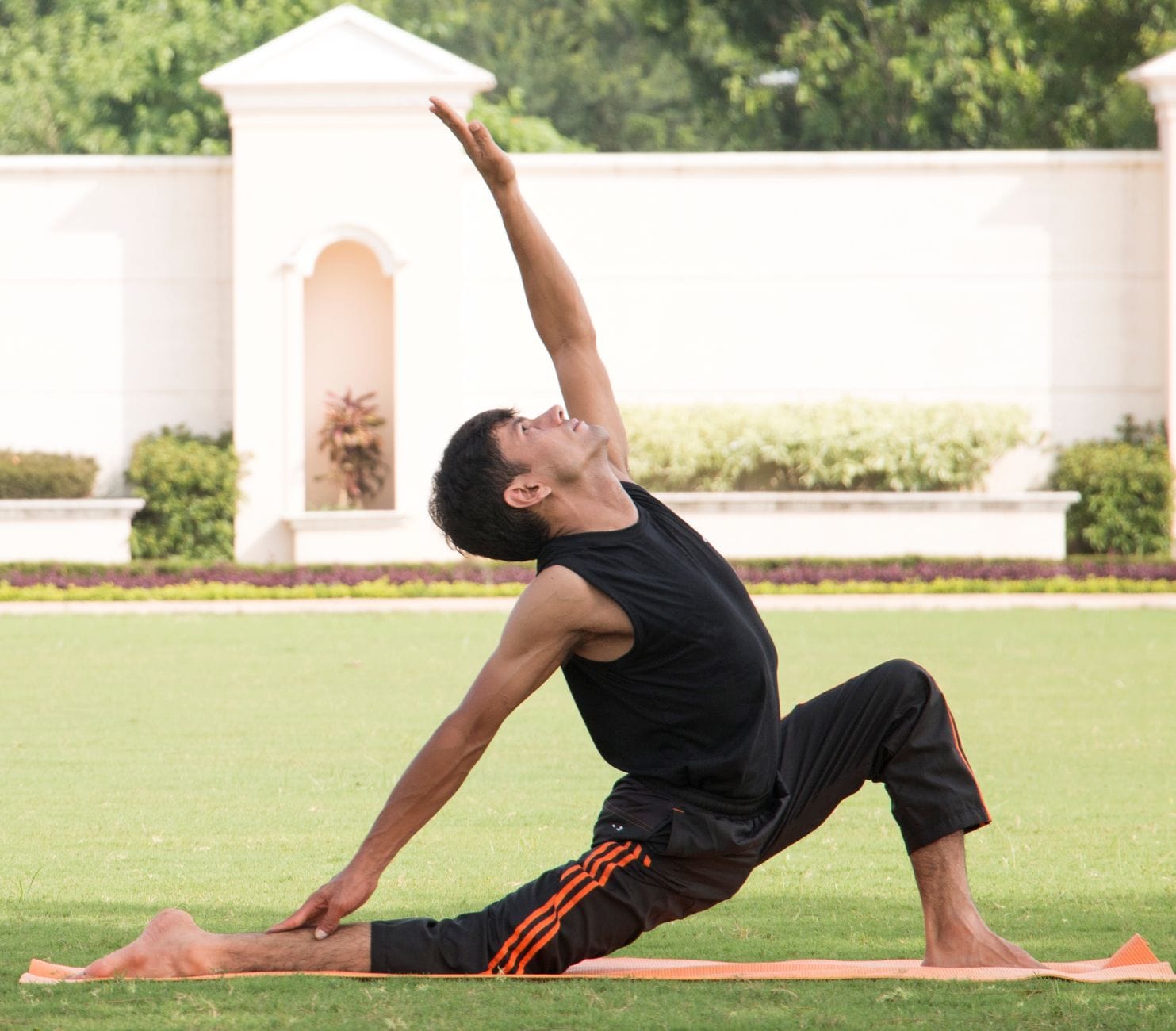
SaveThe sequence moves through eight poses and then retraces its path: Pranamasana, Hasta Uttanasana, Uttanasana, Ashwa Sanchalanasana, Ardha Chandrasana, Parvatasana, Ashtanga Namaskara, Bhujangasana, and then back through Parvatasana, the lunge, Ardha Chandrasana, Uttanasana, Hasta Uttanasana and Pranamasana.
1. Pranamasana (Prayer Pose)
Stand tall with your feet together or hip-width apart. Press your palms together at the center of your chest and breathe slowly.
2. Hasta Uttanasana (Raised Arms Pose)
Inhale and sweep your arms overhead, about shoulder-width apart. Arch back only slightly, or simply reach straight up if backbends are uncomfortable.
3. Uttanasana (Standing Forward Fold)
Exhale and hinge forward from the hips. Bend your knees as much as you need, and rest your hands on your shins or ankles if the floor feels far away.
4. Ashwa Sanchalanasana (Low Lunge)
Inhale and step your right leg back, lowering the right knee to the floor. Keep the front knee over the ankle, lift your chest, and steady yourself with your fingertips on the ground or on blocks.
5. Ardha Chandrasana (Raised-Arm Lunge Backbend)
Staying in the lunge, inhale and raise your arms overhead. Lift the chest and keep any backbend small and comfortable, without compressing the lower back.
6. Parvatasana (Mountain Pose, Inverted V)
Exhale, place your hands down, and step the front foot back. Lift your hips high into an inverted V. Keep a soft bend in the knees if your hamstrings are tight, and take a few slow breaths.
7. Ashtanga Namaskara (Eight-Limbed Salute)
Exhale and lower your knees, then your chest and chin, to the floor, keeping the hips slightly lifted and the palms beside your chest. Lower all the way to the floor if this feels like too much.
8. Bhujangasana (Cobra Pose)
Inhale and slide your chest forward and up into a gentle backbend. Keep your hips on the floor, elbows slightly bent and shoulders away from the ears.
9 to 14. The Return Journey
From Cobra, exhale back into Parvatasana. Then inhale and step the right foot forward into the low lunge, raise your arms into the lunge backbend, fold into Uttanasana, rise into Hasta Uttanasana and finish in Pranamasana. Repeat on the other side, leading with the left leg.
Throughout the sequence, let the breath guide the movement: inhale as you lift or open, exhale as you fold, and move slowly between poses.
What Research Shows About Yoga Practices Like This
 Save
Save| Outcome | What was studied | Evidence for yoga in general |
|---|---|---|
| Sleep (2) | 19 randomized trials of yoga in 1,832 women with sleep problems | Improved sleep quality; no clear effect on insomnia severity |
| Anxiety (3, 4) | Meta-analyses of randomized trials | Small short-term benefit for elevated anxiety; very low certainty in diagnosed disorders |
| Stress and wellness (1) | NIH review of yoga research | Possible benefits for stress, mental health, sleep and balance |
| Low back pain (5) | Cochrane review of 21 trials | Small, clinically unimportant improvement vs no exercise |
| Moon Salutation specifically | No published trials found | Not studied |
The Moon Salutation has not been tested in clinical trials, so any benefits are inferred from research on yoga in general, which uses many different styles. The NIH notes that differences in the types of yoga studied make it challenging to evaluate the research (1).
Stress and sleep
According to the NIH, studies suggest yoga may help relieve stress and improve mental and emotional health, sleep and balance (1). A meta-analysis of 19 randomized trials in 1,832 women with sleep problems found yoga improved sleep quality compared with non-active control groups, but three trials found no effect on insomnia severity, and yoga was not associated with serious adverse events (2).
Anxiety and mood
A meta-analysis of 8 randomized trials found small short-term effects of yoga on anxiety in people with elevated anxiety levels, with inconclusive evidence for diagnosed anxiety disorders (3). A later review found yoga may reduce symptoms in anxiety and depressive disorders, but rated the certainty of evidence as very low (4).
Flexibility, strength and back pain
Slow flowing sequences stretch and move many muscle groups, but specific effects of the Moon Salutation on flexibility or strength have not been measured. For chronic low back pain, a Cochrane review of 21 trials found yoga produced small, clinically unimportant improvements in pain and function compared with no exercise, and about the same results as other back exercises (5). If you want a more vigorous workout, see our guide to exercises that burn more calories.
Getting Started as a Beginner
- Learn from a qualified instructor if you can; practicing without supervision has been linked to a higher injury risk (1).
- Warm up first and never force a pose.
- Use bent knees, blocks or a smaller range of motion whenever you need to.
- Practice the breath pattern slowly before linking the poses together.
- Finish with a few minutes of rest lying on your back.
Safety and Precautions
- Injuries: yoga is generally considered safe for healthy people when practiced properly, but the most common injuries are sprains and strains, most often of the knee or lower leg. Serious injuries are rare (1).
- Older adults: the rate of yoga-related injuries treated in emergency departments is higher in people 65 and older (1).
- Health conditions: preexisting knee or hip injuries, lumbar spine disease, severe high blood pressure, balance problems and glaucoma may require modifying or avoiding some poses (1).
- Back pain: in trials of people with chronic low back pain, yoga was associated with more adverse events, mainly increased back pain, than no exercise, but a similar risk to other exercise (5).
- Pregnancy: yoga is safe for most pregnant women with appropriate precautions; talk with your provider and instructor about which poses to modify (1).
Frequently Asked Questions
When is the best time to practice the Moon Salutation?
The Moon Salutation is traditionally practiced in the evening, and its slow pace makes it a natural fit for winding down. There are no studies comparing the time of day, so choose a time you can practice consistently and safely.
How is the Moon Salutation different from the Sun Salutation?
The Moon Salutation is usually practiced more slowly and includes a raised-arm backbend (Ardha Chandrasana in this sequence) after the low lunge. The version described here has 14 steps. Different yoga schools teach different variations of both sequences.
Is there research on the benefits of Moon Salutation?
No published trials have tested the Moon Salutation specifically. Research on yoga in general suggests it may help with stress, sleep quality and anxiety symptoms, although many studies are small or of limited quality.
Can beginners do Chandra Namaskar?
Many beginners can, with modifications such as bending the knees in forward folds and resting the hands on the shins. The NIH recommends learning yoga from a qualified instructor, because practicing without supervision has been linked to a higher injury risk.
Who should be careful with the Moon Salutation?
People with lumbar spine disease, knee or hip injuries, severe high blood pressure, balance problems or glaucoma may need to modify or avoid some poses. Older adults and pregnant women should talk with their health care provider and yoga instructor first.
The Bottom Line
The Moon Salutation is a slow 14-step yoga sequence that many people use to wind down in the evening. It has not been studied on its own, but research on yoga in general suggests possible benefits for stress, sleep quality and anxiety symptoms, with small effects for back pain. Move with your breath, use modifications freely, learn from a qualified instructor if possible, and check with your health care provider if you have spine problems, high blood pressure, balance issues or glaucoma. Pair regular movement with the positive effects of healthy eating for overall well-being.
This article is for informational purposes only and is not a substitute for professional medical advice, diagnosis, or treatment. Consult a qualified healthcare provider before beginning any new exercise or yoga practice, especially if you have an injury or existing health condition.
Related Articles
How to Burn 2000 Calories a Day, and Why a Week Works Better
Positive Effects of Healthy Eating: What Research Shows
Tree Pose Benefits: What Actually Holds Up